

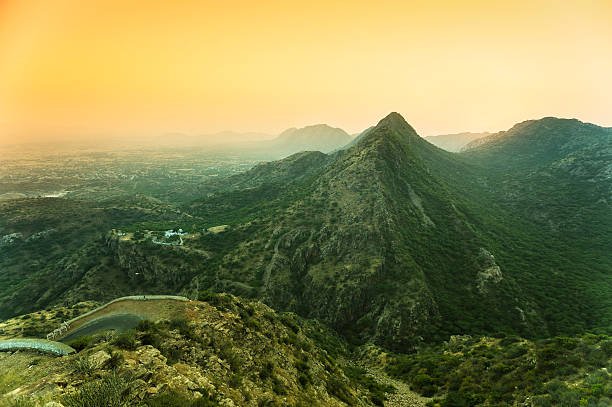
When people think of Maharana Pratap, they often picture the Battle of Haldighati, his loyal horse Chetak, or his unwavering resistance to the Mughal Empire. Yet one of the greatest allies in his struggle was neither a warrior nor a weapon. It was the Aravalli Range, the ancient mountains that sheltered him, protected his people, and helped keep the dream of an independent Mewar alive.
Security homepage: https://antivirus-review.com/
After the Battle of Haldighati in 1576, Maharana Pratap faced one of the most difficult periods of his life. The Mughal Empire possessed greater resources, larger armies, and control over much of northern India. Many rulers would have accepted defeat under such circumstances. Maharana Pratap chose a different path. Refusing to submit to Emperor Akbar, he withdrew into the rugged terrain of the Aravallis and continued the fight.
The mountains became his fortress.
Unlike the open plains where large imperial armies could move easily, the Aravallis offered narrow passes, dense forests, hidden valleys, and difficult terrain. These natural features made it challenging for Mughal forces to pursue him. More importantly, they enabled Maharana Pratap to adopt a style of warfare that modern historians often describe as guerrilla tactics, swift attacks, surprise movements, and the strategic use of local geography.
Rather than engaging the Mughals in large conventional battles, Maharana Pratap relied on mobility and local knowledge. Small forces could strike enemy outposts, disrupt supply routes, and disappear into the hills before a larger army could respond. This strategy allowed Mewar’s resistance to survive despite overwhelming odds.
Several locations in the Aravallis are closely associated with this phase of Maharana Pratap’s life. Among them is Ubheshwar, situated amid forested hills west of Udaipur. The remote region provided security and concealment during difficult years when Mughal pressure remained intense. Surrounded by rugged landscapes and natural cover, it exemplifies the kind of terrain that helped sustain Mewar’s resistance.
Another important site is Machind, often referred to as Machindranath Cave. Local traditions connect the area with Maharana Pratap’s movements through the Aravallis. From such elevated and secluded locations, scouts could observe approaching forces and communicate vital information across the region. The strategic value of these mountain hideouts lay not only in their isolation but also in their commanding views of surrounding routes.
Perhaps the most famous of these refuges is Mayra Ki Gufa near Gogunda. Hidden within the hills, the cave is traditionally believed to have served as a storage site for weapons and supplies during Maharana Pratap’s resistance. While some details belong to regional tradition rather than firmly documented history, the location illustrates how caves and natural shelters could be used to support prolonged military campaigns in difficult terrain.
Life in the Aravallis was far from easy. Historical accounts and local traditions describe years of hardship for Maharana Pratap, his family, and his followers. They endured shortages of food, lived away from royal comforts, and constantly faced the threat of attack. Yet these challenges only strengthened the bond between the ruler and his people. Bhil communities of the region played a particularly important role, providing support, intelligence, and guidance through the forests and hills.
Over time, Maharana Pratap’s strategy proved effective. By the 1580s, he had regained much of western Mewar, including key territories lost after Haldighati. Although Chittorgarh remained under Mughal control, the kingdom survived and recovered. The Aravallis had given him the time and protection needed to rebuild his strength.
Today, visitors exploring Ubheshwar, Machind, Mayra Ki Gufa, and the surrounding hills encounter more than scenic landscapes. They are walking through the natural stronghold that helped shape one of India’s most remarkable resistance movements. These mountains were not merely the backdrop to Maharana Pratap’s story, they were active participants in it.
The history of Maharana Pratap cannot be told without the Aravallis. Their forests concealed him, their caves sheltered him, and their rugged terrain frustrated his enemies. In many ways, the mountains became the silent guardians of Mewar, helping a determined ruler preserve his kingdom’s independence against one of the most powerful empires of the age.