

PC(Facebook)
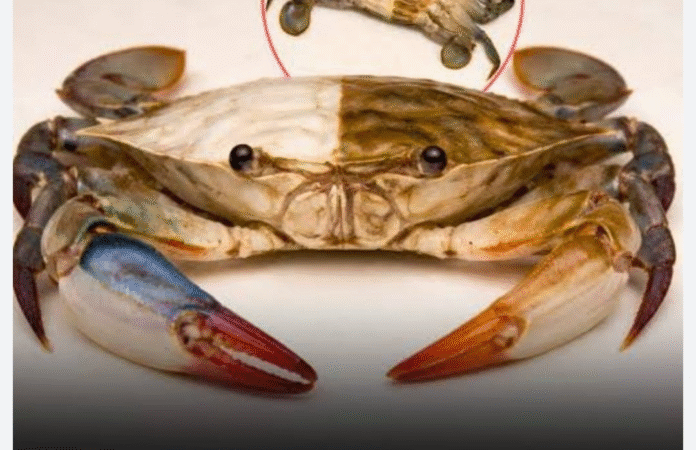
In a remarkable scientific discovery, researchers in Kerala have found three specimens of the Vela carli freshwater crab exhibiting bilateral gynandromorphism – a rare condition where the crab displays both male and female biological traits, often split distinctly down the middle of its body. This is the first recorded instance of gynandromorphy in the freshwater crab family Gecarcinucidae.
Scientists collected the specimens during biodiversity surveys in Silent Valley National Park, a renowned biodiversity hotspot in the Western Ghats, Kerala. Out of more than 120 crabs examined, only three adult specimens showed the dual-sex condition. Two displayed clear bilateral gynandromorphism (one side male, the other female), while one showed a mosaic pattern.
The crabs were found living inside water-filled tree holes an unusual micro-habitat that highlights the hidden ecological richness of the park’s forests. Vela carli is an endemic species restricted to the forests and streams of the Central Western Ghats. One side of the body showed male reproductive structures (such as gonopods). The other side exhibited female features, including gonopores.
The specimens maintained typical crab morphology but with clear sexual dimorphism between the two halves.
Gynandromorphy is extremely rare in crustaceans. This discovery provides valuable insights into genetic mechanisms of sexual differentiation. How hormones and developmental processes shape sex traits. Possible intrinsic (non-pollution-related) causes, as the habitat in Silent Valley is relatively pristine. Lead researcher K.S. Anoop Das from the Centre for Conservation Ecology, MES Mampad College, noted that the condition might represent a survival strategy, potentially allowing the crab to reproduce even in the absence of opposite-sex partners. He emphasized that the phenomenon appears linked to natural developmental processes rather than environmental pollutants.
The study was conducted by K.S. Anoop Das and K.T. Fahis (MES Mampad College) in collaboration with crab specialist Sameer K. Pati and Purnima Kumari from the Zoological Survey of India (ZSI). It was funded by the Department of Science and Technology’s Science and Engineering Research Board (now Anusandhan National Research Foundation).
About Vela carli Crabs habitat found in marshy areas, paddy fields, streams, and now documented in tree holes in Silent Valley and other parts of the Western Ghats. Diet opportunistic feeders – earthworms, insects, and occasionally small vertebrates like rats or snakes. Ecological Role as part of the rich endemic biodiversity of the Western Ghats, these crabs contribute to nutrient cycling in forest and aquatic ecosystems.
This unusual find not only adds to our understanding of developmental biology but also underscores the importance of protecting fragile ecosystems like Silent Valley. Tree holes, once thought to be minor features, are turning out to be micro-habitats teeming with biological surprises. The discovery has captured public imagination, with many calling the “split-sex” crab a fascinating marvel of nature. It serves as a powerful reminder of how much remains unexplored in India’s biodiversity hotspots.
The research team hopes this finding will encourage more detailed studies on sexual anomalies in freshwater crustaceans and further exploration of the Western Ghats’ hidden ecosystems.