

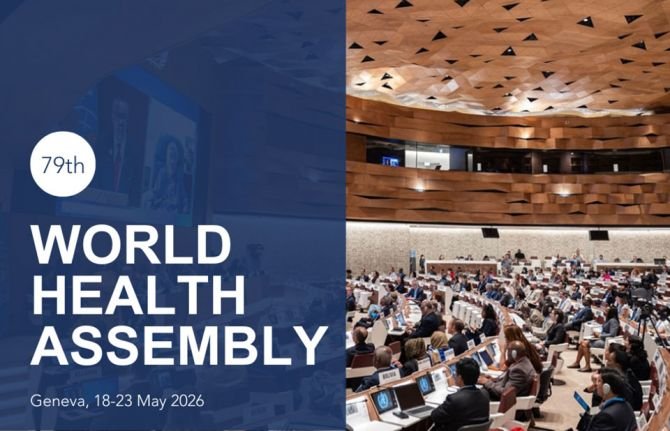
Union Health Minister J.P. Nadda is leading the Indian delegation at the 79th World Health Assembly being held in Geneva, Switzerland, where global leaders, policymakers, and health experts have gathered to discuss some of the world’s most pressing public health challenges. This year’s assembly places special emphasis on the growing impact of climate change on global health systems and human well-being.
Organised by the World Health Organization(WHO), the World Health Assembly is the decision-making body of the organisation and brings together representatives from member countries to shape international health policies and priorities. The 79th session is focusing on strengthening healthcare systems, pandemic preparedness, universal health coverage, digital healthcare, and climate-linked health risks.
A major highlight of this year’s discussions is the increasing concern over the health effects of climate change. According to WHO, rising global temperatures, extreme weather events, air pollution, water scarcity, and changing disease patterns are becoming serious threats to public health worldwide. Experts warn that climate change is contributing to the spread of infectious diseases, malnutrition, respiratory illnesses, and heat-related deaths, especially in vulnerable and developing countries.
India’s participation in the assembly reflects its growing role in global health diplomacy. During the meetings, J. P. Nadda is expected to highlight India’s achievements in healthcare reforms, digital health infrastructure, affordable medicines, vaccination programs, and traditional medicine initiatives. He is also likely to engage in bilateral discussions with health ministers and international organisations to strengthen cooperation in medical research, healthcare innovation, and disease prevention.
The Indian delegation is also expected to showcase initiatives such as Ayushman Bharat, digital health missions, and India’s contributions during global health emergencies, including vaccine supply and pharmaceutical support to multiple countries in recent years.
Climate change and health have emerged as deeply interconnected issues in recent years. Heatwaves, floods, droughts, and environmental degradation are increasingly affecting food security, mental health, access to clean water, and healthcare infrastructure. WHO officials at the assembly stressed that protecting public health must become a central part of climate action strategies worldwide.
The World Health Assembly also provides a platform for countries to collaborate on future pandemic preparedness and strengthen global coordination against emerging health threats. Lessons from the COVID-19 pandemic continue to shape international discussions on healthcare resilience and emergency response systems.
India’s active participation at the 79th World Health Assembly underlines its commitment to global health cooperation and sustainable healthcare development. As climate and health challenges continue to grow worldwide, the assembly aims to encourage collective international action for building healthier, safer, and more resilient societies.