

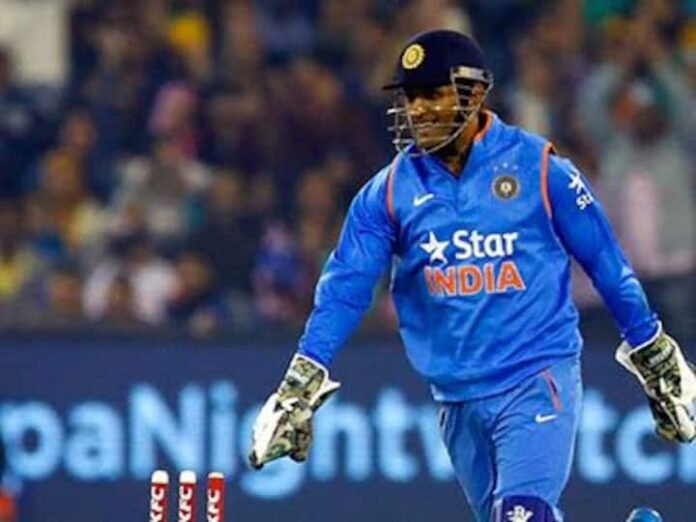
The story of Mahendra Singh Dhoni is one of determination, self-belief, patience and extraordinary achievements. From playing football in the school grounds of Ranchi to becoming one of the most successful captains in international cricket, Dhoni’s journey has inspired millions. Known for his calm temperament, sharp cricketing instincts, remarkable finishing abilities and trademark helicopter shot, he transformed the role of a wicketkeeper-batter and created a legacy that goes far beyond the cricket field.
Early Life and Childhood
Mahendra Singh Dhoni was born on July 7, 1981, in Ranchi, which was then part of Bihar and is now the capital of Jharkhand. He grew up in a middle-class family. His father, Pan Singh, worked at MECON, while his mother, Devaki Devi, managed the household. Dhoni attended DAV Jawahar Vidya Mandir in Shyamali, Ranchi.
Interestingly, cricket was not his first sporting passion. During his school days, Dhoni was interested in football and badminton and played as a goalkeeper for his school’s football team. His cricket journey began when his school coach, Keshav Ranjan Banerjee, encouraged him to try wicketkeeping. Dhoni soon displayed exceptional talent and gradually developed into a promising cricketer.
His powerful batting, natural ability to strike the ball and unconventional style helped him stand out in local cricket competitions. He represented Bihar at the junior level and made his Ranji Trophy debut during the 1999-2000 season as an 18-year-old.
The Railway Job and the Struggle Before Success
Before becoming an international cricket star, Dhoni experienced the uncertainties and struggles of pursuing a sporting career. Between 2001 and 2003, he worked as a Travelling Ticket Examiner (TTE) at Kharagpur railway station in West Bengal under the South Eastern Railway.
Despite having a stable government job, he continued to pursue cricket. He balanced his professional responsibilities with training and domestic matches, determined to make a place for himself in the national team.
His performances in domestic cricket gradually attracted attention. In 2003, his talent was noticed by cricket talent scouts, leading to his selection for the India A team. His impressive performances during tours of Kenya and Zimbabwe brought him closer to his dream of representing India.
International Debut and Rise to Stardom
Dhoni made his One Day International (ODI) debut against Bangladesh on December 23, 2004. His first international appearance was not particularly memorable, as he was run out for a duck. However, he soon made up for that disappointing beginning.
In April 2005, during an ODI against Pakistan in Visakhapatnam, Dhoni scored a sensational 148 runs off just 123 balls. Later that year, he produced another remarkable performance against Sri Lanka in Jaipur, scoring an unbeaten 183 off 145 deliveries. The innings established him as one of the most destructive wicketkeeper-batters in world cricket.
He made his Test debut against Sri Lanka in December 2005 and quickly became an important member of the Indian team. His aggressive batting, reliable wicketkeeping and ability to handle pressure made him a valuable player across formats.
The Captain Who Changed Indian Cricket
In 2007, Dhoni was entrusted with the responsibility of leading India’s young team in the inaugural ICC T20 World Cup in South Africa. Despite limited expectations, he guided the team to the final, where India defeated Pakistan to become the first-ever T20 World Cup champions.
This victory marked the beginning of a remarkable leadership journey. Dhoni subsequently became India’s ODI captain and later took charge of the Test team.
The biggest moment of his career came on April 2, 2011, when India won the ICC Cricket World Cup after 28 years. Leading the team in the final against Sri Lanka at Mumbai’s Wankhede Stadium, Dhoni played an unforgettable unbeaten innings of 91 runs. His match-winning six that sealed India’s victory remains one of the most iconic moments in Indian sporting history.
In 2013, Dhoni added another major achievement to his record by leading India to victory in the ICC Champions Trophy in England. With this achievement, he became the first captain to win all three major ICC limited-overs tournaments: the T20 World Cup, the ODI World Cup and the Champions Trophy.
Under his leadership, India also reached the number one position in the ICC Test rankings in 2009. His captaincy was defined by composure, strategic thinking and an ability to trust his players during challenging situations.
The Chennai Super Kings Connection
Dhoni’s journey in the Indian Premier League began in 2008 when he was signed by Chennai Super Kings for the inaugural season. He soon became the face of the franchise and developed a special connection with its supporters, who affectionately call him ‘Thala’.
Under his captaincy, CSK won five IPL titles in 2010, 2011, 2018, 2021 and 2023. The team also won two Champions League T20 titles under his leadership.
Although CSK was suspended from the IPL for two seasons, Dhoni represented Rising Pune Supergiant during that period before returning to Chennai in 2018. His association with the franchise became one of the most enduring partnerships in the tournament’s history.
Life Beyond Cricket and Major Honours
Beyond cricket, Dhoni has maintained a relatively private personal life. He married Sakshi Singh Rawat on July 4, 2010, and the couple have a daughter, Ziva. He is also known for his interest in automobiles, motorcycles and the Indian Armed Forces.
His contribution to Indian cricket has been recognised with several prestigious honours. He received the Rajiv Gandhi Khel Ratna Award in 2007-08, the Padma Shri in 2009 and the Padma Bhushan in 2018. In 2011, the Indian Territorial Army conferred upon him the honorary rank of Lieutenant Colonel. In June 2025, he was inducted into the ICC Cricket Hall of Fame, recognising his exceptional contribution to the sport.
Retirement and a New Chapter
Dhoni announced his retirement from Test cricket in December 2014, bringing an end to his longest-format career. On August 15, 2020, he announced his retirement from international cricket through a social media post, bringing an end to an extraordinary international journey that began in 2004. He continued playing in the IPL, remaining closely associated with Chennai Super Kings.
On November 17, 2026, Dhoni announced his retirement from IPL playing, marking the end of his professional playing career. However, his association with Chennai Super Kings is set to continue as he takes up the role of team mentor from the 2027 season.
From a young boy who once worked at a railway station to a cricketer who lifted some of the biggest trophies in the sport, Dhoni’s journey is a remarkable example of perseverance and ambition. He did not follow the conventional path to success, yet his belief in his abilities and willingness to take risks helped him achieve what millions only dream of.
For cricket fans, Dhoni will always be remembered for the winning six in the 2011 World Cup final, his extraordinary finishes, lightning-fast stumpings and the composure with which he handled the toughest moments. More than the records and championships, his greatest legacy may be the belief that talent, hard work and patience can take an ordinary beginning towards extraordinary achievements.