

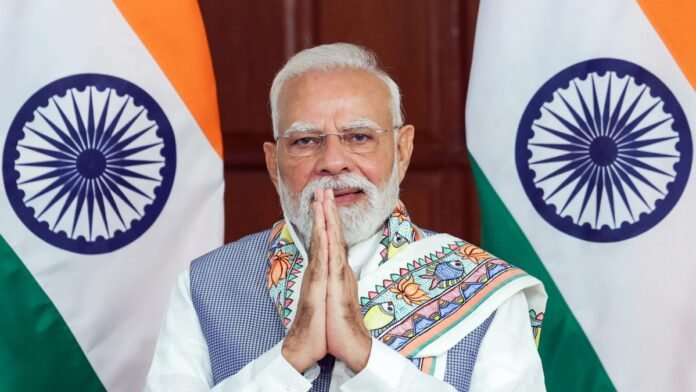
Prime Minister Narendra Modi has completed 12 years in office, marking a significant milestone in contemporary Indian politics. With this achievement, he has also become the longest-serving elected head of government in India’s history, surpassing previous records for continuous tenure by an elected Prime Minister.
From his first swearing-in on May 26, 2014, to leading the country through three consecutive terms, Modi’s political journey has been marked by ambitious reforms, major welfare programmes, infrastructure expansion, and a strong emphasis on India’s global profile. His tenure has coincided with a period of significant economic, technological, and geopolitical change, making his leadership one of the most consequential chapters in modern India.
Over the past 12 years, the government has launched several flagship initiatives aimed at financial inclusion, digital governance, sanitation, healthcare, housing, and infrastructure development. Schemes such as Jan Dhan Yojana, Ayushman Bharat, Swachh Bharat Mission, PM Awas Yojana, and the expansion of direct benefit transfers have sought to improve access to essential services for millions of citizens.
Digital transformation has been one of the defining features of the Modi era. The rapid growth of digital payments through UPI, the expansion of Aadhaar-linked services, and increased internet penetration have transformed the way government services and financial transactions are delivered across the country.
India today stands among the world’s leading digital economies, with digital public infrastructure increasingly being viewed as a model for other nations.
Infrastructure development has also remained a central focus. The past decade has seen significant investments in highways, railways, airports, ports, metro systems, and renewable energy projects. The government has consistently argued that improved infrastructure is essential for sustaining economic growth and enhancing India’s global competitiveness.
On the international stage, India has sought to play a more prominent role under Modi’s leadership. From hosting the G20 Summit in 2023 to strengthening strategic partnerships with major global powers, India’s diplomatic footprint has expanded considerably. The country’s growing influence in areas such as climate action, technology, trade, and global governance has become a key feature of its foreign policy.
Supporters credit Modi with providing political stability, accelerating development projects, and enhancing India’s international standing. Critics, meanwhile, have raised concerns on issues ranging from unemployment and social polarization to institutional independence and democratic discourse. These debates continue to shape assessments of his legacy.
What remains undisputed is the scale of the transformation India has witnessed during these 12 years. Whether in governance, technology, welfare delivery, infrastructure, or foreign policy, the period has seen far-reaching changes that have touched nearly every aspect of public life.
As Narendra Modi completes 12 years in office and begins another phase of his leadership, the focus now shifts to the challenges and opportunities that lie ahead. For a nation aspiring to become a developed economy in the coming decades, the decisions taken in the years ahead may prove just as significant as those made over the past twelve.