

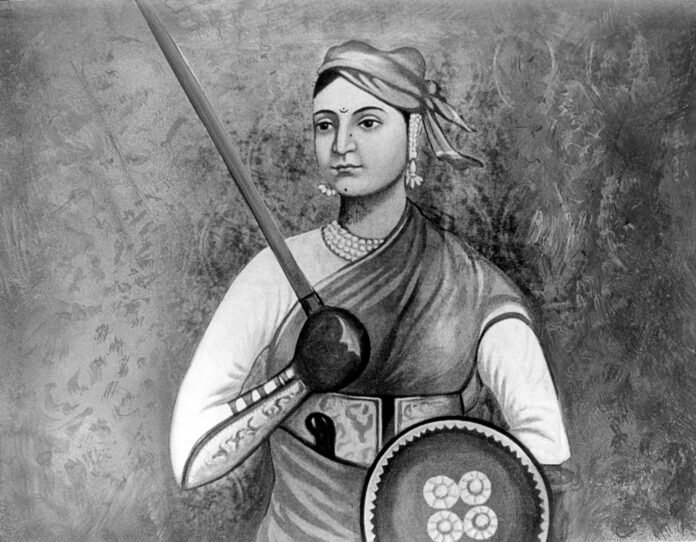
Rani Lakshmibai Jayanti is observed every year on November 19 to commemorate the birth anniversary of one of India’s most courageous and celebrated historical figures. Popularly remembered as the Queen of Jhansi, Rani Lakshmibai played a significant role in the Revolt of 1857 against British rule. Her courage, military leadership and determination to protect her kingdom made her an enduring symbol of resistance, patriotism and women’s empowerment in Indian history. Born on November 19, 1828, her legacy continues to inspire generations, particularly young women, to demonstrate courage and stand firm against injustice.
Early Life and Becoming the Queen of Jhansi
Rani Lakshmibai was born as Manikarnika Tambe on November 19, 1828, in Varanasi, then known as Banaras. Her parents were Moropant Tambe and Bhagirathi Bai. She was affectionately called Manu during her childhood. Following the early death of her mother, she was raised by her father, who encouraged her to develop skills that were uncommon for girls of her time. Unlike the conventional upbringing of royal women, Manikarnika received training in horse riding, sword fighting, shooting and other martial arts. These early experiences later played an important role in shaping her identity as a warrior and military leader.
In 1842, Manikarnika married Maharaja Gangadhar Rao Newalkar, the ruler of Jhansi, and became known as Rani Lakshmibai. The couple had a son who died in infancy. Subsequently, they adopted a child, Damodar Rao, as their heir. However, after Maharaja Gangadhar Rao’s death in 1853, the British East India Company refused to recognise the adopted son as the legitimate successor to the throne.
Resistance Against British Rule
The British refusal to recognise Damodar Rao’s succession was connected to the Doctrine of Lapse, an annexation policy associated with Governor-General Lord Dalhousie. Under this policy, the British East India Company could annex princely states when their rulers died without a recognised natural male heir, refusing to accept adopted sons as legitimate successors. Jhansi was annexed in 1854, despite Rani Lakshmibai’s objections and efforts to protect her kingdom.
The annexation deeply affected the queen, who refused to surrender her claim to Jhansi. When the Revolt of 1857 broke out against the British East India Company, she emerged as one of its prominent leaders. She took responsibility for defending Jhansi, organised her forces and prepared the kingdom to resist British military advances. Her leadership during the conflict established her reputation as a determined military commander.
In 1858, British forces under General Hugh Rose attacked Jhansi. The queen led the resistance with remarkable courage, but the British forces eventually captured the city. Lakshmibai managed to escape and continued her struggle alongside other prominent rebel leaders, including Tatya Tope. She later became involved in the resistance at Kalpi and Gwalior.
Rani Lakshmibai died on June 18, 1858, while fighting British forces near Gwalior. She was around 29 years old at the time of her death. Her determination to defend her kingdom and her refusal to surrender made her one of the most remembered figures of the uprising.
Legacy and Significance
Rani Lakshmibai’s contribution to Indian history extends beyond her military achievements. At a time when women had limited opportunities to participate in public and political affairs, she demonstrated exceptional leadership, courage and administrative ability. Her role challenged prevailing social expectations and established her as an important historical example of women’s participation in resistance movements.
Her legacy was further popularised through literature, folklore and nationalist writings. One of the most celebrated literary tributes to her is the Hindi poem ‘Jhansi Ki Rani’ by Subhadra Kumari Chauhan, particularly remembered for the lines, ‘Khoob ladi mardani, woh toh Jhansi wali Rani thi.’ Her life also inspired the Rani of Jhansi Regiment, the women’s regiment of Subhas Chandra Bose’s Indian National Army, established in 1943.
On her birth anniversary, the nation remembers Rani Lakshmibai not only as a warrior queen but also as a symbol of courage, determination and resistance against colonial rule. Her story reminds us that leadership is defined by conviction and the willingness to stand up for one’s principles, even in the face of overwhelming challenges. More than a century and a half after her death, the Queen of Jhansi continues to occupy a special place in India’s collective memory and remains an inspiration for generations to come.