

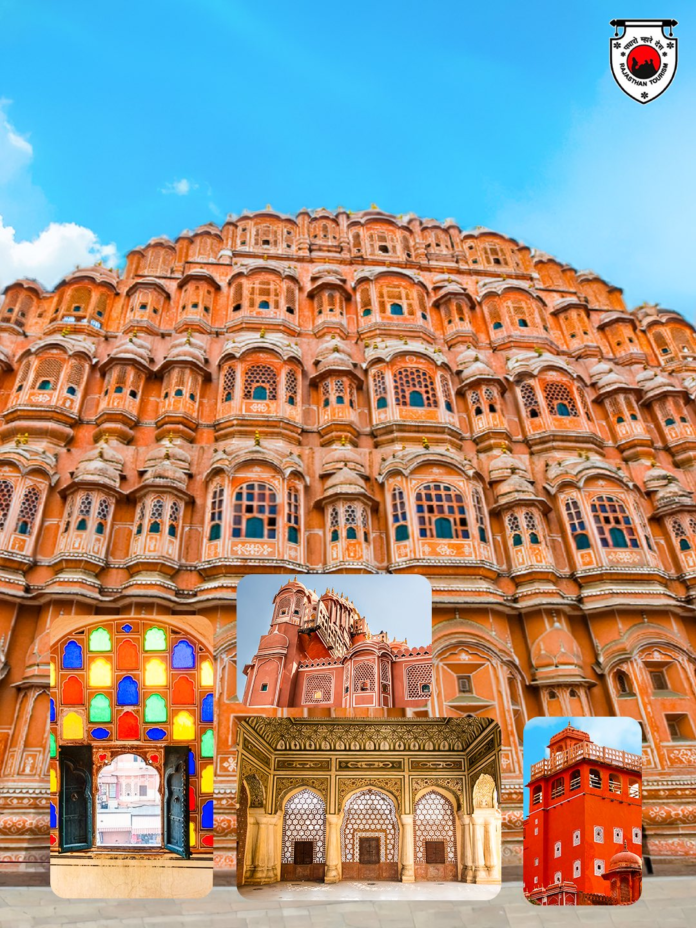
Founded on November 18, 1727, Jaipur is far more than a city of pink facades and royal palaces. Its nine carefully planned sectors, seven historic gates, geometrically aligned streets and remarkable astronomical observatory reveal the extraordinary scientific vision of its founder, Maharaja Sawai Jai Singh II.
On November 18, 1727, a new chapter in Rajasthan’s history began with the foundation of Jaipur. Today, as the city celebrates its 299th Foundation Day, its legacy stands as a remarkable example of how science, architecture, astronomy, commerce and culture can come together to shape a living city.
Popularly known as the Pink City, Jaipur is admired across the world for its grand palaces, colourful bazaars, magnificent forts and vibrant traditions. But beneath its distinctive architectural beauty lies something even more fascinating: a meticulously planned urban landscape built around mathematical precision, astronomical understanding and principles of traditional Indian architecture.
The vision belonged to Maharaja Sawai Jai Singh II, the ruler of Amer, who did not simply want to establish another royal capital. He envisioned a modern, organised city that could accommodate a growing population, encourage trade, support artisans and serve as a centre of administration and culture.
Nearly three centuries later, that vision continues to define Jaipur.
From Amer to Jaipur: The Birth of a Planned Capital
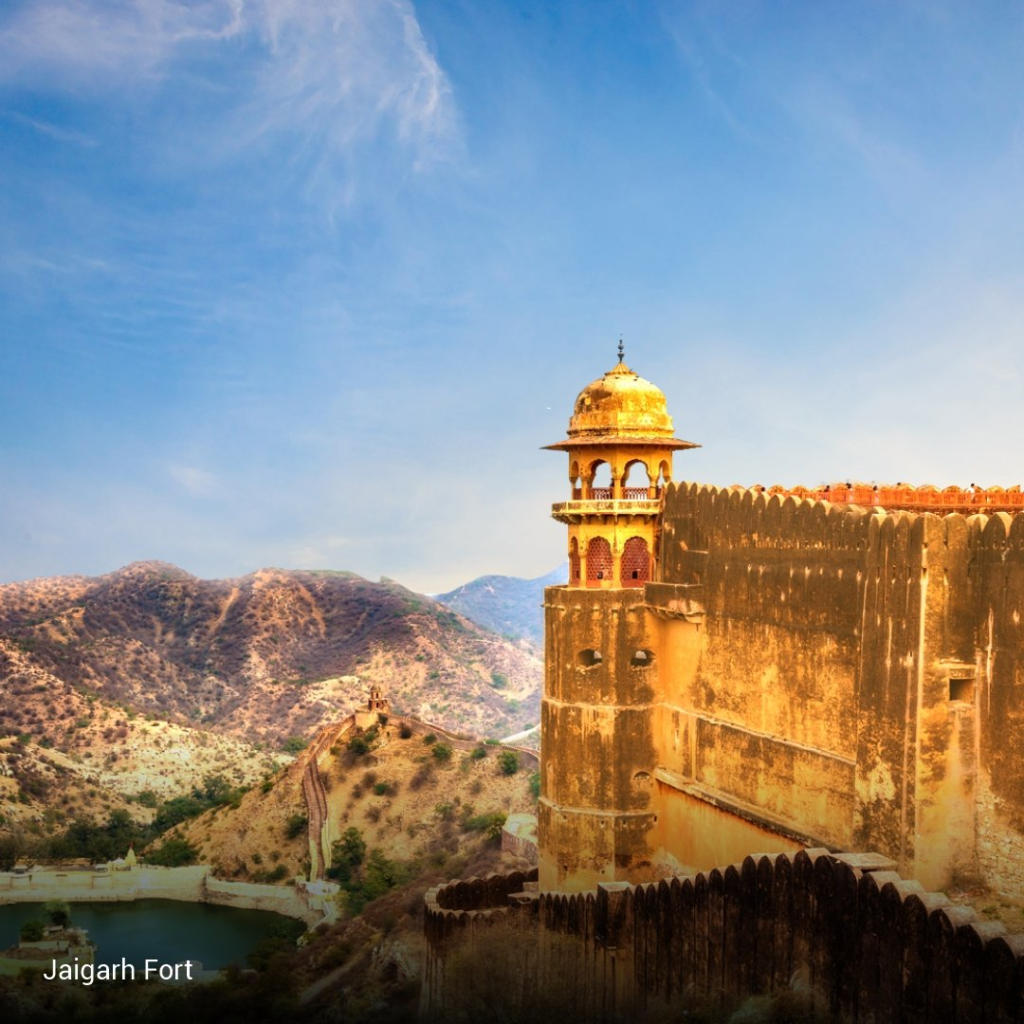
Before Jaipur came into existence, Amer served as the capital of the Kachwaha rulers. Surrounded by the Aravalli hills, Amer was strategically located and naturally beautiful. However, its geographical limitations gradually became a challenge.
The population was increasing, commercial activities were expanding and the demand for water and other essential resources was growing. The hilly terrain offered limited opportunities for further urban expansion.
Recognising these challenges, Sawai Jai Singh II decided to establish a new capital on the plains.
For this ambitious undertaking, he sought the assistance of Vidyadhar Bhattacharya, an accomplished architect and scholar associated with principles of Indian architecture, geometry and town planning.
Together, they developed a city whose layout was remarkably advanced for its time. Jaipur was designed with organised streets, designated commercial zones, residential neighbourhoods, public squares and a fortified boundary.
The result was not merely a royal settlement but a carefully conceived urban centre.
Nine Chowkadis: The Geometry Behind Jaipur’s Design
One of the most remarkable features of Jaipur’s original plan was its division into nine sectors, commonly known as chowkadis.
The nine-sector arrangement is often associated with the Navagraha concept of Indian cosmology, which recognises nine celestial bodies. It also reflects the influence of traditional architectural planning principles, particularly the Vastu-based understanding of spatial organisation.
The city was laid out with considerable attention to symmetry and proportion. Its major roads ran along the north-south and east-west directions, intersecting at right angles to create an organised street network.
Different areas were assigned specific functions, including royal administration, marketplaces, commercial establishments, artisan settlements and residential spaces.
This systematic arrangement made movement easier, encouraged trade and helped maintain an organised urban environment.
The design also incorporated prominent public squares, including Badi Chaupar and Chhoti Chaupar. These open spaces became important centres of commercial and social activity.
Even today, Jaipur’s old-city layout offers a striking example of how urban planning can combine functionality with architectural elegance.
Seven Historic Gates: The City’s Fortified Identity
Jaipur was designed not only for prosperity but also for protection.
A fortified wall was constructed around the settlement, with seven principal gateways forming important entry and exit points in the original city plan.
These historic gates were:
- Ajmeri Gate – Associated with the route towards Ajmer.
- Sanganeri Gate – Connected to the route towards Sanganer.
- Ghat Gate – An important southern gateway.
- Surajpol – The eastern gateway, associated with the rising sun.
- Gangapol – One of the historic entrances to the walled city.
- Zorawar Singh Gate – Located towards the northern side.
- Chandpol – The western gateway, associated with the moon.
Each gateway contributed to the city’s defensive framework and controlled access to the walled settlement. The gates were traditionally closed at night as part of the city’s security arrangements.
New Gate was constructed later, becoming an additional entrance to the historic city.
The positioning of Surajpol in the east and Chandpol in the west is particularly fascinating. Their names reflect the relationship between the city’s geography and the natural movement of the sun.
Surajpol welcomed the morning light, while Chandpol marked the western approach associated with the setting sun.
This orientation demonstrates the importance attached to cardinal directions and natural elements in Jaipur’s original planning.
Jantar Mantar: Where Astronomy Became Architecture
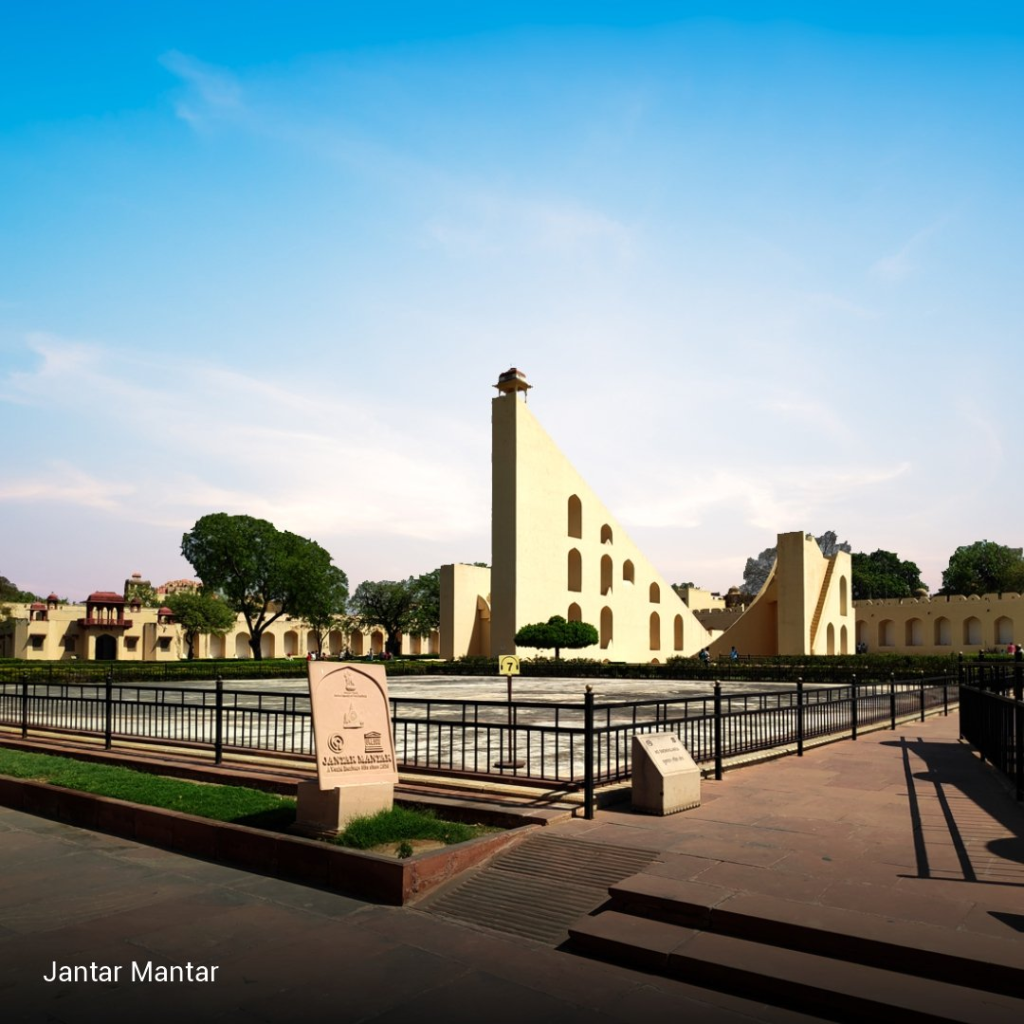
Perhaps the most extraordinary scientific achievement associated with Jaipur is Jantar Mantar.
Sawai Jai Singh II possessed a deep interest in astronomy and mathematics. He recognised the importance of accurate astronomical observations for understanding time, celestial movements and planetary positions.
He therefore established observatories at five locations: Delhi, Jaipur, Ujjain, Mathura and Varanasi.
Among these, Jaipur’s Jantar Mantar is the largest and most impressive surviving example.
Unlike modern observatories that rely on electronic equipment, Jantar Mantar uses massive instruments constructed from stone and masonry to observe celestial movements.
Its most prominent instrument, the Samrat Yantra, is a gigantic sundial that measures local solar time through the movement of its shadow.
Another important instrument, the Ram Yantra, helps determine the altitude and position of celestial objects.
These structures demonstrate how mathematical principles, geometry and astronomical observation were translated into monumental architecture.
In 2010, Jaipur’s Jantar Mantar received UNESCO World Heritage recognition, bringing international attention to India’s remarkable scientific heritage.
It remains a powerful reminder that Jaipur was envisioned not merely as a political capital but also as a centre of intellectual and scientific inquiry.
Chandra Mahal: Seven Floors of Royal Grandeur
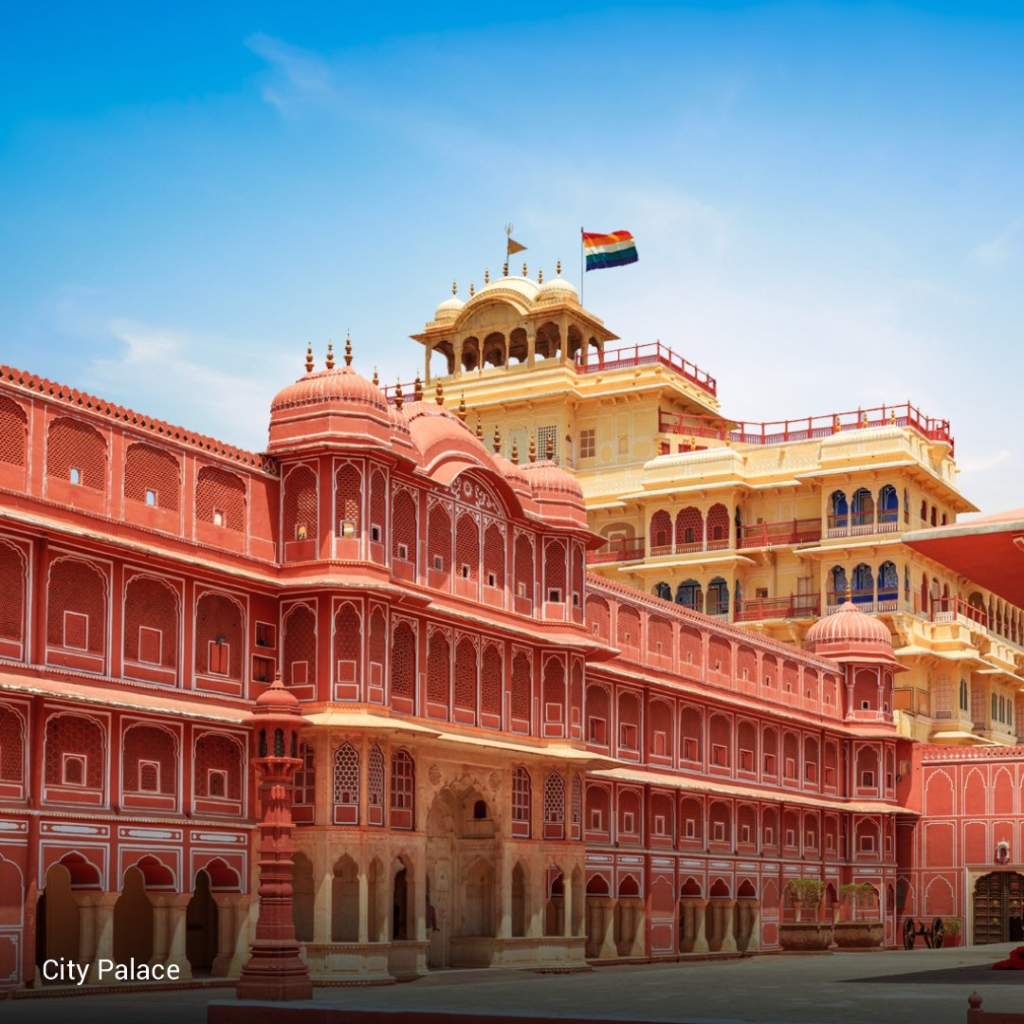
At the heart of Jaipur stands the City Palace, an architectural landmark that reflects the city’s royal heritage.
Within this magnificent complex rises the seven-storeyed Chandra Mahal, one of Jaipur’s most recognisable historic structures.
Its multiple floors represent different architectural expressions, royal traditions and aspects of the former princely court.
The palace continues to symbolise the relationship between Jaipur’s administrative beginnings and its enduring royal identity.
Its architecture, courtyards, decorative elements and carefully designed spaces provide a glimpse into the lifestyle and artistic sensibilities of the rulers who shaped the city.
From Johari Bazaar to Tripolia: The Markets That Keep Jaipur Alive
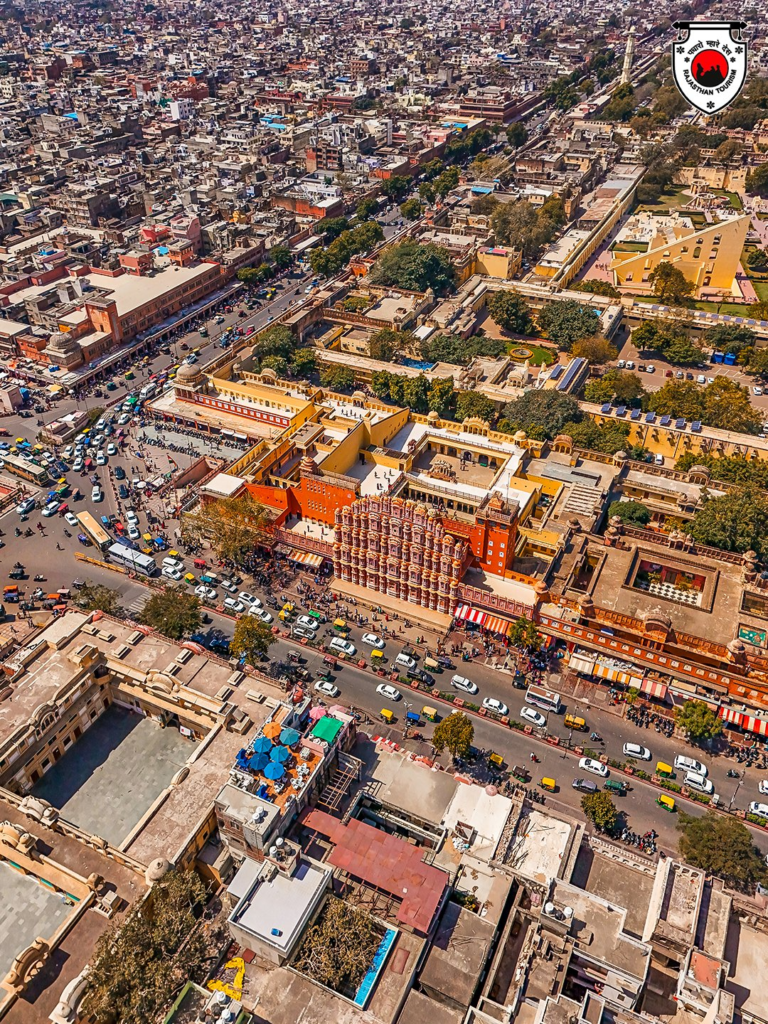
Jaipur’s planning also gave considerable importance to trade and craftsmanship.
Merchants and artisans were encouraged to settle in designated areas, while wide roads and uniform commercial buildings helped establish an organised marketplace system.
Over time, these markets developed distinctive identities.
Johari Bazaar became famous for its exquisite jewellery, precious gemstones, traditional Kundan work and colourful Meenakari enamel craftsmanship.
Kishanpol Bazaar emerged as an important centre for traditional handicrafts and textile-related work.
Tripolia Bazaar became synonymous with colourful lac bangles, while Bapu Bazaar attracted visitors with its Rajasthani textiles, footwear and traditional Mojris.
These markets are not simply shopping destinations. They represent generations of craftsmanship, inherited skills and entrepreneurial traditions.
The city’s artistic identity is further enriched by its famous blue pottery, Sanganeri block prints, hand-crafted jewellery and traditional decorative arts.
For Jaipur, commerce and culture have always been closely connected.
Chhoti Kashi: A City That Celebrates Its Traditions
Beyond its palaces, observatories and markets, Jaipur has another identity: Chhoti Kashi, or Little Kashi.
The name reflects the city’s rich religious traditions, historic temples and deep-rooted cultural practices.
Its calendar is filled with festivals that bring streets and neighbourhoods to life.
Gangaur, dedicated to Goddess Gauri, is among Jaipur’s most celebrated festivals. The occasion is marked by colourful processions, traditional attire, devotional songs and elaborate rituals.
Teej is another major celebration, welcoming the monsoon season with decorated swings, folk performances, traditional sweets and vibrant processions.
These festivals reveal a side of Jaipur that goes beyond its royal architecture. They demonstrate how religious faith, community participation and cultural heritage continue to shape everyday life.
299 Years Later: A Vision That Continues to Inspire
As Jaipur marks its 299th Foundation Day, its story is ultimately about the extraordinary foresight of its founder.
Sawai Jai Singh II imagined a capital where geometry could guide streets, astronomy could influence scientific thinking, markets could support economic growth and architecture could express royal grandeur.
With the assistance of Vidyadhar Bhattacharya, that vision took physical form through nine planned sectors, seven historic gateways, organised marketplaces, grand palaces and the remarkable Jantar Mantar.
Today, Jaipur is a UNESCO-recognised urban heritage destination, a thriving cultural capital and one of India’s most recognisable cities.
Its pink facades may be its most familiar visual identity, but its true distinction lies deeper—in the science embedded in its streets, the astronomy preserved in its stone instruments, the craftsmanship of its artisans and the traditions celebrated by its people.
As the Pink City approaches its 300th year, it stands as a living testament to an idea that was centuries ahead of its time: a city should not merely be built; it should be thoughtfully designed to serve generations.
Jaipur is 299 years young, but the vision behind it remains timeless