

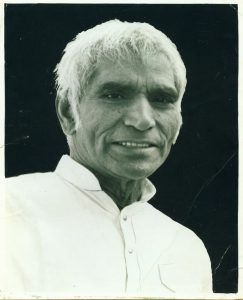
PC: ( Take Heart India, Facebook )
Baba Amte, born Murlidhar Devidas Amte on December 26, 1914, in Hinganghat, Wardha district, Maharashtra (then British India), emerged as one of India’s most revered social activists. Known affectionately as “Baba”—a childhood nickname that stayed with him for life-he dedicated his existence to uplifting the underprivileged, particularly those affected by leprosy, and fighting for environmental and human rights causes. He passed away on February 9, 2008, at Anandwan in Maharashtra, leaving behind a legacy of compassion, selflessness, and transformative social work.
A Privileged Beginning and an Awakening Conscience
Born into an affluent Brahmin family as the eldest of eight children, Amte grew up in comfort. His father, Devidas Haribaji Amte, held a high-ranking position in the British government. Despite the luxuries, young Baba showed early empathy for the less fortunate, often playing with the children of household servants -much to his father’s disapproval.
He pursued law at Hislop College, Nagpur, graduating in 1936 and establishing a successful legal practice. Yet, the stark inequalities around him gnawed at his conscience. He reflected on the injustice of earning large fees while laborers toiled for meager wages, and the disparity between his family’s estate comforts and the servants’ hardships. These realizations deepened his awareness of societal inequities.
In the mid-1940s, two pivotal events shaped his path: his marriage to Indu Guleshastri (later Sadhana Amte or Sadhanatai), who became his lifelong partner in service, and his decision to abandon his lucrative career and wealth for full-time social work.
Inspired by Icons and the Freedom Struggle
Amte was profoundly influenced by Mahatma Gandhi, joining the Quit India Movement in 1942. He mobilized lawyers to defend imprisoned leaders and was himself jailed. Gandhi bestowed upon him the title “abhay sadhak” (fearless seeker of truth) after Amte intervened to protect an Indian woman from British soldiers. Thinkers like Rabindranath Tagore, Vinoba Bhave, and Sane Guruji also shaped his ideals.
In later years, Amte promoted national unity through the Bharat Jodo Abhiyan (Knit India movement). In 1985 and 1988, he led bicycle journeys from Kanyakumari to Kashmir and Arunachal Pradesh to Gujarat, fostering nationalism amid political and communal challenges.
A Lifelong Mission: Empowering Leprosy Patients
Amte’s most iconic work began with a transformative encounter. Spotting a leprosy-afflicted man named Tulshiram abandoned on the road, Amte initially fled in fear but returned to care for him until his death. This overcame his own prejudices and ignited a lifelong commitment.
In 1949, he founded Anandwan (“Forest of Joy”) in Chandrapur, Maharashtra-a rehabilitation center for leprosy patients, offering medical care, dignity, and self-reliance through agriculture and skills training. To deepen his expertise, he studied at the Calcutta School of Tropical Medicine.
He expanded his vision with Ashokavan in Nagpur (1957) and Somnath in the Tadoba buffer zone (later), providing opportunities for sustainable living. Supported tirelessly by his wife Sadhanatai, these initiatives challenged deep-seated stigma and empowered thousands.
Championing the Narmada Bachao Andolan
In the late 1980s, Amte joined the Narmada Bachao Andolan (Save Narmada Movement), led by Medha Patkar, protesting large dams on the Narmada River that displaced communities and harmed the environment. He relocated near the river in 1990, participated in marches like the Jan Vikas Sangharsh Yatra, undertook hunger strikes, and authored “Cry, the Beloved Narmada” to highlight rehabilitation failures and sustainable alternatives. His involvement amplified the movement’s voice until health issues forced his return to Anandwan.
Recognition and Enduring Legacy
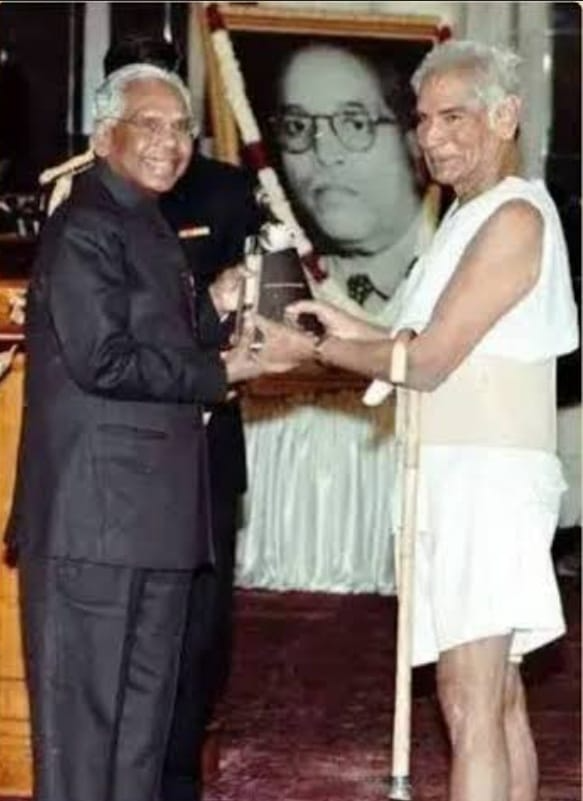
Amte’s contributions earned him India’s Padma Shri (1971) and Padma Vibhushan (1986), the Ramon Magsaysay Award (1985), the UN Human Rights Prize (1988), and a share of the Templeton Prize (1990).
His life exemplified turning privilege into purpose, fear into courage, and isolation into community. Through Anandwan and beyond, his work continues via his family and followers, inspiring generations to serve humanity with empathy and action. Baba Amte remains a beacon of selfless dedication in India’s social reform history.