

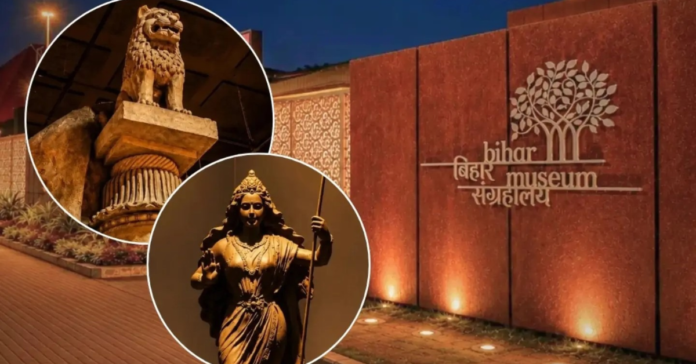
In a remarkable achievement for India’s cultural and historical heritage, the Bihar Museum in Patna has secured the ninth position in the ‘World’s 100 Best Museums 2026’ list released by the international travel guide Worth a Journey. The recognition has placed the Bihar Museum among the world’s leading cultural institutions, making it the highest-ranked museum in Asia and the only Indian museum to feature in this year’s list.
The ranking, published in October 2026, has brought international attention to Bihar’s rich historical legacy and its growing importance as a cultural tourism destination. The Bihar Museum has also moved ahead of some of the world’s most renowned museums, including the Metropolitan Museum of Art, popularly known as The Met, in New York, which secured the tenth position, and the Louvre Museum in Paris, which ranked 31st.
How Did Bihar Museum Secure the Ninth Position?
The ‘World’s 100 Best Museums’ list is published by Worth a Journey, a Munich-based international travel guide and magazine. The publication features rankings across different categories, including museums, libraries, parks, palaces and hotels.
According to reports, its museum assessment combines algorithm-based analysis of data from institutions across the world with verification through in-person visits. The ranking considers museums representing different fields, including art, history, science, technology and cultural heritage.
In the 2026 edition, Mexico City’s Museo Nacional de Antropología secured the first position, followed by the Museo del Prado in Madrid at second place and the Louisiana Museum of Modern Art in Denmark at third. The State Hermitage Museum in Russia ranked fourth, while Vienna’s Kunsthistorisches Museum secured fifth place.
The Bihar Museum’s ninth-place ranking is particularly significant as it has placed an Indian institution ahead of several internationally established museums. It has also brought recognition to Bihar’s historical collections, architectural vision and efforts to preserve its cultural identity.
When Was Bihar Museum Established?
Located on Nehru Path, popularly known as Bailey Road, in Patna, the Bihar Museum was established with the objective of preserving, documenting and showcasing the state’s rich historical, archaeological and cultural heritage.
The museum was inaugurated in August 2015, when some of its initial facilities, including the Children’s Gallery, entrance area and orientation theatre, opened to visitors. The remaining galleries were opened in October 2017, completing the museum’s major public development phase.
Spread across more than 13 acres, the museum was conceived as a modern cultural institution that could present Bihar’s history through archaeological objects, sculptures, paintings, manuscripts and interactive displays.
Its architectural design was led by renowned Japanese architect Fumihiko Maki, a recipient of the Pritzker Architecture Prize, in collaboration with Mumbai-based Opolis Architects. Rather than creating a single conventional museum building, the design brings together different sections, buildings and open courtyards. The architecture combines contemporary design elements with materials such as Indian granite, sandstone, terracotta and Corten steel.
Major Attractions and Galleries at Bihar Museum
The Bihar Museum houses a collection of more than 20,000 artefacts, offering visitors an opportunity to explore the region’s historical journey through different periods, from ancient civilisations to more recent times.
One of its important attractions is the collection associated with the Mauryan period and the reign of Emperor Ashoka. Gallery A introduces visitors to the emergence of the Indus Valley Civilisation, the Mauryan dynasty and the development of Buddhism and Jainism.
Gallery B takes visitors through the periods of the Sungas, Kushanas, Guptas and Palas, highlighting the political, religious and artistic developments of these dynasties. Gallery C explores later historical periods, including the Bengal Sultanate, the Nawabs of Bengal, and the development of the Patna School of Painting, alongside the influence of Sufism and Sikhism.
The History Art Gallery is another significant section, featuring the artistic traditions of different periods, including representations of the famous Didarganj Yakshi, Hindu deities, medieval miniature paintings and Daniell prints.
The Regional Art Gallery showcases Bihar’s traditional and folk art forms, reflecting the state’s diverse cultural practices and artistic expressions. The Diaspora Gallery explores the history of migration from Bihar and its influence on communities and cultures beyond the state.
The Visible Storage section offers a closer look at archaeological collections, including ancient punch-marked coins, medieval coins, terracotta objects and sculptures. The museum also has a Contemporary Art Gallery dedicated to works by modern Indian artists.
Another important attraction is the Children’s Gallery, which introduces younger visitors to subjects such as wildlife, science, folk art and culture through engaging and interactive displays. The Orientation Gallery provides an introduction to the museum’s collections and explains how historians and archaeologists study and interpret the past.
A New Recognition for India’s Cultural Heritage
The Bihar Museum’s achievement is more than an international ranking. It highlights the importance of preserving regional history and presenting it through modern museum experiences. By bringing together archaeological collections, traditional art, contemporary exhibitions, educational spaces and thoughtful architecture, the institution has created a platform for visitors to understand Bihar’s contribution to India’s cultural and historical development.
Its ninth position in the 2026 global ranking has strengthened Patna’s visibility on the international cultural map and opened new opportunities for heritage tourism in the state. The recognition also underlines how museums can connect the past with the present while making history accessible to a wider audience.
With this achievement, the Bihar Museum has emerged as an important cultural landmark, demonstrating that India’s regional museums can also gain recognition on the global stage.