

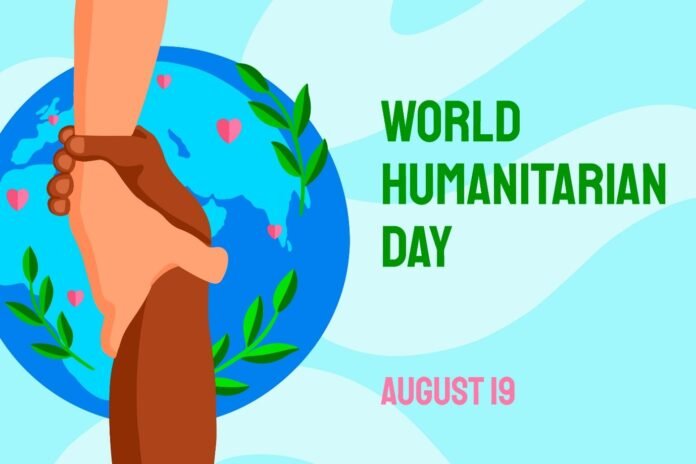
World Humanitarian Day is observed annually on August 19 to honour humanitarian workers and recognise their efforts to protect and support people affected by wars, natural disasters, displacement and other emergencies. The day also highlights the importance of compassion, solidarity and collective action in responding to humanitarian crises around the world.
The observance commemorates the 19 August 2003 bombing of the United Nations headquarters in Baghdad, Iraq, which killed 22 people, including the UN’s Special Representative for Iraq, Sergio Vieira de Mello. Five years later, the United Nations General Assembly designated August 19 as World Humanitarian Day to honour humanitarian workers who have lost their lives while serving others.
Humanitarian workers operate in some of the world’s most difficult and dangerous environments. They include doctors, nurses, emergency responders, aid workers, volunteers, social workers, logisticians and many others who provide essential assistance during crises. Their work can involve delivering food and clean water, providing medical care, helping displaced families, supporting children, arranging shelter and assisting communities in rebuilding their lives.
Humanitarian action becomes particularly important during armed conflicts. Civilians often bear the greatest burden of war, losing their homes, livelihoods and access to essential services. Humanitarian organisations work to provide assistance based on need, while also supporting vulnerable groups such as children, women, older people and people with disabilities.
Natural disasters create another major area of humanitarian need. Earthquakes, floods, cyclones, droughts, landslides and other disasters can leave thousands of people without homes or basic necessities within hours. Humanitarian teams often have to respond rapidly, sometimes working in difficult terrain and under challenging conditions, to reach affected communities.
The day also draws attention to the growing humanitarian consequences of climate change. Rising temperatures, extreme weather events, water stress and environmental degradation are increasing risks for vulnerable communities in many parts of the world. For humanitarian organisations, this means preparing not only for immediate emergencies but also for increasingly complex and interconnected crises.
World Humanitarian Day is also an opportunity to recognise the role of local communities and volunteers. In many emergencies, local people are the first to respond, helping neighbours, rescuing those in danger, arranging food and shelter and supporting recovery efforts. Their contribution is often essential long before international assistance can arrive.
The day carries a message that humanitarianism is not limited to large organisations or professional aid workers. Ordinary people can contribute through volunteering, donating responsibly, supporting relief efforts and helping vulnerable members of their communities. Small acts of kindness and solidarity can become meaningful forms of humanitarian action when communities face adversity.
At its heart, World Humanitarian Day is about putting human dignity at the centre of crisis response. It reminds the world that behind every statistic is a person, family or community whose life has been disrupted. As conflicts, disasters and climate-related emergencies continue to affect millions, the need for empathy, cooperation and humanitarian action remains greater than ever.
World Humanitarian Day therefore serves both as a tribute and a call to action: a tribute to those who risk their lives to help others, and a reminder that protecting human life and dignity is a shared responsibility.