

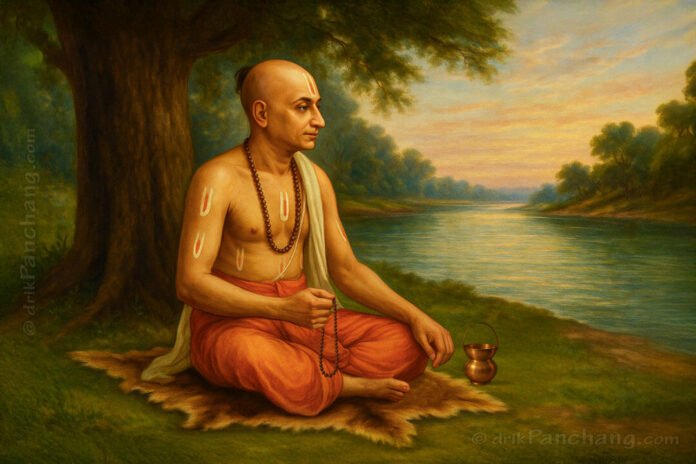
Tulsidas Jayanti, celebrated on Wednesday, August 19, 2026, marks the birth anniversary of Goswami Tulsidas, one of the most influential poets and saints of the Bhakti tradition. Observed on the Saptami Tithi of Shukla Paksha in the month of Shravana, the day is dedicated to remembering his literary and spiritual contribution to Indian culture.
Tulsidas is best known for Ramcharitmanas, his celebrated retelling of the Ramayana in Awadhi. By choosing a language understood by ordinary people rather than Sanskrit alone, he helped make the story of Lord Rama accessible to a much wider audience. His writings continue to be recited in homes, temples and public gatherings across India.
The Life of Goswami Tulsidas
Traditionally believed to have been born in 1511 CE in Rajapur, present-day Uttar Pradesh, Tulsidas was named Rambola Dubey in his childhood. His life and spiritual journey are closely associated with devotion to Lord Rama.
His works reflect the central values of the Bhakti tradition, devotion, humility, compassion, righteousness and surrender to the divine. Through poetry and storytelling, Tulsidas presented Lord Rama not merely as a divine figure but also as an embodiment of ideals such as truth, duty and compassion.
Ramcharitmanas: A Literary and Spiritual Legacy
Tulsidas’ Ramcharitmanas remains his most celebrated work. Written in Awadhi, the epic narrates the life and journey of Lord Rama, drawing from the Ramayana tradition while presenting the story in a form accessible to common people.
The work has had an extraordinary influence on North Indian literature, devotional traditions and popular culture. Its verses are still recited during religious occasions, festivals and family gatherings.
Tulsidas is also traditionally associated with several other important works, including the Hanuman Chalisa, Vinaya Patrika and Dohavali. The Hanuman Chalisa, consisting of devotional verses dedicated to Lord Hanuman, has become one of the most widely recited Hindu prayers.
How Tulsidas Jayanti Is Observed
Tulsidas Jayanti is marked with devotional activities in several parts of India. Devotees gather to read and recite passages from the Ramcharitmanas, while the Hanuman Chalisa is also chanted as part of prayers.
Temples dedicated to Lord Rama, Goddess Sita and Lord Hanuman hold special prayers and devotional programmes. In keeping with the spirit of compassion and service associated with Bhakti traditions, devotees may also distribute food and extend help to people in need.
For many devotees, the day is not simply about remembering a historical figure but about revisiting the values expressed through his writings.
A Legacy That Continues
Centuries after his time, Tulsidas remains deeply woven into India’s literary and spiritual heritage. His greatest contribution was perhaps his ability to bring a profound religious narrative into the language and everyday cultural life of ordinary people.
On Tulsidas Jayanti, the continuing recitation of his verses serves as a reminder of the enduring power of literature and devotion. His works continue to connect generations with the ideals of Lord Rama and with the rich storytelling traditions of India’s Bhakti movement.