

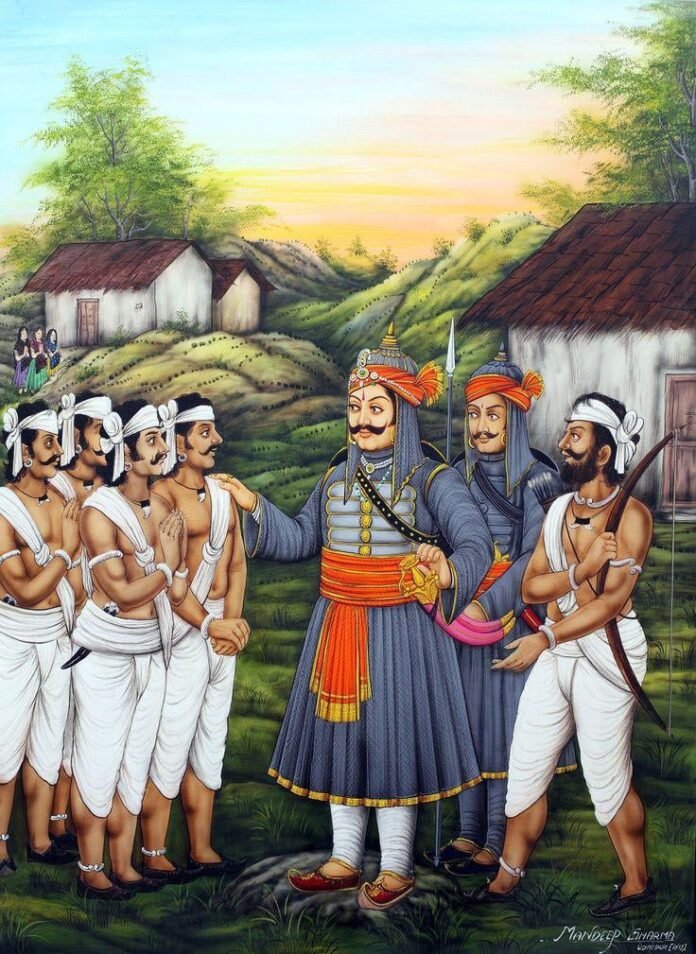
When the story of Maharana Pratap is told, it is often filled with accounts of heroic battles, unwavering courage, and the fierce determination of the ruler of Mewar. Yet, behind his long resistance against the Mughal Empire stood a loyal ally whose contribution is sometimes overlooked, the Bhils. Their support proved crucial in helping Maharana Pratap sustain his struggle during some of the most difficult years in Mewar’s history.
The Bhils, one of India’s oldest tribal communities, had lived for centuries in the forests and hills of the Aravalli region. Their deep knowledge of the rugged terrain made them invaluable partners in Maharana Pratap’s resistance. At a time when Mughal forces were larger and better equipped, the Bhils provided a significant strategic advantage by helping Mewar’s forces navigate forests, mountain passes, and hidden routes that were unfamiliar to invading armies.
Their role extended far beyond simply offering local guidance. Bhil warriors actively participated in military campaigns and became an essential part of Maharana Pratap’s guerrilla warfare strategy. They carried out surprise attacks, protected supply routes, and helped maintain communication across difficult terrain. Their skill in archery and their ability to move swiftly through forests made them effective fighters against much larger forces.
Equally important was their contribution to intelligence gathering. Bhil scouts closely monitored enemy movements and relayed crucial information to Maharana Pratap’s commanders. This network of local knowledge allowed Mewar’s forces to remain one step ahead, enabling them to avoid direct confrontation when necessary and strike strategically when opportunities arose.
Recognising their loyalty and importance, Maharana Pratap gave the Bhils an honoured place in his administration and military structure. The bond between the ruler and the tribal community became a symbol of unity that transcended social and political divisions. Even today, the traditional emblem of Mewar reflects this association, depicting both a Rajput warrior and a Bhil figure.
Centuries later, the Bhil community continues to preserve memories of Maharana Pratap through folklore, songs, and oral traditions. Across Rajasthan, especially in the regions of Mewar, stories of their shared struggle remain an important part of local cultural heritage. Their contribution serves as a reminder that the defence of Mewar was not the effort of one king alone, but the result of a remarkable alliance between a determined ruler and a resilient tribal community united by a common cause.
In remembering Maharana Pratap, it is equally important to remember the Bhils, silent sentinels of the Aravallis whose courage and loyalty helped shape one of the most enduring chapters in Indian history.