

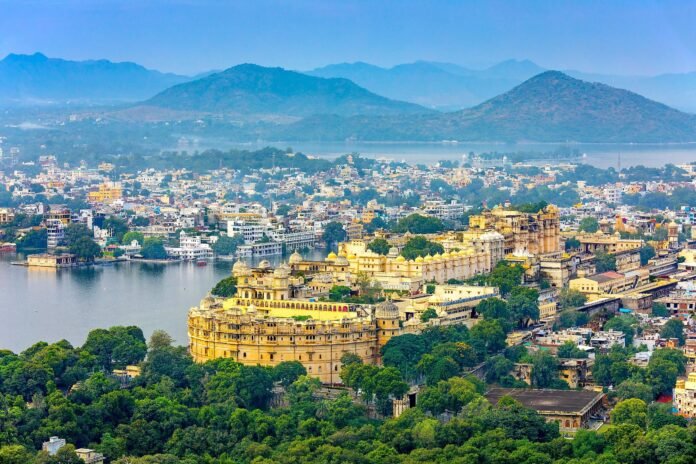
When Maharana Pratap is remembered, images of Haldighati, Chetak, and his years of resistance against the Mughal Empire often come to mind. Yet another place is deeply woven into his story, Udaipur. More than a picturesque city of lakes and palaces, Udaipur represented the future of Mewar, a future that Maharana Pratap would spend his life defending.
The story begins with his father, Rana Udai Singh II. For centuries, Chittorgarh had been the capital and pride of Mewar. Its mighty fort stood as a symbol of Rajput courage, but its strategic importance also made it a constant target for invaders. By the mid-sixteenth century, the expanding Mughal Empire posed a growing threat to the kingdom.
Recognising these changing realities, Udai Singh took a decision that would alter the course of Mewar’s history. In 1559, he founded Udaipur in the Girwa Valley, surrounded by the protective embrace of the Aravalli hills. Rich in water resources and naturally defended by rugged terrain, the location offered greater security than the exposed plateau of Chittorgarh.
For the young Maharana Pratap, the founding of Udaipur was more than the establishment of a new city. It was a lesson in leadership. His father understood that preserving Mewar was not only about defending ancient walls but also about adapting to changing circumstances. The vision behind Udaipur was one of survival, resilience, and continuity, values that would later define Maharana Pratap’s own rule.
That vision was tested sooner than expected. In 1567, Emperor Akbar marched against Chittorgarh. Faced with overwhelming odds, Udai Singh withdrew from the fort and shifted his base to the safer regions around Udaipur. The following year, Chittorgarh fell after a heroic defence by its Rajput warriors. For Mewar, it was a devastating loss. For Maharana Pratap, it was a defining moment.
The fall of Chittorgarh left a deep impression on the future ruler. He had grown up hearing stories of the fort’s glorious past, and now he witnessed the loss of Mewar’s ancestral capital. Yet he also saw something equally important: while a fort could be conquered, a kingdom’s spirit could survive. Udaipur became proof of that resilience.
When Maharana Pratap ascended the throne in 1572, Udaipur was the capital of Mewar. The city symbolised the continuity of Sisodia rule at a time when much of northern India was coming under Mughal authority.
Although Pratap would spend much of his reign moving through the hills and forests of Mewar due to military pressures, Udaipur remained the political and emotional heart of the kingdom he was determined to protect.
The landscapes around Udaipur also played a crucial role in his struggle. The Aravalli hills, narrow passes, and dense forests provided natural advantages against larger Mughal armies. These rugged surroundings became the theatre of Maharana Pratap’s resistance and helped sustain his campaign for independence long after many believed it was impossible.
Perhaps the greatest significance of Udaipur in Maharana Pratap’s story lies in what it represented. Chittorgarh symbolised Mewar’s glorious past; Udaipur symbolised its future. It was the city that carried forward the hopes of a kingdom after one of its darkest chapters. Every effort Maharana Pratap made to defend Mewar was, in many ways, an effort to preserve the vision his father had begun in the valleys of Udaipur.
Today, visitors admire Udaipur for its shimmering lakes, grand palaces, and timeless beauty. But behind that beauty lies a deeper story. Udaipur was born from foresight, strengthened by adversity, and preserved through the determination of Maharana Pratap.
Without Udaipur, the story of Mewar’s survival would have been very different. And without Maharana Pratap, the vision that gave birth to the city might never have endured.
In the history of Mewar, Chittorgarh was the fortress of sacrifice. Udaipur became the city of survival. Maharana Pratap stood at the crossroads of both, and it was his resolve that ensured the spirit of Mewar lived on.