

By Lakshya Govani
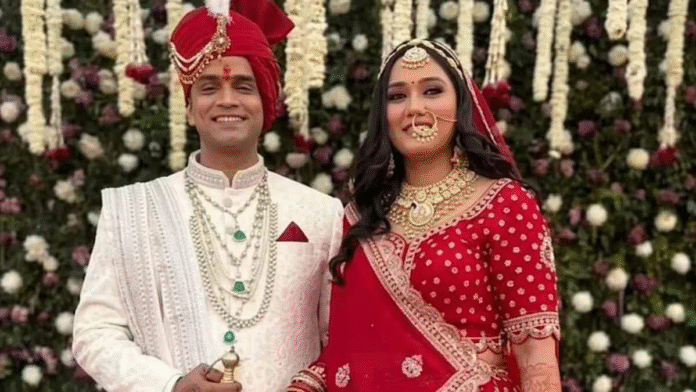
Twisha Sharma was a model. She had a smile that had won beauty pageants. She had a mother who showered her love upon her, a father who was ready to transfer anything for her smile.. in fact, he continued transferring money into her account as her husband failed to give her any. Also, this smiling girl had a phone which she used to send messages sharing her pain with parents telling them that she was living in hell. On May 12, 2026, Twisha Sharma was found dead at her in-laws home in Bhopal, six months after her wedding. She was 33 years old.
In the Supreme Court of India, as her case was being heard, Tushar Mehta, the Solicitor General of India and the second highest law officer in the country, appearing on behalf of the Madhya Pradesh government, said something that stopped the courtroom cold. “For parents, it is better to have a divorced daughter than a dead one.” The remark was not just about Twisha. It was about every family that stayed silent, every daughter that was told to adjust, and every society that still treats divorce as a bigger shame than a funeral.
THE COURTROOM THAT SAID WHAT FAMILIES WON’T
The Supreme Court bench, headed by Chief Justice of India Surya Kant along with Justices Joymalya Bagchi and Vipul M Pancholi, took suo motu cognisance of Twisha’s case, flagging institutional bias and procedural lapses in the initial investigation. The bench asked both families to stop speaking to the media and let the CBI do its work.
But before the restraint was called for, the Solicitor General laid bare the social truth sitting underneath the legal one. Twisha had sent messages to her mother saying she was living in hell. Her mother in fact said that she did hear screams and fighting noise on a WhatsApp call on the night she died. Her father kept calling but nobody took the call.
Mehta also told the court that Giribala Singh, Samarth’s mother and a retired judicial officer, had refused to record her statement with investigators despite repeated requests, but she continued giving television interviews attacking Twisha’s character. “This former judge has been giving interviews maligning the deceased. We requested her so many times to record her statement. She does not want to do it,” Mehta told the bench.
The Supreme Court directed the CBI to take over the investigation and conduct it in a fair, independent and impartial manner.
THE NUMBER BEHIND THE NAME

Twisha Sharma is a name. Behind her are numbers that should make every person deeply uncomfortable.
India recorded 5,737 dowry deaths in 2024. That is nearly 16 women every single day. Not in one state or one community. Across the country. Uttar Pradesh alone accounted for over 2,000 of those deaths. Bihar reported over a thousand. And researchers who study how crimes are recorded in India say the real number could be two to three times higher, because dowry deaths are routinely misclassified as accidents, suicides or natural causes, especially in rural areas.
The Dowry Prohibition Act has been on the books since 1961. More than six decades of law. And still, 16 women a day.
TWO WOMEN. FIVE DAYS APART.
Twisha Sharma was not alone in May 2026. Five days before the country learned her name, Deepika Nagar, 24 years old, fell from the rooftop balcony of her matrimonial home in Greater Noida, seventeen months after her wedding. Her family alleged sustained harassment over money and a luxury vehicle her in-laws had demanded. She had internal bleeding and multiple trauma injuries. She did not survive.
Two women within five days time…both young and empowered and education..both newly married and both dead in circumstances their families say were not accidents.
In Jharkhand, a 21-year-old woman was poisoned by her husband after her family could not pay him fifty thousand rupees. In Muzaffarnagar, a woman named Tabassum was strangled at her in-laws’ home and her death was covered up as a COVID casualty, her body buried before the police were informed. A Delhi Police SWAT commando died in January 2026 after being assaulted by her husband over dowry demands.
These are not footnotes. These are women who had names, families and futures.
THE LAW EXISTS. THE PROBLEM DOES NOT CARE.
India has strong laws on paper. Section 80 of the Bharatiya Nyaya Sanhita defines dowry death and prescribes a minimum of seven years imprisonment, going up to life. Section 85 covers cruelty by a husband or his relatives. The courts are clear. The punishment is severe.
And yet acquittals in dowry death cases still outnumber convictions. Investigations are delayed. Evidence is lost. Witnesses turn hostile. Families are pressured into silence. Only around 4,500 of the roughly 7,000 annual dowry death cases between 2017 and 2022 were even chargesheeted. The rest quietly disappeared into a system that was never in a hurry to find answers.
WHAT INDIA KEEPS GETTING WRONG
We march on Women’s Day. We run campaigns about women’s empowerment. We celebrate when a woman breaks a glass ceiling in sport, business or politics. And then we go home to a system that still treats a daughter’s marriage as a financial transaction, a daughter’s suffering as a private family matter, and a daughter’s death as something to be managed quietly before it becomes a scandal.
The Solicitor General of India had to stand in the Supreme Court and remind the country that a divorced daughter is better than a dead one. That this needed to be said, in the highest court in the land, in 2026, tells you everything about how far we still have to go.
Twisha Sharma waited. She adjusted. She sent messages saying she was living in hell. And then the WhatsApp call went dead and nobody picked up the phone.
Until the conversation changes at home, at the wedding table, and in the silence where a daughter’s cry goes unanswered, the number will not change either.
(The writer of this article is Lakshya Govani, a class X student of APS, Jaipur)