

By Swagatika Pattnaik
SCAMMED THROUGH A SCREEN: BENGALURU’S BATTLE AGAINST DIGITAL ARREST FRAUD
Growing Threat in India’s Digital Age
India’s rapid digital growth has brought convenience, speed, and connectivity to millions of people. However, alongside this technological progress, cybercrime has also evolved into a serious national concern. One of the most alarming forms of online fraud emerging today is the so-called “digital arrest” scam.
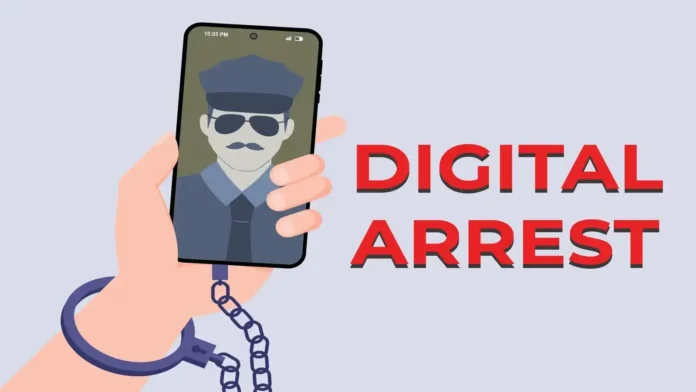
In this fraud, cybercriminals impersonate police officers, CBI officials, customs authorities, or bank representatives and threaten innocent citizens with fake criminal charges. Victims are psychologically pressured into transferring large amounts of money under the fear of arrest and legal action.
What makes this crime especially dangerous is that it targets ordinary citizens through fear rather than force. Senior citizens, working professionals, students, and even educated individuals have fallen victim to these scams.
What is a Digital Arrest?
A “digital arrest” is not a real legal procedure under Indian law. It is a cyber fraud tactic created by criminals to extort money from people through intimidation.
Fraudsters usually contact victims through phone calls, WhatsApp video calls, emails, or fake notices. They falsely claim that the victim’s Aadhaar card, bank account, SIM card, or courier parcel has been linked to illegal activities such as money laundering, drug trafficking, or cybercrime.
The victim is then warned that immediate arrest may follow unless they cooperate with the “investigation.” In many cases, scammers force victims to remain isolated on video calls for hours and instruct them not to contact family members, lawyers, or local police.
Under pressure and fear, many victims transfer their savings into fake “government verification accounts.” Once the money is transferred, the fraudsters disappear.
Rising Cases Across India
Digital arrest scams have increased rapidly across major Indian cities, including Bengaluru, Mumbai, Delhi, and Hyderabad. Cybercrime units have reported a sharp rise in financial fraud cases linked to fake law enforcement calls and online intimidation.
Karnataka, especially Bengaluru, has become one of the major hotspots for such cybercrimes due to its high digital connectivity and growing online financial activity. Reports indicate that Karnataka alone lost more than ₹468 crore to digital arrest scams between 2023 and early 2026.
In the first two months of 2026 itself, victims reportedly lost around ₹11.6 crore. Authorities have also stated that recovery of stolen money remains extremely difficult once funds are transferred through multiple fake accounts.
Data on Digital Arrest Scams in Karnataka
Period: 2023 – Early 2026
Reported Financial Loss: ₹468+ crore
Period: January – February 2026
Reported Financial Loss: ₹11.6 crore
Period: Average Loss Per Case in 2025
Reported Financial Loss: ₹62.3 lakh
The figures reveal how rapidly cyber fraud has expanded in recent years. Experts warn that the actual numbers may be even higher because many victims hesitate to report such incidents due to embarrassment or fear.
Major Cases That Shocked the Country
Several recent cases have highlighted the seriousness of this cybercrime.
In Karnataka, a 94-year-old scholar reportedly lost nearly ₹5 crore after scammers convinced him that he was under investigation for financial crimes.
In another case from Mumbai, a senior citizen was cheated of ₹50 lakh by fraudsters posing as Enforcement Directorate officials. Fake documents and WhatsApp court proceedings were used to create fear and urgency.
Police investigations have also uncovered organised cybercrime networks operating through fake SIM cards, forged identities, and mule bank accounts used for transferring stolen money across states and even outside India.
The Legal Perspective
Legally, there is no provision called “digital arrest” in the Indian judicial system. No police officer or government agency can arrest a person through a WhatsApp call or demand money for verification purposes.
Cybercriminals involved in such scams can face charges under:
●The Information Technology Act, 2000
●Bharatiya Nyaya Sanhita (BNS) provisions related to cheating and impersonation
●Financial fraud and identity theft laws
The government and cybercrime departments have repeatedly advised citizens to avoid sharing personal information or transferring money based on threatening calls. Authorities have also promoted the national cybercrime helpline number 1930 for immediate reporting of online fraud.
Why These Scams Are Increasing
Experts believe that digital arrest scams are growing because criminals now combine technology with psychological manipulation. Fake identities, AI-generated documents, edited video calls, and social engineering techniques make these scams appear believable.
At the same time, increasing dependence on online banking and digital communication has created new opportunities for cybercriminals. Lack of awareness among citizens continues to remain one of the biggest reasons behind the success of these scams.
Conclusion
The rise of digital arrest scams reflects a dangerous transformation in modern crime. Today, criminals no longer need physical weapons or direct contact to exploit people. Fear, misinformation, and digital manipulation have become their strongest tools.
As India moves further into a technology-driven future, cyber awareness must become a public priority. Citizens need to remain cautious, informed, and alert against suspicious calls claiming to represent government authorities.
(The Writer of This Article is Swagatika Pattnaik, APS Jaipur Student of Class XII.)