

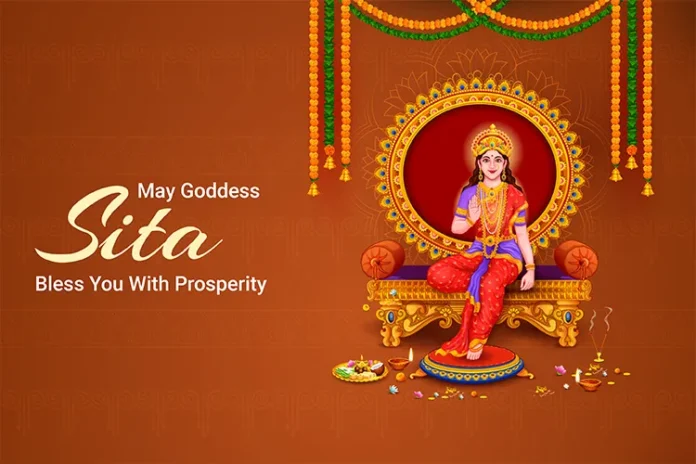
Sita Navami, also known as Janaki Navami, is a sacred Hindu festival that commemorates the birth of Goddess Sita, the revered consort of Lord Rama and one of the most admired figures in Indian epics. Observed with devotion across India, especially in regions like Bihar, Uttar Pradesh, and parts of Rajasthan, the day holds immense spiritual and cultural significance.
Tithi and Date
Sita Navami is celebrated on the Navami (ninth day) of the Shukla Paksha in the month of Vaishakha, according to the Hindu lunar calendar. In 2026, Sita Navami falls on April 25, marking an auspicious occasion for devotees to honor the divine feminine energy embodied by Mata Sita.
The Birth of Goddess Sita
According to the ancient epic Ramayan, Goddess Sita was discovered in a furrow in a field by King Janak of Mithila while he was ploughing the land as part of a ritual. This miraculous birth earned her the name Bhoomija (daughter of the Earth). She is also lovingly called Janaki, meaning the daughter of Janaka.
Sita is considered an incarnation of Goddess Lakshmi, who took birth on Earth to accompany Lord Ram, an avatar of Lord Vishnu, in his earthly journey.
Significance of Sita Navami
Sita Navami is not just a celebration of birth but a reminder of Sita’s unparalleled virtues—her strength in adversity, unwavering devotion, moral integrity, and grace. Her life story, filled with trials such as exile, abduction by Ravana, and the Agni Pariksha, reflects resilience and dignity under pressure.
For many devotees, Sita represents the ideal of patience, sacrifice, and inner strength. Her character goes beyond traditional roles, symbolizing courage and self-respect, making her a timeless figure of inspiration.
Rituals and Observances
On this day, devotees observe fasts, offer prayers, and recite passages from the and Ramayana. Temples dedicated to Lord Rama and Sita are beautifully decorated, and special pujas are conducted.
In places like —believed to be the birthplace of Goddess Sita—grand celebrations take place, attracting pilgrims from across the country. Devotees also worship the Earth (Bhumi) on this day, acknowledging Sita’s divine origin.
Relevance in Today’s World
In a rapidly changing world, Sita’s story continues to hold deep relevance. She is not merely a symbol of devotion but also of quiet strength and resilience. Her life encourages reflection on values such as dignity, endurance, and righteousness in the face of challenges.
Sita Navami thus becomes more than a ritual—it is a day to revisit the ideals that form the moral fabric of society and to draw inspiration from a figure whose legacy transcends time.
As devotees bow in reverence today, Sita Navami reminds us of the enduring power of virtue, faith, and inner strength—qualities that Mata Sita embodied with grace and courage.