

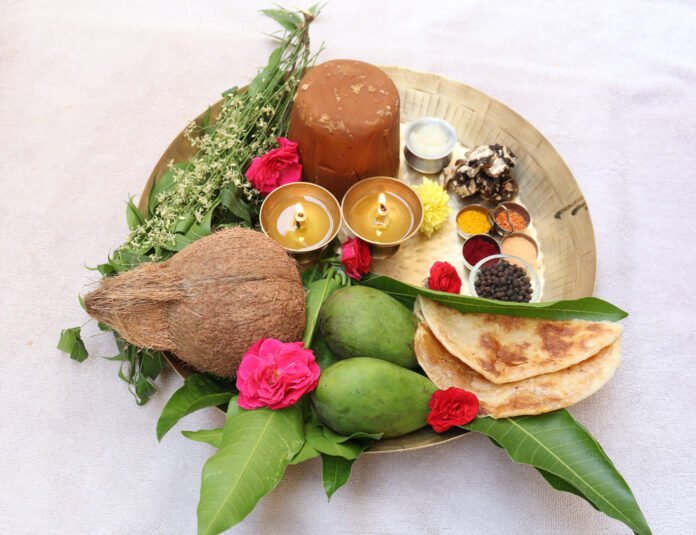
Marking the arrival of spring and the beginning of a new lunar cycle, Ugadi is one of the most important festivals celebrated in southern India. Known as the Telugu and Kannada New Year, Ugadi symbolises renewal, prosperity, and the start of a fresh chapter in life. Rooted in ancient traditions and aligned with nature’s rhythm, the festival reflects both cultural richness and spiritual depth.
When is Ugadi in 2026?
In 2026, Ugadi will be celebrated on 19 March (Thursday), marking the first day of the Chaitra month as per the Hindu lunisolar calendar.
The festival falls on Chaitra Shukla Pratipada, which signifies the beginning of a new year in many Indian traditions.
What is Ugadi?
The word “Ugadi” is derived from two Sanskrit words—Yuga (age) and Adi (beginning)—meaning “the beginning of a new era.”
It marks the start of a new calendar year for people in Andhra Pradesh, Telangana, and Karnataka, where it is also called Yugadi.
Significance and the Story Behind Ugadi
Ugadi holds deep mythological and spiritual importance. According to Hindu belief, this is the day when Lord Brahma created the universe and began the cycle of time, making it an ideal moment for new beginnings.
The festival is also closely tied to the arrival of spring, a season that symbolises growth, renewal, and harmony in nature. It reflects the idea that just as nature rejuvenates itself, humans too should embrace change, positivity, and fresh opportunities.
Rituals and Traditions
Ugadi is celebrated with a blend of spiritual rituals and joyful customs:
●Abhyanga Snanam (oil bath): A ritual purification to begin the year fresh
●Home decoration: Mango leaf torans and rangoli (muggu) adorn entrances
●Temple visits and prayers: Devotees seek blessings for the year ahead
●Panchanga Sravanam: Listening to the Hindu almanac predictions for the new year
These rituals symbolise cleansing of the body, mind, and surroundings, welcoming positivity and prosperity.
Festive Foods and Ugadi Pachadi
No Ugadi celebration is complete without the iconic Ugadi Pachadi—a special dish that perfectly captures the philosophy of life.
Made with six ingredients—neem (bitter), jaggery (sweet), tamarind (sour), raw mango (tangy), chilli (spicy), and salt—it represents the six emotions of life: joy, sorrow, anger, fear, disgust, and surprise.
Other festive delicacies include Bobbattu (similar to puran poli), pulihora, and various traditional sweets, making the celebration both symbolic and flavourful.
Where and How Ugadi is Celebrated
Ugadi is widely celebrated in Andhra Pradesh, Telangana, and Karnataka, and by Telugu and Kannada communities across the world.
Families gather, wear new clothes, exchange greetings, and prepare festive meals. Cultural programs, temple festivities, and community celebrations add vibrancy to the occasion. The festival shares its essence with Gudi Padwa in Maharashtra, both marking the beginning of a new year in different regions.
A Festival of Life and New Beginnings
At its core, Ugadi is not just about marking a date—it is about embracing life in all its forms. From the symbolism of Ugadi Pachadi to the reading of the Panchang, every ritual reminds us that life is a blend of experiences, and each one shapes our journey.
As the new year begins with Ugadi, it brings with it a powerful message: welcome every moment—sweet or bitter—with hope, balance, and optimism.