

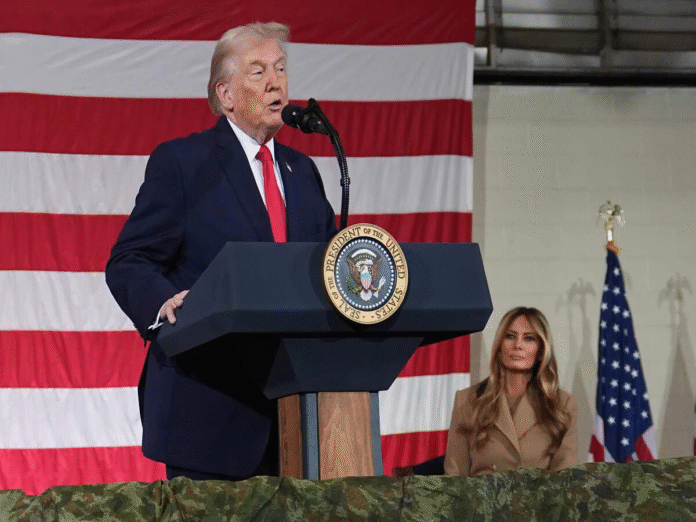
PC: (The Economic Time, India Today)
On February 20, 2026, U.S. President Donald Trump announced a new 10% additional tariff on imports from all countries, describing it as an extra layer over and above existing duties. This move came hours after the U.S. Supreme Court invalidated his prior sweeping tariffs imposed under the International Emergency Economic Powers Act (IEEPA).
Supreme Court Delivers Major Setback
In a landmark 6-3 ruling in Learning Resources, Inc. v. Trump, the Supreme Court held that the IEEPA does not authorize the president to impose tariffs. The decision, authored by Chief Justice John Roberts and joined by Justices Amy Coney Barrett and Neil Gorsuch along with the three liberal justices, struck down billions in “reciprocal” and fentanyl-related duties that had been in effect for about a year.
Trump’s Sharp Rebuke of the Justices
Trump responded with fierce criticism, calling the ruling a “disgrace” and labeling the justices who sided against him as unpatriotic. He highlighted the unusual 6-3 split, where two conservative justices joined the liberal bloc, and vowed to protect American interests through alternative means.
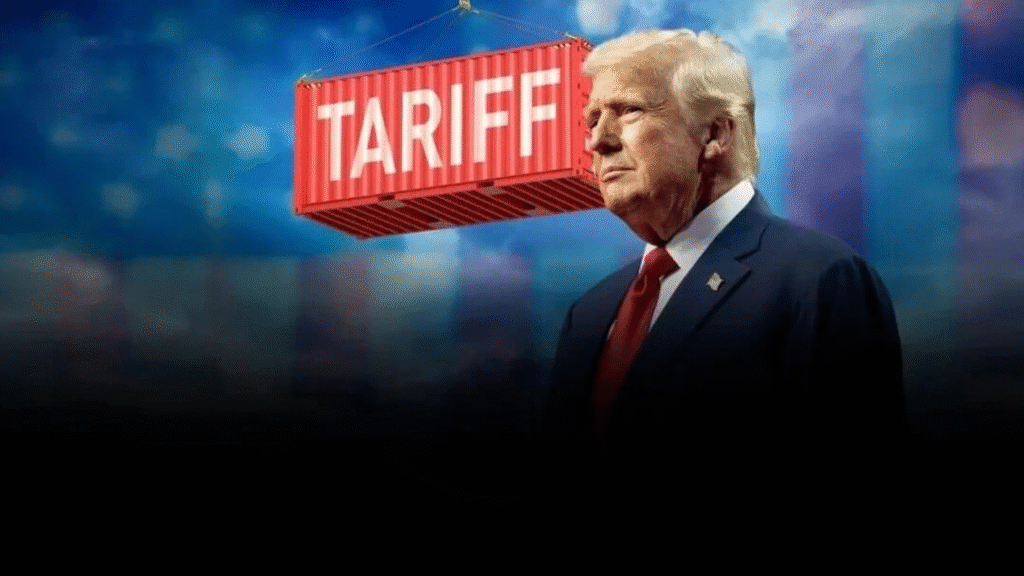
New Tariff Invokes Rarely Used Authority
The new 10% global tariff is being imposed under Section 122 of the Trade Act of 1974, which permits a temporary import surcharge of up to 15% for 150 days to address serious balance-of-payments deficits. This marks the first time a president has invoked this provision for such broad duties.
Effective Date and Scope
The additional duties are scheduled to take effect on February 24, 2026. Trump emphasized that all existing tariffs-such as those under Section 232 (national security, e.g., steel and aluminum) and Section 301 (unfair trade practices)-remain in “full force and effect.”
Key Exemptions in Place
The new 10% tariff will generally not apply to goods covered by the USMCA (U.S.-Mexico-Canada Agreement) or certain agricultural products and other exempt items previously carved out, providing some relief for North American trade and specific sectors.
Financial Fallout from the Ruling
The Supreme Court’s decision could require the U.S. government to refund between $142 billion and $175 billion to importers who paid the now-invalidated IEEPA tariffs in 2025. Trump suggested this refund process might drag on in litigation for years.
Market Response and Investor Sentiment
U.S. stock markets reacted positively to the invalidation of the emergency tariffs, with the S&P 500 and Nasdaq posting gains. Investors viewed the ruling as a potential easing of inflationary pressures from the broadest duties.
Long-Term Trade Strategy
During the 150-day window of the new temporary tariff, the administration plans to initiate new Section 301 investigations aimed at establishing more permanent-and potentially higher-tariffs on unfair trading practices by other countries and companies.
What Lies Ahead
The new levies are limited to a maximum of 150 days without congressional approval for extension. Trump has signaled a protracted legal battle over tariff refunds while pivoting to preserve his aggressive trade agenda through other statutory tools. This rapid response underscores ongoing tensions between executive trade powers and judicial oversight.