

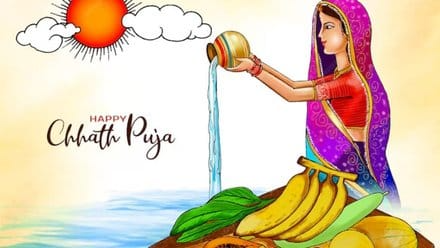
Chhath Puja, a revered Hindu festival, is a vibrant celebration of nature, devotion, and gratitude, primarily dedicated to Lord Surya (the Sun God) and Chhathi Maiya (Goddess Shashthi). This four-day festival, deeply rooted in tradition, is observed with immense faith, rigorous rituals, and strict discipline. Originating from Bihar, Eastern Uttar Pradesh, and Jharkhand, Chhath Puja has transcended regional boundaries and is now celebrated across India and by Indian communities worldwide. This article explores the significance, history, rituals, and cultural essence of Chhath Puja.
Historical Significance: Roots in Ramayana and Mahabharata
Chhath Puja holds a rich historical legacy, with its origins traced back to the eras of the Ramayana and Mahabharata. According to beliefs, Lord Rama and Goddess Sita performed Chhath rituals to express gratitude to Lord Surya upon their return to Ayodhya after 14 years of exile. Similarly, Draupadi, the wife of the Pandavas, is said to have observed the Chhath fast, praying for the victory and well-being of her family. These ancient connections highlight the festival’s deep spiritual and cultural significance.
The festival is unique in its worship of both the setting and rising sun, symbolizing the cycle of life and the eternal bond between nature and humanity. Chhath Puja is a heartfelt expression of gratitude to Lord Surya for sustaining life on Earth through his radiant energy, nurturing crops, and fostering prosperity.
The Essence of Chhath Puja: A Festival of Discipline and Devotion
Chhath Puja is celebrated primarily on the sixth day (Shashthi) of the Kartik month’s Shukla Paksha, with another observance during Chaitra Shukla Shashthi, known as Chaiti Chhath. The festival is dedicated to Lord Surya and Chhathi Maiya, believed to be Lord Brahma’s daughter and the protector of children. Devotees seek blessings for family prosperity, longevity, and good health, particularly for their children.
The rigorous 36-hour fast, which includes abstaining from food and water, is considered one of the most challenging in Hindu traditions. This fast is believed to detoxify the body and strengthen mental health, emphasizing the festival’s holistic benefits. Chhath Puja embodies gratitude for nature’s bounty, celebrating the harvest of Rabi and Kharif crops and the life-giving energy of the sun.
The Four Days of Chhath Puja: Rituals and Traditions
Chhath Puja spans four days, each marked by distinct rituals that reflect purity, devotion, and community bonding. Below is an overview of the rituals for each day, based on the 2025 schedule:
Day 1: Nahay Khay (October 25, 2025, Saturday)
The festival begins with Nahay Khay, a day of purification. Devotees take a ritual bath in a river or pond and prepare a simple, sattvic meal, typically consisting of rice, pumpkin curry, and mustard greens. This day sets the tone for the spiritual journey ahead.
Day 2: Kharna (October 26, 2025, Sunday)
On the second day, devotees observe a strict nirjala (waterless) fast throughout the day. In the evening, they prepare and offer kheer (jaggery-based rice pudding), roti, and fruits as prasad to Chhathi Maiya. The family shares this sacred offering, reinforcing familial bonds.
Day 3: Sandhya Arghya (October 27, 2025, Monday)
The third day, the main day of Chhath Puja, is marked by the offering of Sandhya Arghya to the setting sun. Devotees stand in knee-deep water in rivers or ponds, offering prayers and arghya (water offerings) to Lord Surya. This ritual is a profound expression of gratitude and devotion.
Day 4: Pratahkalin Arghya (October 28, 2025, Tuesday)
The festival concludes with Pratahkalin Arghya, where devotees offer prayers to the rising sun. After this ritual, the fast is broken, and prasad is distributed among family and friends, spreading joy and blessings.
Chhath Puja Prasad: A Symbol of Purity
The prasad of Chhath Puja is prepared with utmost care and purity. Common offerings include thekua (a wheat-based sweet), malpua, rice laddoos, fruits, and coconuts. These items are meticulously crafted and offered to Lord Surya and Chhathi Maiya, symbolizing gratitude for nature’s abundance.
Traditional Chhath Puja Songs: The Soul of the Festival
Chhath Puja is incomplete without its soulful folk songs, which resonate with devotion and cultural pride. These songs, sung in local dialects, express the emotions of devotees and enhance the festive spirit. Two popular songs include:
- Kanch Hi Bans Ke Bahangiya“Kanch hi bans ke bahangiya, bahangi lachkat jaye…”
This song describes the delicate bamboo basket (bahangi) carried by devotees, symbolizing their devotion despite challenges. - “Uga ho Suraj Dev, bhail argh ke ber…”
This song celebrates the moment of offering arghya to the rising sun, marking the culmination of the festival.