

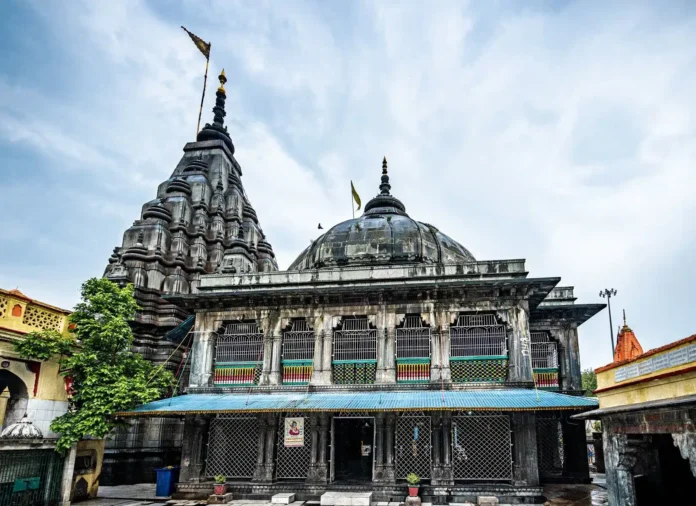
On the sacred banks of the Falgu River stands a temple where mythology, history, and faith converge. The Vishnupad Temple is one of Hinduism’s holiest pilgrimage sites. Every year, millions of devotees visit this ancient shrine to seek Lord Vishnu’s blessings and perform Pind Daan, believing it brings eternal peace to their departed ancestors.
What makes this temple extraordinary is the belief that it preserves the sacred footprint of Lord Vishnu, a symbol that has inspired generations for centuries
The Legend That Made Gaya Eternal
According to Hindu mythology, the demon Gayasura’s devotion pleased Lord Vishnu so greatly that he received a boon, anyone who saw or touched him would attain moksha. When sinners began achieving liberation without righteous deeds, the balance of the universe was disturbed.
To restore cosmic order, Lord Vishnu asked Gayasura to lie upon the earth and pressed him beneath the ground with His divine right foot. That footprint remained imprinted on the sacred Dharmashila, the stone now worshipped inside the temple.
Before disappearing, Gayasura requested that this land forever become the holiest place for rituals for departed ancestors. Lord Vishnu granted his wish, making Gaya the world’s most sacred destination for Pind Daan and Shraddha.
A Temple That Has Defied Time
The Vishnupad Temple finds mention in the Ramayana, Mahabharata, and several Puranas. The present structure was rebuilt in 1787 by Queen Ahilyabai Holkar, who devoted her reign to restoring India’s sacred sites. Built entirely from black granite by Rajasthani craftsmen, it stands as a remarkable example of architectural and spiritual heritage.
The Footprint That Changed History
At the temple’s heart lies a 40-centimetre impression believed to be Lord Vishnu’s sacred footprint. Enshrined within a silver-plated shrine, it bears the Shankha, Chakra, Gada, and Padma. This footprint gives the temple its name, Vishnupad, “the Footprint of Vishnu.”
Why Gaya Is the Gateway to Moksha
No place in Hinduism is more associated with Pind Daan than Gaya. During the Pitru Paksha Mela, hundreds of thousands of pilgrims continue one of the oldest unbroken pilgrimage traditions in the world.
The Falgu River and Sita’s Legend
Tradition holds that Lord Rama, Sita, and Lakshmana came here to perform the Shraddha of King Dasharatha. Legend says Sita cursed the Falgu River to flow beneath the sand. Even today, pilgrims dig through sand to reach its hidden waters. Nearby stands the sacred Akshayavat, regarded as the silent witness to Sita’s offering.
A Legacy That Lives Forever
For thousands of years, the Vishnupad Temple has remained a place where faith transcends time and grief finds solace. Every visitor leaves believing they have stood where the divine and human once briefly touched.
(The writer of this article is Anjali, a student of APS, Jaipur)