

With insights from Historian Divyansh Saxena
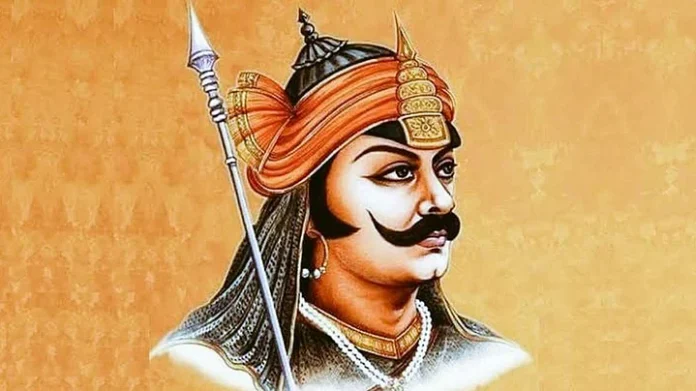
A timeless symbol of courage, sacrifice, and self-respect, Maharana Pratap continues to inspire generations with his unwavering commitment to the freedom and honour of Mewar. Refusing to bow before the mighty Mughal Empire under Akbar, the legendary Rajput ruler devoted his life to protecting his homeland and preserving the pride of his people. Even today, the forts, valleys, battlefields, and towns associated with him proudly narrate the story of one of India’s bravest warrior kings.
Maharana Pratap was born on 9 May 1540 at the “Badal Mahal” of majestic Kumbhalgarh Fort. He was the eldest son of Maharana Udai Singh II and Maharani Jaiwanta Bai of Pali. Fondly known as “Keeka” during his childhood, he spent much of his early life at Chittorgarh Fort, which was then the capital of the Mewar kingdom and a major centre of Rajput culture and power.
As Mughal attacks on Chittorgarh intensified, Maharana Udai Singh II established Udaipur in 1559 as the new capital of Mewar. Surrounded by the Aravalli hills and lakes, the city later became a strong centre of resistance under Maharana Pratap’s leadership.
Following the death of Udai Singh II, Maharana Pratap was coronated at Gogunda on 28 February 1572 in the presence of Mewar’s prominent sardars. Historical records also mention that the formal royal rituals of his coronation were completed at Kumbhalgarh Fort. Determined to safeguard Mewar’s independence, he united different communities, especially the Bhils, by giving them important military and administrative roles.
One of the most significant places linked to his life is Haldighati, where the historic Battle of Haldighati was fought on 18 June 1576 between Maharana Pratap and the Mughal forces led by Raja Man Singh of Amber. The battlefield near Khamnor became immortal for the bravery displayed by Mewar’s warriors and loyal companions like Chetak, Lona, and Ramprasad.
Another defining chapter unfolded at Dewair, where Maharana Pratap achieved a major victory against the Mughals in 1582, regaining several territories of Mewar. Popularly described as the “Marathon of Mewar,” the battle reflected his extraordinary military skill and determination.
Later, Maharana Pratap shifted his capital to Chawand, where he spent his final years rebuilding Mewar and constructing palaces and temples. He passed away there on 19 January 1597. His cremation took place at nearby Bandoli, where a memorial chhatri stands in his honour.
Apart from these major centres, places such as Ubheshwar, Machind, Mayra Ki Gufa, and Koliyari also played an important role during his years of guerrilla resistance in the Aravalli region.
Even centuries later, the land of Mewar continues to preserve the legacy of Maharana Pratap, a warrior whose life remains a shining example of bravery, patriotism, and unyielding honour.