

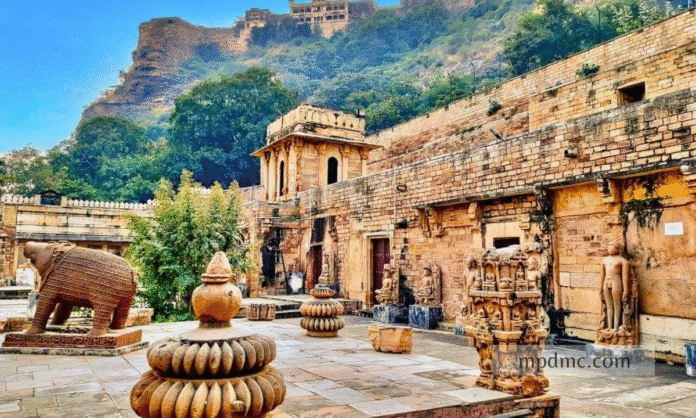
PC: (My India Travel, Madhya Pradesh DMC)
A Royal Love Story That Built an Empire of Beauty
Gwalior, a city steeped in rich history and stunning architectural marvels, hides many cultural gems. Among them, the Gujari Mahal Museum stands out as a true must-visit for any traveler passionate about history and heritage. The story begins with Raja Man Singh (also known as Man Singh Tomar), a 15th-century ruler, and his beloved queen, Mrignayani (originally called Ninni or Nanni), a brave Gujar princess. Legend tells of the king witnessing her extraordinary courage and grace as she fearlessly untangled the locked horns of two raging buffaloes. Captivated by her beauty, strength, and spirit, he proposed marriage. Mrignayani, however, set three bold conditions: equal status without purdah, the freedom to join him on battlefields, and a separate palace with an uninterrupted supply of water from the sacred Rai. River, which she believed enhanced her vitality and allure. Deeply in love, the king agreed, and this union inspired the creation of Gujari Mahal in the 15th century-a palace built as a tribute to their timeless romance.
From Palace of Passion to Treasure Trove of History
Strategically positioned near the Rai River to meet Mrignayani’s wishes, Gujari Mahal fulfilled its romantic purpose. In 1922, the grand structure was transformed into the Gujari Mahal Archaeological Museum (also called the State Archaeological Museum), preserving the region’s glorious past. Today, it serves as a living testament to the love story while housing an extraordinary collection of artifacts spanning millennia.
Where History Comes Alive: The Museum’s Enchanting Galleries
Spread across 28 galleries, the museum takes visitors on a mesmerizing journey through eras like the Sunga, Gupta, Pratihara, Kachchhapaghata, and Paramara periods. Its vast collection includes sculptures, coins, pottery, terracotta figurines, paintings, inscriptions, weapons, and more-making it a paradise for history lovers.
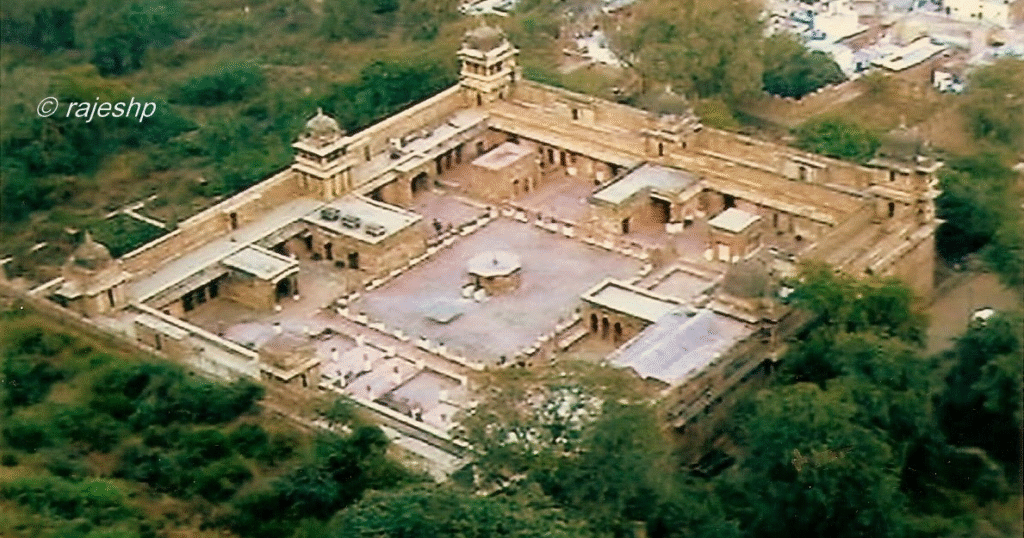
Timeless Treasures That Whisper Tales of the Past
Exquisite Sculptures Marvel at masterpieces like the Yaksha Mani Bhadra (1st century AD), the fierce Mahisasuramardini (6th century AD), Gupta-era panels depicting dance and music, and the alluring Shalbhanjika statue from Gyaraspur (often called a “Mona Lisa of India” by admirers). Terracotta Wonders from Pawaya excavations come stunning 4th-5th century figurines of Lord Ram, Mata Sita, and others, showcasing remarkable proportions, hairstyles, and artistic finesse. Inscriptions and Scripts A rare set of 70 stone and copper plate inscriptions in Brahmi, Devnagari, and Persian scripts offers priceless historical insights.
Coins Through the Ages – Explore a diverse array of gold, silver, and copper alloy coins dating from the 3rd century BC to the 20th century AD. Artistic Replicas and Paintings – Admire replicas of Bagh Caves murals recreated by legends like Nandalal Bose, along with miniature paintings in Mughal, Rajput, Kangra, Pahari, and Gwalior styles-including a striking depiction of Changez Khan. Weapons and Warfare – View an impressive array of guns, swords, cannons, and other armaments that reveal the military history of the region. Excavated Relics Pottery, beads, ear ornaments, engraved seals, and terracotta objects from iconic sites like Mohenjo-daro, Pawaya, Vidisha, and Ujjain provide glimpses into everyday life in ancient civilizations.
This museum isn’t just a collection-it’s a portal to Gwalior’s soul, blending royal romance with profound archaeological depth.
Whether you’re a history buff, art lover, or simply seeking a meaningful experience in Gwalior, Gujari Mahal Museum promises an unforgettable encounter with India’s enduring heritage. Plan your visit and let the echoes of a legendary love story guide you through centuries of wonder!