

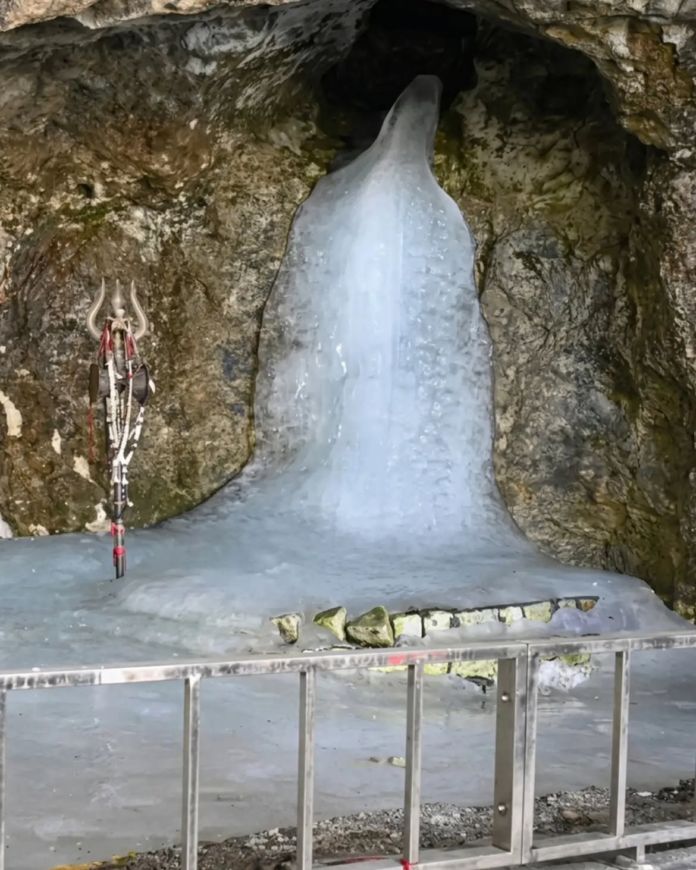
Every year, lakhs of devotees undertake the sacred Amarnath Yatra, one of Hinduism’s most revered pilgrimages, to seek the blessings of Lord Shiva at the holy Amarnath Cave in Jammu & Kashmir. Perched at an altitude of 3,888 metres, the shrine is famous for the naturally formed ice Shivling, believed to symbolize Lord Shiva.
The Amarnath Yatra 2026 is scheduled to begin on July 3 and conclude on August 9, spanning 38 days. If you’re planning the pilgrimage, here’s a complete guide covering registration, routes, helicopter services, accommodation, travel tips, and safety guidelines.
What is the Amarnath Yatra?
The Shri Amarnath Yatra is an annual pilgrimage to the holy Amarnath Cave in the Himalayas of Jammu & Kashmir.
According to Hindu mythology, Lord Shiva chose this secluded cave to reveal the secret of immortality (Amar Katha) to Goddess Parvati. Today, devotees from across India and abroad visit the cave to witness the naturally formed ice Shivling, making it one of the most significant religious journeys in the country.
Apart from its spiritual significance, the yatra also offers breathtaking views of snow-covered mountains, glaciers, alpine meadows, and pristine Himalayan landscapes.
Amarnath Yatra 2026 Dates
The Shri Amarnathji Shrine Board (SASB) has announced the following schedule:
| Event | Date |
|---|---|
| Registration Opens | 14 April 2026 |
| Yatra Begins | 3 July 2026 |
| Yatra Ends | 9 August 2026 |
| Total Duration | 38 Days |
Since the number of pilgrims permitted each day is limited, early registration is highly recommended.
How to Register for Amarnath Yatra 2026
Registration is mandatory for all pilgrims.
Applicants need:
- Compulsory Health Certificate (CHC)
- Valid government-issued photo ID
- Passport-size photographs
Registration can be completed online through the official Shri Amarnathji Shrine Board portal or offline at authorized bank branches, including SBI, PNB, J&K Bank, and Yes Bank.
Helicopter passengers are also required to obtain a valid health certificate before travel.
Which Route Should You Choose?
Pilgrims can reach the holy cave through two official routes.
Baltal Route
The Baltal route is the shorter option, covering approximately 16 kilometres. Most pilgrims complete the trek in a single day.
Although it saves time, the trail is steep and physically demanding, making it more suitable for experienced trekkers and younger pilgrims.
Pahalgam Route
The traditional Pahalgam route stretches approximately 36–48 kilometres and usually takes three to five days.
The route passes through:
- Chandanwari
- Pissu Top
- Sheshnag
- Mahagunas Pass
- Panchtarni
- Holy Cave
This route offers gradual ascent, better acclimatization, and spectacular Himalayan scenery, making it ideal for families and first-time pilgrims.
Helicopter Services
Pilgrims unable to undertake the trek can opt for helicopter services.
Helicopters operate from:
- Baltal to Panchtarni
- Pahalgam to Panchtarni
From Panchtarni, devotees must walk approximately 6 kilometres to reach the shrine.
Since seats are limited, advance booking is advisable.
Physical Preparation
The Amarnath trek involves high altitude and challenging terrain.
Experts recommend beginning physical preparation at least one month before departure by:
- Walking 4–5 kilometres daily
- Practicing yoga and breathing exercises
- Improving cardiovascular fitness
- Staying hydrated
- Spending a day in Srinagar or Jammu for acclimatization before beginning the trek
Essential Packing List
Carry only essentials, including:
- Woollen clothing
- Waterproof jacket
- Raincoat
- Trekking shoes
- Gloves
- Woollen cap
- Torch
- Power bank
- Water bottle
- Energy bars
- Personal medicines
- Valid ID proof
Layered clothing is recommended due to rapidly changing weather conditions.
Accommodation and Food
Accommodation is available at:
- Baltal
- Chandanwari
- Sheshnag
- Panchtarni
- Srinagar
- Pahalgam
Pilgrims can stay in tents, government camps, guest houses, or hotels.
Numerous Langars (community kitchens) serve free vegetarian meals, while tea stalls and snack vendors are available along the trekking routes.
Safety Guidelines
Authorities advise pilgrims to:
- Wear their RFID card throughout the journey
- Follow only designated trekking routes
- Travel in groups
- Stay hydrated
- Avoid overexertion
- Keep track of weather updates
- Avoid carrying plastic items
Medical assistance is available every few kilometres along both routes.
Weather Conditions
The weather during the yatra remains unpredictable.
Temperatures generally range between:
- Day: 10°C to 18°C
- Night: 0°C to 5°C
Rain and snowfall are common even during July and August. Pilgrims should therefore carry warm clothing and waterproof gear.
Travel Tips
To ensure a smooth pilgrimage:
- Reach Srinagar or Jammu one day before the trek.
- Book flights and accommodation well in advance.
- Carry sufficient cash as ATM facilities are limited.
- BSNL offers the most reliable mobile connectivity in the region.
- Begin trekking early each morning.
- Take regular breaks to avoid altitude sickness.
Frequently Asked Questions
When does Amarnath Yatra 2026 begin?
The yatra begins on 3 July 2026.
When will it conclude?
The pilgrimage ends on 9 August 2026.
Is registration compulsory?
Yes. Every pilgrim must register before undertaking the yatra.
Which route is easier?
The Pahalgam route is longer but less steep, making it easier for most pilgrims.
Which route is shorter?
The Baltal route is only 16 kilometres but considerably steeper.
Is a health certificate mandatory?
Yes. A Compulsory Health Certificate (CHC) is mandatory for registration.
Conclusion
The Amarnath Yatra 2026 is not merely a trek but a journey of faith, devotion, and self-discovery. Whether you choose the scenic Pahalgam route or the shorter Baltal trek, proper planning, timely registration, and adequate physical preparation are essential for a safe and fulfilling pilgrimage.
As thousands gather in the Himalayas to seek the blessings of Lord Shiva, the Amarnath Yatra continues to stand as one of India’s most spiritually enriching and awe-inspiring journeys.