

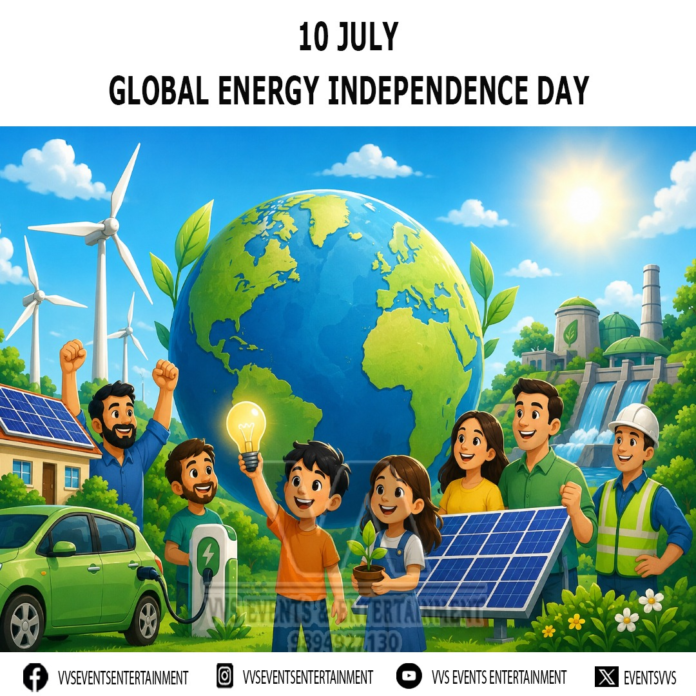
Global Energy Independence Day is celebrated to promote the global transition from fossil fuels to clean, self-sufficient energy sources like solar, wind, and hydroelectric power. Observed annually on July 10, coinciding with the birthday of electrical pioneer Nikola Tesla, the day encourages communities, businesses, and governments to reduce pollution, increase energy security, and foster green economic growth.
In fact, India has set a significant target for itself, to attain complete energy independence by 2047, as the world faces the difficulties of climate change and the exhaustion of non-renewable energy sources
Many countries are now generating 100% of their electricity from renewable energy. Albania, Bhutan, Nepal, Paraguay, Iceland, Ethiopia and the Democratic Republic of Congo produced more than 99.7 per cent of the electricity they consumed using geothermal, hydro, solar or wind powe
Global Energy Independence Day, in fact, marks a pivotal moment for countries striving to achieve energy self-sufficiency and sustainability.
- It is a call to action for individuals, businesses, and governments to recognize the importance of reducing dependence on non-renewable energy sources and transitioning to cleaner, more sustainable energy solutions.
- It has since become widely recognized worldwide and highlights the significance of energy autonomy and a variety of sustainable energy sources.
- With climate change accelerating and the demand for energy increasing, this day serves as a reminder of the critical need for innovation and commitment to sustainable energy.