

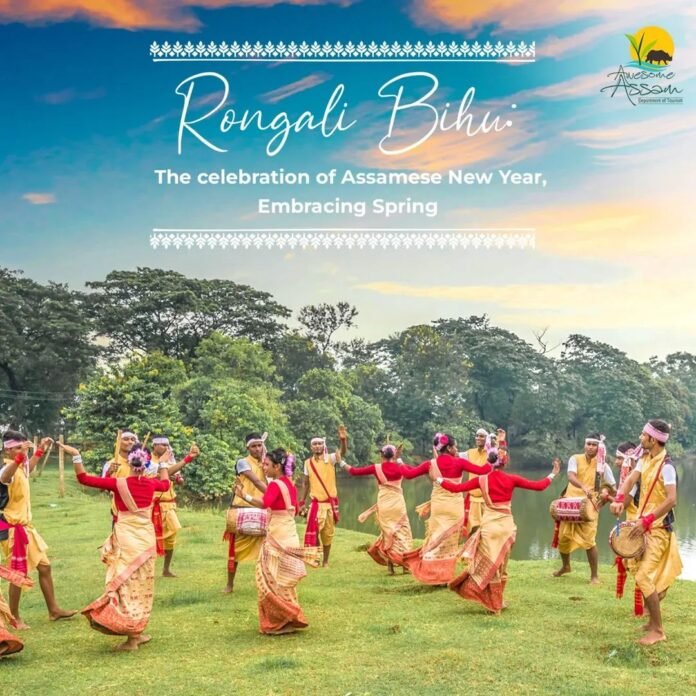
Rongali Bihu, also known as Bohag Bihu, is the most vibrant and widely celebrated festival of Assam. Marking the Assamese New Year, this festival is a joyful celebration of spring, fertility, and new beginnings. It is not just a cultural event but a reflection of the deep-rooted traditions, agrarian lifestyle, and rich heritage of the Assamese people.
When is Rongali Bihu Celebrated?
Rongali Bihu is observed every year in mid-April, usually starting around April 14 or 15, coinciding with the Assamese month of Bohag. It aligns with other regional New Year festivals across India such as Baisakhi, Pohela Boishakh, and Vishu, all of which celebrate the onset of spring and the harvest season.
Why is Rongali Bihu Celebrated?
The festival has its origins in agriculture. Assam is primarily an agrarian state, and Rongali Bihu marks the beginning of the sowing season. It is a time when farmers prepare their fields for cultivation and pray for a prosperous harvest.
Beyond agriculture, Rongali Bihu also celebrates youth, love, and life. Traditionally, it was a time for young men and women to express affection through songs and dances, symbolizing renewal and harmony with nature.
The Significance of Rongali Bihu
Rongali Bihu holds immense cultural and social significance. It represents:
●Renewal and Hope: The Assamese New Year brings fresh beginnings.
●Agricultural Prosperity: It marks the start of the farming cycle.
●Cultural Identity: The festival showcases Assam’s traditional music, dance, and attire.
●Community Bonding: People come together, strengthening social ties.
The festival is characterized by the energetic Bihu dance, accompanied by traditional instruments like the dhol, pepa, and taal. The rhythmic movements and lively music embody the spirit of joy and celebration.
How is Rongali Bihu Celebrated?
Rongali Bihu is celebrated over several days, each with its own rituals:
●Goru Bihu (Cattle Day): Cows and bulls are washed, decorated, and worshipped, acknowledging their importance in agriculture.
●Manuh Bihu (Human Day): People wear new clothes, seek blessings from elders, and exchange greetings.
●Husori and Mukoli Bihu: Groups perform traditional songs and dances in open fields and households.
Food plays a central role in the celebrations. Traditional delicacies like pitha (rice cakes), laru (sweet balls), and curd with flattened rice are prepared and shared among family and friends.
Homes are cleaned and decorated, and people often visit relatives, reinforcing bonds of love and respect.
A Festival Beyond Borders
While rooted in Assam, Rongali Bihu is now celebrated by Assamese communities across India and the world. Cultural programs, music performances, and community feasts bring people together, keeping the tradition alive even far from home.
Conclusion
Rongali Bihu is more than just a New Year festival—it is a celebration of life, nature, and togetherness. With its blend of agricultural significance, cultural richness, and joyous spirit, it continues to define the essence of Assamese identity. As spring breathes new life into the land, Rongali Bihu fills hearts with hope, happiness, and a sense of renewal.