

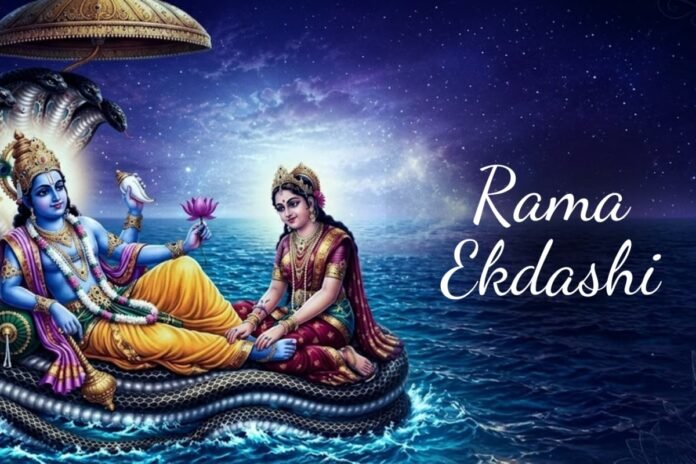
Rama Ekadashi, one of the significant fasting days in the Hindu calendar, will be observed on Thursday, November 5, 2026. Celebrated during the Krishna Paksha, or dark fortnight, of the Kartika month, the sacred Ekadashi is dedicated to Lord Vishnu and Goddess Lakshmi. Devotees observe the day through fasting, prayers and devotional activities, seeking spiritual growth, prosperity and peace.
The occasion falls four days before Diwali and holds special importance during the auspicious month of Kartika. The word ‘Rama’ in Rama Ekadashi refers to Goddess Lakshmi, who is also known as Rama. The day is therefore associated with the worship of both Lord Vishnu and his consort, Goddess Lakshmi.
Date and Auspicious Timings
According to the Hindu lunar calendar, the Ekadashi Tithi begins at 11:03 am on November 4 and concludes at 10:35 am on November 5. Since the Ekadashi Tithi prevails during the sunrise period on November 5, the vrat will be observed on Thursday.
The fast will be concluded on Friday, November 6, during the Dwadashi Tithi. The Parana, or the ritual of breaking the fast, is scheduled between 6:37 am and 8:48 am. Devotees traditionally break their fast during the prescribed morning period, after considering the Hari Vasara, an auspicious period associated with the Ekadashi observance.
Religious and Spiritual Significance
Rama Ekadashi holds an important place in Hindu religious traditions. According to Hindu beliefs, observing the fast with devotion helps cleanse past sins, purify the mind and encourage a disciplined spiritual life. Devotees believe that prayers offered to Lord Vishnu and Goddess Lakshmi on this day bring blessings of prosperity, happiness and well-being.
The observance also emphasises the importance of self-control, compassion and devotion. Fasting is considered a means of directing attention away from material desires towards spiritual reflection. For many devotees, the occasion provides an opportunity to strengthen their faith and seek divine blessings for their families.
Rituals and Fasting Traditions
The observance of Rama Ekadashi generally begins with preparations on Dashami, the tenth day of the lunar fortnight. Devotees traditionally consume simple, sattvic food and avoid certain ingredients as part of their preparation for the fast.
On Ekadashi morning, devotees take a ritual bath and offer prayers to Lord Vishnu and Goddess Lakshmi. A lamp filled with ghee or oil is lit, while fresh flowers, fruits, incense and Tulsi leaves are offered during the worship. Tulsi holds particular importance in Vaishnav traditions and is considered especially dear to Lord Vishnu.
Fasting is one of the central practices of the day. Depending on their health, personal beliefs and capacity, devotees may observe a strict waterless fast, consume fruits and milk, or follow a simple fasting diet. Grains, rice and beans are generally avoided. Devotees also spend the day chanting Vishnu mantras, reciting the Vishnu Sahasranama and reading religious scriptures.
Charity and acts of kindness are also encouraged. Offering food, clothes and other essentials to those in need is considered a meaningful way of observing the occasion.
Rama Ekadashi Vrat Katha
The traditional Rama Ekadashi Vrat Katha is associated with King Muchukunda and his daughter Chandrabhaga. According to the legend, Chandrabhaga was deeply devoted to Lord Vishnu and observed Ekadashi fasts with sincerity. Her husband, Prince Shobhan, once stayed at her father’s kingdom during Rama Ekadashi. Although physically weak, he decided to observe the fast. However, he could not withstand its demands and passed away.
It is believed that his observance earned him a divine abode, although it lacked permanence. Through the merit of her devotion and observance of Rama Ekadashi, Chandrabhaga later helped restore his prosperity and happiness. The story highlights the religious belief in the spiritual merit of sincere devotion and fasting.
Breaking the Fast
The fast is traditionally concluded on Dwadashi, the twelfth day of the lunar fortnight. On November 6, devotees can perform Parana between 6:37 am and 8:48 am. The fast should be broken according to the prescribed timing, after the Hari Vasara period has ended.
Rama Ekadashi is not merely an occasion of fasting but also a reminder of devotion, discipline, charity and inner purification. Through prayers and acts of compassion, the observance encourages devotees to cultivate spiritual awareness and seek a balance between material responsibilities and religious faith.