

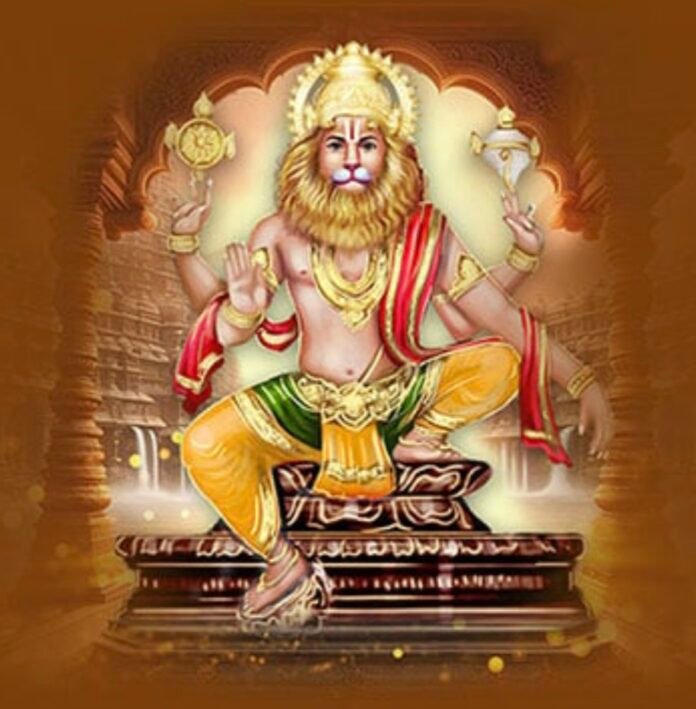
Narasimha Jayanti is a significant Hindu festival dedicated to the birth (appearance) of Lord Narasimha, the fourth incarnation of Vishnu. In 2026, the festival will be observed on April 30, falling on the Chaturdashi tithi (14th day) of the Shukla Paksha in the month of Vaishakha.
Who is Lord Narasimha?
Lord Narasimha is a unique and powerful avatar of Vishnu, depicted as half-man and half-lion. According to Hindu scriptures, he incarnated to protect his devotee Prahlada and to destroy the tyrant demon king Hiranyakashipu.
The story symbolises the ultimate victory of faith and righteousness over arrogance and evil. Narasimha’s form itself represents divine intervention beyond logic—neither human nor animal, appearing at dusk—to honour the conditions of a boon that made the demon nearly invincible.
Why is Narasimha Jayanti Celebrated?
The festival commemorates the moment when Lord Narasimha emerged to restore dharma (cosmic order) and protect his devotee. It is believed that worshipping him on this day helps devotees overcome fear, negativity, and obstacles in life.
Spiritually, the day signifies:
●Victory of good over evil
●Protection from harm and negative energies
●Strength, courage, and unwavering faith
Rituals and Traditions
Narasimha Jayanti is observed with deep devotion across temples and homes. The day usually begins early, with devotees taking a ritual bath and preparing for worship.
Key rituals include:
●Fasting (Vrat): Many devotees observe a strict fast until evening or the next day.
●Puja and Abhishekam: Idols of Lord Narasimha or Vishnu are bathed with panchamrit (milk, curd, honey, ghee, and sugar).
●Offerings: Flowers, fruits, sweets, and sacred items like sandalwood and saffron are offered.
●Mantra Chanting: Devotees recite prayers and the Narasimha mantra, often 108 times.
●Evening Worship: Special importance is given to evening prayers, as the Lord is believed to have appeared at dusk.
Many also engage in charity and spiritual readings, reflecting the values of compassion and righteousness.
Significance in Today’s World
Beyond rituals, Narasimha Jayanti holds deep philosophical meaning. It reminds devotees that divine protection comes to those who remain steadfast in truth, even in adversity. The story of Prahlada’s unwavering devotion continues to inspire faith, resilience, and moral courage.
In a broader sense, the festival is a timeless reminder that no matter how powerful injustice may seem, righteousness ultimately prevails.
Conclusion
Narasimha Jayanti is not just a celebration of a divine incarnation—it is a reaffirmation of faith in justice, protection, and the triumph of good over evil. Through fasting, prayer, and devotion, devotees seek the blessings of Lord Narasimha for strength, peace, and protection in their lives.