

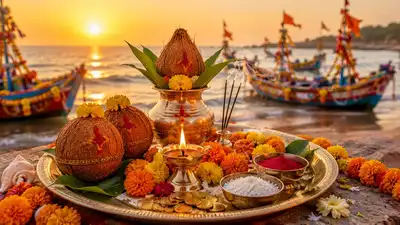
As the monsoon begins to retreat and the sea slowly becomes safer for fishing, the coastal communities of Maharashtra turn towards the waters with gratitude. On Narali Purnima, observed on the full moon day of Shravan, the sea is worshipped, coconuts are offered to Varuna Dev, and fishermen prepare to return to their traditional livelihood. In 2026, Narali Purnima falls on Friday, August 28, coinciding with Raksha Bandhan.
Known also as Nariyal Purnima, the festival takes its name from the Marathi word “naral”, meaning coconut. For the Koli and other fishing communities along the Konkan coast and in Mumbai, the coconut is more than an offering. It represents gratitude towards the sea, which provides food, livelihood and sustenance to generations of families.
The central ritual of Narali Purnima is the offering of coconuts to the sea. Before resuming regular fishing activities after the difficult monsoon period, fishermen and their families pray to Varuna Dev, the deity associated with water and the oceans. They seek blessings for the safety of fishermen, their boats and their families, while expressing gratitude for the bounty of the sea.
The festival transforms the coastline into a place of celebration. Boats are cleaned and decorated, families gather near the shore, and prayers are offered before coconuts are placed in the water. Homes may also prepare traditional coconut-based dishes and sweets, bringing the festival into the family kitchen as well as the community space.
What makes Narali Purnima particularly significant is the close relationship it reflects between faith and livelihood. For communities whose lives have always been connected to the sea, nature is not a distant concept. The rhythm of their lives is shaped by the monsoon, tides, fishing seasons and weather. The festival acknowledges this dependence and turns it into an annual expression of respect and thanksgiving.
The tradition also carries a message of humility. The sea can provide abundance, but it can also be unpredictable and powerful. After months of monsoon weather, returning to the waters is not merely an economic decision for fishing families. It involves uncertainty and risk. The prayers of Narali Purnima therefore express a collective hope for a safe fishing season and a prosperous year ahead.
Narali Purnima is not limited to fishing communities alone. Certain Maharashtrian Brahmin communities observe Shravani Upakarma on the same day, while traditional fasting practices may include coconut and other forms of phalahar. The festival thus exists within the wider cultural landscape of Shravan Purnima, a day associated with several religious observances across India.
The 2026 observance falls on August 28. The Shravana Purnima tithi begins at 9:08 am on August 27 and ends at 9:48 am on August 28. Since the full moon prevails after sunrise on August 28, Narali Purnima is observed that day. Local communities may follow the customs and timings prescribed by their temples, families and fishing traditions.
At a time when conversations around sustainability and environmental responsibility are becoming increasingly important, Narali Purnima also offers a timeless cultural reminder: human life and nature are deeply interconnected. The simple act of offering a coconut to the sea carries within it an acknowledgement that livelihoods depend upon respecting the natural world.
From decorated boats and coconut offerings to prayers whispered along the shoreline, Narali Purnima captures a distinctive relationship between people and the sea. It is a festival of faith, but also of livelihood, gratitude and hope. As the fishing season begins again, the coconut offered to the waves becomes a quiet promise: to honour the sea, seek its blessings and return to it with respect.