

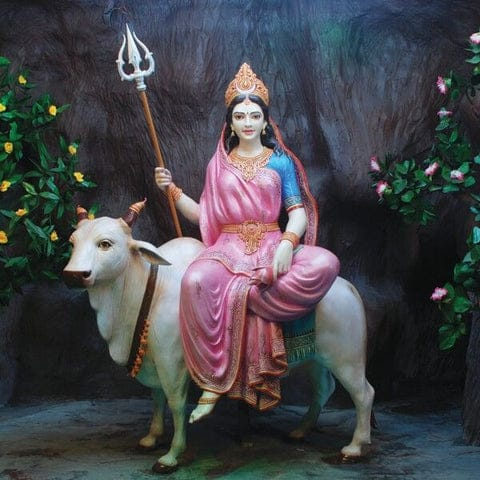
PC ( Rasai Shop, Utsavpedia )
Chaitra Navratri, the vibrant nine-day festival honoring Goddess Durga, begins on March 19, 2026 (Thursday). This auspicious occasion marks the start of the Hindu New Year in many regions and is a time for spiritual renewal, fasting, and devotion. The first day is specially dedicated to Maa Shailputri, the initial form of Navdurga, symbolizing the grounding of spiritual energy and the beginning of the devotee’s journey.
Form and Symbolism of Maa Shailputri
Maa Shailputri, meaning “Daughter of the Mountains,” is the beloved daughter of Himavat (the Himalaya mountain king) and Queen Mena. She rides a majestic bull (Nandi), holding a trishul (trident) in her right hand for protection and a lotus flower in her left, signifying purity and spiritual awakening. She embodies stability, strength, and purity. Astrologically, she governs the Moon, and her worship is believed to alleviate negative lunar influences, promoting mental peace and emotional balance. In yogic traditions, she is linked to the Muladhara Chakra (root chakra), representing the foundation for spiritual growth and the awakening of inner Shakti.
The Inspiring Story of Maa Shailputri
The tale of Maa Shailputri highlights themes of devotion, sacrifice, and rebirth. In her previous incarnation, she was Goddess Sati, the devoted wife of Lord Shiva and daughter of King Daksha. During a grand yagna hosted by Daksha, Shiva was deliberately not invited. Sati attended despite warnings, only to face severe insults toward her husband. Overwhelmed by grief and humiliation, she immolated herself in the sacrificial fire. Moved by her unparalleled devotion and the fervent prayers of Himavat and Mena, the Goddess was reborn as their daughter-Shailputri. Through rigorous penance in this new life, she reunited with Lord Shiva, remarried him, and became the divine mother of Lord Ganesha and Kartikeya. This story underscores her unshakeable faith and resilience, making her the perfect deity to invoke at the start of Navratri for a solid spiritual foundation.
Puja Rituals and Offerings on Day 1
The day commences with the sacred Ghatasthapana (Kalash Sthapana), where a copper or earthen pot is filled with water, adorned with mango leaves, a coconut, and placed on grains to invite the Goddess’s presence.Color of the Day: Yellow – symbolizing optimism, action, and vigor. Devotees are encouraged to wear yellow attire.
Offerings (Bhog): Pure Desi Ghee or sweets
prepared with it are offered, believed to grant a disease-free life and good health.Flowers white varieties like jasmine or hibiscus, representing peace and purity. Mantras and Chanting: The primary mantra is ॐ देवी शैलपुत्र्यै नमः (Om Devi Shailputryai Namah) Devotees also recite the Durga Chalisa or passages from Durga Saptashati to invoke her blessings.
Why Devotees Place Faith in Maa Shailputri
Worshipping Maa Shailputri on this first day establishes a strong base for both worldly success and spiritual progress. As the ruler of the root chakra, she helps ground energies, fostering inner stability amid life’s challenges. Her association with the Moon brings emotional harmony, while her mountain heritage inspires patience and unshakeable resolve. By offering pure ghee and sincere prayers, devotees seek protection from ailments, prosperity, and the strength to embark on their nine-day Navratri sadhana with clarity and devotion. May Maa Shailputri bless you with unwavering strength, purity, and peace as Chaitra Navratri 2026 unfolds! Jai Maa Shailputri!