

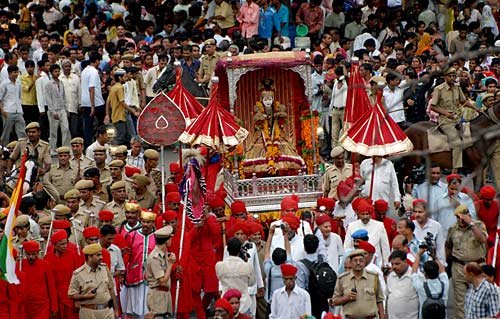
Every monsoon, Jaipur takes on a distinctive shade of green as the Pink City prepares for one of Rajasthan’s most celebrated festivals, Teej. More than a religious occasion, the Jaipur Teej Festival is a spectacular meeting of devotion, women’s traditions, folk culture and the city’s royal heritage.
In 2026, the Jaipur Teej Festival is scheduled for August 15–16, coinciding with the wider Hariyali Teej celebrations. Rajasthan Tourism describes Teej as a monsoon festival celebrating greenery, the arrival of rain and the renewal of nature through music, dance, social gatherings and traditional customs.
The story behind Teej
Teej is dedicated to Goddess Parvati, also revered as Teej Mata, and celebrates her union with Lord Shiva. Traditionally, women observe the festival with prayers for marital happiness and the well-being of their families. The festival also gives unmarried women an opportunity to pray for a suitable life partner.
But Jaipur’s Teej is not confined to temples and homes. Its most distinctive feature is the grand public celebration that brings the historic walled city alive.
The royal procession of Teej Mata
The centrepiece of Jaipur’s celebrations is the Teej Mata procession, in which the beautifully adorned image of the goddess is carried through the old city in a traditional royal procession.
According to Rajasthan Tourism, the procession begins from the City Palace, passes through Tripolia Bazaar and Chhoti Chaupar, and makes its way through the historic streets of Jaipur. The procession features decorated camels, folk artists, royal palanquins, chariots and bullock carts.
The association with the City Palace is particularly significant. The palace remains one of the important settings for Jaipur’s royal festivals, and the Teej procession carrying the goddess through the city connects the present celebration with Jaipur’s living royal traditions.
When the streets become a stage
On procession days, Jaipur’s historic streets become an open-air cultural stage. Folk musicians, dancers and performers accompany Teej Mata, while decorated animals, traditional vehicles and royal-style pageantry add to the spectacle.
Traditional Rajasthani performances such as Ghoomar and Kalbeliya, along with folk instruments and music, form an important part of the atmosphere. The procession is not simply something to watch; it is an opportunity to experience Rajasthan’s performing traditions in the very streets where the city’s history unfolded.
In 2026, preparations have also placed an emphasis on showcasing women’s strength and cultural participation, with reports of women and girls presenting traditional martial-art and sword-fighting performances as part of the festivities.
Green, colourful and unmistakably Rajasthani
The visual identity of Teej begins long before the procession. Women dress in colourful traditional attire, particularly green and vibrant leheriya, apply mehendi, wear bangles and gather for songs and celebrations. Swings decorated beneath trees are another cherished feature of Hariyali Teej.
And then there is ghewar, the honeycomb-textured Rajasthani sweet that has become almost synonymous with the monsoon and Teej season. Rajasthan Tourism specifically notes its close association with the festival.
A living heritage of Jaipur
What makes Jaipur’s Teej distinctive is the way it brings together several layers of Rajasthan in one celebration, faith, monsoon, women’s traditions, folk art, food and royal heritage.
For visitors, the festival offers more than a colourful spectacle. Standing along the old city’s streets as Teej Mata passes in her palanquin is a glimpse into a tradition where the past is not preserved behind museum glass; it continues to move through the living city.
And perhaps that is the enduring charm of Jaipur’s Teej. When the Pink City turns green, its streets don’t merely celebrate the monsoon, they tell the story of Rajasthan itself.