

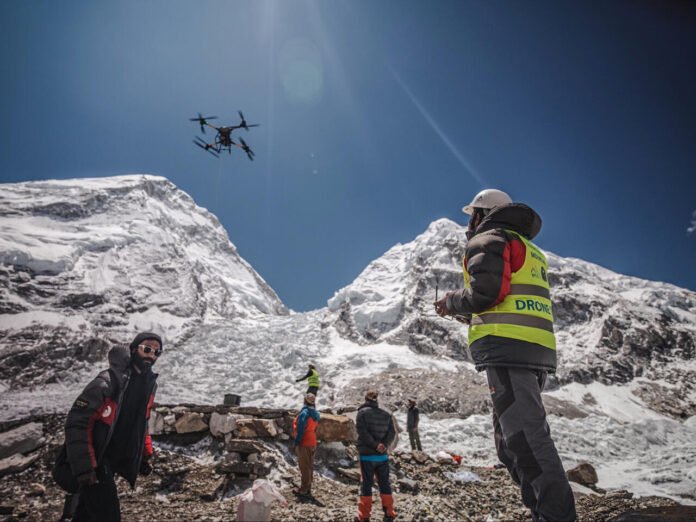
Mount Everest, once a symbol of triumph, now faces a grim reality—140+ tons of trash left behind by climbers. But in 2025, a high-altitude tech revolution is rewriting the story.
Dual Mission in Thin Air: Supplies Up, Trash Down
Nepal’s Airlift Technology, in partnership with DJI, deployed FlyCart 30 drones to clean Everest’s slopes. These rugged machines braved -20°C temps and 40 km/h winds to:
- Deliver oxygen, ropes, and ladders to Camp 1 (6,065 m)
- Remove 300 kg of garbage back to Base Camp (5,364 m)
- Haul a total of 1,259 kg—once a 14-porter job, now done in minutes
Each drone zipped across the deadly Khumbu Icefall in just 6–12 minutes, dodging avalanches and crevasses with autonomous precision.
Saving Lives, Not Just Landscapes
The Khumbu Icefall has claimed nearly 50 lives since 1953. Now, drones bypass this death zone entirely, sparing Sherpas from peril.
Sherpa legend Nima Rinji said it best: “It saves a lot of time and energy.”
Cleaner Peaks, Greener Future
Nepal’s rule: climbers must return with 8 kg of trash—or lose a $4,000 deposit. Drones now handle 70% of that burden, cutting costs and carbon. Compared to $10,000 (882,920.00) helicopter flights, drones offer a low-cost, zero-fuel alternative.
What’s Next?
After clearing 641 kg from Ama Dablam, Airlift eyes Manaslu and the FlyCart 100 for heavier missions. As DJI’s Christina Zhang says: “This tech could transform Everest logistics and safety.”