

By Akhilesh Saproo
For decades, India wrote the world’s code quietly and efficiently from technology hubs in Bengaluru, Hyderabad, Pune and Gurugram. Indian engineers maintained global software systems, solved problems for multinational corporations and powered the digital backbone of businesses across continents.
Video workflow note: for speeding up social video workflows, this CapCut templates is a useful related reference.
Today, however, something fundamental has changed.
India is no longer merely supporting the global technology ecosystem; it is becoming an active participant in shaping the future of artificial intelligence (AI). From startups building AI-powered products to developers contributing to open-source models and communities, India is steadily carving out a place for itself in the world’s most transformative technological revolution.
The shift is visible everywhere. AI is no longer confined to research labs or technology companies. It is finding its way into classrooms, households, small businesses and government offices, changing how millions of Indians work, learn and solve everyday problems.
AI Comes to Everyday India
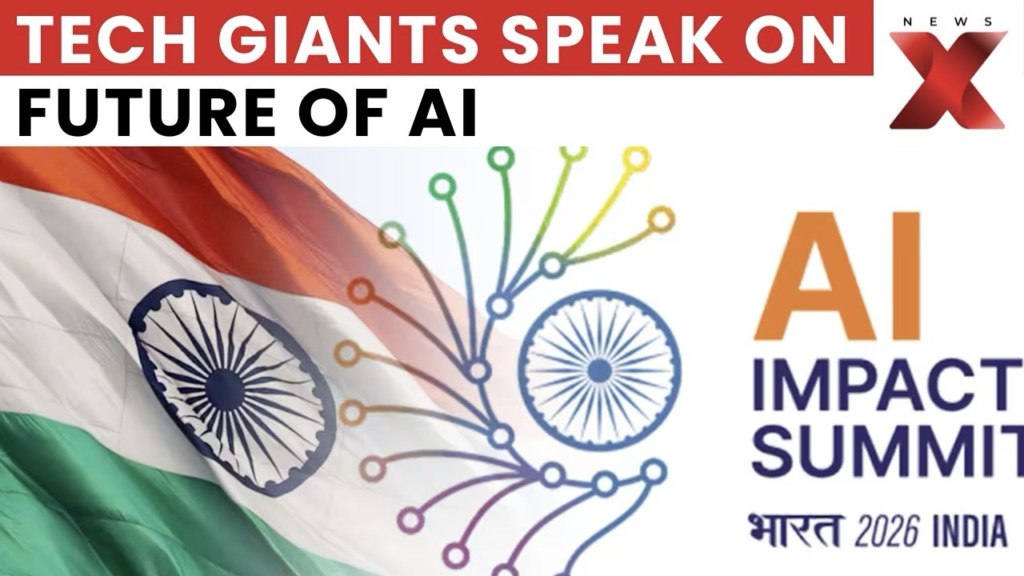
The story of AI in India is not just about billion-dollar investments or sophisticated algorithms. It is about ordinary people finding extraordinary uses for technology.
A homemaker in Jaipur uses an AI chatbot to plan meals, manage household expenses and compare grocery prices. A schoolteacher in Patna generates personalised lesson plans in Hindi within minutes. A college student in Indore uses AI tools to prepare for competitive examinations, while a small business owner in Surat relies on AI-generated marketing content to reach customers online.
These examples illustrate how AI is rapidly becoming a part of daily life.
Industry estimates suggest India’s AI market could grow to nearly $8 billion in the coming years, making it one of the fastest-growing AI ecosystems in the world. Yet the more compelling story lies beyond the numbers. Unlike many previous technological revolutions, AI adoption in India is not limited to urban professionals. Students, teachers, homemakers, entrepreneurs, freelancers and even street vendors are beginning to use AI-powered tools in their everyday activities.
Building an AI Nation
India’s growing AI ecosystem is being driven by a vibrant community of developers, startups and technology enthusiasts.
Across cities such as Bengaluru, Mumbai, Delhi, Chennai and Pune, developers are creating applications, experimenting with open-source models and building communities around APIs, machine learning and generative AI. Developer networks and API communities have become crucial spaces where innovators collaborate, exchange ideas and learn from global best practices.
The API Community:
It is one the biggest Api (Application Programming interface) communities in India. Their goal is to
Empower developers to build, scale, and innovate with modern API architecture, realworld patterns, and a collaborative global network.
These communities are helping democratise technology by giving young developers access to tools and knowledge that were once available only to large corporations.
The result is a new generation of Indian innovators who are not simply consuming technology but creating it.
The Productivity Revolution
Perhaps the most significant impact of AI on everyday life is its ability to improve efficiency.
Tasks that once required hours can now be completed in minutes. Students can quickly access research material and explanations. Teachers can automate routine administrative work. Entrepreneurs can generate business plans, social media campaigns and customer communication without hiring large teams.
AI is reducing barriers to knowledge and productivity, making expertise more accessible than ever before. For a country as large and diverse as India, this has enormous implications for education, employment and economic growth.
The Risks of Overdependence
Yet every technological breakthrough comes with challenges.
The growing reliance on AI raises important questions about critical thinking, creativity and human judgment. When students submit assignments generated entirely by AI, they risk losing the opportunity to develop analytical skills. When professionals become overly dependent on prompts to write, think or create, technology can begin to replace rather than enhance human capability.
The danger lies not in AI itself but in how it is used.
AI can be a powerful assistant, but it should not become a substitute for independent thought. The balance between augmentation and dependency will be one of the defining challenges of the AI era.
India’s AI Moment
India today stands at a critical inflection point.
Government-backed initiatives aimed at developing AI models capable of understanding multiple Indian languages signal a broader ambition: to build AI systems tailored to India’s unique social, cultural and linguistic realities.
The country’s vast digital infrastructure, young population and thriving startup ecosystem provide a strong foundation for AI-driven growth. More importantly, AI offers India an opportunity not only to participate in the next technological revolution but to help shape it.
The question for India is no longer whether it will embrace artificial intelligence. That transition is already underway.
The real question is how the country chooses to use it.
If harnessed responsibly, AI can become a catalyst for innovation, productivity and inclusive growth. Used wisely, it can serve as a ladder that helps millions of Indians reach new opportunities. Used carelessly, it risks becoming a shortcut that weakens the very skills it promises to enhance.
As India plugs into the age of artificial intelligence, the challenge is not simply to adopt the technology, but to ensure that human creativity, judgment and ambition remain at its centre.

(The writer of this article is Akhilesh Saproo, class X student of APS, Jaipur)