

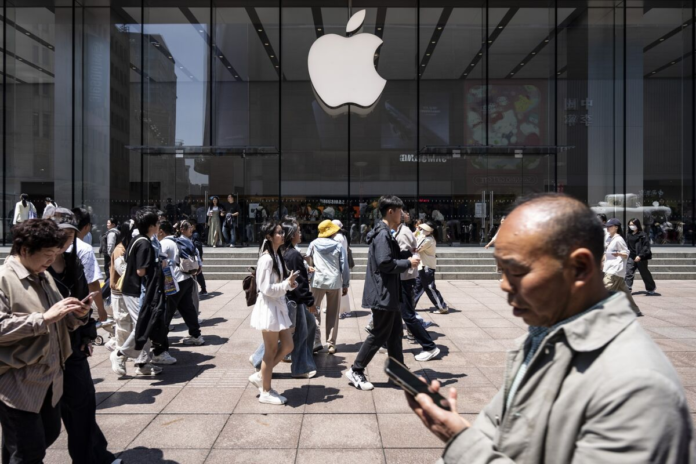
The artificial intelligence (AI) boom is transforming the technology industry in unexpected ways. While AI companies are thriving, consumers may soon have to pay more for everyday gadgets. Apple’s latest decision to increase prices shows just how much the tech world is changing.
Buying an Apple Device? Be Prepared to Pay More
If you’ve been planning to buy a new MacBook, iPad, or Mac Studio, you may have to rethink your budget. Apple has increased prices across several of its popular products, with some models becoming up to $500 more expensive in the US. The company says the reason is simple: memory chips—the tiny components that power computers and tablets—have become much more expensive because of the global AI boom.
The announcement shocked investors, sending Apple’s shares down more than 6% in a single day and wiping out nearly $250 billion in market value.
Why Are Memory Chips Suddenly So Expensive?
Think of memory chips as the brain’s short-term memory inside your computer. Today, companies such as OpenAI, Microsoft, Google and Meta are building massive AI data centres that require enormous quantities of advanced memory chips. As demand has exploded, manufacturers are struggling to keep up.
The result? There simply aren’t enough chips to go around.
Instead of supplying laptop and smartphone makers first, chip manufacturers are prioritising lucrative AI contracts. Companies like Apple are therefore paying much higher prices for the same components.
How Much Have Prices Increased?
Here’s how some Apple products have changed in price.
| Product | Earlier Price | New Price | Increase |
|---|---|---|---|
| MacBook Neo | $599 | $699 | $100 |
| 13-inch MacBook Air | $1,099 | $1,299 | $200 |
| 14-inch MacBook Pro | $1,699 | $1,999 | $300 |
| 16-inch MacBook Pro | $2,499 | $2,999 | $500 |
| iMac | $1,299 | $1,499 | $200 |
| Mac Studio | $1,999 | $2,499 | $500 |
| 11-inch iPad Pro | $999 | $1,199 | $200 |
| iPad mini | $499 | $599 | $100 |
For Apple, raising prices in the middle of a product cycle is highly unusual.
Why Investors Didn’t Like the Move
Normally, Apple absorbs rising production costs rather than passing them on to customers. This time, however, the company decided consumers would bear part of the burden. Investors worry that higher prices could discourage buyers, especially when many households are already dealing with inflation. As a result, Apple’s stock fell sharply, wiping out roughly $250 billion in market value in a single trading session.
While Apple Lost, Chip Companies Won
Interestingly, not everyone lost money. Memory-chip maker Micron Technology reported record earnings on the same day, and its shares surged nearly 16%.
Why?
Because companies making memory chips are benefiting enormously from AI demand.
In simple terms:
| Winners | Why They Benefit |
|---|---|
| Memory chip manufacturers | Higher demand means higher prices and larger profits. |
| AI data-centre companies | They continue buying chips despite rising costs. |
| Consumer electronics companies | Facing higher production costs and lower profit margins. |
| Consumers | Paying more for laptops and tablets. |
Apple Is Also Changing Its Chip Strategy
The price hike wasn’t the only surprise. Reports suggest Apple is planning one of the biggest changes in its in-house chip strategy since introducing Apple Silicon in 2020. Instead of launching the expected M6 Pro and M6 Max chips, Apple may skip them altogether and move directly to the M7 series in 2027. The goal is to make future Macs much better at running AI features directly on the device instead of relying on cloud computing.
Why Is Apple Doing This?
AI is becoming central to every technology company. Future laptops won’t just open apps and browse the internet—they’ll edit videos, write documents, translate languages, generate images and perform complex AI tasks without needing an internet connection. To make this possible, Apple needs much more powerful chips with faster memory. Skipping a generation could help the company reach that goal sooner.
What Does This Mean for Consumers?
If you’re planning to buy an Apple device, here’s what these changes could mean:
| If You… | You Should Know |
|---|---|
| Want a new MacBook | Expect higher prices than before. |
| Need an iPad | Most premium models now cost significantly more. |
| Already own an Apple device | No immediate impact, but future upgrades may be more expensive. |
| Are waiting for next-generation Macs | Apple could introduce major AI-focused improvements with the M7 chips. |
The Bigger Picture
Apple’s announcement highlights a major shift in the technology industry. For years, smartphones and laptops drove demand for computer chips. Today, artificial intelligence has taken over. The same AI revolution powering smarter chatbots and faster computing is also making everyday devices more expensive. In many ways, Apple’s price hike is more than just a change in product pricing—it signals the beginning of a new era where the race to build AI is reshaping the cost, design and future of consumer technology.
As AI continues to grow, consumers can expect faster and smarter devices—but they may also have to pay a premium for them.