The city of Kolkata is set to host the main national celebrations of the International Day of Yoga (IDY) 2026 on June 21, marking another major moment in India’s global yoga diplomacy and wellness movement. The announcement was made by Union Minister of State (Independent Charge) for AYUSH, Prataprao Jadhav, during the “Yoga Mahotsav 2026” event held at the UNESCO World Heritage Site of Khajuraho in Madhya Pradesh.
Kolkata will host the national event for International Yoga Day 2026 on June 21, marking the first time West Bengal will stage the Centre’s flagship Yoga Day celebrations. Union Minister of State (IC) for Ayush, Shri Prataprao Jadhav, announced this during the Yoga Mahotsav 2026… pic.twitter.com/Ia9A8pCXIM
This year’s theme, “Yoga for Healthy Ageing,” will focus on the role of yoga in promoting physical fitness, mental wellness and holistic health among people of all age groups, especially the elderly. The government aims to highlight yoga as a preventive healthcare practice and an essential part of balanced living.
According to reports, Prime Minister Narendra Modi is expected to participate in the main event in Kolkata, continuing his tradition of personally leading the flagship Yoga Day celebrations across India. Over the years, cities such as Chandigarh, Lucknow, Ranchi, Dehradun and Mysuru have hosted the national event.
The announcement came as the government launched the 25-day countdown to International Day of Yoga 2026. During the Khajuraho event, the Ministry of AYUSH also unveiled several initiatives to increase public participation, including the revamped Yoga Sangam Portal for registrations and the Yoga Park Portal aimed at creating dedicated yoga spaces across institutions and states. A new Yoga-themed T-shirt was also launched during the ceremony.
Addressing the gathering, Minister Prataprao Jadhav described Kolkata as a city deeply rooted in India’s spiritual and cultural traditions, making it a fitting venue for the global yoga celebration. He emphasised that yoga represents India’s ancient wisdom and has become an important tool for preventive healthcare and mental well-being in modern society.
The International Day of Yoga was first proposed by Prime Minister Narendra Modi during his address to the United Nations General Assembly in September 2014. Soon after, the United Nations declared June 21 as the International Day of Yoga with overwhelming support from member nations. The first global celebration was held in 2015 at Rajpath in New Delhi and created Guinness World Records for mass yoga participation.
With Kolkata preparing to host the marquee event this year, the celebrations are expected to draw thousands of yoga practitioners, wellness experts, dignitaries and citizens from across the country. The event will further strengthen India’s efforts to position yoga as a global movement for health, harmony and sustainable living.
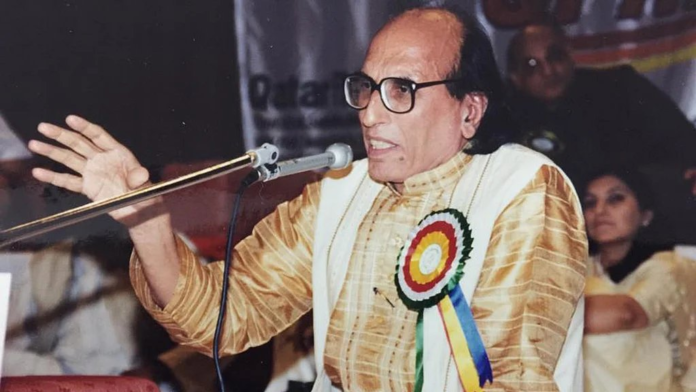
The world of Urdu poetry lost one of its most beloved voices on May 28, 2026, as celebrated poet Bashir Badr passed away in Bhopal at the age of 91 following a prolonged illness.
Born as Syed Muhammad Bashir on February 15, 1935, in Faizabad, Uttar Pradesh, Bashir Badr carved a unique place in Indian literature through his soulful ghazals that blended romance, longing, pain, and quiet wisdom. His poetry transcended generations, finding admirers not only among literary scholars but also among ordinary readers who found their own emotions reflected in his words.
Famous poet of the country, Janab Bashir Badr Sahib, who hailed from Madhya Pradesh, is no more.
For decades, Bashir Badr remained one of the most recognisable faces of the Urdu ghazal tradition. His verses, marked by simplicity and emotional depth, became staples of mushairas across the country. Unlike classical poetry that often remained confined to literary circles, Badr’s poetry travelled effortlessly into homes, hearts, and popular culture.
Beyond poetry, Bashir Badr was also an academic deeply committed to the Urdu language. He taught Urdu at Aligarh Muslim University before serving as the Head of the Urdu Department at Meerut College for nearly seventeen years. His contribution as a teacher shaped countless students and strengthened the academic study of Urdu literature.
Life, however, was not untouched by tragedy.
The communal riots that shook Meerut in 1987 proved to be a devastating turning point. Much of Bashir Badr’s unpublished literary work was reportedly lost during the violence, a personal and creative loss that deeply affected him. In the years that followed, he moved to Bhopal, where he continued to write and remain connected to literature.
Despite personal setbacks and declining health in later years, including a prolonged battle with dementia, Bashir Badr’s poetic legacy remained undiminished.
Many of his lines became timeless expressions of love, separation, and human vulnerability, quoted widely across generations and languages.
He is survived by his wife, Rahat Badr, and their two children.
With Bashir Badr’s passing, Urdu literature bids farewell not merely to a poet but to an era—a gentle craftsman of words whose ghazals carried both fragility and strength, and whose voice will continue to echo wherever poetry is cherished.
The history of Rajasthan is filled with stories of extraordinary courage, sacrifice, and unwavering pride. Across centuries, Rajput women became powerful symbols of resilience during some of the most turbulent periods in Indian history. Whether through acts of battlefield bravery, political wisdom, or ultimate sacrifice, these queens and royal women left behind legacies that continue to live in Rajasthan’s forts, folklore, and collective memory.
Many of these stories are deeply rooted in oral traditions and regional legends, while others are documented in historical chronicles. Together, they reflect the Rajput ideals of honor, duty, and sacrifice that shaped the history of Rajputana.
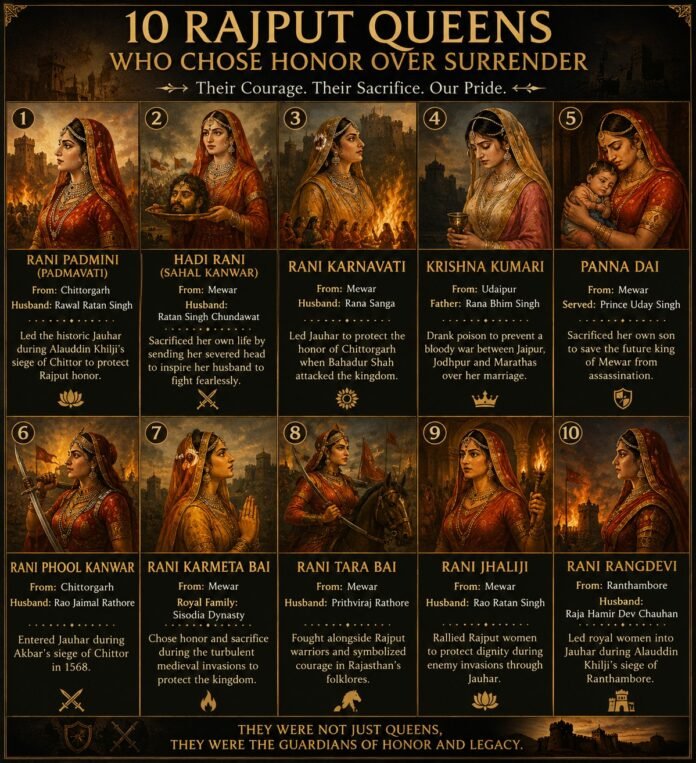
Rani Padmini (Padmavati)
Among the most well-known figures in Rajput history, Rani Padmini of Chittorgarh is remembered for the legendary Jauhar performed during Alauddin Khilji’s siege of Chittor in 1303. According to medieval literary traditions, especially Malik Muhammad Jayasi’s epic Padmavat, she chose death over capture after the fall of the fort.While historians continue to debate the historical accuracy of some aspects of her story, Rani Padmini remains a lasting cultural symbol of Rajput pride and resistance.
Hadi Rani (Sahal Kanwar)
Hadi Rani is remembered in Rajasthan’s folklore as the embodiment of sacrifice and courage. Married to Ratan Singh Chundawat, a Rajput commander, she is believed to have sacrificed her life so that her husband could leave personal attachments behind and fight fearlessly in battle for Mewar.Her story survives primarily through oral traditions and folk narratives, where she is revered as a symbol of supreme devotion and bravery.
Rani Karnavati
Rani Karnavati, the widow of Rana Sanga and regent of Mewar, played a crucial role during Bahadur Shah of Gujarat’s attack on Chittorgarh in 1535. Facing inevitable defeat, she is remembered for leading the women of the fort into Jauhar while Rajput warriors prepared for their final battle. She also remains associated with the famous story of sending a rakhi to Mughal emperor Humayun seeking assistance, though historians differ on certain details surrounding the event.
Krishna Kumari
Princess Krishna Kumari of Udaipur is remembered for a tragic sacrifice made to prevent bloodshed among Rajput kingdoms. In the early 19th century, rival states entered into conflict over her proposed marriage alliance. To stop a devastating war and protect her kingdom, she consumed poison at a young age. Her sacrifice is regarded as one of the most heartbreaking episodes in Rajput history and symbolizes duty towards the larger good above personal life.
Panna Dai
Though not a queen, Panna Dai occupies a revered place in the history of Mewar. Serving as the nurse and guardian of Prince Uday Singh, she made one of the greatest sacrifices recorded in Rajput history. When Banbir attempted to kill the young prince to seize the throne, Panna Dai secretly replaced Uday Singh with her own son in the royal bedchamber. Her son was killed, while the future ruler of Mewar survived. Her loyalty ultimately helped preserve the Sisodia dynasty.
Rani Phool Kanwar
Rani Phool Kanwar, associated with Rao Jaimal Rathore during Akbar’s siege of Chittorgarh in 1568, is remembered in local traditions for participating in Jauhar along with the women of the fort before Chittor fell to the Mughal forces. The siege itself remains one of the most defining moments in Rajput resistance against the Mughal Empire.
Rani Karmavati Bai
Stories associated with Rajput resistance often mention women from the Sisodia dynasty who chose sacrifice and honor during periods of invasion and warfare. While detailed historical records about Rani Karmeta Bai are limited, regional traditions continue to remember such figures as representations of Rajput valor and dignity.
Tara Bai and Other Rajput Heroines
Several Rajput women, including figures remembered in folklore such as Tara Bai and Jhali Rani, symbolize the courage of women who stood beside Rajput warriors during difficult times. Some stories describe them inspiring soldiers, protecting royal families, or participating in resistance during invasions. Though certain accounts belong more to oral history than documented political records, these narratives continue to form an important part of Rajasthan’s cultural heritage.
Rani Rangdevi
Rani Rangdevi, associated with Ranthambore and Raja Hammir Dev Chauhan, is remembered in historical traditions linked to Alauddin Khilji’s siege of Ranthambore in 1301. As defeat became inevitable, she is believed to have led the royal women into Jauhar, following the Rajput tradition of choosing death over capture.
Legacy of Rajputana
The stories of these women continue to occupy a unique place in Indian history and cultural memory. Across Rajasthan, their names survive in folk songs, literature, oral traditions, and the walls of ancient forts that witnessed both glory and tragedy.
They came to symbolize ideals that were deeply valued in Rajput society: ●Honor before surrender ●Duty before personal desire ●Courage in the face of impossible odds
Today, whether viewed through the lens of history, legend, or cultural identity, these queens and heroines remain enduring symbols of sacrifice and resilience in the story of Rajputana.
Travel today is no longer just about collecting destinations or rushing through itineraries. Across India, travellers are becoming far more conscious about how they feel during their journeys — physically, mentally, and emotionally. From clean eating and mindful cafés to wellness-focused stays and calming spaces, people are increasingly seeking experiences that feel healthier, slower, and more intentional.
For years, travel was often associated with unhealthy routines — irregular sleep schedules, heavy meals, exhaustion, and overstimulation. But a noticeable shift is taking place. Modern travellers now want spaces where they can enjoy nourishing food, spend time in peaceful environments, and experience destinations in a more meaningful way.
This growing preference for wellness-led travel has also reshaped the hospitality industry. Cafés, restaurants, and lifestyle spaces are becoming more mindful about what they serve and the kind of atmosphere they create. Wellness today is no longer limited to fitness culture; it has become an essential part of how people choose to travel.
And when it comes to destinations that naturally complement slow living and mindful experiences, Udaipur stands out effortlessly. With its serene lakes, relaxed pace, scenic cafés, and evolving wellness culture, the city has quietly become a favourite among travellers looking for healthier and more balanced experiences.
Here are some of the top healthy food spots in Udaipur that perfectly reflect this growing travel trend.
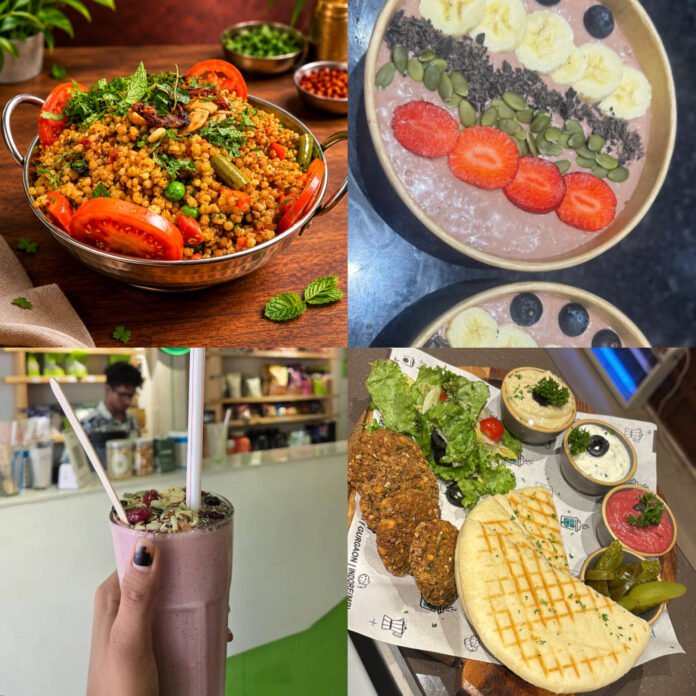
Millets of Mewar
One of the pioneers of healthy eating in Udaipur, Millets of Mewar has been promoting millet-based cuisine long before wellness became mainstream. Built around the philosophy of conscious and locally sourced eating, the café focuses on organic, vegan, gluten-free, and low-oil meals that make healthy food both comforting and flavourful.
Top Recommendations:
●Millet Tikki
●Millet Biryani
Be Swasth
Be Swasth brings together clean eating and indulgent flavours in a fresh, youthful way. Known for its wholesome meals, smoothie bowls, and nutritious wraps, the café has become a favourite among health-conscious travellers looking for food that tastes as good as it feels.
Top Recommendations:
●Veggie Falafel Wrap
●Loaded Berry Smoothie Bowl
JJ’s Healthy Time
More than just a smoothie or juice spot, JJ’s Healthy Time has created a casual wellness-focused space for people looking to recharge during their travels. With fresh juices, smoothies, protein snacks, and daily consumption price point healthy meals, it reflects the growing demand for accessible wellness experiences in everyday travel.
Top Recommendations:
●Triple Berry Smoothie
●Mango Mastani
Love Over Coffee
Blending cosy café culture with mindful eating, Love Over Coffee offers a refreshing alternative to conventional fast-food spaces. With nourishing meals, vibrant beverages, and a calming atmosphere, the café perfectly captures the idea of slow and intentional travel that modern travellers are increasingly drawn towards.
Top Recommendations:
●Lebanese Platter
●The Green Way
As travel continues to evolve, people are no longer looking only for luxury or adventure — they are also searching for balance, comfort, and well-being. The rise of healthier cafés and mindful spaces reflects a larger shift in the way people want to experience destinations today.
And in a city like Udaipur, where beauty naturally encourages people to slow down, these wellness-focused food spaces are becoming an important part of the travel experience itself.
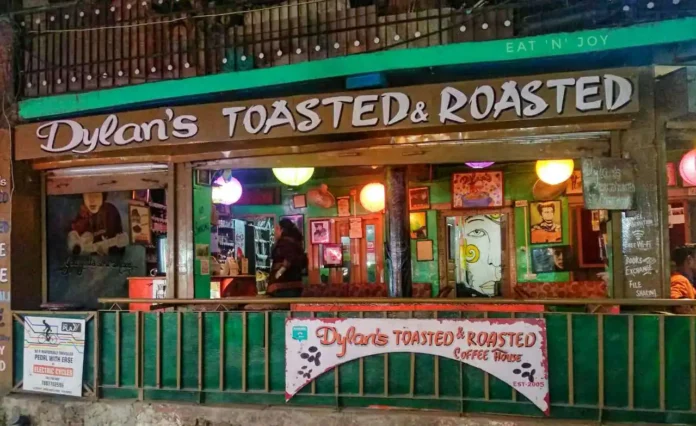
Nestled in the heart of Old Manali, Dylan’s Toasted & Roasted is far more than just a café. Over the last two decades, it has become a cultural landmark for travelers, artists, musicians, and backpackers from across the world. Founded in 2005 by Rajan Nalwa, popularly known as Raj Dylan Nalwa, the café is often credited as one of Himachal Pradesh’s earliest specialty coffee spaces.
But behind the aroma of fresh coffee and homemade cookies lies a deeply personal story of struggle, compassion, creativity, and purpose. In this conversation, Raj Dylan Nalwa reflects on his extraordinary journey — from theatre artist and social worker to café pioneer — while sharing the philosophy, memories, and vision that continue to shape Dylan’s timeless legacy.
Q. What inspired you to start Dylan’s Toasted & Roasted in Old Manali back in 2005?
Before starting the café, I was a full-time theatre artist. Later, I moved to Mumbai, where I became a social worker and worked in Kamathipura, one of the largest red-light areas in the city. During that time, I failed to rescue a 13-year-old Bangladeshi girl who had been sold into a brothel by her own father along with her mother for just ₹5,000.
As a struggling social worker, I felt helpless in supporting such cases. That one incident deeply moved me and inspired me to start something creative where I could earn enough for my livelihood while also helping people in need. Since then, I have regularly supported several rescue projects in Mumbai and Pune.
Q. How did a small café in the hills become such a legendary backpacker destination?
Twenty-one years ago, there wasn’t even a single proper coffee house in Himachal where coffee lovers could enjoy authentic coffee. Dylan’s became one of the first real coffee places in the state in 2005, even before Café Coffee Day arrived in Shimla in 2008.
Within just two weeks, Dylan’s became a hub for backpackers. Over time, our coffee and homemade cookies became the USP of the place. In 2015, we received our first national award, and since then, there has been no looking back. Today, Dylan’s Coffee House has received 11 national and international recognitions and awards.
Q. The café was first called “Double Vision.” How did it eventually become “Dylan’s”?
As I mentioned earlier, the journey began from social work to business, and initially the café was named “Double Vision.” However, many people misunderstood the meaning of the name and often associated it with drugs or hash.
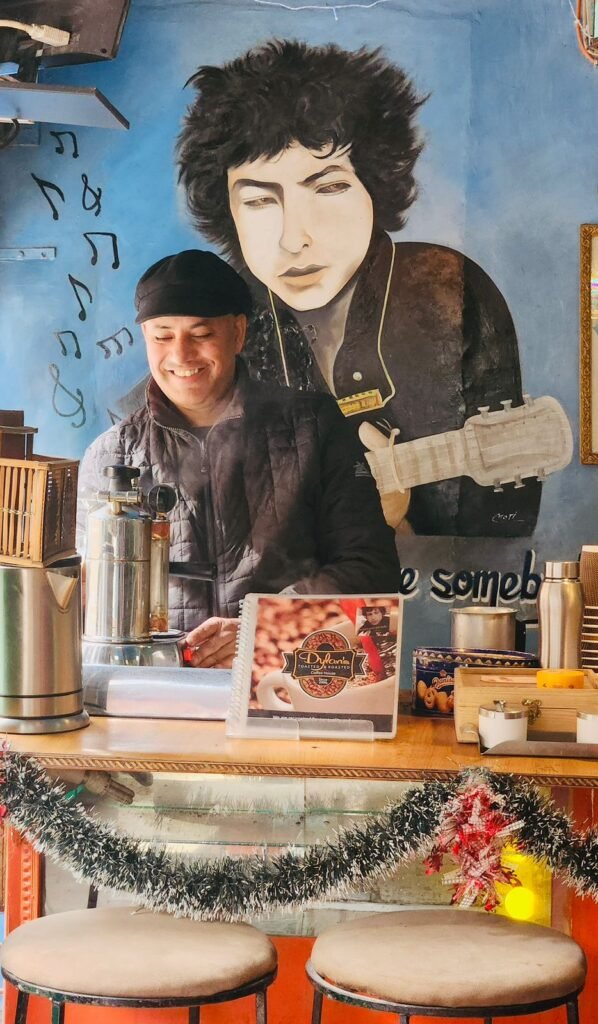
Later, a dear friend suggested the name “Dylan’s” after we painted the first mural of Bob Dylan on one of the café walls. That’s how Dylan’s Toasted & Roasted was born, and eventually became a part of Old Manali’s history.
Q. What makes Dylan’s coffee and food stand out even today?
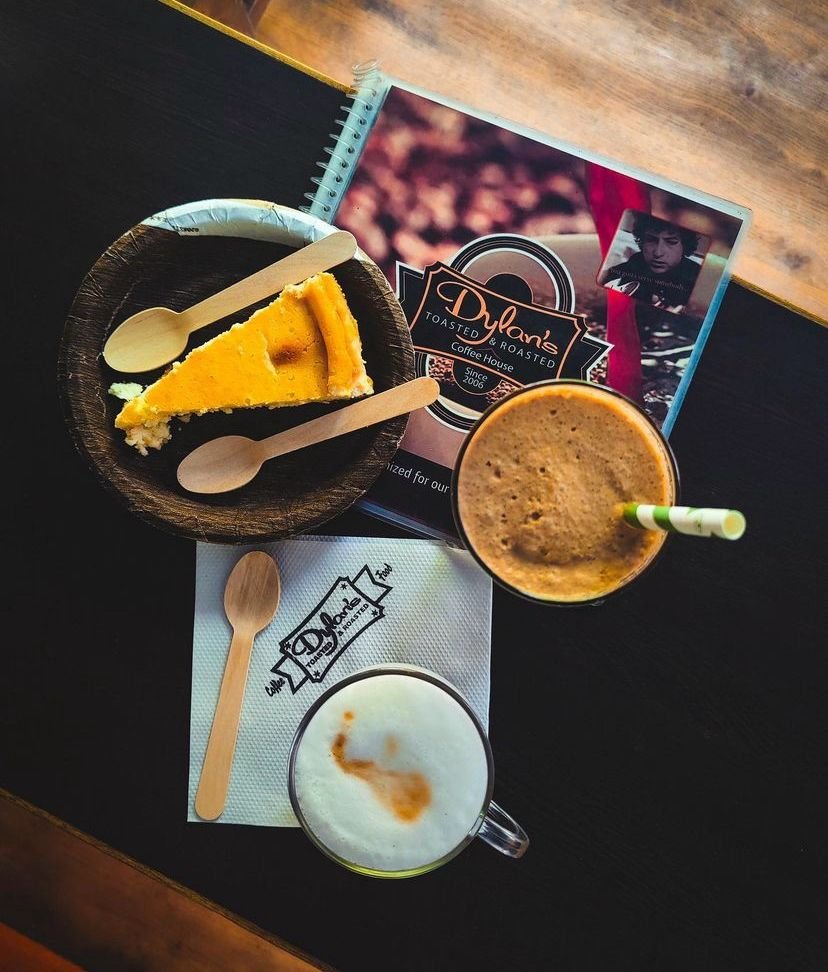
Every item is prepared fresh, and each dish carries my personal touch because I myself am a baker, chef, and coffee expert. We understand our customers’ tastes, likes, and dislikes, so many preparations are customised accordingly.
That is why people continue to love our food and coffee even after 21 years. In fact, many customers who once visited us in their younger days now introduce Dylan’s to their second and even third generations.
Q. How has Old Manali’s café culture changed over the last two decades?
The café culture changed very rapidly after the pandemic, especially with the sudden rise in domestic tourism. Everything became quicker and more commercialised. The relaxed café culture, peaceful atmosphere, and proper café manners slowly started fading away.
Fast-food culture and louder environments have become more common now, and that is one of the biggest changes I have noticed.
Q. What were the biggest struggles you faced while building the café in its early years?
In the early days, everything had to be made from scratch, and proper supplies were difficult to arrange. We struggled a lot to source good coffee beans, chocolate, olive oil, and many other ingredients because nothing was easily available nearby back then.
Q. Is there a memorable guest, moment, or story from Dylan’s that you still cherish?
There are hundreds of memorable stories. I have met several celebrities over the years, and some of them even became close friends.
One story that remains very special to me is about two strangers from politically hostile countries who met for the first time at Dylan’s and fell in love. A year later, I received an email from the girl thanking me and sharing their journey together. Eventually, both of them left their original nationalities and moved to New Zealand. The girl was from Israel and the boy was from Iran.
Under one roof, a simple cup of coffee brought two lives together.
Q. How important have music, art, and travel culture been in shaping the café’s identity?
Music, art, books, and travel culture help build the character and soul of a café. They have played a huge role in shaping Dylan’s identity over the years.
Q. What advice would you give to young entrepreneurs who want to open independent cafés?
One must begin with passion and work wholeheartedly. Your products, service, and behaviour should always make customers want to come back. Also, value every suggestion, correction, and appreciation because they help you grow.
Q. After all these years, what still motivates you to keep Dylan’s going strong?
My biggest motivation is still my passion and my dream of helping rescued children from brothels live a life with dignity and respect.
Q. With so many cafés coming up today, what do you think has helped Dylan’s stay timeless and stand out from the competition?
The key is maintaining high standards and staying personally involved. You cannot simply hire staff, sit back, and only count money. Dylan’s is a family-owned business, and my daughter, my son, and I are deeply involved in every aspect of the café.
For us, there is no unhealthy competition. In fact, I often guide and help other cafés as well. I believe that if every café serves good products and experiences, it ultimately benefits the entire café culture and brings better customers for everyone.
Q. How do you balance preserving Dylan’s old charm while adapting to changing trends?
It is all about the art of balance — preserving the old charm while making small changes with time and trends. People are always looking for something fresh, whether it comes from old-school simplicity or modern ideas.
Q. What is your vision for the future of Dylan’s and Himachal’s coffee culture?
Beyond coffee culture, my dream is to see my children take this legacy to greater heights while remaining grounded and continuing to reach out to people in need.
For me, Dylan’s is not just a café — it is a lifestyle.
Sikkim has scripted a major educational milestone by becoming India’s fifth fully literate state under the ULLAS – Nav Bharat Saaksharta Karyakram. The Himalayan state achieved an impressive literacy rate of 99.82 per cent, comfortably surpassing the Ministry of Education’s benchmark of 95 per cent required for recognition as a fully literate state.
The historic declaration was made on May 27, 2026, by Chief Minister Prem Singh Tamang during the seventh convocation ceremony of Sikkim University held at Manan Kendra in Gangtok. President Droupadi Murmu and Governor Om Prakash Mathur were also present at the event.
The achievement comes under the ULLAS (Understanding of Lifelong Learning for All in Society) programme—India’s national adult education initiative aimed at promoting literacy, numeracy, and lifelong learning. The campaign was launched in Sikkim on November 14, 2022, and implemented extensively across the state’s six districts, 34 blocks, Gram Panchayat units, and urban wards.
Under the programme, authorities identified 15,361 non-literate adults through surveys. Of these, 14,447 learners were certified as literate after successfully clearing the Foundational Literacy and Numeracy Assessment Test, the official evaluation used under the ULLAS framework.
A remarkable aspect of the campaign was the role played by volunteers. More than 4,000 volunteer teachers, including school educators and college students, participated in the literacy drive without receiving any honorarium, reflecting strong community participation and public commitment toward education.
With this recognition, Sikkim joins Mizoram, Goa, Tripura, Himachal Pradesh, and Ladakh among the states and Union Territories acknowledged as fully literate under the ULLAS programme. The recognition is based on adult literacy levels, foundational numeracy skills, and assessment-based certification.
The milestone highlights India’s ongoing efforts to strengthen adult education and foundational learning. By achieving near-universal literacy, Sikkim has emerged as a model for educational inclusion and community-led learning, reinforcing the broader national vision of ensuring reading, writing, and numeracy skills for all citizens.
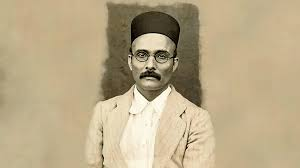
Veer Savarkar Jayanti is observed every year on May 28 to commemorate the birth anniversary of Vinayak Damodar Savarkar, one of the most influential and debated figures of India’s freedom movement. A revolutionary nationalist, writer, poet, political thinker and social reformer, Savarkar dedicated his life to the cause of India’s independence and national awakening. His courage, intellectual strength and relentless patriotism continue to inspire generations across the country.
Born on May 28, 1883, in Bhagur village near Nashik in present-day Maharashtra, Savarkar grew up in a deeply patriotic environment. From a young age, he displayed extraordinary leadership qualities and a strong spirit of resistance against British rule. He founded the Mitra Mela, which later evolved into the revolutionary organization Abhinav Bharat Society, aimed at inspiring youth to fight for India’s freedom.
Remembering Veer Savarkar on his Jayanti. His courage and patriotism will always inspire people. His intellect and emphasis on social reform are also noteworthy. pic.twitter.com/vbW5M3iTnD
Savarkar later moved to London to study law at Gray’s Inn, where he became actively involved in revolutionary activities. During his stay there, he established the Free India Society and inspired Indian students toward nationalism and armed resistance against colonial rule. One of his most significant literary contributions was his book The Indian War of Independence – 1857, in which he described the Revolt of 1857 as India’s first organized war against British rule. At a time when the British dismissed it merely as a “sepoy mutiny,” Savarkar’s interpretation gave the uprising a powerful nationalist perspective.
His revolutionary activities eventually led to his arrest in 1910. In one of the most dramatic episodes of his life, Savarkar attempted a daring escape while being transported by ship from Britain to India. He jumped into the sea at the French port of Marseilles and swam ashore in an attempt to escape British custody. Though he was recaptured, the incident became a symbol of his fearless determination.
Savarkar was sentenced to two life imprisonments amounting to fifty years and was sent to the infamous Cellular Jail in the Andaman and Nicobar Islands, also known as “Kala Pani.” The harsh conditions there were brutal, yet he remained mentally unbroken. Despite severe hardships, solitary confinement and physical punishment, he continued writing poetry and revolutionary thoughts, often composing verses on prison walls and memorizing them for preservation.
Apart from being a freedom fighter, Savarkar was also a social reformer. He strongly opposed untouchability and caste discrimination and advocated social unity among Hindus. He supported inter-caste dining and temple entry for all sections of society. His political philosophy of Hindutva, explained in his 1923 work Hindutva: Who Is a Hindu?, later became highly influential in Indian political discourse.
Savarkar was known for his sharp intellect, remarkable memory and powerful oratory. He wrote extensively in Marathi and English, producing poems, plays, historical works and political essays. Many admirers remember him not only for his revolutionary zeal but also for his discipline, scholarship and unwavering devotion to the nation.
In his final years, Savarkar chose to embrace “Atmaarpan,” a voluntary fast unto death, believing that his life’s mission had been fulfilled. He passed away on February 26, 1966, in Mumbai at the age of 82.
Veer Savarkar remains a towering figure in India’s history — admired for his patriotism, revolutionary courage and intellectual contributions. On his Jayanti, the nation remembers a man who devoted every moment of his life to the dream of a strong, independent and self-reliant India.
SCAMMED THROUGH A SCREEN: BENGALURU’S BATTLE AGAINST DIGITAL ARREST FRAUD
Growing Threat in India’s Digital Age
India’s rapid digital growth has brought convenience, speed, and connectivity to millions of people. However, alongside this technological progress, cybercrime has also evolved into a serious national concern. One of the most alarming forms of online fraud emerging today is the so-called “digital arrest” scam.
In this fraud, cybercriminals impersonate police officers, CBI officials, customs authorities, or bank representatives and threaten innocent citizens with fake criminal charges. Victims are psychologically pressured into transferring large amounts of money under the fear of arrest and legal action.
What makes this crime especially dangerous is that it targets ordinary citizens through fear rather than force. Senior citizens, working professionals, students, and even educated individuals have fallen victim to these scams.
What is a Digital Arrest?
A “digital arrest” is not a real legal procedure under Indian law. It is a cyber fraud tactic created by criminals to extort money from people through intimidation.
Fraudsters usually contact victims through phone calls, WhatsApp video calls, emails, or fake notices. They falsely claim that the victim’s Aadhaar card, bank account, SIM card, or courier parcel has been linked to illegal activities such as money laundering, drug trafficking, or cybercrime.
The victim is then warned that immediate arrest may follow unless they cooperate with the “investigation.” In many cases, scammers force victims to remain isolated on video calls for hours and instruct them not to contact family members, lawyers, or local police.
Under pressure and fear, many victims transfer their savings into fake “government verification accounts.” Once the money is transferred, the fraudsters disappear.
Rising Cases Across India
Digital arrest scams have increased rapidly across major Indian cities, including Bengaluru, Mumbai, Delhi, and Hyderabad. Cybercrime units have reported a sharp rise in financial fraud cases linked to fake law enforcement calls and online intimidation.
Karnataka, especially Bengaluru, has become one of the major hotspots for such cybercrimes due to its high digital connectivity and growing online financial activity. Reports indicate that Karnataka alone lost more than ₹468 crore to digital arrest scams between 2023 and early 2026.
In the first two months of 2026 itself, victims reportedly lost around ₹11.6 crore. Authorities have also stated that recovery of stolen money remains extremely difficult once funds are transferred through multiple fake accounts.
Data on Digital Arrest Scams in Karnataka
Period: 2023 – Early 2026 Reported Financial Loss: ₹468+ crore
Period: January – February 2026 Reported Financial Loss: ₹11.6 crore
Period: Average Loss Per Case in 2025 Reported Financial Loss: ₹62.3 lakh
The figures reveal how rapidly cyber fraud has expanded in recent years. Experts warn that the actual numbers may be even higher because many victims hesitate to report such incidents due to embarrassment or fear.
Major Cases That Shocked the Country
Several recent cases have highlighted the seriousness of this cybercrime.
In Karnataka, a 94-year-old scholar reportedly lost nearly ₹5 crore after scammers convinced him that he was under investigation for financial crimes.
In another case from Mumbai, a senior citizen was cheated of ₹50 lakh by fraudsters posing as Enforcement Directorate officials. Fake documents and WhatsApp court proceedings were used to create fear and urgency.
Police investigations have also uncovered organised cybercrime networks operating through fake SIM cards, forged identities, and mule bank accounts used for transferring stolen money across states and even outside India.
The Legal Perspective
Legally, there is no provision called “digital arrest” in the Indian judicial system. No police officer or government agency can arrest a person through a WhatsApp call or demand money for verification purposes.
Cybercriminals involved in such scams can face charges under: ●The Information Technology Act, 2000 ●Bharatiya Nyaya Sanhita (BNS) provisions related to cheating and impersonation ●Financial fraud and identity theft laws
The government and cybercrime departments have repeatedly advised citizens to avoid sharing personal information or transferring money based on threatening calls. Authorities have also promoted the national cybercrime helpline number 1930 for immediate reporting of online fraud.
Why These Scams Are Increasing
Experts believe that digital arrest scams are growing because criminals now combine technology with psychological manipulation. Fake identities, AI-generated documents, edited video calls, and social engineering techniques make these scams appear believable.
At the same time, increasing dependence on online banking and digital communication has created new opportunities for cybercriminals. Lack of awareness among citizens continues to remain one of the biggest reasons behind the success of these scams.
Conclusion
The rise of digital arrest scams reflects a dangerous transformation in modern crime. Today, criminals no longer need physical weapons or direct contact to exploit people. Fear, misinformation, and digital manipulation have become their strongest tools.
As India moves further into a technology-driven future, cyber awareness must become a public priority. Citizens need to remain cautious, informed, and alert against suspicious calls claiming to represent government authorities.
(The Writer of This Article is Swagatika Pattnaik, APS Jaipur Student of Class XII.)
Twisha Sharma was a model. She had a smile that had won beauty pageants. She had a mother who showered her love upon her, a father who was ready to transfer anything for her smile.. in fact, he continued transferring money into her account as her husband failed to give her any. Also, this smiling girl had a phone which she used to send messages sharing her pain with parents telling them that she was living in hell. On May 12, 2026, Twisha Sharma was found dead at her in-laws home in Bhopal, six months after her wedding. She was 33 years old.
In the Supreme Court of India, as her case was being heard, Tushar Mehta, the Solicitor General of India and the second highest law officer in the country, appearing on behalf of the Madhya Pradesh government, said something that stopped the courtroom cold. “For parents, it is better to have a divorced daughter than a dead one.” The remark was not just about Twisha. It was about every family that stayed silent, every daughter that was told to adjust, and every society that still treats divorce as a bigger shame than a funeral.
The Supreme Court bench, headed by Chief Justice of India Surya Kant along with Justices Joymalya Bagchi and Vipul M Pancholi, took suo motu cognisance of Twisha’s case, flagging institutional bias and procedural lapses in the initial investigation. The bench asked both families to stop speaking to the media and let the CBI do its work.
But before the restraint was called for, the Solicitor General laid bare the social truth sitting underneath the legal one. Twisha had sent messages to her mother saying she was living in hell. Her mother in fact said that she did hear screams and fighting noise on a WhatsApp call on the night she died. Her father kept calling but nobody took the call.
Mehta also told the court that Giribala Singh, Samarth’s mother and a retired judicial officer, had refused to record her statement with investigators despite repeated requests, but she continued giving television interviews attacking Twisha’s character. “This former judge has been giving interviews maligning the deceased. We requested her so many times to record her statement. She does not want to do it,” Mehta told the bench.
The Supreme Court directed the CBI to take over the investigation and conduct it in a fair, independent and impartial manner.
THE NUMBER BEHIND THE NAME
Twisha Sharma is a name. Behind her are numbers that should make every person deeply uncomfortable.
India recorded 5,737 dowry deaths in 2024. That is nearly 16 women every single day. Not in one state or one community. Across the country. Uttar Pradesh alone accounted for over 2,000 of those deaths. Bihar reported over a thousand. And researchers who study how crimes are recorded in India say the real number could be two to three times higher, because dowry deaths are routinely misclassified as accidents, suicides or natural causes, especially in rural areas.
The Dowry Prohibition Act has been on the books since 1961. More than six decades of law. And still, 16 women a day.
TWO WOMEN. FIVE DAYS APART.
Twisha Sharma was not alone in May 2026. Five days before the country learned her name, Deepika Nagar, 24 years old, fell from the rooftop balcony of her matrimonial home in Greater Noida, seventeen months after her wedding. Her family alleged sustained harassment over money and a luxury vehicle her in-laws had demanded. She had internal bleeding and multiple trauma injuries. She did not survive.
Two women within five days time…both young and empowered and education..both newly married and both dead in circumstances their families say were not accidents.
In Jharkhand, a 21-year-old woman was poisoned by her husband after her family could not pay him fifty thousand rupees. In Muzaffarnagar, a woman named Tabassum was strangled at her in-laws’ home and her death was covered up as a COVID casualty, her body buried before the police were informed. A Delhi Police SWAT commando died in January 2026 after being assaulted by her husband over dowry demands.
These are not footnotes. These are women who had names, families and futures.
THE LAW EXISTS. THE PROBLEM DOES NOT CARE.
India has strong laws on paper. Section 80 of the Bharatiya Nyaya Sanhita defines dowry death and prescribes a minimum of seven years imprisonment, going up to life. Section 85 covers cruelty by a husband or his relatives. The courts are clear. The punishment is severe.
And yet acquittals in dowry death cases still outnumber convictions. Investigations are delayed. Evidence is lost. Witnesses turn hostile. Families are pressured into silence. Only around 4,500 of the roughly 7,000 annual dowry death cases between 2017 and 2022 were even chargesheeted. The rest quietly disappeared into a system that was never in a hurry to find answers.
WHAT INDIA KEEPS GETTING WRONG
We march on Women’s Day. We run campaigns about women’s empowerment. We celebrate when a woman breaks a glass ceiling in sport, business or politics. And then we go home to a system that still treats a daughter’s marriage as a financial transaction, a daughter’s suffering as a private family matter, and a daughter’s death as something to be managed quietly before it becomes a scandal.
The Solicitor General of India had to stand in the Supreme Court and remind the country that a divorced daughter is better than a dead one. That this needed to be said, in the highest court in the land, in 2026, tells you everything about how far we still have to go.
Twisha Sharma waited. She adjusted. She sent messages saying she was living in hell. And then the WhatsApp call went dead and nobody picked up the phone.
Until the conversation changes at home, at the wedding table, and in the silence where a daughter’s cry goes unanswered, the number will not change either.
(The writer of this article is Lakshya Govani, a class X student of APS, Jaipur)
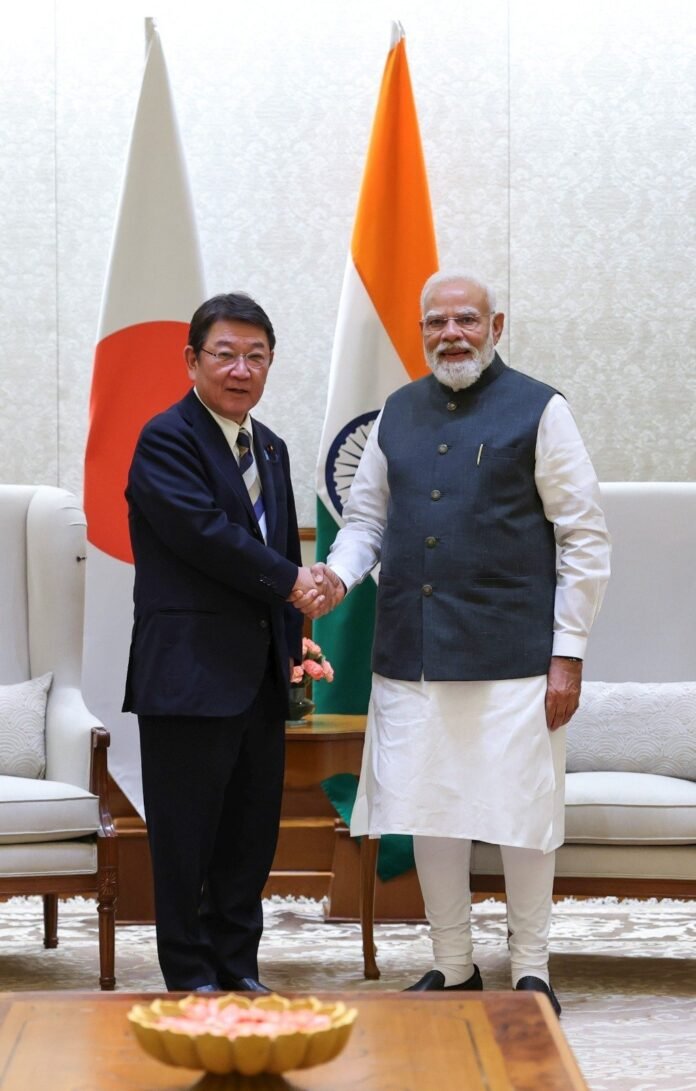
Prime Minister Narendra Modi met Japanese Foreign Minister Takeshi Iwaya in New Delhi on May 26 during the Quad Foreign Ministers’ Meeting, reaffirming the deep and strategic ties between India and Japan. The meeting highlighted the growing cooperation between the two countries across areas such as trade, technology, infrastructure, defence and regional security.
Delighted to receive Mr. Toshimitsu Motegi, Minister for Foreign Affairs of Japan. Reaffirmed the vital role of the India-Japan Special Strategic and Global Partnership in advancing peace, stability and prosperity across the Indo-Pacific and beyond.@motegingpic.twitter.com/39AB2xN6FD
Held at a time of increasing geopolitical focus on the Indo-Pacific region, the interaction underscored the importance both nations place on maintaining peace, stability and prosperity in the region. Prime Minister Modi described India and Japan as trusted partners linked by shared democratic values and a common vision for a free, open and inclusive Indo-Pacific.
According to official statements, the leaders reviewed the progress of the India-Japan Special Strategic and Global Partnership and discussed ways to further strengthen bilateral cooperation. They also exchanged views on regional and global developments, including economic resilience, connectivity and security challenges in the Indo-Pacific.
Japan remains one of India’s closest strategic and economic partners. Over the years, the two countries have collaborated on several landmark infrastructure projects, including the Mumbai-Ahmedabad High-Speed Rail corridor, industrial corridors and metro rail networks. Japanese investments have also played a major role in India’s manufacturing, transport and technology sectors.
The meeting took place alongside the Quad Foreign Ministers’ Meeting hosted by India, which brought together ministers from India, the United States, Japan and Australia. The Quad nations reiterated their commitment to strengthening cooperation on maritime security, critical technologies, supply chain resilience and disaster response.
Prime Minister Modi appreciated Japan’s continued support for India’s development priorities and emphasised the growing people-to-people and cultural ties between the two nations. Japanese Foreign Minister Takeshi Iwaya also conveyed Japan’s commitment to deepening cooperation with India in emerging areas such as clean energy, digital innovation and semiconductors.
India and Japan have steadily expanded their partnership over the past two decades, transforming it into one of Asia’s most important strategic relationships. The latest meeting once again reflected the strong mutual trust and shared vision that continue to drive ties between the two countries.