India is set to enter a new era of sustainable transportation as the Railway Board has approved the country’s first hydrogen-powered train, a major milestone in Indian Railways’ push towards cleaner and greener mobility. The hydrogen fuel cell-based train is expected to begin operations soon on the Jind–Sonipat route in Haryana under the Northern Railway zone.
Ministry of Railways approves the launch of the country’s first hydrogen-powered 10-coach DEMU train.
The move marks a significant step towards promoting green and sustainable transportation in the railway sector.
— All India Radio News (@airnewsalerts) May 27, 2026
The train will be a 10-coach Hydrogen Fuel Cell-based Diesel Electric Multiple Unit (DEMU) equipped with a powerful 1200 KW hydrogen propulsion system. According to railway officials, the train will run at a maximum speed of 75 kilometres per hour and is designed to provide an eco-friendly alternative to conventional diesel-powered trains.
Hydrogen-powered trains are considered one of the cleanest forms of rail transport because they operate with near-zero emissions. Instead of diesel engines, these trains use hydrogen fuel cells that generate electricity through a chemical reaction between hydrogen and oxygen, producing only water vapour and heat as by-products. This makes them an important solution in reducing carbon emissions and dependence on fossil fuels.
The Jind–Sonipat section in Haryana has been selected as the first operational route for this ambitious project. Necessary infrastructure, including hydrogen storage and refuelling facilities, has already been established at Jind. Reports indicate that trial runs for the train were conducted earlier this year before the Railway Board granted formal approval for regular operations.
Greener & More Energy Efficient; First Indigenous Hydrogen Train All Set to Start
✴️10-Car Train with 1200 KW Engine Approved by Indian Railways to Operate at a Maximum Speed of 75 kmph on Jind-Sonipat Section
The launch places India among a select group of countries such as Germany, Japan and China that are actively exploring hydrogen-powered rail technology. Experts believe the project could pave the way for wider adoption of green hydrogen in India’s transport sector and strengthen the country’s commitment towards sustainable development and net-zero emission goals.
Indian Railways has increasingly focused on environmentally friendly initiatives in recent years, including railway electrification, solar energy projects and biofuel technologies. The hydrogen train project is seen as another significant step in modernising India’s railway network while reducing its environmental footprint.
Beyond technology, the hydrogen train symbolises a broader transformation in Indian transportation — one that balances growth with sustainability. As the country prepares to roll out its first hydrogen-powered passenger service, the project stands as a landmark achievement in India’s journey towards cleaner and more innovative public transport.
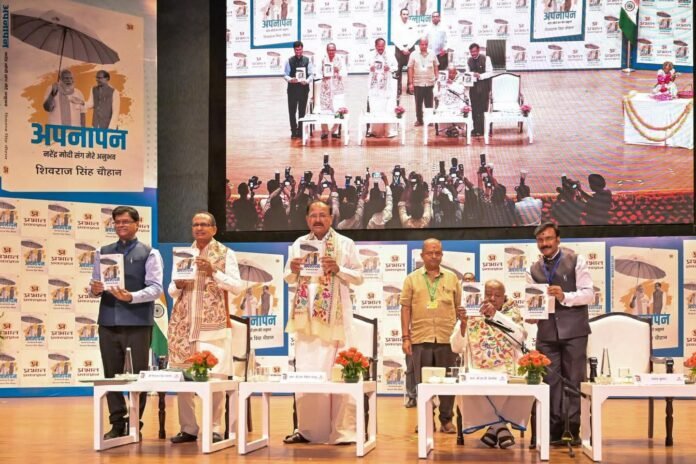
Union Agriculture Minister and former Madhya Pradesh Chief Minister Shivraj Singh Chouhan launched his new book Apnapan at a special ceremony held in New Delhi, offering readers a personal and reflective account of Prime Minister Narendra Modi and his style of leadership. The event drew political leaders, party workers and dignitaries from across the country, turning the launch into both a literary and political occasion.
VIDEO | Delhi: Union Minister Shivraj Singh Chouhan (@ChouhanShivraj) releases his book 'Apnapan: My Experiences With Narendra Modi'. Addressing the gathering, he says, "As workers of the Bharatiya Janata Party, we have traditionally worked in a conventional manner. Many times,… pic.twitter.com/OWS01UmVRU
The title Apnapan, which loosely translates to “sense of belonging” or “warmth,” explores Shivraj Singh Chouhan’s experiences and interactions with Narendra Modi over the years. Rather than being a conventional political biography, the book focuses on personal anecdotes, leadership lessons and moments that reveal Modi’s working style, discipline, technological foresight and connection with party workers.
During the launch, Chouhan shared several interesting stories from the early years of the Bharatiya Janata Party’s organisational journey. One anecdote that received particular attention was his recollection of Narendra Modi introducing the culture of using email within the BJP at a time when many leaders were unfamiliar with digital communication. Chouhan humorously recalled that when Modi asked leaders to “send an email,” one party functionary misunderstood the term and asked which “female minister” he was referring to. The story highlighted how Modi recognised the importance of technology and modern communication long before it became common in Indian politics.
अपनापन, आत्मीयता की अभिव्यक्ति है। अपनापन, नेतृत्व की ज्योति है। अपनापन, प्रेरणा का दीप है।
— Shivraj Singh Chouhan (@ChouhanShivraj) May 26, 2026
The ceremony was attended by several prominent leaders, including Andhra Pradesh minister Nara Lokesh , along with senior BJP members and supporters. Speakers at the event described the book as an insight into the organisational culture of the BJP and the evolution of Narendra Modi’s leadership over the decades.
Chouhan said the book was written not merely to document political events, but to share the human side of leadership — moments of guidance, motivation and emotional connection that often remain outside public discourse. He emphasised that Modi’s strength lies not only in governance but also in his ability to connect personally with people across all levels of society and politics.
अपनेपन और आत्मीयता की अभिव्यक्ति
आज का दिन मेरे जीवन के सबसे भावुक और अविस्मरणीय क्षणों में से एक है। 'अपनापन : नरेंद्र मोदी संग मेरे अनुभव' पुस्तक आज देश को समर्पित हुई।
— Shivraj Singh Chouhan (@ChouhanShivraj) May 26, 2026
The launch of Apnapan comes at a time when political literature around Narendra Modi continues to attract significant public interest. By combining personal memories with political observations, Shivraj Singh Chouhan’s book seeks to present a more intimate portrait of one of India’s most influential contemporary leaders.
Blending nostalgia, humour and political insight, Apnapan offers readers a closer look at the relationships and experiences that have shaped modern Indian politics.
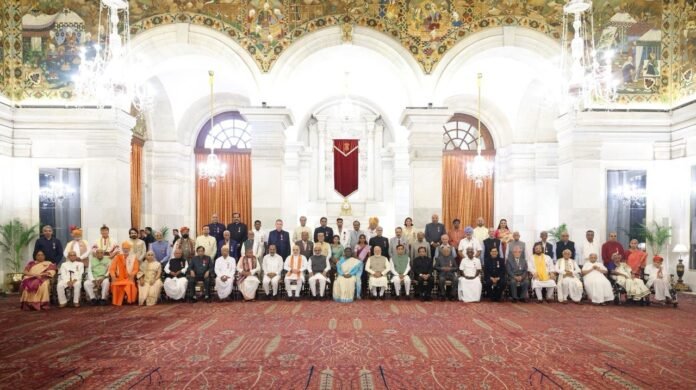
India celebrated the spirit of achievement, dedication and public service as President Droupadi Murmu conferred the prestigious Padma Awards 2026 at the Civil Investiture Ceremony held at the Ganatantra Mandap of Rashtrapati Bhavan in New Delhi on May 25. The grand ceremony brought together distinguished personalities from across the country, with Prime Minister Narendra Modi, Union ministers, diplomats and families of the awardees in attendance.
President Droupadi Murmu presented Padma Vibhushan, Padma Bhushan and Padma Shri Awards for the year 2026 at the Civil Investiture Ceremony-I held at Rashtrapati Bhavan pic.twitter.com/NO5QL7AwT4
— President of India (@rashtrapatibhvn) May 25, 2026
The Padma Awards, among India’s highest civilian honours, recognise exceptional contributions in fields ranging from art, literature and education to sports, medicine, science, public affairs and social work. This year, the President approved a total of 131 Padma Awards, including 5 Padma Vibhushan, 13 Padma Bhushan and 113 Padma Shri honours. During the first investiture ceremony, 66 awardees received their honours, while the remaining recipients will be felicitated at a later ceremony.
The 2026 awards reflected the true diversity of India’s talent and service. Alongside celebrated public figures, several grassroots changemakers and unsung heroes were honoured for their extraordinary work in transforming communities and preserving cultural traditions. The awards also included 19 women recipients and 16 posthumous honours, highlighting contributions that have left a lasting impact on the nation.
Among the most emotional moments of the evening was the posthumous Padma Vibhushan awarded to veteran actor Dharmendra, received on his behalf by actress and parliamentarian . The ceremony also honoured personalities from cinema, music, sports and business whose journeys have inspired millions.
Legendary singer Alka Yagnik, actor Mammootty, cricketers Rohit Sharma and Harmanpreet Kaur, Paralympic gold medallist Praveen Kumar and banker Uday Kotak were among the prominent names recognised this year. Their achievements reflected the expanding reach of the Padma Awards in celebrating excellence across diverse spheres of Indian life.
Beyond glamour and recognition, the ceremony carried a deeper message — that dedication, perseverance and service to society remain the true markers of national honour. Prime Minister Narendra Modi described the stories of the awardees as “inspiring journeys,” noting that many recipients had worked quietly for years away from the public spotlight.
Attended the Padma Awards ceremony today. The ceremony was filled with pride, gratitude and inspiration as distinguished personalities from diverse fields were honoured for their exceptional contributions to society and our nation.@PadmaAwardspic.twitter.com/aai7H47JKK
The Padma Awards 2026 once again showcased the richness of India’s talent and the power of individual contribution. From artists and athletes to social reformers and educators, the honourees represented the many faces of a nation driven by excellence, resilience and service.
Observed every year on May 28, Menstrual Hygiene Day aims to raise awareness about the importance of menstrual health and hygiene while challenging the stigma and silence surrounding menstruation. The date — 28/5 — symbolically represents the average menstrual cycle of 28 days and the average duration of menstruation, which is around five days.
Despite being a natural biological process, menstruation continues to be treated as a taboo in many parts of the world. Millions of girls and women still face discrimination, misinformation and lack of access to proper sanitary products, clean toilets and healthcare facilities. In several communities, periods are associated with shame, leading many girls to miss school, avoid social interactions or suffer in silence.
Menstrual Hygiene Day serves as a reminder that menstrual health is not just a women’s issue, but a matter of dignity, education, equality and public health. Access to safe menstrual products, proper sanitation and accurate information is essential for the well-being and confidence of menstruating individuals.
Poor menstrual hygiene can lead to infections and other health complications. Experts stress the importance of using clean sanitary products, changing them regularly, maintaining personal hygiene and disposing of menstrual waste safely. In recent years, awareness around sustainable menstrual products such as menstrual cups and reusable cloth pads has also increased, encouraging both affordability and environmental responsibility.
Schools, governments, NGOs and healthcare organisations across the world observe the day through awareness campaigns, workshops and health drives. In India too, several initiatives have focused on making sanitary pads affordable and improving menstrual education, especially in rural areas where awareness remains limited.
Equally important is the need to break social myths around menstruation. Conversations about periods should be normalised at homes, schools and workplaces so that young girls grow up with confidence instead of embarrassment. Men and boys also have an important role in supporting open dialogue and ending stigma.
The theme of Menstrual Hygiene Day goes beyond hygiene alone — it is about ensuring that no one is held back because of a natural biological process. By promoting awareness, education and access, the day encourages society to create a world where menstruation is treated with understanding, respect and dignity rather than silence and shame.
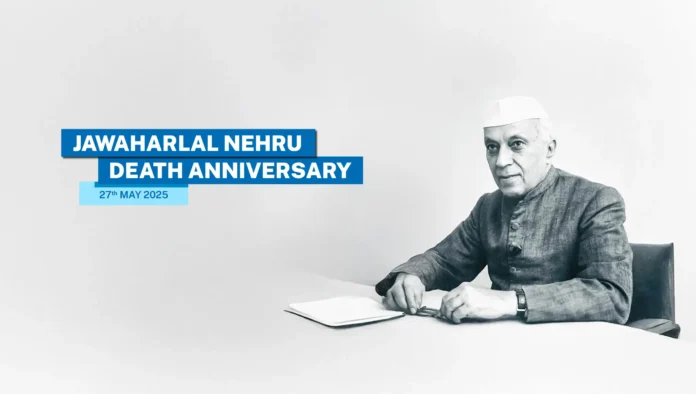
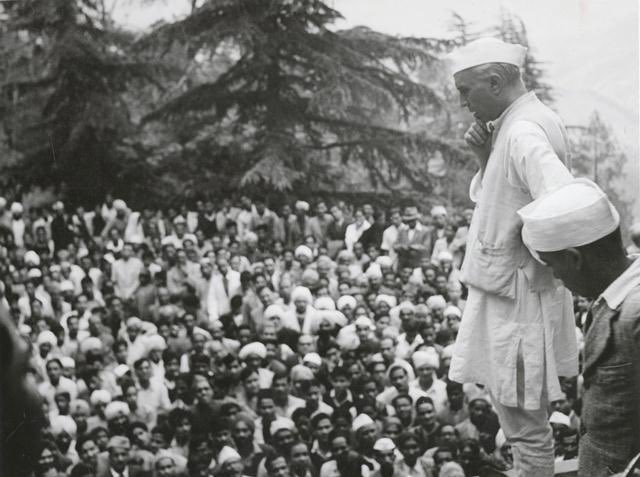
On May 27, India remembers its first Prime Minister, Jawaharlal Nehru, on his death anniversary — a day that marks the passing of one of the most influential architects of modern India. Fondly called “Pandit Nehru” and “Chacha Nehru,” he played a pivotal role in shaping the nation’s democratic foundations, economic vision and global identity after Independence.
Born on November 14, 1889, in Allahabad, Nehru emerged as a prominent leader of India’s freedom struggle under the guidance of Mahatma Gandhi. His commitment to nationalism, secularism and social progress made him one of the leading voices in the fight against British rule. After India gained independence in 1947, Nehru became the country’s first Prime Minister and remained in office until his death in 1964.
Nehru’s tenure laid the groundwork for modern India. He strongly believed in democracy, scientific temper and industrial growth. Under his leadership, India established major institutions such as the Indian Institutes of Technology (IITs), large public sector industries and important scientific and research centres. His vision of planned economic development led to the creation of dams, steel plants and infrastructure projects, which he famously called the “temples of modern India.”
On the global stage, Nehru championed the policy of non-alignment during the Cold War era, ensuring that India maintained an independent foreign policy rather than aligning with major power blocs.
Nehru was also deeply associated with children and education. His affection for children earned him the title “Chacha Nehru,” and his birthday is celebrated across India as Children’s Day.
However, his legacy remains a subject of both admiration and debate. While many credit him for building democratic institutions and a modern developmental framework, critics often point to challenges faced during his tenure, including the 1962 Sino-Indian War and economic limitations of the early decades after Independence.
Jawaharlal Nehru passed away on May 27, 1964, leaving behind a legacy deeply intertwined with India’s formative years as an independent nation. Decades later, his contributions continue to shape political discourse, governance and the idea of India itself.
Padmini Ekadashi is one of the rarest and most spiritually significant Ekadashis in Hindu tradition. Dedicated to Lord Vishnu, it falls during the Shukla Paksha of Adhik Maas or Purushottam Maas — an extra lunar month that appears approximately once every three years. Because of this, Padmini Ekadashi is considered exceptionally sacred and powerful.
According to Hindu scriptures, especially the Padma Purana, observing this vrat with devotion is believed to cleanse sins, bring prosperity, remove obstacles and guide devotees toward spiritual upliftment and moksha (liberation). Spiritual practices performed during Adhik Maas are said to carry multiplied merit, making this Ekadashi even more auspicious.
The vrat is also associated with a popular legend in which a devoted and pious woman performs intense penance and worship of Lord Vishnu. Pleased with her unwavering devotion, the Lord blesses her with peace, prosperity and spiritual liberation. The story highlights the power of faith, discipline and surrender to the divine.
In 2026, Padmini Ekadashi is being observed on May 27, though the exact muhurat and timings may vary slightly according to regional Panchangs. The Ekadashi tithi begins on May 26 at 5:10 AM and ends on May 27 at 6:21 AM.
Devotees usually wake up early, take a holy bath and worship Lord Vishnu with flowers, Tulsi leaves, fruits and sweets. Many observe a strict fast, avoiding grains and consuming only fruits or milk. Chanting Vishnu mantras, reading the Vishnu Sahasranama, listening to the vrat katha and staying spiritually mindful throughout the day are important rituals. Charity and helping the needy are also considered highly rewarding on this occasion.
What makes Padmini Ekadashi truly special is its emphasis on inner purification. Beyond rituals and fasting, the day encourages devotees to practise self-control, devotion, compassion and spiritual reflection. In today’s fast-paced world, the vrat serves as a reminder to pause, reconnect with faith and seek peace within oneself.
For many devotees, Padmini Ekadashi is not just a religious observance, but a sacred opportunity for spiritual renewal and divine grace.
There are journeys that take us across mountains, rivers, and valleys and then there are journeys that quietly lead us inward, towards faith, peace, and spiritual awakening. My visit to the holy shrine of Machail Mata Temple in the enchanting Paddar Valley of Jammu and Kashmir was one such unforgettable experience.
On the morning of 14 August 2023, while the world around us was still asleep, my family and I began our sacred pilgrimage from Udhampur at around 4 a.m. Accompanied by close family friends, we set out with hearts full of excitement and devotion. As our vehicle moved deeper into the mountains, the changing landscapes became more mesmerizing with every passing mile. The mighty Chenab River flowed alongside the winding roads like a silver ribbon cutting through the rugged Himalayas, while the cool mountain breeze carried a strange sense of calm and anticipation.
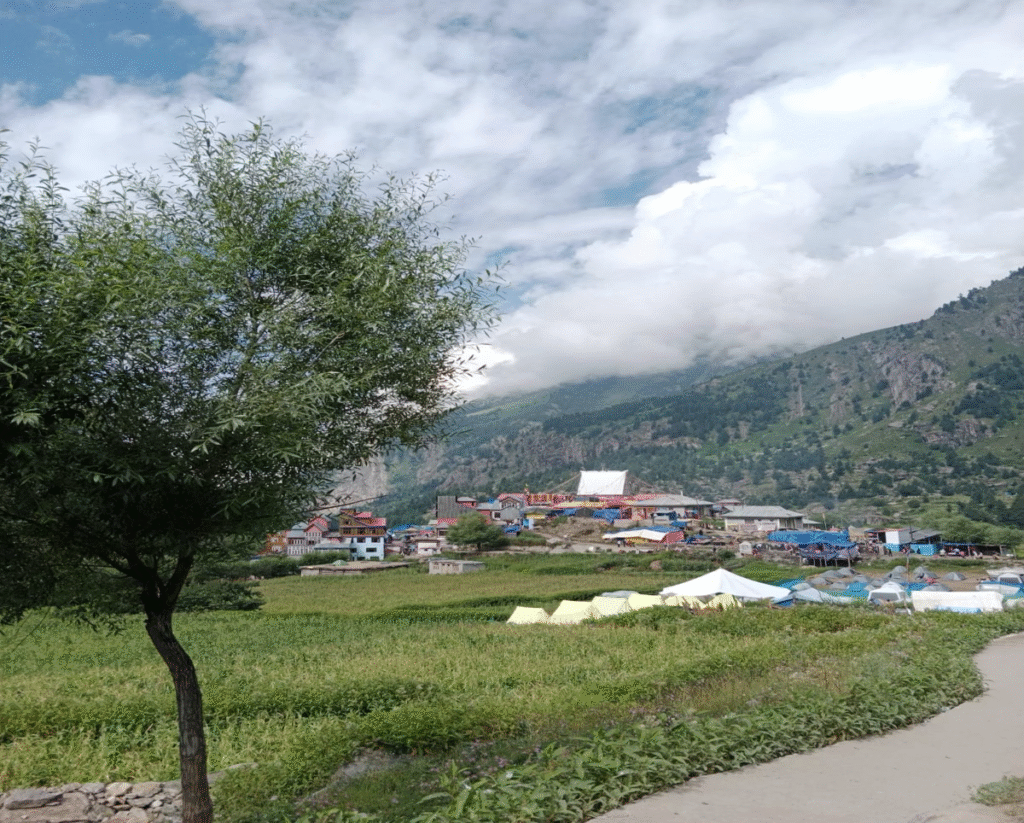
By noon, after several refreshing halts to admire nature’s beauty, we reached Gulabgarh in Kishtwar district, the base camp of the revered Machail Mata Yatra. Nestled amidst towering mountains, Gulabgarh buzzed with spiritual energy as thousands of devotees gathered there before continuing their onward journey to the shrine.
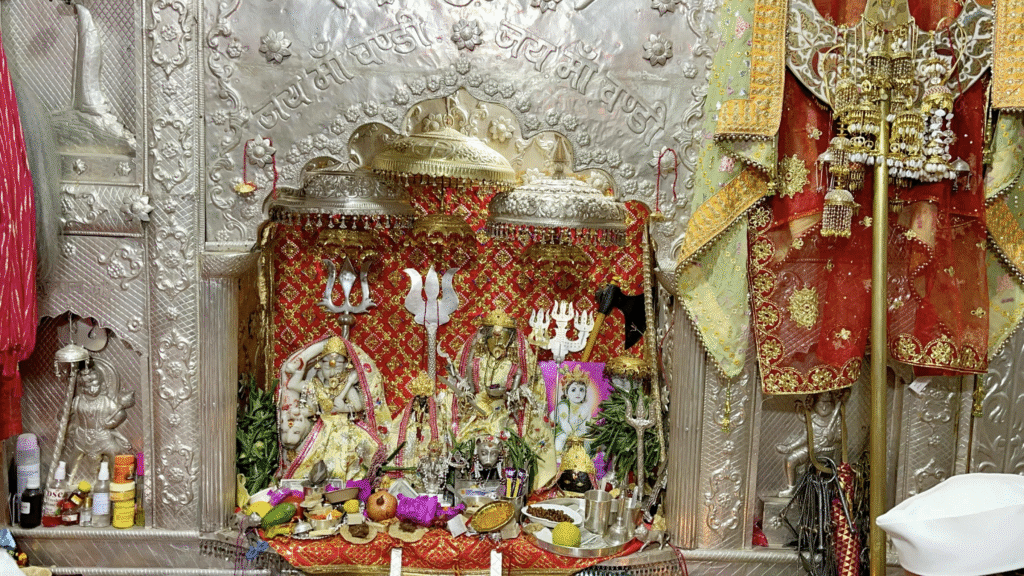
The sacred shrine of Machail Mata is situated in the remote village of Machail at an altitude of nearly 2,800 metres above sea level. Surrounded by snow-clad peaks, cascading waterfalls, lush green valleys, and crystal-clear streams, the place appears less like a destination on earth and more like a hidden piece of heaven.
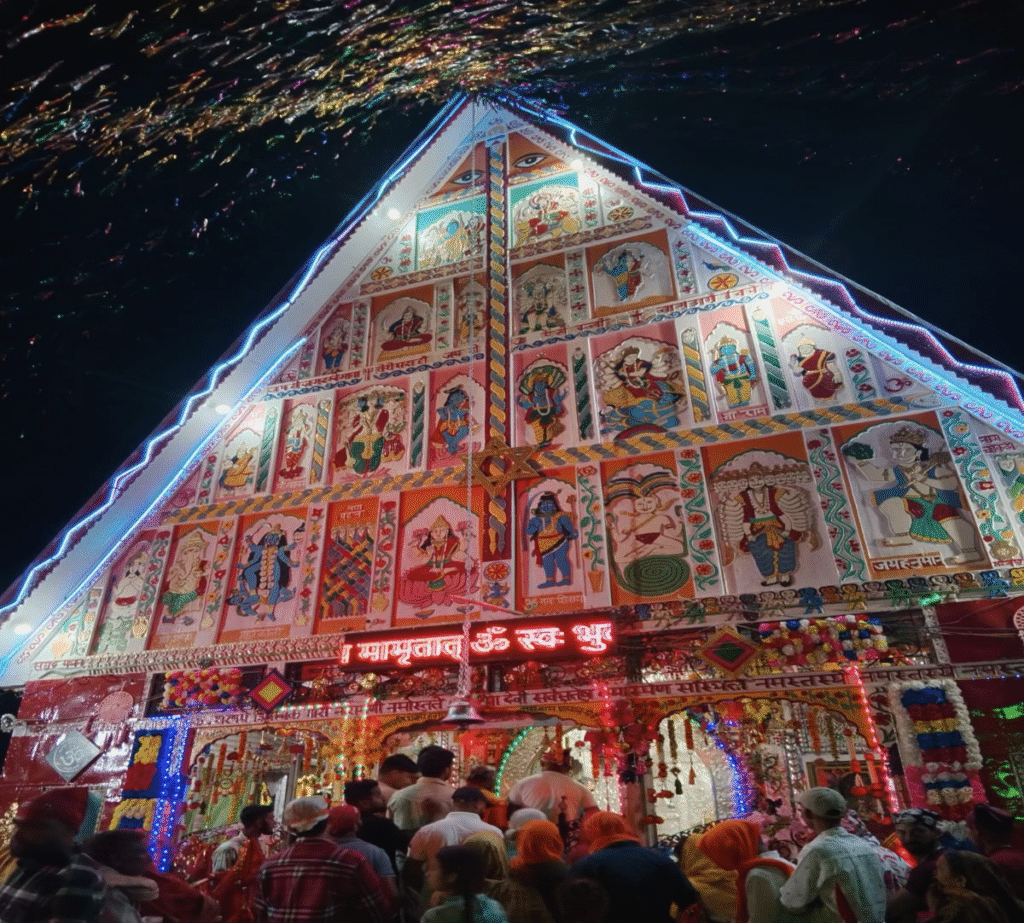
Machail Mata Temple
The temple is dedicated to Goddess Chandi, a fierce and powerful manifestation of Maa Durga, also worshipped as Kali. Legends and faith breathe through every stone of this sacred place. It is believed that during the Indo-Pak wars near Ladakh and surrounding regions, Indian soldiers prayed to Mata Machail for protection and victory, and their prayers were answered time and again. Even the legendary warrior General Zorawar Singh is said to have sought blessings here before his victorious campaigns. After attaining success, he organized a grand hawan to spread the divine glory of Mata.
Over time, the devotion towards Mata grew stronger, especially through the efforts of Guru Kulveer Singh Ji, who later popularized the famous Machail Mata Yatra.
Divine Signs Inside Temple
Many fascinating beliefs are associated with the temple. Devotees say that Mata sometimes gives divine signs by slightly moving her jewellery, particularly the earrings and hands of the idol. Some fortunate devotees even claim to have witnessed the idol opening her eyes, an experience considered deeply sacred and miraculous.
How to Vist the Shrine
From Gulabgarh, pilgrims can either undertake the challenging trek to the shrine or opt for helicopter services. The trekking route, stretching nearly 21–32 kilometres through the Himalayas, usually takes one to two days depending on weather and stamina. Many devotees prefer walking despite the difficulty because the journey itself becomes a form of devotion. Along the route, one witnesses breathtaking mountain scenery, flowing rivers, and the unwavering faith of pilgrims chanting the name of Mata.
The Aerial Journey to Temple
Our family chose the helicopter ride, and within minutes we found ourselves soaring above the magnificent valleys of Kishtwar. The ten-minute aerial journey was truly magical. From above, the mountains looked endless, the rivers shimmered beneath the sunlight, and the valleys appeared untouched by time. It felt as if nature itself was welcoming us into the divine abode of Mata.
Facilities During Yatra
Despite being located in a remote Himalayan region, the yatra is remarkably well-managed. Pilgrims are provided with several facilities including buses, taxis, Sumos, and local transport up to Gulabgarh. Helicopter services make the journey easier for elderly devotees and families. Numerous langars offer free meals to visitors throughout the route, while tea stalls and small eateries provide refreshments amidst the chilly mountain weather. Medical camps, resting tents, drinking water facilities, and security arrangements ensure the safety and comfort of pilgrims.
After reaching Machail, we booked a tent for the night. As evening descended upon the valley, the entire landscape transformed into a breathtaking canvas of silence and beauty. The majestic Himalayas stood proudly under the fading golden sunlight while the cool winds whispered through the mountains. Sitting there amidst nature’s grandeur, I felt an indescribable sense of peace.
Bask under the serene surroundings of temple premises
The most memorable part of the journey came when I finally entered the sacred temple premises. The ringing of temple bells, the fragrance of incense, the chants of devotees, and the divine aura surrounding the shrine filled my heart with immense positivity and devotion. In that moment, all worldly worries seemed to disappear. I felt spiritually connected—as if the divine presence of Mata herself had touched my soul.
Every corner of the temple radiated faith, serenity, and sacred energy. It was not merely a visit to a holy place; it was an experience of inner peace that words can hardly describe.
After spending the night amidst the divine atmosphere of Machail, we began our return journey the next day. Yet, while returning home, it felt as though a part of my heart had remained behind in those sacred mountains.
This pilgrimage was much more than a religious trip. It was a beautiful blend of devotion, adventure, natural beauty, and spiritual awakening. The memories of the majestic Himalayas, the sacred temple, and the divine energy of Mata Machail will remain etched in my soul forever.
Some journeys end when we return home. But journeys like the Machail Mata Yatra continue within us for a lifetime.
(The writer of this article is Akhilesh Saproo, a student of APS Jaipur, who is studying in class X E)
India is home to 191 recorded species of cockroaches, with more than 60 percent of them found exclusively within the country, according to a new study conducted by the Zoological Survey of India (ZSI).
Published in the taxonomy journal Zootaxa, the study also unveiled India’s first and largest DNA barcode reference library for cockroaches, marking a significant advancement in insect taxonomy and biodiversity research.
191 Species Documented, Including Endemic Lineages
The latest findings expand India’s documented cockroach diversity to 191 species, adding several previously undocumented and endemic lineages.
Researchers generated more than 100 high-quality DNA barcodes to support accurate species identification and classification, helping scientists better understand the country’s insect biodiversity.
DNA Barcoding Helps Identify Species
DNA barcoding involves using a short genetic sequence—typically from the mitochondrial cytochrome c oxidase I gene—to identify species.
Scientists say the technique is particularly useful in taxonomy for distinguishing closely related species and resolving classification challenges among organisms that display similar external characteristics.
Collaborative Scientific Effort
The research was carried out by scientists from the Zoological Survey of India’s Western Regional Centre in Pune, Southern Regional Centre in Chennai, and Prof. Ramkrishna More College.
The study forms part of a broader initiative aimed at building a comprehensive genetic reference library for India’s insect diversity.
Ancient Origins and Ecological Importance
Researchers noted that some of India’s endemic cockroach lineages may trace their origins to Gondwana, the ancient supercontinent that once connected present-day India with Africa, South America, Antarctica, Australia, and Madagascar.
Far from being merely household pests, cockroaches play vital ecological roles as decomposers, nutrient recyclers, and bioindicators that help maintain ecosystem balance.
Recent Discovery in the Deccan Region
Earlier this year, in March 2026, ZSI scientists identified a new species—Neoloboptera peninsularis—from the Deccan Peninsula near Nathachiwadi in Pune.
That discovery had raised the country’s documented cockroach count to 190, before the latest update increased the total to 191 species.
Under modern classification systems, cockroaches belong to the order Blattodea, which also includes termites. Scientists believe the new DNA reference library will strengthen biodiversity conservation and improve future research into India’s rich insect fauna.
Pandit Jawaharlal Nehru, independent India’s first Prime Minister, was not only a freedom fighter and statesman but also a distinguished thinker and writer. Serving as Prime Minister from 1947 to 1964, Nehru played a pivotal role in shaping modern India through democratic governance, industrial development, scientific progress and secular values.
Born on November 14, 1889, Nehru received his early education at home before studying abroad in England. His intellectual depth and broad worldview were reflected in his writings, particularly The Discovery of India, Glimpses of World History, and An Autobiography. Throughout his public life, Nehru inspired people with his vision, eloquence and progressive ideas.
Even decades after his passing on May 27, 1964, Nehru’s words continue to resonate across generations. Here are some of his most inspiring quotes:
On Language and Culture “A language is something infinitely greater than grammar and philology. It is the poetic testament of the genius of a race and culture.”
On Hard Work and Dedication “Loyal and efficient work in a great cause, even though it may not be immediately recognized, ultimately bears fruit.”
On Ideals and Principles “Failure comes only when we forget our ideals and objectives and principles.”
On Responsibility and Consequences “It is only too easy to make suggestions and later try to escape the consequences of what we say.”
On India and Civilization “India has known the innocence and insouciance of childhood, the passion and abandon of youth, and the ripe wisdom of maturity.”
On Hope and Human Spirit “Without that passion and urge, there is a gradual oozing out of hope and vitality.”
On Adventure and Learning “There is no end to the adventures that we can have if only we seek them with our eyes open.”
On Ideals “But the ideal is terribly difficult to grasp or to hold.”
On Life and Choice “Life is like a game of cards. The hand you are dealt is determinism; the way you play it is free will.”
Jawaharlal Nehru’s legacy lives on not only through the institutions he helped build but also through his words, which continue to inspire reflection on democracy, humanity and nation-building.
In a breakthrough that is exciting astronomers worldwide, scientists have detected a mysterious radio signal that journeyed across space for nearly 10 billion years before reaching Earth. The signal, identified as FRB 20240304B, was first captured on March 4, 2024, by the MeerKAT radio telescope in South Africa.
Researchers later used the James Webb Space Telescope (JWST) to trace the origin of the signal to a small, clumpy, low-mass dwarf galaxy actively forming stars. The discovery is being hailed as a major milestone in understanding the early universe.
What Are Fast Radio Bursts?
FRB 20240304B belongs to a mysterious class of cosmic phenomena known as Fast Radio Bursts (FRBs), extremely short but powerful flashes of radio waves emitted from distant regions of space. These bursts last only milliseconds yet can release enormous amounts of energy.
Astronomers study FRBs through factors such as dispersion measure, redshift, and host-galaxy localisation, which help reveal information about the material the signal crossed on its way to Earth.
A Glimpse into ‘Cosmic Noon’
Scientists say the burst originated when the universe was only around 3 billion years old, during an era called “Cosmic Noon.” This period, roughly 2–3 billion years after the Big Bang, marked the peak of star formation across the cosmos.
The detection of FRB 20240304B has doubled the redshift range of previously localised fast radio bursts, allowing astronomers to probe even deeper into the universe’s past.
Powerful Telescopes Behind the Discovery
The discovery relied on a combination of advanced observatories:
MeerKAT (South Africa): A powerful radio telescope array that first detected the burst.
James Webb Space Telescope: Operating in infrared wavelengths, JWST helped identify the host galaxy.
LOFAR (Low Frequency Array): A European radio telescope network used for low-frequency astronomy.
Scientists believe some FRBs may originate from magnetars—highly magnetised neutron stars—though the exact source remains under investigation.
Another Deep-Space Discovery
In a separate finding, astronomers using LOFAR discovered a radio mini-halo surrounding the SpARCS1049 galaxy cluster, located about 10 billion light-years away and spanning more than one million light-years—further expanding humanity’s understanding of the universe.