Home Blog Page 874

Confident the kids stand to tell interesting tales; Thanks Aunty K for training them smart!

0


Do you know that when kids narrate stories, they don’t just passively listen to them, but they become far more socially expressive. The good story tellers learn the art of influencing and persuading people. In fact, that is the reason why story telling has become the most critical skill of the future generation.

Reading the pulse of kids who love getting engaged in the art of story telling, Aunty K with stories or Khushoo, hence, started The Little Kathakar programme where she is making young kids adept in the art of story telling.

You shall be surprised to know that many of her kids have been shortlisted by Bookosmia which is India’s premier writing platform for kids, which has been publishing over 100 original digital stories a month.

With several digital stories written by kids narrating the video stories by best storytellers, her kids have been standing with confidence to narrate the stories which is their own creativity.

Surprised? Isn’t it? But then, yes, this is a fact. Now let’s share the story of Mehul, who despite being 7 year old, has been surprising Aunty K with his out of the box ideas.

“However, he brought a proud moment for us when his creation during little Kathakar First Edition got selected by Bookosmia for publication.

 He penned down a cute little story about four cows with a message – United we stand, divided we fall.

Bookosmia congratulated Stories with unity K for nurturing his creative talents.

Similarly, little Anvy of seven year has also earned credentials at Bookomia with her story Lali’s Jungle Safari, says Aunty K.

Now, if you want to take the sojourn into the kids story world, you can take them to Aunty K who is starting her second edition of Little Kathakar from July 18 for kids under the age category of 7-12 years.

So rush before you get late to register your kids for this wonderful programme which will set a milestone in your children’s carrier. 
Killing the dragon differently!

0

Rajasthan catches up ‘vocal for local’ trend for ensuing Rakshabandhan festival!

Pledging for making Atmanirbhar Bharat, they avow to kill the dragon via the ‘boycott chinese products’ slogan

This Raksha Bandhan will be different in many ways!

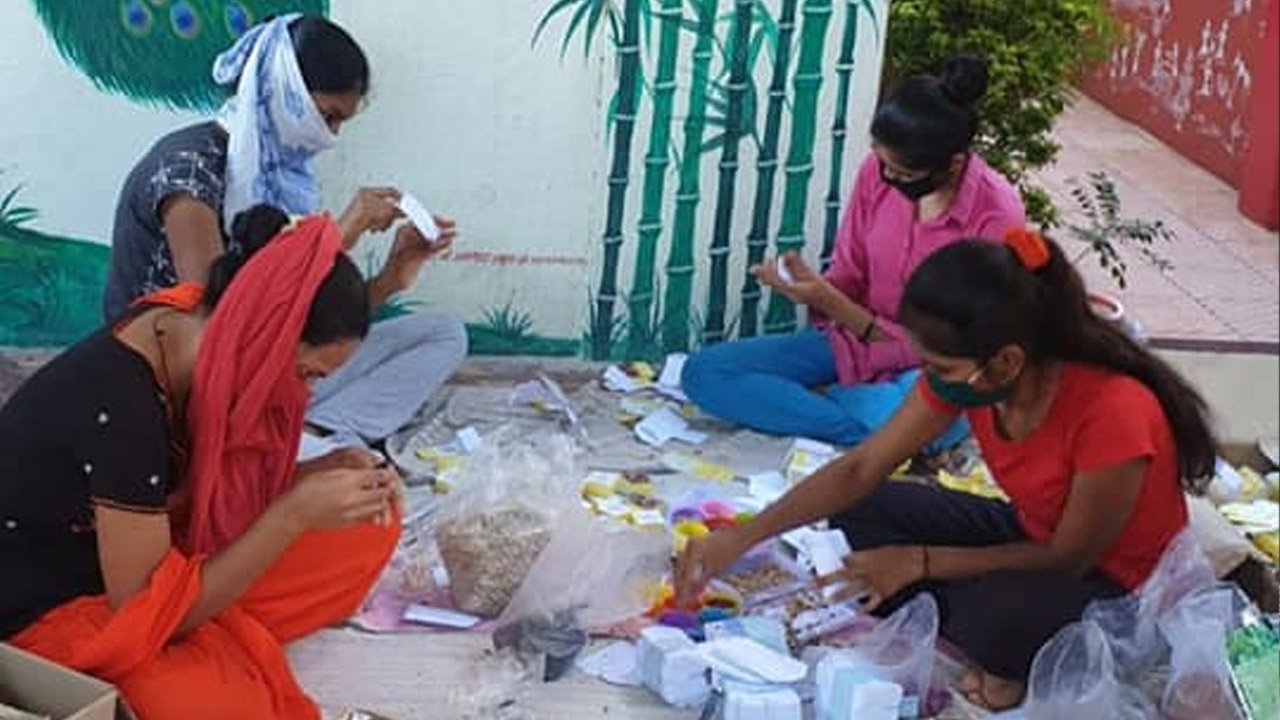
Sisters shall pledge to make Atma Nirbhar Bharat in Banswara  following PM’s call for Vocal for local. They have started making handmade rakhis boycotting the Chinese raw material which till last year dominated the Rakhi manufacturing market.

In fact, they shall tie ‘Swadeshi Rakhi’ on their brother’s hands and shall pledge to use Indian made goods, said Swati Jain and Sandeep Tripathi from Banswara who have been running an NGO, Sparsh Sansthan here.

The members of the organisation are busy rolling out Swadeshi Rakhis.

The couple has already started training their team to make bulk rakhis with Indian made stuff.

“On this rakshabandhan, all sisters will pledge to use India made goods and shall boycott any China made good while tying rakhis on their brother’s hands,” said Swati Jain.

This couple has been engaged in many social issues and have a big team which is now involved in rolling out swadeshi rakhis as the festival is not far off now, said Sandeep.

They are training people to make handmade rakhis using India-made raw material, boycotting the Chinese raw materials which was earlier being used by Rakhi manufacturers on large scale.

Besides Banswara, there is a large scale Rakhi production started in Bharatpur too while giving a big boost to the Atmanirbhar Bharat campaign.

Many people in this city are getting engaged in making handmade rakhis using the cowdung and tulsi seed while dejecting Made-in-China stuff.

Himani, associated with rakhi making, says, “On vocal for local call given by PM Narendra Modi, we are making handmade rakhis which can be sown in pots or gardens after its use. A Tulsiplant will come out of it there being a tulsi seed placed in the rakhi. These rakhis shall be much better than the plastic made rakhis which posed environment threat to us, she added.

The Panchgayvashala and Research Centre is training many hands to make idols, watch, pots and frames too by using cowdung, said Himani.

Vijay Ojha, associated with the organisation, said, “Last time, we had supplied these cowling made rakhis to places like Ujjain, Varanasi, Delhi and Jaipur. Now, this year, we have already started receiving  big orders from different places and hence we are a big bulk with 25 different forms of rakhis, he said.

Besides Bharatpur and Banswara, women self help group are being trained in Ajmer too to make handmade rakhis with indian raw material. The training is imparted in Arjunlal Sethi  Nagar where women are imparted training for micro-finance too.

Missing experiencing monsoons in COVID-19 times? Let’s tour these 5 desert cities virtually

0

As COVID-19 has left us packed inside our houses, the beautiful monsoon is forcing us to go outside and relish the beauty which nature has spread around in desert state. We are hence providing you the list of beautiful destinations where you should travel when things normal under ‘New Normal’.

So here comes the detailed list:

Bundi: Monsoons make Bundi a mesmerising place with Taragarh  Fort reflecting all its splendour and glory as rains give a beautiful view. The stepwells,  aesthetically carved havelis and Nawal Sagar Lake will leave you stunned once you make a visit in this historic town.

The small town is blessed with beautiful stepwells, or baori which once were the only method of obtaining and storing water here. You shall be surprised to see that there are over 50 stepwells that rise and fall depending on the water table. The most famous boari is Rani Ki Ji Baori also called as Queen’s Step Well which was built in 1699 by the spurned queen. Dabhai Kund and Nagar Saga Kund (called as Janana Sagar and Ganga Sagar) constructed between 1871 and 1875, are 2 step wells are yet another beautiful sites which shall leave you stunned with its beauty.

Missing experiencing monsoons in COVID-19 times? Let's tour these 5 desert cities virtually
Bhimlat Waterfall

Jodhpur: Also called as Blue City, Jodhpur visually treats eyes in many ways. The houses here are painted in blue shade which gives a pristine view. The beautiful forts and temples make it a reason to visit this place during monsoon as rains add a pristine sheen to all-famous Mehrangarh Fort, Umaid Bhawan Palace, Jaswant Thada Mausoleum, Ghanta Tower, etc.

Missing experiencing monsoons in COVID-19 times? Let's tour these 5 desert cities virtually

Keoladeo: Known as the Bharatpur Bird Sanctuary, the Keoladeo National Park is one of the world’s most important bird breeding and feeding grounds. Blessed with over 370 species of birds and animals including the basking python, deer, nilgai and painted storks, this place has been visited by Bird lovers and ornithologists from all across the world. The Indian ornithologist and naturalist Salim Ali is the man behind creating the Keoladeo National Park.

The trek of the park can be covered by walking on foot, cycle or rickshaws. In fact, the park management has trained the rickshaw pullers in bird watching and they make for extremely knowledgeable guides.

Missing experiencing monsoons in COVID-19 times? Let's tour these 5 desert cities virtually

Mount Abu: This hill station is called as Shimla of Rajasthan which is blessed by many lakes, gardens, hills and waterfalls. Once you have stepped on the land of Mount Abu, you are certainly vulnerable to losing yourself amidst its greenery and evergreen beauty. Located in the Aravalli Range, Mount Abu is a must-visit destination for you if you have never been to a surreal location blessed with beauty in diversity.

Missing experiencing monsoons in COVID-19 times? Let's tour these 5 desert cities virtually

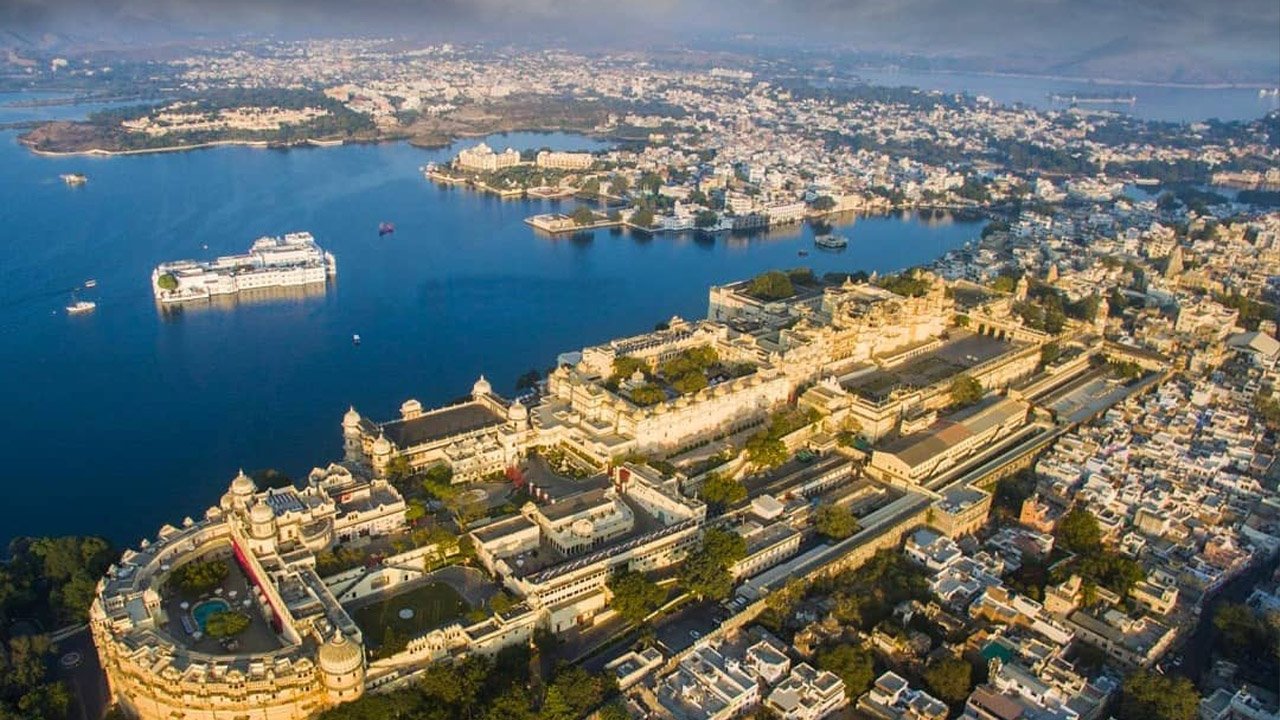
Udaipur: Blessed with many beautiful forts and palaces and lakes, monsoon makes this city look like a heaven with clouds hovering around over the blue surface of its lakes. Breeze embraces the rooftop of the City Palace and rowing in Lake Pichola are a surreal experience during rains. Monsoon remains one of the best time to visit Rajasthan. A boat ride on a pleasant day or evening will make your holiday in Udaipur even more magical and mesmerizing that you would expect it to be.

Missing experiencing monsoons in COVID-19 times? Let's tour these 5 desert cities virtually

Wanna catch the fancy of painted havelis? Visit Shekhawati in Rajasthan

0

Wanna see an open art gallery in Rajasthan existing in the form of colourful frescoes?

If yes, you should take a tour to Shekhawati and you are bound to fall in love looking at the mesmerising art flowing on walls and ceilings here.

The age-old havelis exist in vast spread nine villages of Shekhawati region, namely, Mandawa, Laxmangarh, Fatehpur, Nawalgarh, Ramgarh, Bissau, Chirawa, Dundlod and Mahansar.

In fact, the history of Shekhawati region is quite interesting which once housed 22 ‘crorepatis’ including the biggies namely Oswals, Mittals, Birlas, Goenkas, Singhanias etc. All of them have had their roots here in the region

The town symbolises a striking similarity as almost all havelis used natural colours till the 19th century. While Lime was a substitute for white, indigo, vermilion, ultramarine, verdigris, etc was used in prayer rooms and bedrooms. The themes of these havelis reflected the colourful frescoes speak the stories of mythology, local festivals and love stories.

Now let’s discuss a few havelis which have been luring the tourists from world across:

Seth Arjundas Goenka Haveli: Situated in Dundlod, this haveli is one among those constructed way back in 1875. It houses 20 rooms, accommodates a fortified gate and is also housing a museum.

Wanna catch the fancy of painted havelis? Visit Shekhawati in Rajasthan

Ramgarh Fresco Hotel: This is yet another haveli which speaks how traders collected a vast wealth and later were spending it to beautify their havelis.

In fact, Ramgarh has the largest number of frescoes existing in Shekhawati. The once Khemka Haveli has now been converted into a century-old Haveli called as Ramgarh Fresco Hotel. Regular walking tours are organised around this painted town.

Wanna catch the fancy of painted havelis? Visit Shekhawati in Rajasthan

Piramal Haveli: Seth Piramal Chaturbhuj Makhania built this haveli in 1928 which accommodates a big garden in present times which has two pillared courtyards too.

It also houses colourful wall tiles and pretty kitsch frescoes, which show flying angels and gods with motorcars. Presently, Neemrana group manages this property.

Once you visit this region, you shall hear the stories how the Shekhwati region came into being. The story dates back to the 15th century when Rao Shekhaji (1433-88) conquered north region of Amer, called as Shekhawati. This region changed the fortunes of many businesses.

The traders made money and spent in making beautiful artistic havelis due to which this region, even in present times, remains the largest open-air gallery in Rajasthan.

Fashion from rustic rural lanes

0

Are you aware of the fashion trends being followed by Rabari community from Gujarat who wear huge earrings which are as big as their ear lobes and in fact their skirt in red and black goes in direct contrast with their blouse and tattoo designs.

Surprised? Yeah, in fact, it is very surprising to see the women walking with elan reflecting their traditional style statements.

Speaking to EBNW, Rami Ben, one of their community members says, “Our family members ensure that girls aged 15-16 years get their ears completely pierced before their wedding.”

She adds that ear piercing process starts with a small neem stick which is pushed into the ear. As it gets bigger, the number of sticks going inside also become bigger making a cut through the earlobe.

The community members have big tattoos on their arms, which they say is their tradition.

Fashion from rustic rural lanes
The tattoo work on her hands contrasts with her skirt

“Earlier, our mothers and grandmothers used to make dots with a tattoo needle. Now machines are doing the same.”

The dots in the tattoos match with the designs on their dresses — dotted skirt in red and black matched with either a black or red blouse.

The Rabaris basically are a semi-nomadic tribe, found in arid regions of Gujarat and Rajasthan who are adept in the embroidery and crafts.

Fashion from rustic rural lanes
It’s a beautiful red and black combination!

The objects they embroider highlight significant events, rites and rituals and values in their lives. The girls from this community traditionally embroider blouses, skirts, veils, wall hangings, pillows, purses, etc.

Appliqué, Heer Bharat, Kathi and Bead Work etc make their artwork.

When traditional methods are merged with modern means to defeat corona

0

A small town in Rajasthan has been using traditional methods with modern means to defeat COVID-19 which is spreading its tentacles soon and fast in village lanes of Rajasthan.

This small town is none other than Dungarpur, a tribal dominated district, which has merged simple traditional methods with modern means using puppet shows and pictorial stories to spread awareness on COVID-19.

The district administration in this town are using traditional methods of puppet shows and chitra katha which were packaged in the form of e—puppet show and e-chitrakatha. To ensure that messages reach out to maximum people, it ensured  that the dialogues were also recorded in the local Wagadi dialect.

When traditional methods are merged with modern means to defeat corona
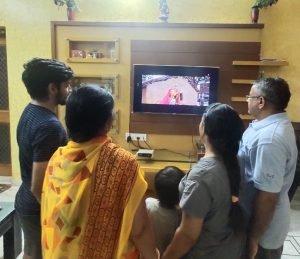
People watching puppetry show to make themselves aware of corona precautions

A beautiful video series was prepared keeping the interest of students who were staying back in home during lockdown.

As the writer of the series was Alok Sharma, who is working as a teacher in Jawahar Navodaya Vidhyalaya in Dungarpur, he wrote an interesting script to spread awareness on symptoms and prevention from corona.

The series also presented the advisories to be followed at home and while going out about social distancing.

This innovative model is garnering praise all across and eventually, it was also released in Hindi language and shared on different social media handles.

Also, Information and broadcasting ministry’s regional outreach bureau also shared this on its official twitter handle

With these e-series, an attempt has been made to solve the curiosity and doubts of the common man in a simple and easy language with excellent dialogues.

The series speaks on spread of corona virus infection, its symptoms, prevention and treatment precautions for pregnant women etc. It also attempts to address the innate curiosities arising in the minds of people residing in rural areas. These promotional materials are being widely publicised on social media especially WhatsApp, Facebook, YouTube and Instagram.

Her songs & saris have set newer trends in Bollywood; meet Usha Uthup, who is a style icon @72!

0

Usha Uthup started her career from a nightclub in Chennai

Her starting salary was Rs 750 a month in 1960s

She was the only singer to have been singing in the nighclub wearing a saree

Do you know that renowned Bollywood singer Usha Uthup started her career from a nightclub in Chennai somewhere around 1960s drawing a starting salary of Rs 750 a month?

The legendary singer, who is known for her distinguished style with a big bindi on her forehead and pretty saris, in fact, went to a night club for singing wearing sari.

On her first day of her job in the nightclub, the first comment she received was, ‘What will this Amma sing here?’

However, she remained deterred.

“There were other girls who were wearing short dresses, those black dresses but I was draped in sari.  I avoided all comments and concentrated to give my best and soon all those comments turned into compliments, says Usha speaking in an event in Jaipur.

But the singer holds all positive memories from her first job; in fact, she quotes it as her preliminary school where she learnt a lot.

With her distinguished voice, Usha Uthup made a mark in the industry which needs no introduction. In fact, her husky voice demarcates her from rest of singers.

Also, her ability to sing in myriad languages makes her the queen of music industry.

This wonderful singer has given her voice to numerous songs sung in Punjabi, Bengali, Marathi and of course Hindi.

Usha sings all her songs with equal elan.

When asked how she manages the show in all these languages, she promptly answers ‘Because I am a true Bharatiya.’

She is quick to say that she was born in a Madrasi (Tamilian) family, then she studied in Mumbai, married to a Keralite and lived in Kolkata.

“Doesn’t this sound amazing,” she asks.

She strongly feels that one needs to break the set notions no matter where you are and accepts that even Bollywood has set certain stereotypes in the industry.

“While renowned singers including Lataji and Asha ji (Lata Mangeshkar and Asha Bhonsle) were given the songs of Bollywood heroines, I was asked to sing for vamps in films. However, I managed to break the notion that good females always come with that feeble, sweet voice. 

“Ultimately, I started singing for Bollywood divas — be it Rekha, Sridevi among many others.”

Am proud to have my signature style of singing, she says adding, “I can’t sing like anybody, but only like me. What I can do on stage, I can, but not all that everyone else is doing,” she said.

Meet this 23-year-old fashionista who rolls out Laado range for your lovely kids

0

Women have phenomenal energy and there creativity remains unlimited, no matter what comes the challenge and what remains their age!

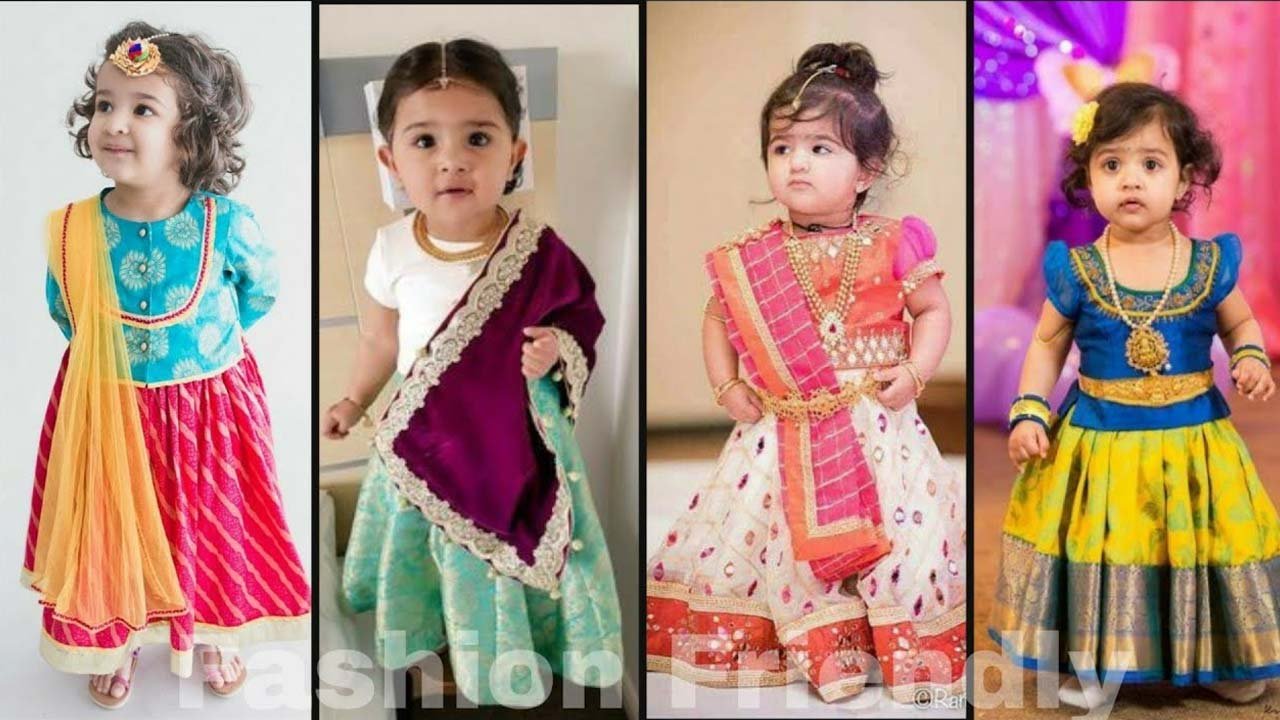
These facts prove real looking at Laado, a superb ethnic clothing range for kids, launched by a 23-year-old fashionista Harshita.

The young girl studied the psyche of parents who were sick running from one boutique to another to buy the best for their child.

Harshita wondered how she can make it convenient for them to shop for their kids and launched her brand- Laado which comes equipped with the beautiful and comfortable festive clothing for children starting from newborn to 16 years of age.

Meet this 23-year-old fashionista who rolls out Laado range for your lovely kids

Harshita says, “We all shop for new lehengas or anarkalis to add on to the Diwali joy- but what about kids? Should they celebrate Diwali in jeans or a skirt? Moms are often at a loss when thinking about what their toddlers should wear for a wedding- it makes them wonder how they could have saved times had there been more options for kid’s festive wears? Going further, the problem of their ever-changing sizes is yet again a challenge.”

Looking at tremendous issues being faced by parents, “We, at Laado, launched a one-stop solution to all these troubles and created a range of vibrant and elegant options for festive clothing for children.
We encouraged customisations in terms of size, colour and even designs- in order to create the perfect outfit for your little munchkin.”

Meet this 23-year-old fashionista who rolls out Laado range for your lovely kids


Harshita says Ladoo promises parents of providing a seamless experience of a boutique.
“We just made life easier for so many parents. A child’s laugh is infectious, and we are dedicated to bringing smiles and cheer on children’s faces.”

The young girl also has a soft heart for a few unfortunate ones, for which she decided to donate 5% of her profits to the children’s NGOs. “I want to bring smiles for all kids and hence have been donating 5pc of my profits to NGOs working for kids,” she says.

Ladoo knows how to win millions of hearts by her simple deeds. Isn’t it?

Here comes a good news; Jaipur to get the world’s 3rd largest cricket stadium

0

The Pink City shall get world’s 3rd largest cricket stadium with 75,000 capacity

The Motera Stadium in Ahmedabad is the largest stadium in the world third while the Melbourne Cricket Ground in Australia is second largest.

While Motera has a seating capacity of 1.10 lakh, the MCG can accommodate 1.02 lakh spectators

The audience  in the new stadium to come shall get world-class facilities

The new green stadium shall bask under the sheen of latest flood flights

It shall have sufficient space to accommodate around 4,000 vehicles in the stadium

If you too are feeling low watching all negative news of Corona crisis and seeing many of your favourite Bollywood celebs saying good-bye, here is some good news for you…!

Say cheers as Jaipur in Rajasthan shall get the world’s third largest cricket stadium soon which shall have a seating capacity to accommodate around 75,000 spectators.

Here comes a good news; Jaipur to get the world’s 3rd largest cricket stadium

This world-class green stadium will be well-equipped with state-of-the-art facilities such as modern grand pavilion stands, corporate boxes, plush sports field, modern club house and many other world class features for indoor games and sports training facilities.

It shall have two restaurants for the audience, 30 practice nets for players and a press conference room with a seating capacity of 250.

The stadium construction would progress in two phases; the first phase will be developed with 45,000 seating capacity while the second would have a seating capacity of 30,000.

Here comes a good news; Jaipur to get the world’s 3rd largest cricket stadium

Rajasthan Cricket Association (RCA) Secretary Mahendra Sharma said that the stadium shall spread over 100 acres of land. “The land has been finalised in Chonp village, 25 km from Jaipur on the Jaipur-Delhi Highway and the construction is expected to begin in the next four months,” he added.

Sharma informed that after the Motera Stadium in Ahmedabad and the Melbourne Cricket Ground in Australia, the Jaipur stadium shall be the third largest stadium. While Motera has a seating capacity of 1.10 lakh, the MCG can accommodate 1.02 lakh spectators.

Mehta and associates LLP and Delhi based sports design consultancy firm GRAS, who will build the stadium, have given a presentation of the design to RCA chief patron C.P. Joshi and RCA President Vaibhav Gehlot, Sharma said.

Guru Purnima: Significance and History

0

Guru Poornima is being celebrated with zeal and fervour all across the nation on Sunday.

However, are you aware of reasons why we have been celebrating this festival since ages and centuries? Do you know the significance and history of this festival?

If no, we are here sharing the glorious history of this festival, exploring reasons why this festival has been celebrated in our country since decades.

A glance into some interesting facts:

Guru Poornima has a deep meaning hidden in its name: Guru Poornima in itself is a paradoxical term, with ‘Gu’ meaning darkness and ‘ru’ standing for the removal of darkness. Thus, a guru is believed to be someone who removes all darkness from our lives.

Teachers in different parts of the world are respected on this day: People of different age groups pay respect to teachers all over the country. In Nepal, this auspices day is celebrated as Teacher’s Day. In fact, gurus, including spiritual to secular ones, are being given all due respect on this auspicious day.

Lord Buddha gave his first sermon on this day: It is believed that Lord Buddha gave his first sermon on this day. Buddha went from Bodhgaya to Sarnath, Uttar Pradesh after five weeks of achieving enlightenment under the Bodhi tree, where he gave the sermon on the full moon day. The followers of Buddha hence celebrate Guru Poornima to worship him.

Shiva transmitted Yoga learning to his disciples: Even Lord Shiva, it is believed,  did transmit the learning of yoga to his disciples, the ‘Saptarishis’ or seven sages on this day.

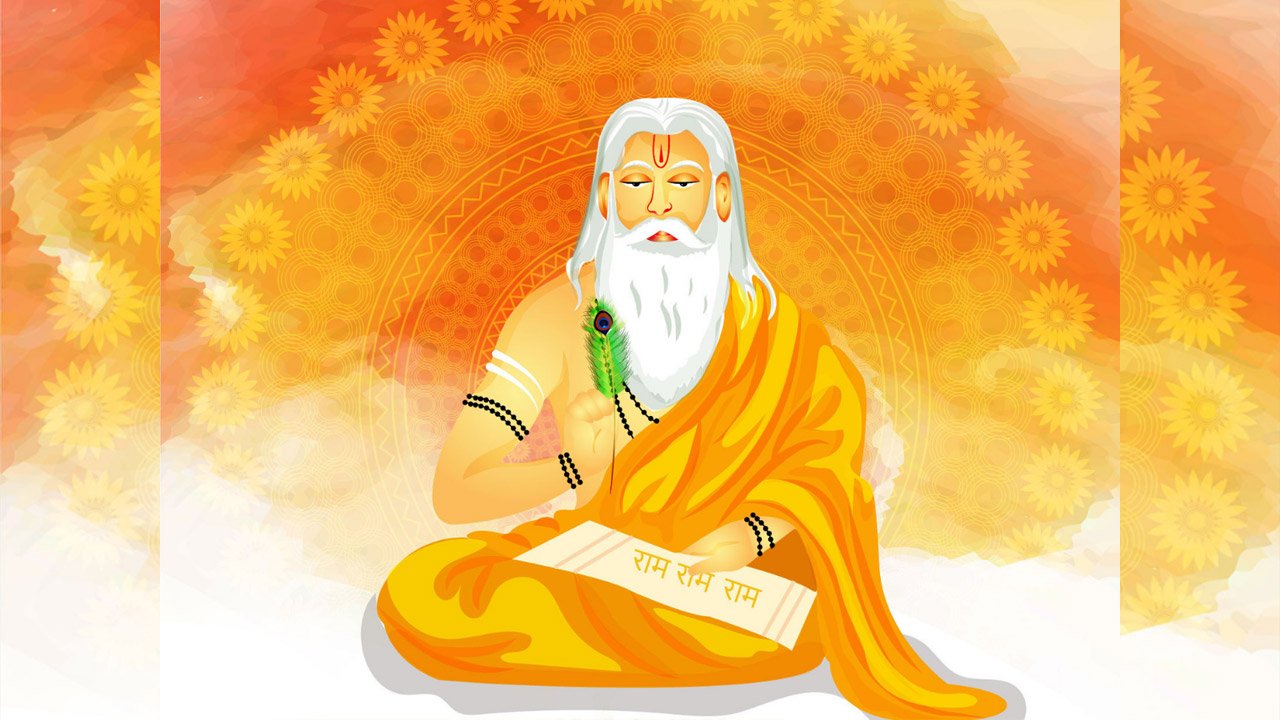
Ved Vyas, author of Mahabharata was born on this day: Guru Purnima is also called as Vyasa Purnima. as it is believed that Ved Vyasa, the author of Mahabharata was born,  on this day who is a pioneer of the guru-shishya tradition.