Home Blog Page 873

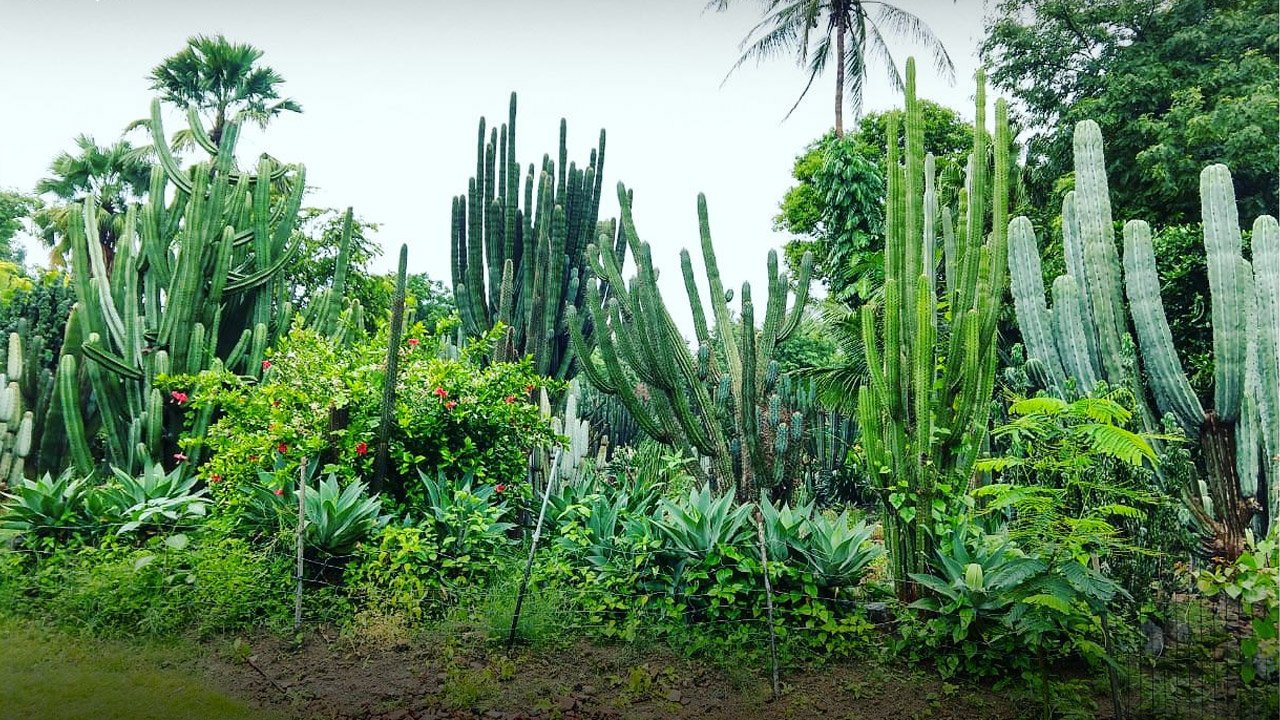
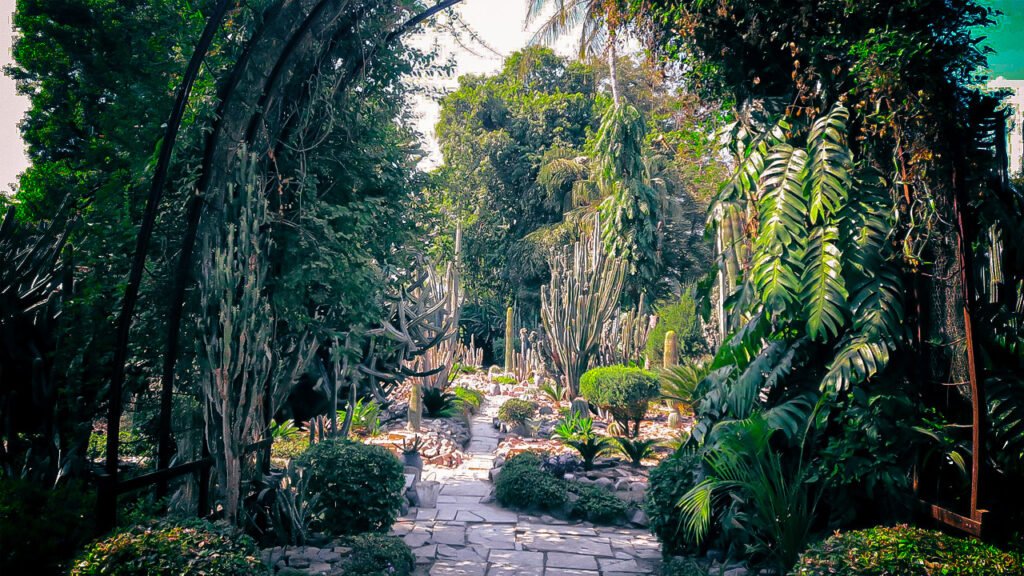
Cactus Garden Sailana: Asia’s largest garden, Which houses around 1,200 different species of cactus

0

Asia’s biggest cactus garden is situated in Sailana, a small town in Madhya Pradesh

With 1200 species of cactus, it woos tourists from across the world 

Raja Digvijay Singh made this garden after ordering cactus plants from across the world

It’s not only the flowers, but even the cactus can make beautiful gardens!

Surprised to believe it? Then you should visit Sailana, which is situated 25 km from Ratlam in Madhya Pradesh and 50 km ahead from Banswara in Rajasthan which houses the biggest cactus garden in Asia.

Cactus Garden Sailana: Asia's largest garden, Which houses around 1,200 different species of cactus

This beautiful garden is one amongst the most unique gardens in the world which houses around 1,200 different species of cactus which stand with pride wooing tourists from across the globe.

The Sailana Cactus garden situated in Madhya Pradesh was built by Raja Digvijay Singh who had fallen in love with cactus plants.

Chasing his passion for his love, he brought cactus plants from across the world and planted them in a wide spread plot situated right behind his palace to make the most distinguished form of cactus garden.

Besides ordering the cactus plants, he also ordered the right quality of mud from those nations to ensure the plant doesn’t die missing its original environ for its growth.

Cactus Garden Sailana: Asia's largest garden, Which houses around 1,200 different species of cactus
Cactus Flowers

Out of over 1,200 species of cactus, this Cactus Garden has out of which 50 plants which are purely Indian, the garden is situated behind the Sailana Palace and has cacti twice the height of a man in the Garden.

Digvijay Singh was in Germany when found that he was in love with cactus. Eventually, he ordered cactus plants from countries like Chile, US, Mexico etc which were brought to Sailana and hence came a beautiful garden which stands with pride as the biggest cactus garden of the world.

At the Jaswant Niwas Palace, these cacti are twice the height of a man in the Cactus Garden and add more to the stories of Sailana which is a  quiet town near Ratlam

Dr Rajnikant Shah: The man who lives his passions even in his mid-80s!

0

Dr Rajnikant Shah has been a doctor who ventured in gemstone trade after working in medicine for 15 years. Destiny made him leave his profession in 1976 when he joined gemstone business at the age of 40. It was sheer destiny that brought him into business. EBNW narrates the story of this man who loves living his passions even in his mid-80s.

He is the man with courage, grit and determination who loves following his passion even in his 80s and leads by example by attaining his set goals within the set deadlines. This man with mission has been scripting many success stories by following his heart, undeterred and unaffected, by the challenges being posed by the age and other related barriers. He is none other than Dr Rajnikant Shah who is a known name in gemstone world.

A Medical Doctor-Family Oriented Person! 

Born on Nov 22, 1935 in Dhanera (Gujarat), he was very much interested in education – along with his MD, MRCP, DTM&H; he also did Sahitya Ratna in Hindi. A family-oriented person, he also helped many students to study further and helped many young traders to settle in business and many young doctors to move abroad for further studies in those days.

After his return from abroad, he helped in establishing a hospital –  Santokba Durlabhji Hospital in the beginning. Then later on, his family donated for an outdoor building in the hospital. It also donated a building in Subodh College for Master of Business Administration studies.

Sojourn: From a Doctor to a Trader 

Dr Shah says, “I forayed in the trade in 1976 after migrating to New York. I started purchasing raw material and supplied it to Jaipur trade. Purchasing was made from Brazil. This became an ongoing regular trade with a policy of charging 10 per cent commission. This initiative helped Jaipur traders to get the original rough at a reasonable price. I continued doing the same for 25 years,” says Dr Shah adding, however, later on, slowly, the Brazilian Emerald trade cooled down and the Zambian emerald trade took over the markets. Then, by 2005, I retired. This is my small business career,” the man says with a smile.

A Community get-together in New York

Even in New York, he was instrumental in holding the Jaipur Community together – socially and culturally – Diwali festival is one of those. While for the trade 30 years ago, he thought of starting Indian Diamond and Color Stone Association in New York thus bringing colourstone traders from Jaipur and diamond traders from Mumbai together in the market.

A Temple in New York-A Unity in Diversity

Dr Shah also got a beautiful temple built in New York which stands unique in the city. Its construction started in 2000 and was handed over to jain community in the year 2005. This is the place where 5 traditions can worship together under one roof – A Unity of Diversity -which is one of a kind in the world.

Dr Rajnikant Shah: The man who lives his passions even in his mid-80s!

Shri Ashtapad Maha Tirth-Ratna Mandir

He designed and created a replica of Shri Ashtapad Maha Tirth –Ratna Mandir, a Gemstone Temple. It was carved from crystal and gemstones– which was then donated to New York Jain Community in the year 2010. This is a largest structure carved out of gemstones – a work of art as well. Today it stands tall and beautiful

An Art Gallery-A Pictorial Guide to Jainism

Then he worked on an art gallery – Jainism as a way of life – an art of living – Principles and Practices of Jainism depicting them by posters 500+ which were installed in the said temple.

Hobby-Stamp Collection and A Stamp Website

Stamp collecting is one of his hobbies which he has been collecting since 1947. This passion for his hobby stays alive till today. He has developed a web museum of gems and jewellery stamps which houses 25,000+ individual stamps on this topic collected from all the countries of the world. 

Collecting Shayari-Humsafar

Dr Shah has a passion for collecting Shayari’s since childhood till today. Earlier, he published a book of Gujarati shayaris– A collection of shayari’s
of Gujarati shayar. Recently, he has published a book with Shayari’s translated from Gujarati to Hindi – HUMSAFAR for the benefit of Hindi speaking world. At present, he is trying to put together all the Shayaris in
Hindi into a book format which he had been collecting since childhood.

Man with a Mission-A Museum of Gem and Jewellery

Dr Shah is the man behind the making of the first-of-its-kind Gem and Jewellery Museum in Jaipur – The only one in India. He stood alert, agile and active to have this museum which speaks the age-old story of stone right from its emergence from the centre of the earth to its final shape it attains after being cut, polished and designed to make jewellery. Now he is trying to get his dream museum to a new level – A world class level in a bigger and better location.

In fact, this man has been following his heart right from his young age with the help of family and friends. As Dr Shah continues living his passion knowing no full stops, we eagerly await what comes next. So keep waiting for this man with a mission to start his next beginnings soon when he wishes to have a gemstone temple and a Jain Museum of Idols to be built in India.

Six families struggle to keep alive the centuries-old lacquered artistry in this Gujarat village Nirona

0

Away from the glittery and glamorous world, around 6 families of artisans residing in Nirona village of Gujarat’s Kutch region are scripting a fabulous handmade story to sustain the lac turned wood craft tradition which is also called as lacquer artistry.

Battling the challenge of keeping alive the handmade artistry in the mechanised era, the proud artisans are crafting the beautiful decor products, purely hand made which range from kitchen utensils such as chakia-velan (chapatti roller and board) to beautiful colourful spoons and spatulas. They also make mesmerising mortar and pestals as well as multicoloured charpoy (bedsteads), stools and  furniture legs.

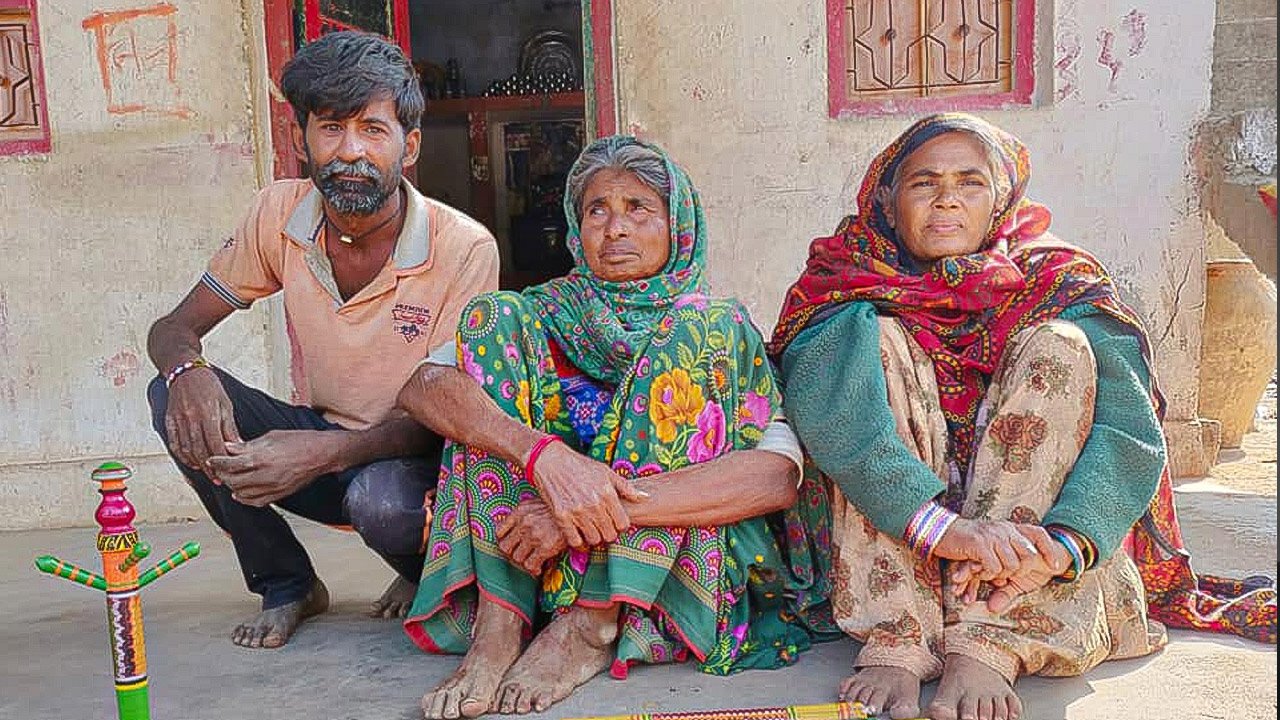
Says an artisan Bhavik bhachaya bhai, “Out of 24 houses in our village, only 6 families from Vadha community are involved in carrying forward the technical and artistic legacy of our forefathers to sustain the age-old craft of lacquer artistry.”

Six families struggle to keep alive the centuries-old lacquered artistry in this Gujarat village Nirona

Bhavik’s father, Bhachayabhai, is 75 now and can’t see clearly from his eyes. But he is too keen to make his sons adept in lacquer skills so that the rare art doesn’t die a silent death but is passed on from generation to generation with a marginal growth rate.

Says Bhavik, “My father came here in 1971 after India-Pakistan war. He settled here in Kutch region in Gujarat and started making earning as he was master in the lacquered artistry.”

In fact, my son is also learning the skills, however, lockdown and COVID-crisis has hit us hard and forced many of us to take up other profession to earn livelihood. Amid lockdown, dispatch of ordered goods is a challenge and generally takes 20 days to reach our clients. The entire cycle has gone slow and so is the number of artisans in our village coming down as they are going towards other professions,” he adds.

Six families struggle to keep alive the centuries-old lacquered artistry in this Gujarat village Nirona

The lacquer artistry is beautiful, rare, mesmerising and pristine, but how to promote it poses a challenge in front of us. We are ready to work round the clock if we get some good number of orders, he says.

Geetanjali Kasliwal, co founder, Anantaya, says, “The beautiful turnwood lacquer craft of Kutch definitely needs new directions and regular markets. The skill of creating these unique patterns on wood using a simple bow lathe is unique to the Vadhas of Kutch and should be promoted.”

Kutch is the only place in India where a handful of families practise this unique lacquer work technique, she adds.

The lacquer work technique is undoubtedly the most unique artistry yet is so much unknown in the nation.

In fact, Khamir, a platform for the crafts, heritage and cultural ecology. of the Kachchh region of Gujarat, organised an event in Jaipur where these artisans showcased their rare artistry.

Now, don’t you think we need to stand up to popularise this art so that more artisans from this community start getting more work to ensure this dying art keeps floating with force?

Let’s share  a positive message across…!

This sleepy town of Rajasthan once had 3000 Chinese prisoners locked in jail

0

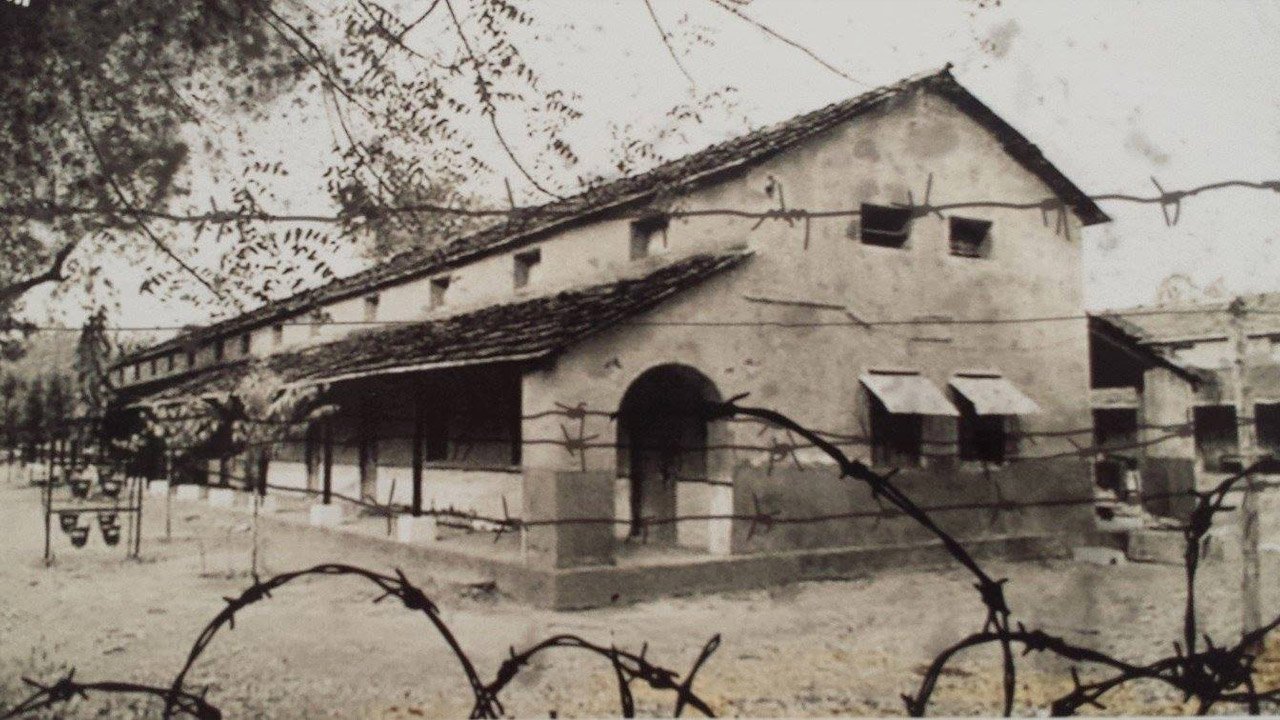
Deoli had been a prisoner of war camp in the British era

As India went to war with China in 1962, over 3,000 people of Chinese origin were sent to Deoli Prison Camp

Chinese families were picked up from border areas in West Bengal and Assam, suspected of being spies or Chinese sympathisers.

Once upon a time, Deoli prison was used to detain Jawaharlal Nehru.

Today, it is a training centre for the Central Industrial Security Force.

Do you know that Deoli, a sleepy town in Rajasthan, situated 165 km from Jaipur, had detained over 3000 Chinese people during and post 1962 India-China war?

Surprised? But yes, it is a fact that over 3000 Chinese prisoners were kept at Deoli which falls under Tonk district in Rajasthan during the India-China war reported in the year 1962.

This sleepy town of Rajasthan once had 3000 Chinese prisoners locked in jail

The quiet town is also a treasure trove for history lovers and houses a World War II prison camp which was converted into a training centre for Central Industrial Security Force (CISF) in 1984.

Deoli, in fact, was established as a garrison town by Britishers due to its strategic location in the year 1854.

The objective of setting it as a garrison town was to keep a watch over Jaipur, Ajmer and Kota.

Later, a prison was set up at Deoli in the 1940s to house Japanese and German Prisoners of War (PoW) which was later used to keep Chinese prisoners too.

Meanwhile, the town also houses the remains of prison, cemetery and church of world war II times here.

In fact, a plaque installed at the gate of the CISF camp reads that Deoli once had housed German, Japanese and Chinese prisoners too. 

The senior citizens staying here recall that China had later sent a ship to bring back its citizens in those times. 

It needs to be mentioned here that the India-China war lasted from October 10 to November 20 in 1962.

Later on, the Deoli camp was closed in 1968, however, the stories of prisoners still echo the silent lanes here.

People also remember how they used to watch the Chinese prisoners with suspicion.

In fact, a book has also been written on these chain of incidents with the name ‘Deoli Diaries’ which features a collection of interviews with the camp survivors. 

It reveals how local people shouted ‘Go Back to China’ when they were brought here while the security personnel saved them from the stones they threw.

PEHLA SUKH – INDIA WELLNESS INITIATIVE : Millennials aware of mental wellness

0

Is your mind happy’? A webinar was held on Sunday discussing this subject which aimed at spreading awareness on mental wellness amongst millennials.

Organised by Pehla Sukh – India Wellness Initiative, it was powered by India Community Center, Crack the Wellness Code (CWC), Silicon Valley and was managed by Indifamily Foundation, Rajasthan.

The webinar was addressed by Nivedita Singh , Psychologist, Author & Founder, Co-Create Change, & Raj Raghunathan, Professor of Business at University of Texas Austin, who shared the authentic and proven lifestyle practices for mental wellness.

Brain like any other organ can also fall sick and can have a problem too. However, we at times, don’t accept it, but it is a fact that any challenge related to the brain relates to mental illness and can lead to schizophrenia, bi-polar, acute anxiety and chronic depression which are major mental illnesses and need psychiatrist’s help and medicines, said Nivedita Singh.

She further said, “People these days are confused about mental health and mental illness. They don’t want to believe that the brain like other organs can also have a problem too.

According to her, “Mental health is directly related to certain strengths in your life which can be built. For example, a positive mental health needs to be built and nourished along with well being, happiness, life satisfaction and other such factors, she added.

Raj addressing the session said, “People who are uncertain about job prospects and are stressed out ( including married and single people) should learn to enhance happiness. They should look at children who love to stay happy. A friend in your life can define your happiness, longevity and can help you to be free from any disease. This friend can be either your spouse or any other person,” he said.

The session helped resolve the challenges being faced by those who doubted their own capacity and faced decrease in productivity. It also helped those facing difficulty in coping with stress and even people who have sudden emotional outburst and those feeling lonely and depressive.

Pehla Sukh” – India Wellness Initiative is a social start up focused on supporting overall health and wellness.

Focussing on prevention of lifestyle diseases, it supports holistic health and wellness of all living beings.

“The focus is to bring the best of east and west, lifestyle practices to impact 5 million Indians in the next 5 years,” says Divya Jain, convenor of the programme.

Wow! Our motto ‘Sabka Saath, Sabka Vikaas’ resonates with core SDG principle!

0

In the United Nations Economic and Social Council (ECOSOC) session held on July 17 at the United Nations in New York, PM Narendra Modi said that India’s developmental motto of ‘Sabka Saath,  Sabka Vikaas,  Sabka Vishwas’ resonates with the core SDG principle of leaving no one behind.

Addressing the session, Modi said that India’s success in improving the socio-economic indicators of its vast population makes a significant impact on global SDG targets.

He also spoke on India’s commitment to support other developing countries in meeting their SDG targets.

This was the first address by PM to the broader UN membership since India’s overwhelming election as a non-permanent member of the Security Council on 17th June, for the term 2021-22.

Now, are you aware about these 17 SDG goals which the UN has shortlisted for the holistic development of the world?

Wow! Our motto ‘Sabka Saath, Sabka Vikaas’ resonates with core SDG principle!

These goals are:

GOAL 1: No Poverty

GOAL 2: Zero Hunger

GOAL 3: Good Health and Well-being

GOAL 4: Quality Education

GOAL 5: Gender Equality

GOAL 6: Clean Water and Sanitation

GOAL 7: Affordable and Clean Energy

GOAL 8: Decent Work and Economic Growth

GOAL 9: Industry, Innovation and Infrastructure

GOAL 10: Reduced Inequality

GOAL 11: Sustainable Cities and Communities

GOAL 12: Responsible Consumption and Production

GOAL 13: Climate Action

GOAL 14: Life Below Water

GOAL 15: Life on Land

GOAL 16: Peace and Justice Strong Institutions

GOAL 17: Partnerships to achieve the Goal

The theme of the High-Level Segment of the ECOSOC this year was “Multilateralism after COVID19: What kind of UN do we need at the 75th anniversary”.

Meet Kriti Bharti who is liberating young girls from clutches of child marriage

0

She annulled the first Child Marriage in India

Her name was recorded in Limca Book of Records, World Records India as well as in the syllabus of CBSE curriculum for creating history.

The fastest marriage annulment in 3 days recorded in Unique World Records, India Book of Records & World Records India

She made a hat-trick record on Akshay Tritya  which was recorded in World Records India.

She is none other than Kriti, who took Rajasthan on top for annulment of child marriages.

This is a story of a Jodhpur girl Kriti Bharti who has pledged to end the curse of child marriage from the country and has been fighting all odds to ensure that the girls stand on their own to make a decent living for themselves.

Till date, she has annulled 40 child marriages and has helped stop 1400 child marriages.

Liberating many girl children from the clutches of child marriages, Kriti  has become the guardian and mother of “balika vadhus” (child brides) and has been looking after their education and other basic needs.

Meet Kriti Bharti who is liberating young girls from clutches of child marriage

“I witnessed many such marriages where innocent children were forced to follow age-old traditions, which were ruining their lives,” she said.

“Trying to search solutions to end this social evil, I started searching for a legal remedy and discussed the situation with legal experts. Then came up with the idea of annulment of such illegal child marriages,” she added.

In 2012, she started Saarthi Trust in Jodhpur and has been working as a rehabilitation psychologist and managing trustee of the organisation.

In all these years, Kriti has given a fresh lease of life to many girls after annulling their child marriages.

“Annulment of child marriage means the marriage which took place years ago which is legally announced null and void. After annulment, the boys and girls who tied the knot of child marriage are freed from this bond,” she explained.

The story of annulment of child marriage started with one Laxmi Sargara, who had came to Kriti seeking help.

Her marriage was successfully annulled and it made history as it was a first such marriage annulment in the country, which did set a precedent for future cases. This also brought national and international fame to Kriti and her organisation.

Kriti finds a place in several record books for the first annulment of a child marriage in the country.

In fact, her campaign also finds a place in the syllabus of class XI and XII of Central Board of Secondary Education.

Meet Kriti Bharti who is liberating young girls from clutches of child marriage

Her efforts has started yielding fruits as Jodhpur in Rajasthan which was once infamous for solemnising the highest number of child marriages in the country, is now bringing a paradigm change and the numbers are slowly coming down which is proved by the fact that the city tops the list in the country for the most number of child marriage annulments.

Kriti’s efforts have helped annul 40 child marriages so far, which took place years ago. She made a record of preventing thousands of child marriages and has found a place in record books like Limca Book of Records and World Records India, and Unique Book of World Records.

In 2016, her name was registered in World Record India, India Book of Records and Unique World Records for nullifying three child marriages in three days.

Kriti also works for rehabilitation of child labourers, victims of child trafficking and child abuse besides working for annulment of child marriages and has rehabilitated more than 7,000 children and more than 6000 women.

The young girl in fact faced many brutal attacks and threats while working to stop child marriages but she stands stood on her determination and hence has been making a mark on global map too.

Way to go Kriti for creating more success stories..!

This woman crossed orthodox barriers of a family to find her lost self!

0

A woman knows no barrier when she decides to step out from the confines of her boundaries!

The phrase sounds true when it comes to an inspiring story of Reshma who is scripting a successful story in her second innings by learning newer skills along with her grown up kids to make a mark for herself!

This pretty woman, like most Indian girls, was married at an early age and her family responsibilities took a top priority for her.

“Somewhere along the line,  I lost contact with my inner being thereby burying all my aspirations and ambitions. Like a dormant volcano, I was calm and quiet on the outside but boiling within, because the chase for dreams might have ceased but the dreams I saw, never died and kept sending tremors from within,” she says.

Over the years, Reshma finally found a friend in her diary where she started sharing her daily emotions and hence came up her passion to write!

This woman crossed orthodox barriers of a family to find her lost self!

Lost in the words, she started presenting them with best emotions which honed her writing skills.

Although her family have had the orthodox views, she successfully managed to skip those barriers and developed a strong indulgence in writing which helped her discover her true calling.

“I believed that this escapade shall help me in realising my dream of becoming independent and self-reliant woman. However, multiple thoughts raced my mind at the slightest thought of exposure to mundane events or novel experiences.”

As years passed, she entered in her early forties; her grown-up children poised as her mirror and introduced her to her lost self.

‘Either you stop being so regretful of your past or you do something to amend it’. These were my sons’ words which echoed within me, rekindling those past embers.

All these years I had waited for an external source of encouragement or push, being pessimist and blaming my stars and circumstances, but never myself! A big lesson learnt was that the first step of upliftment must come from within and then watch how things fall in place!

She says these words helped her start new innings of her life.

“The need to cultivate my inner desires and follow my passion was so strong that I jumped over hurdles one by one, steadily and patiently.  Eventually, perseverance paid and within a span of six to seven years, I armed myself with academic qualifications (BA, MA, DIPLOMA IN CREATIVE WRITING and still going on) in English Literature, which served as a catalyst to further enhance my writing abilities and achieve my goals,” says Reshma with shine in her eyes as she says, “I haven’t looked back since then.”

This woman crossed orthodox barriers of a family to find her lost self!

Speaking of an anecdote here at this point, she quotes, “My daughter was flying off for her first job, and simultaneously I was secretly stepping into a modest office for my first job interview. As a young girl, I had visioned myself innumerable times walking into an upscale Manhattan type office, in chic formals and stilettos with a heavy portfolio, confident to take on the world. In contrast, I was nervously clutching my saree pallu, acutely aware of the implications of my shining grey streaks, insecure about my resume which was based more on passion than experience and fumbling with words.”

“My reporting officer, a retired IPS officer running his cyber security company, took on me and gave me the initial lessons of the professional world,” she says.

This woman crossed orthodox barriers of a family to find her lost self!

A month-long workshop with a committed mentor, released me from my confines and gave me that much needed dose of confidence to share the pages of my journals with a wider audience. It has been my privilege that pieces of my fiction and poetry have been published in various magazines like Women’s Era, Himalayan Times, TOSS The Sheet, Siyahi etc.”

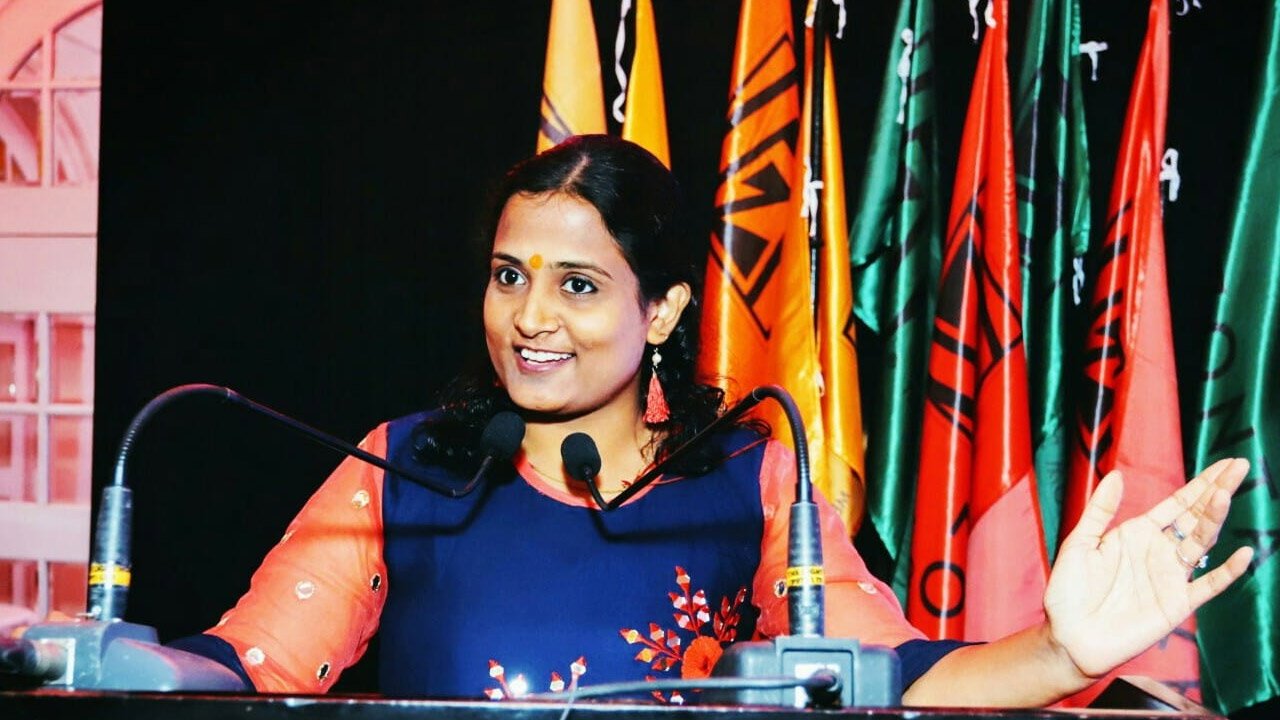
I have my teaching centre, WORD BLOOM where I nurture young minds and also conduct creative writing workshops for all ages, which is more like an indulgence into the world which I had dreamed all through my life, says Reshma with a smile of satisfaction!

Why old leaders are ruling the young Indian states?

0

Old leaders ruling the young Indian states!

Don’t you think this is quite a contradicting situation in India at a time when the majority of our population in different states comprises people under the 40  year bracket.

Don’t you think the young nation needs young energy, young thinking and young inspiration to script a new young India story?

However, in India, it is just the vice-versa been happening with young leaders being shadowed under the greedy ambit of old guards in different states.

Rajasthan and MP can be quoted in this reference as there have been regular reports of frequent chaos emanating between old Vs young guards in these two states.

Such situation certainly raises a quick need for a strict rule where a retirement age of a politician should be fixed in the same way as the employees are retired after rendering their duties for a certain time period who pass off the baton to the next line with due respect.

Surprisingly, in all these years, there has been no such system made to fix the system and now, when the educated youth has started pitching for his own rights and freedom, there is a revolution-kind situation emerging in politics.

Former MP CM Kamalnath Vs Jyotiraditya Scindia’s story in Madhya Pradesh is just one example which has been repeated in Rajasthan where Sachin Pilot wants to lead from the front as he has been overshadowed by the old guard, the chief minister Ashok Gehlot, in the same way Scindia was overshadowed under Kamalnath regime.

Surprisingly, the story doesn’t end on Kamalnath and Ashok Gehlot.

It stretches its marks to former Rajasthan CM Vasundhara Raje too who doesn’t want her presence to faint away from the desert state and is eager to make a comeback in one way or the other.

Similarly, MP CM Shivraj Singh Chauhan has started feeling low with Scindia given a little more flexibility.

Look at Bengaluru, an IT City, also called as India’s Silicon Valley.

The most dynamic and bubbling city falling in Karnataka is being ruled by BS Yediyurappa who is 75+ in age.

The story is not limited in Central India and South but is also repeated in Himachal Pradesh where former chief minister Prem Kumar Dhumal wants to have his own say in one way or the other.

In fact, the fight between old Vs new guard is also been reported at the central leadership of India’s oldest party-Congress.

So don’t you think so that a clear system should be formed to ensure the senior politicians have a way out and their services be availed in newer yet refined ways.

Surprisingly, politicians in India start their careers at an age when other professionals’ retire.  Despite being  turning around 50, they are considered juveniles in the political arena.

In fact, the developed countries have followed a different trend and have been scripting the growth story under young leadership which have contributed their nation in touching newer horizons.

Barack Obama was just 47 when he was elected as US president and he departed from White House at 55. Even the Russian President Vladimir Putin was in his 40s when he became the Russian PM. German Chancellor Angela Merkel and French President Francois Hollande are in their 50s serving their nations.

Sebastian Kurz, the new Chancellor of Austria, is just 31 while Jacinda Ardern, Prime Minister of New Zealand, is 37.

Finland PM Sanna Marin is just 34!

Now all these leaders stand at the forefront to take their nations ahead with fresh thoughts and perspectives.

Don’t you think we also need an immediate overhaul as India has a fifth of the world’s young population. However, led by depressingly feudal and dynastic valued system, these youths are looking for a change to script their own young India story wanting their leaders to be energetic, enthusiastic, innovative, honest, morally sound, diligent and inspiring who can guide them, push them to excel and contribute in nation building.

But can their dreams turn into reality?

Again, it’s the old guards who are to decide on it!

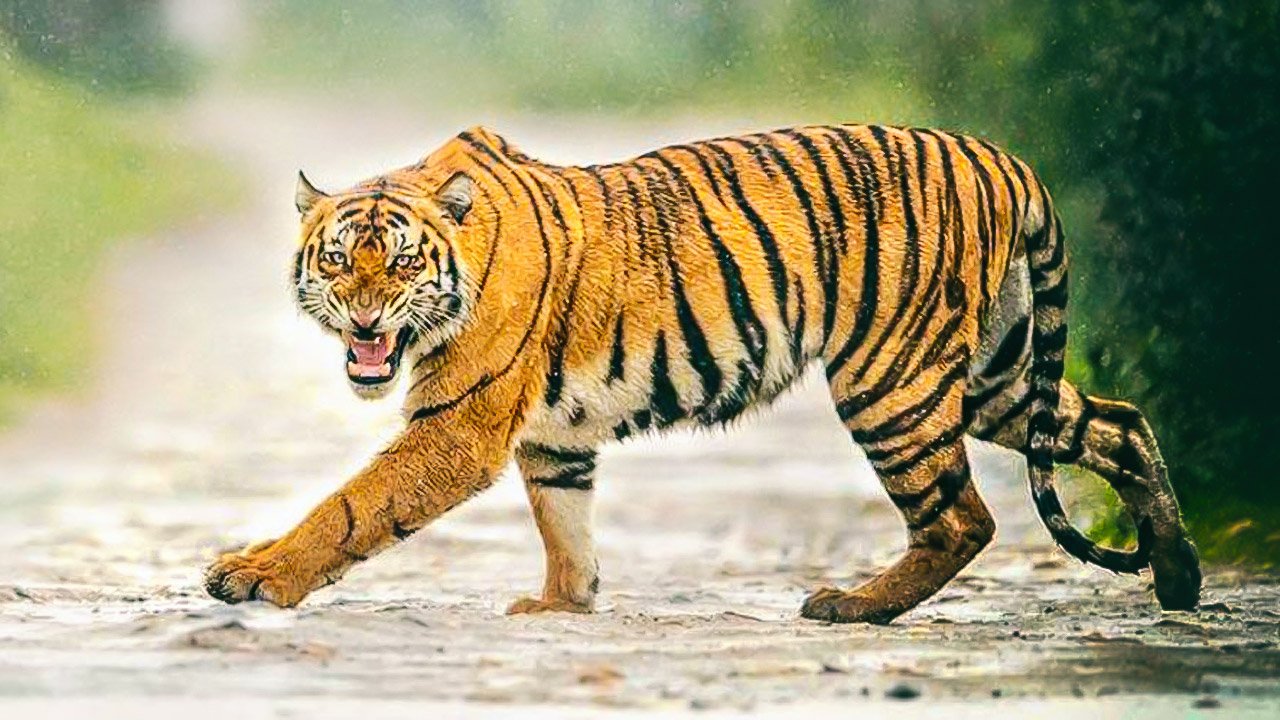
Cheers! India now houses 75% of world’s global tiger population

0

India has 2,967 tigers, revealed the results of 2018 tiger census conducted by the country

This census entered the Guinness Book of World Record for carrying the largest ever camera trap wildlife survey

Do you know that India accommodates a total of 2,967 tigers, which is 75 pc of the global tiger population?

The surprising and proud facts were revealed in the recently announced 2018 tiger census conducted by India which also made India stand with head high for making a world record of carrying the largest ever camera trap wildlife survey.

This census entered the Guinness Book of World Record.

The Guinness Book of World Record carries the message on its website, saying “The fourth edition of the census, which was carried out between 2018-19, was “the most comprehensive to date, in terms of both resource and data amassed.”

Terming this achievement a great moment, Union Environment Minister Prakash Javadekar in a tweet message said that this is a shining example of Atma nirbhar Bharat which in the Prime Minister’s own words, was attained through sankalp se siddhi

Cheers! India now houses 75% of world's global tiger population

The citation at the Guinness World Record website reads- “The fourth iteration of the survey – conducted in 2018-19 – was the most comprehensive to date, in terms of both resource and data amassed. Camera traps (outdoor photographic devices fitted with motion sensors that start recording when an animal passes by) were placed in 26,838 locations across 141 different sites and surveyed an effective area of 121,337 square kilometres (46,848 square miles). In total, the camera traps captured 34,858,623 photographs of wildlife (76,651 of which were tigers and 51,777 were leopards; the remainder were other native fauna). From these photographs, 2,461 individual tigers (excluding cubs) were identified using stripe-pattern-recognition software.

As well as unprecedented camera trap usage, the 2018 “Status of Tigers in India” assessment also conducted extensive foot surveys that covered 522,996 km (324,975 mi) of trails and sampled 317,958 habitat plots for vegetation and prey dung. It’s estimated that the total area of forest studied was 381,200 km2 (147,181 sq mi) and cumulatively the collection and review of data equated to some 620,795 labour-days.”

The All India Tiger Estimation done quadrennially is steered by the National Tiger Conservation Authority with technical backstopping from the Wildlife Institute of India and implemented by State Forest Departments and partners.

The latest results of 2018 tiger census had shown that India now has an estimated 2967 tigers out of which 2461 individual tigers have been photo captured, a whopping 83 % of the tiger population.