Man Sagar Lake, located towards the northern fringe of the Pink Pity of Jaipur, has witnessed everything in the last four centuries…Its boom, fall, rise and then neglect of everything. It was set up by Raja Man of Amer, a contemporary of emperor Akbar. Since then, the lake refuses to let down its significance and is yielding eco-system benefits despite administration’s neglect. A report…
According to wildlife conservationist Harsh Vardhan, “The Man Sagar Lake, few years back, had become a cesspool of sewer. Two open drains Brahmpuri Nalla and Nagtalai Nalla, merged raw sewer into it,” he says. Harsh coined the Bird Fair at this lake in 1997 to market lake-conservation through birding. It is in conjunction with the British Birdwatching Fair held at Rutland Water annually for past thirty years.
On 20 May 2002, then Rajasthan Chief Minister, Ashok Gehlot himself initiated the desilting program in the lake bed. He picked up a “fawda” (shovel) in his hand and started scratching the dry bed of this lake. Jaipur Development Authority’s then Commissioner, GS Sandhu was the brain behind it.
How the lake emerged as a new tourism hub
The lake then emerged as a new tourism hub as the Government set up a public-private project. An ecosystem-based approach was adopted by the new company headed by Nav Ratan Kothari, a jeweller, who turned out to be a heritage restoration magnet. He gave priority to lake restoration and Jal Mahal renovation and gave second fiddle to his hotel project at a nearby land to be initiated only after these twin social responsibilities were completed.
Through a planned approach and inviting overseas experts from Singapore and Germany, Kothari spent a huge amount. “I am born in Jaipur and I want to give back to its citizens a novel gift which they never envisioned. The heritage lake is restored and historic Jal Mahal is renovated beyond imagination,” he said with satisfaction, adding that “I did not a single rupee from the Government.”
Another challenge being battled by the lake
Man Sagar Lake battles another problem yet. The lake should receive a minimum 22 million liter water daily to remain full round the year. It receives about 50% of its need from monsoon. The rest used to be received from the sewer flow. By bypassing both open drains, sewer flow got diverted out of lake precincts. How to meet the shortage of water here?
A new pipeline was drawn to connect the lake with the sewage treatment plant a kilo-meter away in the city. It is to receive seven million liter treated water daily which it is not receiving. So the Constructed Wetlands created near the lake platform are bereft of water. It is an innovative device to treat raw water through roots of shrubs and bushes and was set up by Kothari.
Fashioning Man Sagar Lake as mini-Keoladeo National Park
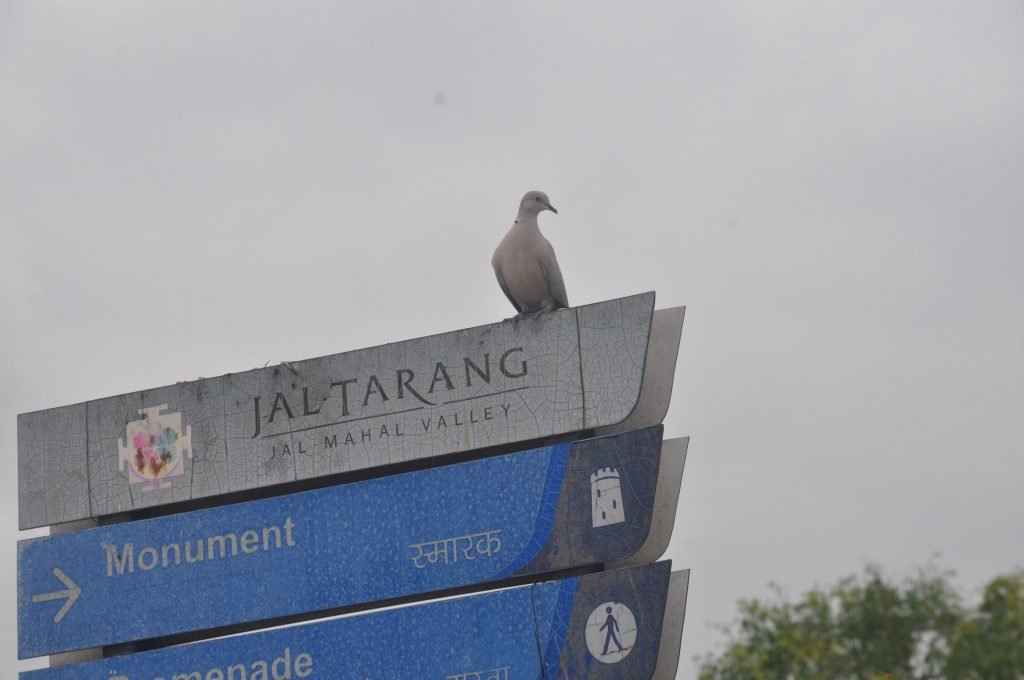
The lake is brimful these days. Thanks to the monsoon water. Common Sandpipers, which breed in Russian arctic region, have already marked attendance, indicating an early migration having commenced. A Pallas Gull hovered over water while White-browed Wagtails picked up tiny insects on its surface. A few hundred Little Cormorants are pairing. Great Egret and Spotbilled Duck have completed breeding. A white Collared Dove was photographed at the lake edge this week, looked like a mutant, first record. Within weeks, migratory ducks and waders will touch down here. Many birders, called as twitchers, flock to this site to log in new species.
Eight earthen mounds (islands) have been created within the lake where indigenous species of trees have been planted. It is to copy the Keoladeo National Park, Bharatpur, where heronries function only over trees standing over islands. Man Sagar can easily be fashioned out as a mini-KNPark provided small aspects are worked out, argues Harsh who has devoted a few decades in aquatic habitats’ restoration and learnt tactics abroad.
A mutant Collared Dover at Man Sagar, photo by Harsh Vardhan
Earning benefits for people
Man Sagar Lake, as a designed project, has started providing benefits to people at no cost, despite the fact that all agreed programmes are yet to be implemented at the site. The project is still wait listed for a formal opening. The government hopefully will visualise massive tourism and eco-system benefits out of it.
Business Models for Eco-Tourism
“Nearly 400 lakes are in service in the state of Rajasthan, euphemistically called as semi arid. Fishing as a sport, bird watching, walking trails, cycling routes, camping in wilderness, village visits, etc are new ecosystem related business models worth attempting to enable the State attain top position in eco-tourism, suggests Anand Mishra, President of Tourism & Wildlife Society of India (TWSI), a non government platform working for past four decades. “
Who will bell the cat? The person, who wielded a shovel here twenty year ago, is back on Chief Minister’s seat (Ashok Gahlot). The same promoter (Nav Ratan Kothari) stands there to this day, waiting for time to take a more positive turn…!
Teamwork Arts, the producer of the iconic Jaipur Literature Festival, and the British Library, will unveil a virtual edition of the annual JLF London, with the magnificent piazza of the British Library replaced by the boundless possibilities of the internet. Everything else remains the same – the magic of discourse, the caravan of ideas, the camaraderie of people, and the seamless flow of knowledge.
Virtual edition from Sept 11-13
‘JLF London at the British Library’, an annual celebration of books, creativity, dialogue, and diversity, had a very successful curtain-raiser in June this year. With 2020 struck by the cloud of a global pandemic, the Festival was postponed from its customary summer dates. In its stead, a virtual edition has been scheduled from 11th to 13th September 2020. This chapter of JLF London at the British Library will mark the annual literary event’s seventh edition. The Festival will be streamed on all official social media handles of JLF –– Facebook, Twitter, and YouTube.
Vidya Balan in talk with Vani Tripathi Tikoo
The Festival features a stellar line-up including celebrated actress Vidya Balan, who will be in conversation with actress and politician Vani Tripathi Tikoo and author & screen-writer Nayanika Mahtani, discussing a behind-the-scenes perspective on the recently-released biopic on the life of the late mathematical genius, Shakuntala Devi.
Navigating through the journey of an interconnected group of 12 black women, the 2019 Man Booker Prize-winning Girl, Woman, Other is a quest for love, hope, and home, spanning across the legacy of contemporary and colonial Britain. In conversation with writer Anjum Hasan, one of Britain’s most exciting and original authors, Bernardine Evaristo will discuss the idea of womxnhood, culture, class, politics, and race coursing through her iconic writings. She will speak of the binding power of collective experiences and give us a peek into her creative process.
The Festival will also present some intriguing conversations featuring speakers like the much-loved Indian author and politician Shashi Tharoor; Israeli historian and author Avi Shlaim; journalist and bestselling co-author of I am Malala, Christina Lamb; author of Djinn Patrol on the Purple Line, Deepa Anappara; Indian filmmaker, writer, and singer Shabnam Virmani; journalist and author Roger Highfield; British journalist and novelist John Lanchester and award-winning journalist, restaurateur, chef, and broadcaster Ravinder Bhogal, among many others.
“There is a sense of homecoming as we return, even though virtually, to JLF London at the British Library. Come September, the excitement of unfolding ideas and conversations across continents will bring together book-lovers from across the world. Do join us live from London from the 11th to 13th of September to participate in the unique spirit of Jaipur.“
Namita Gokhale, Jaipur Literature Festival Co-Director and author
“Following on the success of JLF Brave New World we are excited to announce JLF London at the British Library as our ongoing digital series to mark the annual festival in London. While we will miss the physicality of being in London, we look forward to presenting exciting sessions for all our viewers in the UK and across the world.”
Sanjoy K. Roy, Managing Director, Teamwork Arts, Festival Producer,
“We are delighted to have worked with JLF and Teamwork Arts to reimagine this year’s festival to take place online so that anyone across the world can take part. Our events – whether they take place onsite or online – enable us to make the Library’s intellectual heritage accessible to everyone.”
Jamie Andrews, Head of Culture and Learning at the British Library,
About JLF
The Jaipur Literature Festival in India is a global literary phenomenon, having hosted more than 5000 speakers and artists
The five-day Jaipur Literature Festival, held annually in the Pink City of Jaipur, is a riot of colour, energy, ideas and music against a backdrop of readings, dynamic discussions and debates
It has welcomed over a million book-lovers from across the globe over the past decade.
JLF London at the British Library brings the universal, democratic, and inclusive core values of the Festival to the UK.
Teamwork Arts, producer of the Jaipur Literature Festival presents JLF London for its seventh consecutive year from 5th – 7th June 2020 to celebrate books, creativity, dialogue, diversity and varied intellectual discourse.
Last year, the British Library was infused with excitement and repartee for two days and had resounded with sessions on the Empire, Mughal and Sikh art, Shakespeare, cricket, democracy, yoga, travel, science, Bollywood, fiction-writing, poetry and history. Speakers ranged from Venki Ramakrishnan, Pico Iyer, Marcus du Sautoy, Christina Lamb, Christopher de Hamel, Davinder Toor, Parmjit Singh, Prashant Kidambi, Romesh Gunesekera and others.
On Wednesday morning, Prime Minister Narendra Modi left one and all stunned by posting a video of the marvellous Modhera Sun Temple situated in Mehsana, Gujarat which blends the glorious history and mesmerising elegance together.
Wanna know more about the temple? Read this piece to know its stunning facts:
Modhera’s iconic Sun Temple looks splendid on a rainy day 🌧!
1. The temple is built on the bank of Pushpavati river. With no worship being offered here as of now, it stands as an obsolete temple where no worship is offered. The temple premises which is an extraordinary piece of art came up even before the Konark Temple of Orissa.
2. Modhera Sun Temple is pillared on a lotus-shaped structure with each inch of its walls showcasing edgy and detailed carvings.
3. These carvings represent our culture in detail ranging from Ramayana to Mahabharata.
4. The temple has been constructed in a way that with every equinox, the first sunrays would fall on a diamond placed on the Sun God’s head.
5.The entire temple then illuminated in a golden glow.
6. In fact, on other days, two pillars before the garbhagriha would stay illuminated throughout the day, irrespective of the position of the sun.
7. The sabha mandap stands on 52 pillars, depicting the 52 weeks in a year.
8. Carvings of the sun, going with its unity with 4 elements which are air, water, earth and space can be spotted on the walls.
“We must reject not only the stereotypes that others hold of us, but also the stereotypes that we hold of ourselves.” ― Shirley Chisholm, first Black woman elected to Congress
“No person is your friend who demands your silence, or denies your right to grow.” ― Alice Walker, author and activist
“The future depends entirely on what each of us does every day; a movement is only people moving.” ― Gloria Steinem, feminist political activist
“We cannot all succeed when half of us are held back.” ― Malala Yousafzai, Nobel Prize laureate and female education activist
“No matter what issues I have with feminism, I am a feminist. I cannot and will not deny the importance and absolute necessity of feminism. Like most people, I am full of contradictions, but I also don’t want to be treated like shit for being a woman. I am a bad feminist. I would rather be a bad feminist than no feminist at all.” ― Roxane Gay, New York Times best-selling author
On August 26, 1303, Alaud din Khilji captured Chittorgarh. On this day, he attacked and won Chittorgarh after defeating the ruling king, Ratan Singh, in a historic battle which became the reason of a massive ‘jauhar’ in which queen Padmini and other women of the palace jumped into the pyre to avoid ill-treatment at the hands of the new rulers.
The battle was considered as an unequal one because Khilji’s army was quite big as compared to the Ratan Singh’s army. After winning Chittorgarh, Khilji handed over the Chittorgarh to his son Khizr Khan.
As per the legends based on Malik Mohammad Jaisi’s poem Padmavat, Alauddin conquered Chittorgarh to obtain Padmini, the beautiful queen of Ratnasimha (also called Ratan Sen or Ratan Singh in these legends).
These legends mention the name of a man named Raghava who told Alauddin about the extraordinary beauty of Padmini.
The the siege of Chittor in 1303, also became a reason of the jauhar when queen Padmini and other women ofthe palace preferred sacrificing their lives over ill-treatment at the hands of Khilji and team.
They lit a huge pyre, the queen along with other women dressed up in best attire, sang religious songs and engulfed their bodies into flames. Legend says that Rani Padmavati jumped first and the other women followed her. The queen preferred ending her life than to becoming a captive to the enemy.
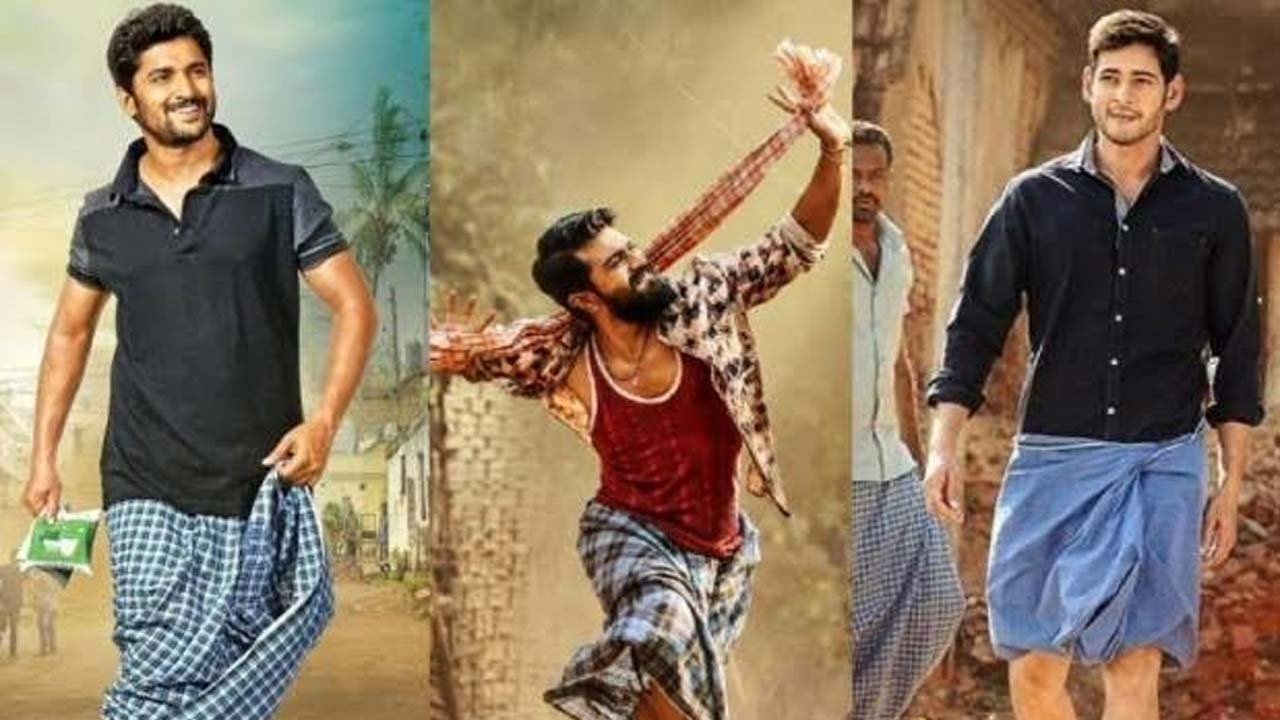
Wanna be a part of the ‘Lungi Bottom’ reversible story to contribute to the sustainable revolution?
Then try this ‘lungi’ which derives inspiration from the checkered ‘Madras’ cotton garment popular in South India and is typically worn by men.
The ‘Lungi Bottom’ is the ‘lungi’ stitched into a reversible light weight bottom that is airy and comfortable. Be a part of the sustainable revolution in style by supporting the handloom weavers who create this excellent fabric.
This product offered by AnanTaya is making waves in the fashion market.
Do you know Kala, that is, cotton coming from Kachchh, comprises an indigenous variety which is found in Gujarat?
Kala Cotton is woven by weavers in simple patterns of checks and stripes encouraging sustainable cotton textile production. It also promises preservation of artisan livelihoods in Kachchh as the massive earthquake which hit the state in the year 2001 left them highly devastated.
The smartly designed ‘KALA Cotton Shirts’ from the ‘AnanTaya Loves Handloom’ collection are highly absorbent, soft and comfortable. Suitable for all weather, this Unisex Kurta-Shirt is for the modern individual, comfortable in their global identity creating a social impact!
As the Centre government recently abolished the All India Handloom Board, the All India Handicrafts Board and scrapped the All India Powerloom Board, there are slew of questions which remain unanswered in the minds of those who have been sweating out in this segment since ages for the growth and development of artisans. The questions including the impact of this decision on future of weavers and craftsmen as well as on prospects of the handloom and handicraft sector etc remain unanswered.
The EBNW Story therefore talks to Macherla Mohan Rao, president of the National Federation of Handlooms and Handicrafts to dig into the details of the outcome of the surprising decision…A few excerpts…
How will the scrapping of such world-renowned institutions impact the weavers and craftsmen?
Abolition of All India Handlooms and Handicrafts Boards is a sign to ruin both these sectors. I really feel this is like ‘Hanging artisans without rope but with Government policy decisions’ in the handmade sectors during the Covid-affected economy. Health emergency and lockdown call was given by Prime Minister Narendra Modi without taking any precautions for food and other groceries of families from March 24 to May 31 this year.
Due to this, handloom weavers and other artisans had no work to sustain their families. The government has given a regular ration for 5kg per person and 1 Kg dal and Rs 1000/- for a family in addition to the regular ration in April. But was it sufficient ?
Those engaged in handmade industry are undergoing a huge debt burden due to government inaction in the lockdown period. Master weavers / Cooperative Societies are not giving raw materials and wages to weavers in AP and Telangana. A total of 12 weavers have committed suicide in Telangana and 2 persons committed suicide in Andhra Pradesh during Covid period as they have no work and are fearing for future. The same situation is continuing in many parts of India among the artisans.
As head of the National Federation Of Handlooms and Handicrafts, could you discuss the importance of institutions like the All Indian Handloom and Handicraft boards, especially for the craft industry?
There is a strong need and importance of All India Handlooms and Handicrafts Boards in present condition.
Lakhs of people have migrated to another village/ nearby town to search for work. No control of yarn prices ( cotton/zari,silk/wool/jute etc) has been done by the authorities under Textile Control Order 1948. There is a problem of Non Implementation of Handloom Reservation Act Properly.
Handicraft sector is facing the problem for raw materials and marketing for their products and credit facilities through rural /commercial banks . Welfare schemes are reaching only to 10 to 12 % of the community, some schemes are only below 8%. Why is it not being reviewed by the authorities if they are doing proper duty for the welfare of the Handlooms and Handicrafts.
To review all these schemes or any act of implementation, we need both Boards for the upliftment of the Handlooms and Handicrafts.
It is not possible to field officers or higher authorities to visit respective clusters of Handlooms and Handicrafts to understand their problems. Their workload is already unbearable to observe the implementation of welfare schemes. So, in many clusters, they are depending on NGOs or implementing agencies.
Both sectors are in deep crisis, lakhs of artisans are searching prospects in another sector for employment. More than 67% of handloom weavers earnings are below Rs 5,000 per month and living in bad conditions with malnutrition food and ill health conditions (4th Handlooms Census of 2019-20).
All policy issues are related to political parties’ perspective as well as the political will of the party in relation with socio- economic and cultural perspectives. It is not possible for the officials in our hierarchy governments under the bossism of political leaders. And therefore, it needs Non Official Boards of Experts/Eminent Personalities of dedicated persons, who are closely working with these communities.
What is the need of the hour?
We need reconstitutions of Boards with eminent/ experienced persons to review all relevant matters and to visit clusters with State /Central level authorities to know about conditions of the communities and to understand the gross root problems to appraise to the concerned Ministry/ Authority to take appropriate actions.
Finally, it is very essential for growth of Handlooms and Handicrafts after post Covid development to create rural employment and sustainable economic growth in rural areas of the unorganised sector of organised people. Boards should do Liaison work in between Government and Communities and update each and every problem to take immediate decisions of Government for the protection of millions of artisans and act on behalf of the Handlooms and Handicrafts sector.
Many claimed that the boards had become toothless and were being neglected. What is your opinion about the abolishment of the boards?
All India Handlooms and Handicrafts Boards is chaired by the Minister and secretary, textiles was the vice-chairman of the Boards.
Development Commissioner Handlooms/ Handicrafts plays the role of a Member Secretary and he is the responsible person to convene the meetings of the boards. There is no right to convene any meeting without the knowledge of the Chairmen/ Vice Chairman according to the rules, because it is a Statutory body comprising officials and non-officials.
Even the appointment/ constitution of Board Members was done by the decision of the Minister and not by any Member or Official.
There have been just 6 meetings of the Board in the last 15 years. It is the fault of the Member Secretary, he is the Development Commission, Handlooms. He should convene the meeting in every 3 months. As far as I know, many of the Non Official Members requested him, verbally and in writing, to convene the meeting. Now, who will punish him for not conducting the meetings,? It is very clear today that there has been ignorance/ negligence of the Government on Handlooms/ Handicrafts sector.
Whenever they want to decide on certain issues, they invite NGOs (cluster implementing agencies) and cluster development entrepreneur/exporters/ex apex management for meetings who listen to their decision without any hesitation or opinion. this has been happening since 20 years with meagre participation of real stakeholders of the community, who are fully involved and doing dedicated work more than 30 years. On policy issues, officials cannot take any decision or cannot say to the higher authorities. Policy decisions always depend on public pressure on the government movements/ decisions.
How do you feel the government could have revived or saved it?
Government should revive the Boards with the original spirit of fact finding committee recommendations for the protection of 32 millions of handlooms and handicrafts artisans (31.45 lakhs handloom weavers and 68.86 lakhs handicrafts persons, multiply with 3 persons in average in family). I will be happy for Government decision for reviving the All India Handlooms and Handicrafts Boards with experts/eminent personalities, who are having experience in policy making with observation of constitutional provisions like Article 43 and 43 A and 41 and rights of the unorganised people /marketing/design inputs etc with statutory powers to inspect fake production of mechanised units and to review all related issues of handlooms and handicrafts to appraise the periodical reports of the boards of the Government Authorities and Concerned Ministry.
Despite the lack of government support, the handlooms and handicrafts sectors have made significant contributions to India’s economy. Why there is an apathy and indifference towards handicrafts and handloom? Is it a problem of the current government, or even those in the past, have been indifferent?
In the previous financial year, handicrafts earned Rs 36,7898 crore through exports and Rs 12,678 crore in the domestic market, while handlooms earned Rs 2,280.18 crore in exports and Rs 2,75,000 crore in domestic trade. This is Government Data extracted from the Ministry of Textiles, Annual report of 2018-19.
Today’s abolition of the handloom and handicraft boards is not a sudden move, but intensification of its policies from pursued from 2015-16 to 2020-21 characterised by decline in budget allocations, from Rs 721.55 crores (17.64%) to Rs 485 crores (13.80%) for handloom sector. During the same period, budget allocations for handicrafts have increased from Rs 315.24 crore to (7.37%) to Rs 388.21 crore (11.05%). The slight increase was far less than the proportion of growth of the handloom and handicraft in terms of employment and exports.
Discrimination towards this sector reveals that artisans and handloom weavers are not as important to the government as the industrial capital lobby. That’s why there is no mention of handlooms and handicrafts and it has not been not allotted any share of government assistance under the 20 lakh crore assistance for economic revival under Atma Nirbhar Bharat Abhiyan Mission in the wake of COVID-19 pandemic.
These are all part of implementation of Globalisation and Economic reforms,ultimately weavers and artisans have to bear the brunt of unimaginable economic crisis and the loss of lives in future.
Why is the number of Handloom weavers declining every year. Can you shed light on major reasons for the decline situation?
Handloom weavers are not getting the monthly wages more than Rs 5,000/, however, nearly 3 or 4 members are working together on Pre-loom and Post-loom work for more than 11 hours per day.
In other sectors, labour working 8 hours are not getting any less than Rs 400. Even the government has given Rs 203/- under MGNREGA Programme, it is unskilled work, but weavers are highly skilled and getting low wages for their skilled work.
Maintenance of the family is a criteria, it does not happen in the Handloom Sector, so weavers are searching for other sectors for their livelihood. If they are able to get more than Rs 400/- per day on Handloom work, definitely they will continue and more people also enter into this sector.
On this Ganesh Chaturthi, a fresh start has been made in Udaipur under which thousands of tons of garlands and flowers offered to Gods on daily basis in temples and households will be converted into powder forms and shall be converted into incense sticks by training and employing hundreds of unemployed and poor women.
The initiative will help in two-phased manner; firstly, it will help unemployed women to garner jobs and secondly it shall check pollution in lakes as these flowers, in present times, are being immersed in the lake waters, said M Square Foundation chairman Mukesh Madhwani.
The Modus-Operandi
Under the novel initiative of our Foundation, the flowers will be dried and turned into power form to make incense sticks. Hundreds of unemployed women from the district shall be trained to make incense sticks from these garlands which will take the blessings from temple’s corridors to each household.
It needs to be mentioned here that the M Square Foundation has been taking initiatives to provide employment to many people by making them skilled.
Under this project, thousands of tons of garlands which are offered to God and then are flown into the lakes polluting the waters inside will be dried and shall be used to make incense sticks.
The herbal incense sticks will be made by crushing flowers into powder form.
This will bring smiles for unemployed women who will get newer opportunities to earn there livelihood, he added.
The money earned from selling the incense sticks shall be distributed among those poor women while some part will be spent in other social work too.
Flowers collected from Eklingji Temple and Saras Temple in Udaipur
Initially, two renowned temples have been shortlisted to start the drive which are Eklingji temple and Saras temple which attract many devotees from India and abroad, said Madhwani adding that two more temples shall be shortlisted soon.
Once we have our more skilled people and machinery ready, we will spread it to other temples as well, said Madhwani.
Profit sharing with jail inmates too
Another outlet of this Foundation, Being Manav, being run in Udaipur, recently started a novel drive here under which it shares a chunk of the profit with women jail inmates which is earned with the selling of incense sticks being made by these inmates.
The women jail inmates are being trained to make incense sticks to ensure they stand financially independent to raise and nurture their family members many of whom, have lost their jobs during current lockdown announced in the nation in wake of COVID-19 pandemic
According to founder of Being Manav, Mukesh Madhwani, “We have made a humble effort to engage female jail inmates in the process of making incense stick. The initiative ensures that the inmates stand financially independent to raise and nurture their family members in a dignified manner.”
“Under the said initiative, the women undergoing imprisonment in Udaipur Central Jail shall be trained to make the incense sticks out of which they shall earn their daily wages along with a chunk of the profit earned in the process as mentioned under the jail rules.
The remaining 100 per cent dividend will be applied to other social causes being run by Being Manav,”
Soon, this organisation also plans of opening food outlets across the country on the lines of Domino’s and McDonald’s, under which only the underprivileged will be given employment. Professional training shall be imparted to the employees to ensure they perform their job religiously with expertise.