Home Blog Page 863

Navratri 2020: Shubh Muhurat Start Date Festival of Nine Nights Facts

0

‘Navratri’ in Sanskrit stands for ‘nine nights’ when people observe fast and offer special prayers to the ‘Nine Forms of Maa Durga’. 

Story behind Navratri

Goddess Durga, considered as an incarnation of Goddess Parvati, took the avatar of Devi Durga to destroy the demon, Mahishasura. 

Two Navratris

Navratri is the most auspicious pooja which Hindu households perform with a great religious fervor and enthusiasm.

Navratri puja basically has two versions namely Sharada Navratri falling during the months of September-October and Chaitra Navratri observed during the months of March – April. 

This year, Chaitra sharada Navaratri puja will be performed between October 17, 2020 and 25, 2020.

Navratri 2020 Muhurat

Kalash Sthapna: 6.27 am to 10.13 am

Abhijit Muhurt: 11.44am to 12.29 pm

What is different this time during Navratri

The planetary movements, this Navratri, symbolises prosperity for all. The astrologers perdict that it is after 58 years that the Saturn and Jupiter shall stand in positions which are sure to bring in good fortune for people around.

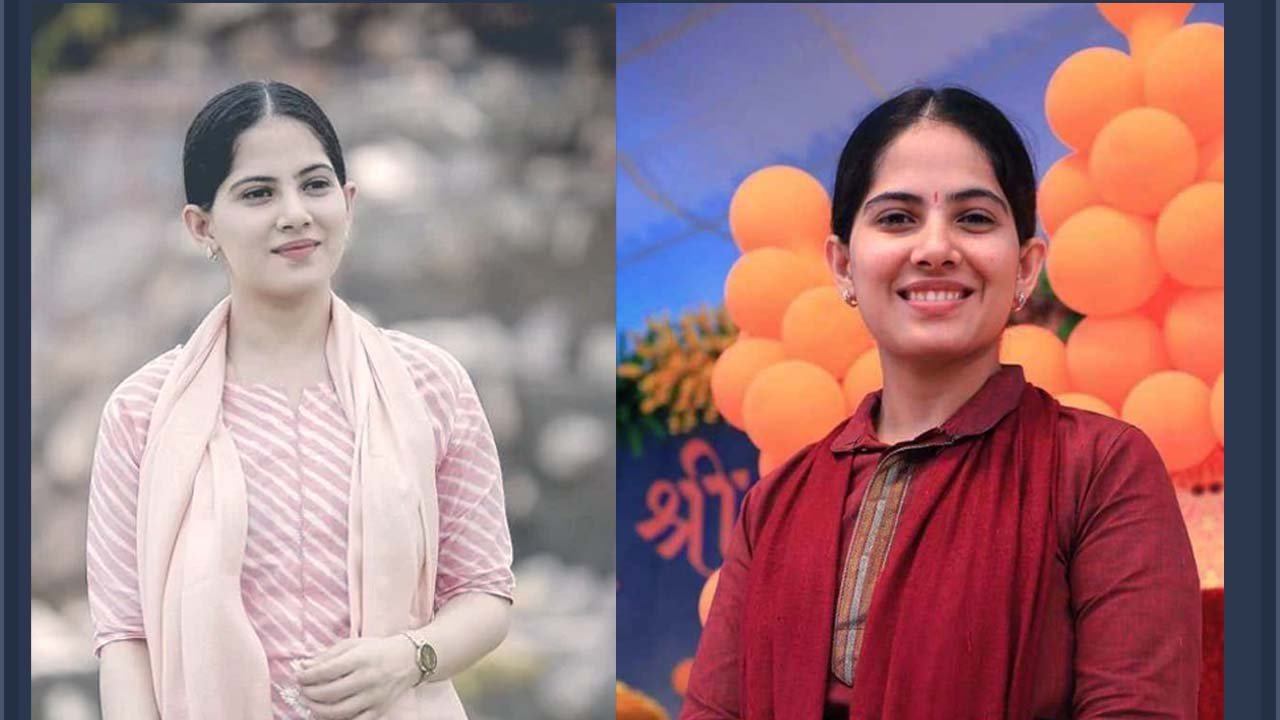
Jaya Sharma(Jaya Kishori Ji) Biography, Age, Family, Marriage, Education, Bhajan, Quotes

0

Jaya Kishori Ji’s Biography in English: Jaya Kishori has been garnering accolades and laurels all across the world with her melodious voice which mesmerises one and all and takes them take a holy dip in the spiritual world.

Since childhood, she has earned name and fame being a story teller, bhajan singer and motivational speaker. 

Jaya Kishori has been reciting stories related to Bhagwat Geeta, Nani Byro Myro at quite a young age. Jaya Kishori has been an inspiration for many youths and she has millions of followers.

Her description

Full Name – Jaya Kishori Sharma
Date of Birth – 13 July 1996
Place of Birth – Sujangarh, Churu (Rajasthan)
Father’s Name – Shiv Shankar Sharma (Radhe Shyam Haritpal)
Mother’s name – Geeta Devi Haritpal
Sister- Chetna Sharma
Education – B.Com

Jaya Kishori Ji’s Husband Name

Although Jaya Kishori is considered as a sadhvi, however, in one of her cent interviews, Jaya Kishori replying to a question on her marriage, said that she is not a monk or a saint and shall marry and have children too, but this is not the right time for it. She said that she wanted some more time to get married as her work may get affected after marriage.

Why does Kishori Ji say…

Jaya Sharma’s teacher is Pt Govindaram Mishra who used to call Jaya as Radha. In fact, he gave Jaya the title of ‘Kishori Ji’, seeing her love for Krishna.

Jaya Kishori Ji Bhajan (Bhajan of Jaya Kishori Ji)

Laga tumse laga baht

Jagat ke rang kya dekhoon

Meethe was se bhariyo re

Mhara Khatu Ra Shyam

Mere Lagi Shyam Sang

Diwani mein Shyam ki

Chhap Tilak Sab Chini Re

Khatu Ra Raja Mehar Karo

Gaadi mein Bitha le re baba

Sabse Unchi Prem Sagaai

Maan Baap ko Mat Bhoolna

Meri Krapa se

Jaya Kishori’s- Website, Facebook, Twitter, Instagram, Youtube, Wikipedia

Facebook – https://www.facebook.com/iamjayakishori/

Twitter – https://twitter.com/iamjayakishori

Youtube – https://www.youtube.com/channel/UCfwa_zKl8-zC9rQDWIEixgg

Official Website – https://www.iamjayakishori.com/

Jaya Kishori Ji HD Images: Jaya Kishori Ji’s photos can be downloaded from her official website – https://www.iamjayakishori.com/gallery/

The Only Living fort in India: Jaisalmer Fort Images, History, Facts

0

Here is a few beautiful images of The Only Living fort in India- Jaisalmer Fort

Jaisalmer Fort Images

Do you know that the Jaisalmer Fort, a UNESCO World Heritage site, is India’s only ‘living’ fort. 

Built in 1156 by the king Rawal Jaisal, the fort has a population of around 5,000 people

Most of them are descendants of Brahmin and Rajput families who once lived here

India is the only country in the world to win 60 50 and 20-over world cups

0

India is the only country in the world to win 60 50-over and 20-over world cups

Answer- Yes

National Wildlife Week: Let’s take wildlife conservation to homes following ancient Indian ethos

0

The first bread will go to the cow and the last for the street dog! Indian families have had an ancient tradition to feed animals. They also treat  wilderness and all its inhabitants as pious. The west looked at this subcontinent with wonder and surprise. Qualitative living and conservation ethos had been hallmarks since time immemorial. Let’s try to revisit those traditions and imbibe them to attain balanced sustainable development.

By Harsh Vardhan

The Constitution of India Article 51 A (g) lays down that it is a fundamental duty of the Indian citizens to protect wildlife and have compassion for all living creatures. The Article 48 A states that it is the duty of the State to protect, safeguard and work for the improvement of forests and wildlife of the country. The subject of protection of wildlife and birds is given under List III, Schedule VII of the Constitution. List III is the Concurrent List, which depicts that both the Centre and the States have the power to make laws over it. 

National Wildlife Week from October 1-7

October 1-7 annually is celebrated all over India as National Wildlife Week, a movement marked by immense enthusiasm and participation by non-government organisations, civic service clubs, and groups. They support forest department to hold diverse events and contribute awards to students. An outstanding example of government and non-government participation, happening on their own.  

The powerful feature image speaks volumes

A black-and-white photo here speaks about the 1979 Wildlife Week at Jaipur Zoological Garden. It shows a few renowned experts sitting on the dais: (L to R) Ishwar Prakash, a zoologist from CAZRI, Dharmakumarsinhji, a renowned expert on wildlife, D.R. Mehta, famed for his Jaipur Foot Initiative, VS Saxena, a forest officer, and KC Kulish, founder editor of the Rajasthan Patrika daily. DR Mehta continues to this day with a vision and dedication difficult to be found among trillions. Visit his Foot-Factory in Jaipur’s Malviya Nagar or meet him at the Prakrit Bharti Academy, he set up as a creative renaissance. You educate yourself.  

Today’s gain can be loss for future generations

Crisis over forests and wildlife within them, is gathering storm. Owing to need for faster development, priorities of the Government remain what conservationists say ‘lopsided.’ Who else if not the Government will realise that today’s perceived net gain in development can also be the gross loss for the future generations in case ecological security is not maintained.  

National Wildlife Week: Let’s take wildlife conservation to homes following ancient Indian ethos
Greater Painted-snipe (Rostratula benghalensis) pair feeding at a water body, they confine to edges only and are very selective feeders. (Photo by Durga lal Verma)

Vedas, Gita speak of nature conservation

The dialogue between the two sides should sustain to attain balanced sustainable development. The ancient Indian literature including the Vedas, Bhagwad Gita, etc are replete with dictates on nature conservation. Are they practised by authorities who preach a lot on ethics and values? More now a days. 

The Indian Birding Fair 

Catch Them Young! Students are the future of the world. The Indian Birding Fair at Jaipur’s Man Sagar lake imparts conservation tips to a few thousand of them annually for past 24 years. Teachers acclaim that they seldom receive at schools and in books what they receive at such an open-air class-room-event. And at no price paid.  The Rajasthan Forest Department has become a lead partner at this biggest event in the country. 

From Horse’s mouth

The lake now offers wondrous experiences as its dam was renovated by the Jan Mangal Charitable Trust during mid 90s at a time a new idiom like the corporate social responsibility was non-existent. As a responsible businessman, we practice green-buildings and try to popularise nature conservation. But we often find it hard to sell such ideas to colleagues in same or allied business, he admits frankly.   

Anand Mishra, TWSI’s President

Meet Kadambini Ganguli, one of India’s first women graduates and doctors

0

Kadambini Ganguly, who was born on July 1861 and passed away on October 3, 1923, was one of the first women graduates from India and the entire British Empire, who became one of the first female physicians trained in western medicine in the entire South Asia.

She was the one who made Calcutta Medical College open its doors for women.

This woman has many firsts to her credit which includes she being one amongst the earliest working women in British India.

With a series of firsts to her credit, Kadambini Ganguly was also one of the earliest working women in British India.

Born in Bhagalpur, she was brought up in Changi, Barisal (which is now in Bangladesh).

Her childhood has strong influence of Bengal Renaissance and her father, Braja Kishore Basu, championed the case of Brahmo Samaj. As a headmaster, he co-founded Bhagalpur Mahila Samiti in 1863, which was the first of its kind women’s organisation in India.

Kadambini completed her formal education from Banga Mahila Vidyalaya which later merged with the Bethune School. She created history by becoming the first candidate from this School to appear for the University of Calcutta entrance exam and becoming the first woman to pass the test as early as 1878.

Her success inspired Bethune College to introduce FA (First Arts) and Graduation courses in 1883. Kadambini was one of the first two graduates, which include  Chandramukhi Basu, in the entire British Raj.

Besides education, Kadambini also challenged everything in the society and married her teacher, Dwarakanath Ganguly who was 20 years older to her. None of the Brahmo members accepted their marriage. 

After her graduation, Dwarkanath encouraged her to take up medicine. This proposal received severe backlash in the Bhadralok (upper caste Bengali) community.

Even the editor of the periodical Bangabasi, Maheschandra Pal, referred to her as a courtesan. Dwarakanath confronted him, and made him swallow the piece of paper where that comment was printed. 

Becoming a doctor was a difficult task for Kadambini in those days. Calcutta Medical College refused to admit her as a candidate despite her merit as there was no history of Indian women studying there.

After the couple legally threatened the authorities, they allowed Kadambini to study.

In 1886, she marked her record as one the first Indian women physician eligible to practice western medicine alongside Anandi Gopal Joshi. She even left for the United Kingdom in 1892 and received certificates from Edinburgh, Glasgow, and Dublin. After her return to India, she worked for a short period in Lady Dufferin Hospital and started her private practice later.


6 Facts About Atal Tunnel in Rohtang : World’s longest underground highway

0

Do you know that Atal Tunnel is the longest highway tunnel in the world (which stands above 10,000 feet)? As the valley was earlier cut off for about six months every year due to heavy snowfall, the 9.02 km long tunnel connects Manali to Lahaul-Spiti valley throughout the year. Let’s discuss its five different facts:

  • The strategically important all-weather Atal Tunnel reduces the distance between Manali and Leh by 46 km 
  • It also reduces the travel time by four to five hours.
  • The tunnel is built with ultra-modern specifications at an altitude of 3000 metres (10,000 feet) from the Mean Sea Level (MSL) in the Pir Panjal range of Himalayas.
  • The south portal (SP) of Atal Tunnel is situated at a stretch of 25 km from Manali at 3,060 metres height, while the tunnel’s north portal (NP) is located at an 3,071 metres height near village Teling, Sissu, in Lahaul Valley.
  • The Atal Tunnel is designed to accommodate around 3000 cars and 1,500 trucks per day at a maximum speed of 80 kmph.

The  Atal Bihari Vajpayee government on June 3, 2000 decided to construct the strategic tunnel below the Rohtang Pass. The foundation stone for the access road to the south portal of the tunnel was laid on May 26, 2002.

African Cheetah: Finally to land Cheetah in India

0

Wildlife lovers have reasons to be gung-ho during the National Wildlife week (1-7 October) with the decision at Government level for entry of Cheetah in to India.  (The feature image features an African Cheetah clicked by Lauri Marker)

By Harsh Vardhan

Cheetah comprise the species which became extinct in the country during fifties. The lone person who raised a loud voice for its re-entry in the country is Dr.  Ranjitsinhji, a prince from Wankaner in Saurashtra, 1961 IAS batch and a renowned wildlife expert who has chaired numerous panels to give a new prestige to wild life  and written extensively on how to step up nation’s economy through sustainable living with such species. 

Dr. Ranjitsinhji was nominated as the chairman of a committee by the Supreme Court of India end January 2019 to recommend ideal habitats where Cheetahs were to be introduced in India. A video-meeting among officials and this expert took place on 30 September 2020 to chart out a well-defined procedure. 

Dr. YV Jhala, Dean at the Wildlife Institute of India (WII), has been nominated to head the Cheetah-team to inspect habitats where this predator should be rehabilitated. The National Tiger Conservation Authority (NTCA) has already been appointed as the new Cheetah-Office in India vide the Supreme Court Order. The Ministry of Environment, Forest and Climate Change (MoEFCC) has sanctioned a sum of Rs 2.5-crore to WII to facilitate this wild cat’s entry into India. 

Ms. Lauri Marker, founder-head of Cheetah Conservation Foundation in Namibia
Lauri Marker (right) and Shira Yashphrey from Cheetah Conservation Foundation, Namibia, discussing their plan at Jaipur’s Jal Mahal during February 2020 (Photo by Harsh Vardhan)

Where shall be cheetah’s new house in India? 

Where shall Cheetah be allocated a piece of land in India? Madhya Pradesh has suggested Nauradehi Sanctuary (between Jabalpur and Sagar) besides Kuno Palpur (north of Shivpuri, close by Gwalior). 

Rajasthan wants this wild cat to reside in a landscape covering Mukund Darra, Rana Pratap Sagar and also Gandhi Sagar which lies in Madhya Pradesh. It aims at an inter-state Cheetah-Reserve. Interestingly Bihar, which was nowhere in sight for this cat, has now laid its claim on Cheetah. 

Jhala is a proven scientific horse in understanding and experimenting with wild species. He has  already given an account of WII’s  capability by heading the ex-situ breeding of Great Indian Bustard in the Thar Desert (2019-20). He has an eye over Shahgarh Bulge in Jaisalmer district, a large area having least anthropogenic pressure but bordering Pakistan. Cheetah needs extensive open and  scrub habitat with proficient grass cover and abundant feed. Nowhere in India large tracts of such habitats are in sight for this cat as it enjoys in its African homes. Feed quotient faces a big question mark besides village population to face the brunt in the suggested areas.  

From where Cheetah will be air-lifted? 

The Asiatic Cheetah survives in Iran only. It is unwilling to part with it to any country. The lone option therefore will be the African Cheetah. South Africa and Namibia are apparently willing to export to India. Ms. Lauri Marker, founder-head of Cheetah Conservation Foundation in Namibia, was in India last February and discussed such aspects with some key players.     

The forest authorities appear cock-a-hoop. Have they re-examined  the impact this fastest running predator will receive in Indian conditions? More importantly, what will the Indian countryside feel when another predator will be picking up their sheep, goat, poultry, etc? Lauri has created an example for compensation for such losses in Namibia and also designed Cheetah-attack-proof pans for livestock. What plan the Indian foresters have chalked out prior to offering a rose-garland to this alien wild animal? And who shall check their home-work? Forest Secretaries, Principal Forest Secretaries, Ministers of Forest and also Chief Ministers? Such questions have dogged the Indian rural psyche: Tigers vs the village sector. Cheetah to add to worries or solve them?    

Royal Rajasthan on Wheels: Train, Ticket Price, Tour Package, Photos, Journey, Destinations

0

Know About the Royal Rajasthan on Wheels in India: Train, Ticket Price, Tour Package, Photos, Journey, Destinations etc

Wanna know about the luxury train the Royal Rajasthan on Wheels which is run by the Indian Railways.

Modelled on the lines of Palace on Wheels,  the train chugs on a route through Rajasthan taking tourists to beautiful tourist, wildlife and heritage sites of the state.

The tariff ranges from 700$-$1800 per person varying on the basis of single/double/triple occupancy of rooms.

When was the train launched?

The Royal Rajasthan on Wheels luxury train was launched in January 2009 following the success story of the Palace on Wheels, another luxury train that travels through Rajasthan.

Cabins

The Royal Rajasthan on Wheels houses 14 luxury cabins which have been named after erstwhile royal palace of the state. They are categorized into Deluxe and Super Deluxe saloons, which are equipped with all modern amenities including Wi-Fi internet, Satellite TV, Channel music system and temperature control system.  A few cabin names of deluxe coach include Hawa Mahal, Padmini Mahal, Phool Mahal while the cabin names of Super Deluxe Coach also includes the name of Taj Mahal, one amongst the seven wonders of the world.

It’s a 7-day/8-night Journey

The train takes tourists on a 7-day/8-night tour through Rajasthan, while starting from New Delhi’s Safdarjung railway station which counts Day 1 of the journey.

The next stop is Jodhpur which is Day 2, Udaipur and Chittaurgarh are Day 3, Ranthambore National Park and Jaipur make day 4, Khajuraho make Day 5, Varanasi and Sarnath make day 6 of the tour while Agra is the seventh day as the train returns to Delhi making it the eighth day of the journey.

The tourist attractions covered in the itinerary are the Hawa Mahal, Moti Mahal, Ranthambore National Park, Chittaurgarh Fort, Lake Palace among many other renowned places like the Taj Mahal.

IPL 2020: Owners of Rajasthan Royals frachisee

0

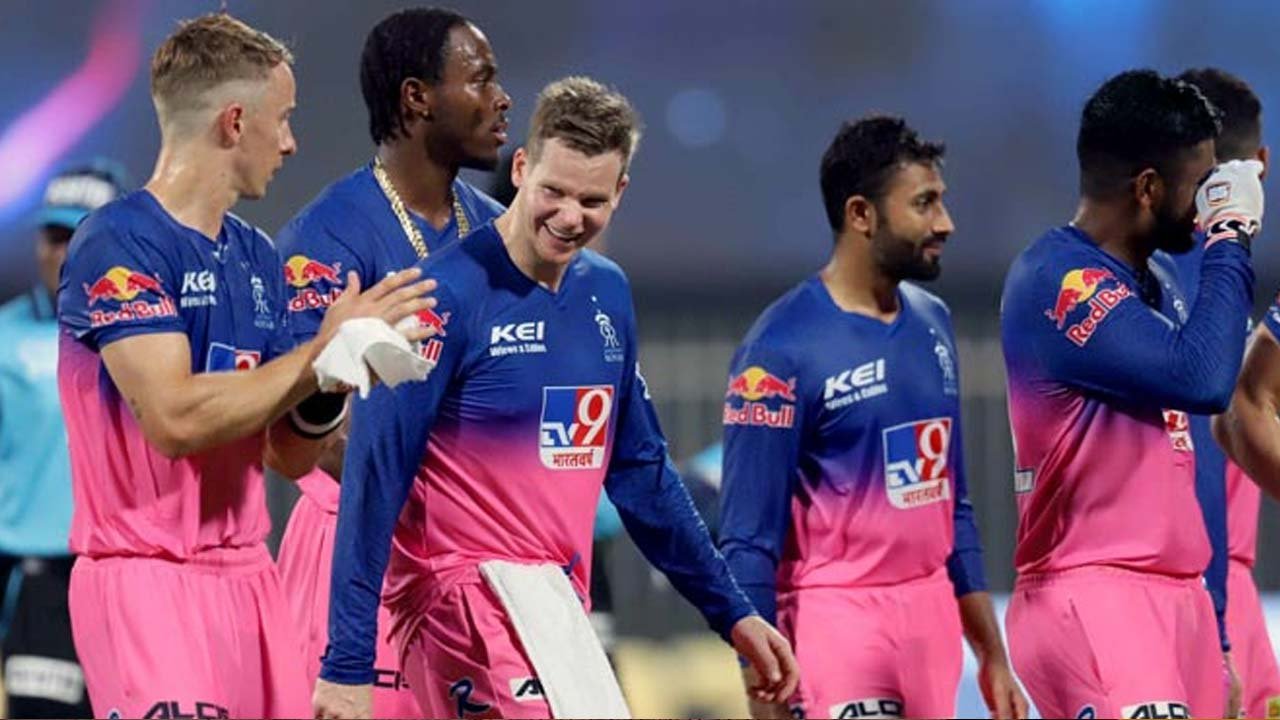
Here comes the short description of Rajasthan Royals franchisee owners who are known to search the best young talents each year.

Who owns Rajasthan Royals?

Rajasthan Royals was amongst the first eight franchises which were launched during the inaugural edition of the Indian Premier League (IPL) in 2008. The Royals won the opening edition by defeating Chennai Super Kings in the finals under the leadership of Australian cricketer Shane Warne. Now you must be eager to know who are the owners of Rajasthan Royals. Here comes the details…

Amisha Hathiramani’s Tresco International Ltd owns a total of 44.2% shares in the Rajasthan Royals. Suresh Chellaram, her father had the same hold before he transferred his stake to her in 2015.

Manoj Badale (Emerging Media (IPL) Ltd)

Manoj Badale owns a total of 32.4% stake in the popular franchise. 

He is the co-founder and managing partner of Blenheim Chalcot and is the chairman of the British Asian Trust 

Lachlan Murdoch, an Australian-British-American businessman,  is one of the co-owners of the Royals whose Blue Water Estate Ltd owns 11.7% shares in the franchise.

Former Australian cricketer Shane Warne, after his retirement, took up the co-ownership of the popular franchise through his undergarment brand called as ‘Spinners’. He too owns 3% share in the team.

Disclaimer: The above write-up has been sourced from different websites and hence does not guarantee a 100% accuracy of the figures.