Home Blog Page 854

Ujjain-based Vikram University launches short-term course on Ramcharitmanas

0

A short-term course on Ramcharitmanas launched by Vikram University: Wanna know why stones floated on water while making Ram Setu, how did Pushpak Vimaan fly in the sky, how did Bali took a parikrama of earth each day two and a half times?

If you too are curious to know these answers, contact Ujjain University which has launched a six-month science and culture certificate course on Ramcharitmanas, written by Tulsidas.

While it shall help you answer these questions, it shall also provide an in-depth understanding of Ramayana. 

The university has started the course with 20 seats.

According to head of the Hindi department of Vikram University, Prof Shailendra Sharma, “Interested students can apply for the course till December 28 through MP Online. Students of 10+2 pass are eligible to apply. We have not capped the upper age limit for the students. It has been done to help everyone who is willing to know more about Lord Ram and Ramcharitmanas,” he added.

“Students completing this course can do a lot of research work. We have prepared syllabus in such a manner that students can know those facts which are known to very few people,” said Prof Sharma.

He added that students can do this course simultaneously with their UG or PG courses. “We have decided to conduct online classes for students living out of Ujjain. Several initiatives will be taken to popularise this course,” said Prof Sharma.

The course will be conducted in collaboration with the Ayodhya Research Institute, Department of Culture, Government of Uttar Pradesh.

Mohatta Palace Museum bespeaks India’s Taj Mahal-kind love story in Pakistan

0

Mohatta Palace in Pakistan bespeaks India’s Taj Mahal’s kind story in Pakistan, however, there is one difference; While Taj Mahal was built on orders of the Mughal emperor Shah Jehan in ‘loving memory of his wife’, Mohatta Palace was built to save Mohatta’s wife from dying.

This Palace in Pak has used Rajasthani architecture to ensure free winds of sea get into the palace for the ailing wife of the then successful Marwari entrepreneur, Shivratan Mohatta.

Usman Damohi, Karachi historian, in his book Karachi Taareekh Kay Aaeenay Main says

*”In 1927, Shivratan Mohatta, a successful Marwari entrepreneur, commissioned a palatial house in the affluent seaside neighbourhood of Clifton. The architect commissioned for the assignment was Ahmed Hussein Agha, one of the first Muslim architects of India. He came from Jaipur to take up the assignment.

“Working in a Mughal revival style with a combination of locally available yellow Gizri stone and pink stone from Jodhpur, he sought to recreate the Anglo-Mughal palaces of the Rajput princes.”*

The reason behind the commissioning of the project was a serious illness that Mohatta’s wife suffered from. Doctors told Mohatta that sea’s refreshing winds of the sea can cure his wife’s illness. Hence, Shivratan built this fascinating bungalow in the previous century in Clifton, covering a very large area.

When it was handed over to Fatima Jinnah

After Partition, the palace was handed over to Fatima Jinnah, sister of the founder of Pakistan, Muhammad Ali Jinnah. After her demise, the Government of Sindh took over the building

Pinguli Chitrakathi Art: Merging art & storytelling!

0

‘Chitra’ in Hindi means painting and ‘katha’ means a story in any form.

Now, Chitrakathi is the rare combination of art and storytelling which represents a special art form of Maharashtra. 

The village of Pinguli, near Kudal in Sindhudurg district of Maharashtra, is home to the few families who practise the art. 

Chitrakathi artists hail from the Thakar tribe who not only create paintings, but are also performers, composing the songs that tell stories, and performing them to music.

By modulating their voice to create dialogue and drama, the performance is also backed by vocals and playing traditional musical instruments.

First Train in India- Made its maiden journey, on December 22

0

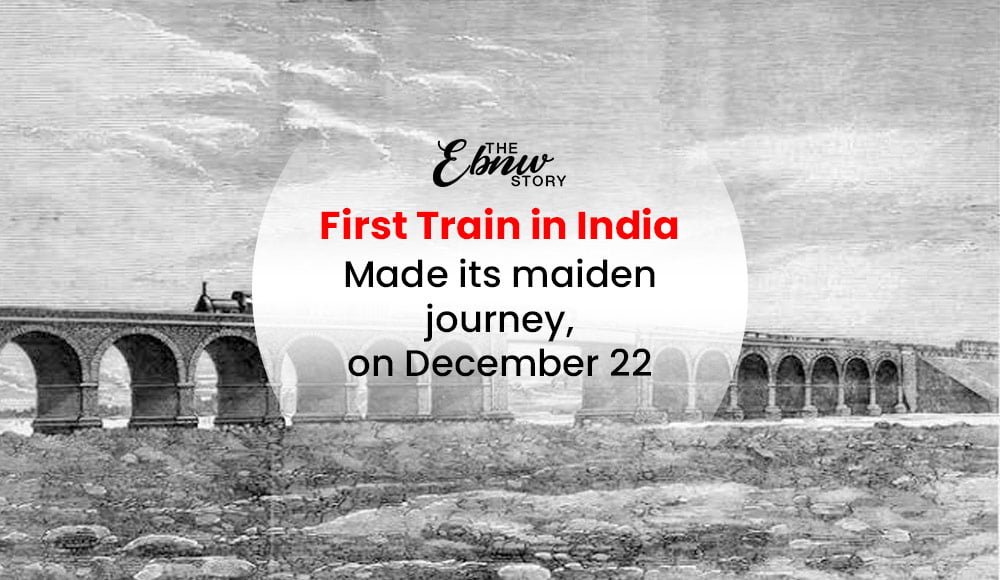
Do you know why December 22 is a landmark date for Indian railways as well as for Indians? The reason is that the first train in India, made its maiden journey, on December 22 aiming at solving farmers’ irrigation woes.

The clay required for the said construction was available in sufficient quantity at Piran Kaliyar area, which was 10 km away from Roorkee. 

One Yogendra Singh, a librarian in IIT Roorkee, perusing its rich collection of books came through the fact and  then conveyed the same information to Prof. Prem Vrat, the former Director of the institute.

First Train in India

The book, published in London in 1860, says that the train’s engine was brought from England in 1851 and was then named after the executive engineer, Thompson, who was credited with the plan to run a train on that route.

This potentially disrupts the other claims which mentions that the first train ran in 1853 between Mumbai and Thane. The 1853 train journey, in fact, was a commercial one, which made it as the first commercial train journey.

Do you know Rajsamand Lake of Rajasthan was used as Seaplane Base during World War -II

0

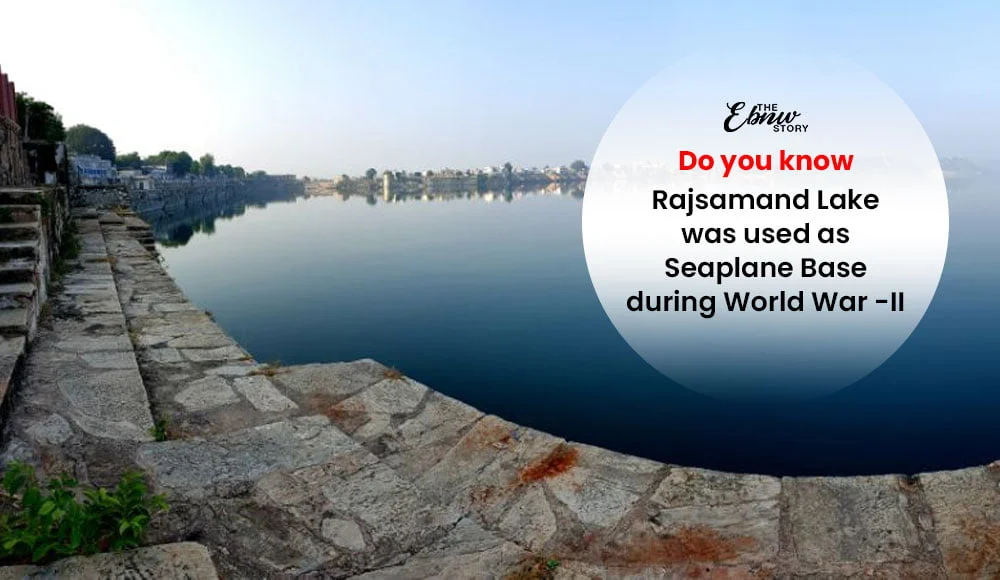
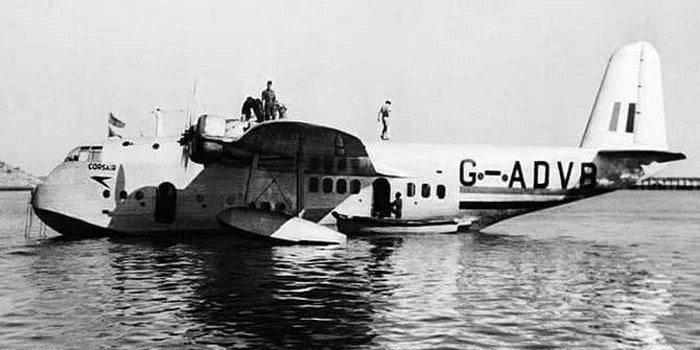
Do you know that the Rajsamand Lake in Udaipur situated 66 Km. north of Udaipur, between the towns of Rajnagar and Kankroli was used as a seaplane base by Imperial Airways for about six years during World War II.

Rajsamand Lake of Rajasthan was used as Seaplane Base during World War -II


The lake was the result of a dam constructed across the Gomati, Kelwa and Tali rivers at the southwestern end by Maharana Raj Singh I, between 1662 and 1676 AD. 

The reason for the dam and lake was to provide employment for victims of a widespread drought and famine (1661), and to provide canal irrigation to local farmers. 

Rajsamand Lake is the oldest known relief work in Rajasthan and cost almost 4 million rupees. 

With a circumference of 22.5 Sq Km. the lake is quite awe- inspiring with a depth of 30ft and a catchment area of about 524 sq km. 

As large as it is, the lake has been known to disappear in times of severe drought: for instance in 2000 it was merely a huge, empty basin with a surface of dried, cracked mud.

Know About The Great Conjunction of Jupiter Saturn (Christmas Star) on December 21, 2020

0

Jupiter and Saturn will meet in the closest ‘great conjunction’ since 1623

From December 21, Saturn and Jupiter will be in complete conjunct and the latter planet is ready for another fight with Saturn. In fact, Jupiter and Saturn huddle closer together in the evening sky than they have for nearly 400 years.

Warning

In the distant past, such alignments of the planets have been seen as portents of things to come, from great fires and floods to the birth of Christ and the ultimate collapse of civilisation.

History

Galileo first observed Jupiter and Saturn in 1610, which is 13 years before the last really close conjunction. But there is no record of anyone observing the 1623 conjunction through a telescope

An IDEAL- Adarsh Kishore Leaves Behind Invaluable Lessons for All

0

By Harsh Vardhan: Adarsh Kishore has been an officer who climbed up the success ladder to become Secretary, Finance at Government of India and rubbed shoulders with P. Chidambaram, the then Finance Minister. He also served at International Monetary Fund as its Executive Director.

The man who was bold, known for taking timely and just decisions, also scripted a book, “The Global Economic Crisis through an Indian Looking Glass” which coincided with the recession in global economy at end of last decade.  

A small town man who made big headlines

Born in Sikar town in arid zone of Rajasthan 74 years ago, no one ever knew that he would hit international headlines and assume a key seat for decision making by virtue of joining the Indian Administrative Service in 1969, Rajasthan cadre? 

A top ranking position he always attained in education, post-graduating in political science from University of Rajasthan, he displayed flair for debating, discussions and excellent behaviour. 

The first district collector of Alwar

Few would know that he happened to be the first district collector of Alwar to have translocated a village (Karna ka Bas) from Sariska in 1976, then not included in the Project Tiger scheme of administration. Harideo Joshi as Chief Minister, gave away land-papers to villagers. He had invited this writer to attend the event.  The present day district collectors ought to derive strength from his record performance for sake of conservation. Any reason why most of them are found hiding behind curtains when call of wild is raised by forest officers before them. MK Ranjitsinhji happened to be the most outstanding district collector of Mandla district in Madhya Pradesh to have translocated villages in 1970 to let Kanha sanctuary enjoy more area. He continues to hit wild-headlines to this day.  

Serving key posts under different CMs

Adarsh served at key posts under different Chief Ministers of Rajasthan: Harideo Joshi, Bhairon Singh Shekhawat, Shiv Charan Mathur, Joshi again, Shekhawat again and finally Ashok Gehlot. 

Ironically, he faced two acrimonious mortality cases. One was suicide by Prince Pratap Singh of Alwar while he was Collector. The other was death of a prince in a village near Bharatpur while he was Secretary to Chief Minister.  He emerged unscathed. A 1949 batch officer BN Malhan shared with me how he scripted the enquiry report on the Alwar Prince case. 

He was bold and God fearing too

Such official encounters made him more bold. He was already known for timely and just decisions. He became a bit God fearing. A fast on Tuesday probably commenced for him, as a new  lesson? He remained Secretary, Finance at Government of India and rubbed shoulders with P. Chidambaram, then the Finance Minister. Finally he served international Monetary Fund as its Executive Director. It led him to script a book, “The Global Economic Crisis through an Indian Looking Glass” which coincided with the recession in global economy at end of last decade.

The book, Sage publication, has traced out the origin of the great-recession: (i) genesis, (ii) impact on the world and India, (iii) the response, and (iv) the aftermath. He emphasised in it the gaps in the international financial architecture that allow the recurrence of crises with global ramifications and emphasized the importance of cooperation, coordination and collective action to secure and sustain macroeconomic and financial stability across the globe.  

The gold-buying at international scale and depositing it in Britain to secure future economy of India? Let many decisions of Adarsh remain latent. Only the time shall open up the lid to surprise many. Can one take a lesson from his decisive ways? Being conveyed to all those decision-makers who raise collars but often cause chaotic competition in present day governance.  

And the man of action breathed his last

Adarsh breathed his last during December 2020. Manjari Kishore, his equally brilliant, erudite and  bold wife, Arush, son, and Trisha, grand-daughter, are now basking in loads of records he left behind. Living at the farm villa he had nursed as a green-sanctuary on outskirts of Jaipur. A cold silence had enveloped the front lawn as this writer sipped hot tea with them, listening to  Hume’s Warbler calling in frontal shrubs as ducks honked and the two dogs licked table-corners. Good-bye Adarsh from this one time university mate, we shall next meet upstairs. 

PS: The feature image caption should read as:

As India’s Finance Secretary, Dr. Adarsh Kishore addressing valedictory session of the Controllers’ conference in New Delhi


Desert National Park in Jaisalmer and Barmer district of Rajasthan : Animals, Safari, Photos

0

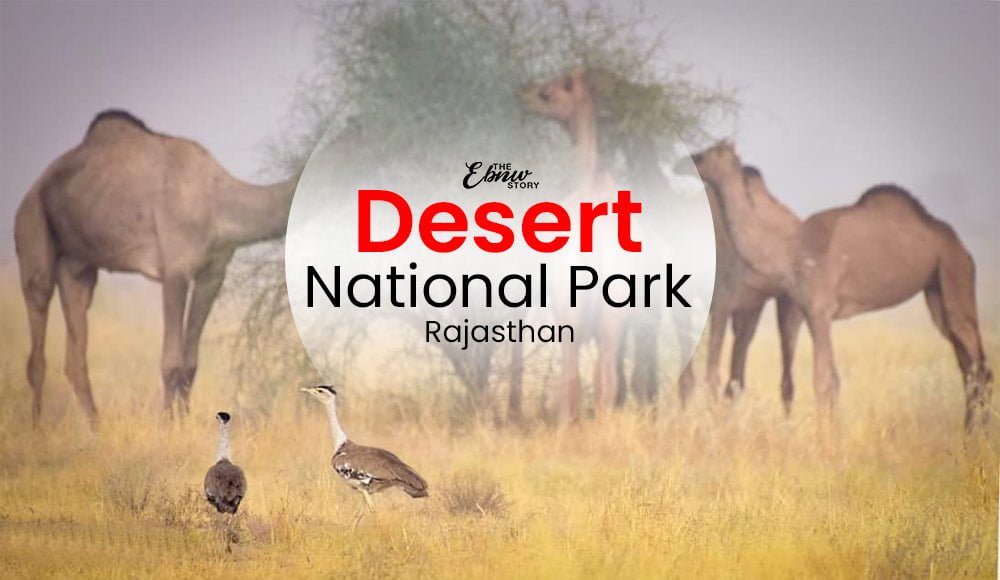
The Desert National Park : Doesn’t the name itself reflect the vivid variety of fauna and the undulating sand dunes?

Wondering? But yes, it’s true that this park has amazing species of animals which are found amid sand dunes.

Going with the name, the name Desert National Park displays the best of the Thar desert’s ecosystem and its varied wildlife. 

The Park situated in Jaisalmer and Barmer district of Rajasthan is formed of undulating sand dunes, jagged rocks, dense salt lake bottoms and inter-medial areas. 

Various species of animals such as black buck, chinkara and desert fox inhabit the Park. The highly endangered Great Indian Bustard, one of the world’s heaviest flying birds, can also be seen here. In winter, the park hosts an incredible variety of migratory raptors such Himalayan and Eurasian Griffon Vultures, Eastern Imperial Eagle, and the Saker Falcon.

Ancient India : History, Facts, Map, Civilization, Time Period, Culture and Heritage

0

Do you know that India is one of the oldest civilizations in the world with a kaleidoscopic variety and rich cultural heritage? 

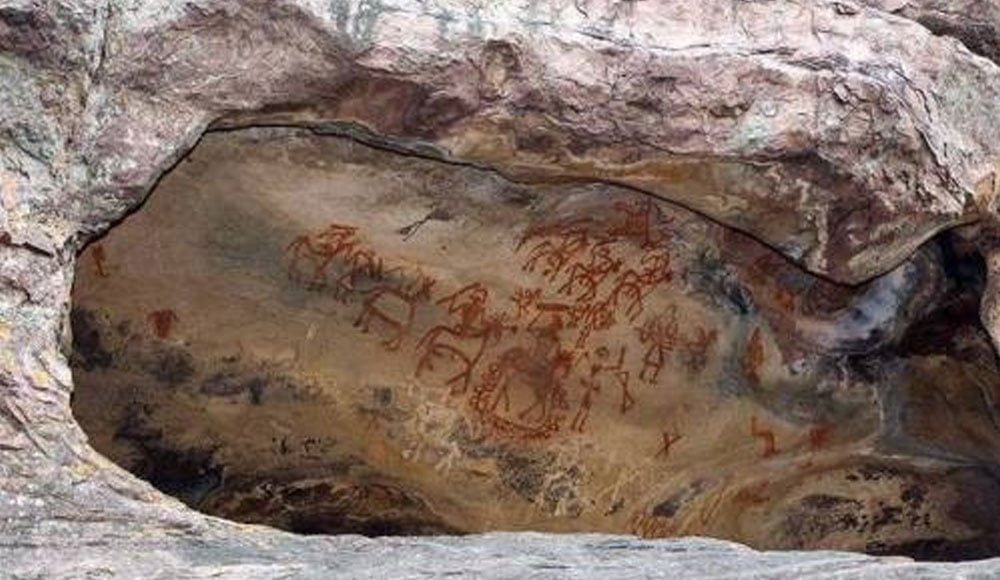
India’s history and culture is dynamic, spanning back to the beginning of human civilization. It begins with a mysterious culture along the Indus River and in farming communities in the southern lands of India. Let’s discuss a few unknown facts about India

Ancient India Photos
  1. Harapppan Culture came in 5000 years back: When many cultures were only nomadic forest dwellers over 5000 years ago, Indians established Harappan culture in Sindhu Valley (Indus Valley Civilization)

2. India derived from Indus Valley civlisation: The name ‘India’ is derived from the River Indus, the valleys around which were the home of the early settlers. The Aryan worshippers referred to the river Indus as the Sindhu.

3. Birthplace of Chess: Chess was invented in India.

4. Algebra was born here too: Algebra, Trigonometry and Calculus are studies, which originated in India.

5. Decimal System came in 100 BC:  The ‘Place Value System’ and the ‘Decimal System’ were developed in India in 100 B.C.

6. The largest democracy: India is the largest democracy in the world, the 7th largest Country in the world, and one of the most ancient civilizations.

7. Ayurveda is earliest school of medicine: Ayurveda is the earliest school of medicine known to mankind. The Father of Medicine, Charaka, consolidated Ayurveda 2500 years ago.

8. Oldesh European Church is in Inda: The oldest European church and synagogue in India are in the city of Cochin. They were built in 1503 and 1568 respectively.

9. Oldest City of the world: Varanasi, also known as Benaras, was called “the Ancient City” when Lord Buddha visited it in 500 B.C., and is the oldest, continuously inhabited city in the world today.

10. Yoga originated in India: Yoga has its origins in India and has existed for over 5,000 years.

Goa Liberation Day: 19 December History, Goa Independence from Portugal

0

Goa Liberation Day is celebrated each year on December 19

Even after India’s independence, Goa was ruled by the Portuguese. In fact, the Portuguese rule lasted for about 450 years, and fluenced Goan culture, cuisine, and architecture.

In December 19, 1961, the Indian Army invaded and annexed Goa after a 36 hour battle. The region was incorporated as a union territory of Goa, Daman and Diu. In 1987, Goa was granted statehood.