Makar Sankranti celebrated on January 14 is also called as Uttarayan
Makar Sankranti marks the end of Malmaas, which is considered as an inauspicious month in the Hindu calendar. It also symbolises Sun’s transition to the zodiacal sign of Makar (Capricorn) which heralds a seasonal change.
The day of transition is celebrated in different states with different names, but the theme remains common for all which is the ‘harvest season’. In the north, it is celebrated as Lohri, in Assam as Bhogali Bihu and in the south as Pongal.
Makar Sankranti reflects unity in diversity. Every state in India has different ways of celebrating Makar Sankranti but the theme – harvest season – is the uniting factor.
From Makar Sankranti, the Sun starts its movement towards northern hemisphere, thereby marking winter season’s end and eventually days start getting longer. Hence, Makar Sankranti is known with the name of Uttarayan, which marks the beginning of an auspicious period.
National Youth Day is celebrated on January 12 each year to honor the ideals and philosophy of Vivekananda
National Youth Day is celebrated each year to remember, respect and honor the ideals and thoughts of Swami Vivekananda. Born on January 12, 1863 in Kolkata, Swami Vivekananda has been a spiritual thinker unlike any other monk and played a major role in reviving India’s image as a land of spirituality.
“Sisters and brothers of America,” This is how Vivekananda started his speech in 1893 at the Parliament of World’s Religions in Chicago.
This speech immortalised the ideals which the monk believed in globally.
What Swami focussed upon
Swami Vivekananda always focused on harnessing youth’s potential.
He wanted to inspire the young generation so that they could counter the British and attain Independence.
Swami Vivekananda’s weapons of winning the world were education and peace.
He always portrayed himself as a ‘Nationalist Saint’ who wanted the youth to get out of their comfort zones to attain anything they desire.
Swami Vivekananda had incredible understanding and knowledge of philosophy, religion, literature, Vedas, Puranas, Upanishads, and what not.
The Jain Temples of Jaisalmer are situated right inside the Jaisalmer Fort campus. There are a total of seven of these temples and each of them give a sight of sheer greatness.
Containing frescoes, mirrors and other forms of detailing, the temples boast of exquisite designs, with the walls of the temples adorned with human and animal figures in the style of Dilwara temples.
Upon reaching the Jain Temples in Jaisalmer, you will see Chandraprabhu, the first temple. This temple is dedicated to the eighth tirthankar, and was constructed in 1509.
Comprising of the mandapa, this temple is nothing short of an iconic one. Then, on turning right, you will get a view of the calm Rikhabdev temple that’s carefully safeguarded with glass cabinets.
After that, you will find the majestic Parasnath that’s located behind Chandraprabhu. This is followed by a door on the south through which you will reach Shitalnath that’s dedicated to the tenth tirthankar.
Further, the northern wall will take you to the door of the mesmerising Sambhavanth. The remaining two temples i.e. Shantinath and Kunthunath contain beautiful carvings as well for you to revel in. These Jain temples of Jaisalmer are architectural wonders in their own right, a fact which makes for a compelling visit. To top it off, the Astapadhi Temples are located in the same complex, which just goes on to add to a tranquil experience.
How to reach here:
One can hire or share an auto rickshaw from anywhere in Jaisalmer. The temples are located in the complex of Jaisalmer fort.
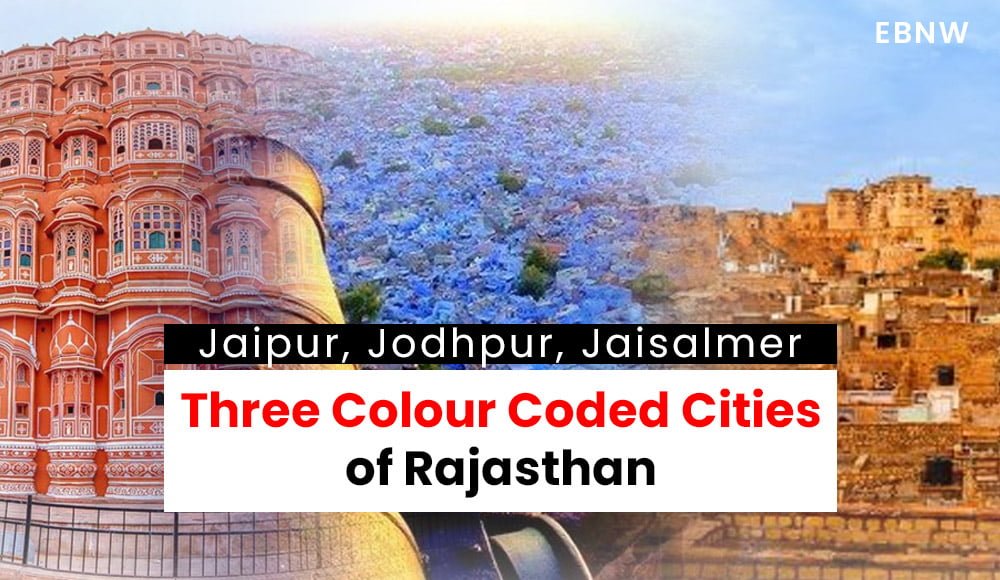
Jaipur is called as Pink City, Jodhpur is called as Blue City and Jaisalmer is called as Golden City. Rajasthan, often associated with its royal palaces, mighty forts and flashes of color, has been luring tourists from across the world in three cities which are known for their three striking shades in particular.
Jaipur – Pink City
Spread through the desert territory, the “Pink City” of Jaipur, the “Blue City” of Jodhpur and the “Gold City” of Jaisalmer has been winnning millions of hearts with their immaculate beauty and glory as they narrate their own historical tales.
The Pink City-Jaipur is famous for its salmon-hued buildings and meticulous city planning.
The city was given a rosy hue during a highly anticipated visit from Prince Albert in 1876. The city was painted with pink shade, which symbolizes hospitality in Indian culture.
The building department mixed up a natural dye made of lime and red soil to paint the city pink. Even today, the government repaints the buildings every two years in keeping with tradition.
The pink Old Town area, accommodates the pretty terracotta pink Hawa Mahal palace, City Palace, the Palace of the Winds and Jantar Mantar astronomy observatory.
Another highlight is the Amber Fort, located about six miles outside of the city. Once the residence of the Rajput Maharajas, this red sandstone fort complex features grand courtyards, ornate wall mosaics and opulent halls.
Jodhpur – Blue City
Jodhpur stands synonymous with another color: sky blue.
Now, if you have a question that why it is called as the Blue City, there are many reasons for it.
Firstly, the city has a very high temperature because it’s surrounded by desert, so people have painted their houses with blue colour to keep things cool inside.
Secondly, Jodhpur is home to Brahmins who worship Lord Shiva. As Shiva is often associated with the color blue, worshipers paint their homes and temples this sacred and soothing shade.
The best place to see the ‘Blue City’ is from atop Mehrangarh Fort. From here, you can see the bright blue clusters and a beautiful sky blue.
Jaisalmer – Golden City
Established in 1156, Jaisalmer got its nickname from the magnificent Jaisalmer Fort which shines with a honey-gold hue during dusk.
Although the fort is made with local sandstone, however, it is cut in a way that it comes out identical to gold and the city gets its name as golden city.
Also, the sand spread around gives a golden hue and hence comes the name!
Take the trip to beautiful havelis (mansions) — such as Salim Singh ki Haveli and Patwon Ki Haveli — with exquisite ornate carvings and open-air courtyards. Located in the heart of the Thar Desert, Jaisalmer is a place to experience camel safaris and desert camps.
South African-born US entrepreneur Elon Musk is now the world’s richest person, with a net worth of $195 billion.
He overtakes Amazon’s Bezos to become the world’s richest person a net worth of more than $188.5 billion, $1.5 billion more than Bezos.
Musk, the chief executive officer (CEO) of SpaceX and Tesla, in his underwhelming response to his crowning glory moment, tweeted, “How strange” and added, “Well , back to work.”
A 4.8% rally in the electric carmaker’s share price Thursday boosted Musk past Amazon.com Inc. founder Jeff Bezos on the Bloomberg Billionaires Index, a ranking of the world’s 500 wealthiest people.
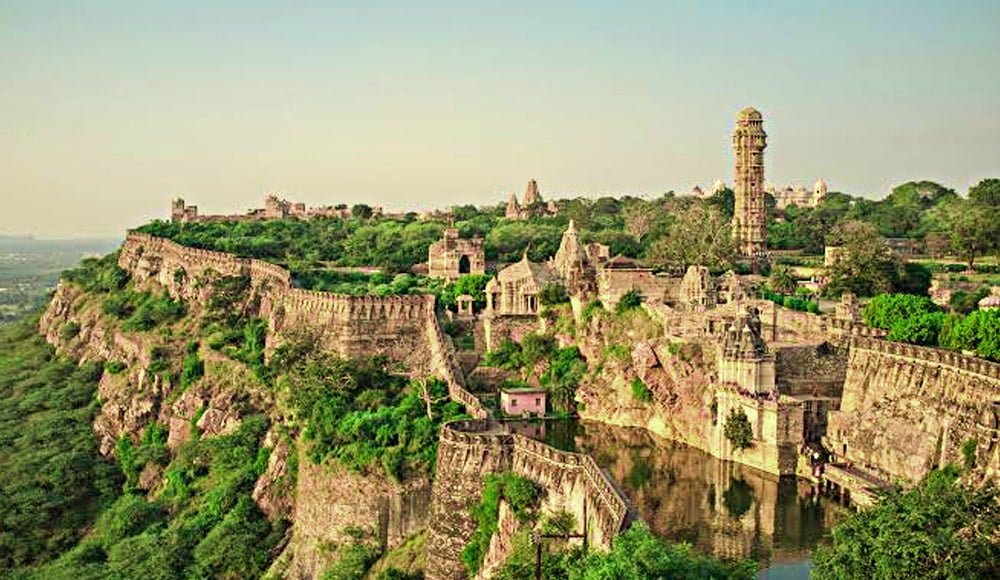
Chittorgarh (UNESCO World Heritage Site) is the Largest Fort in India and Asia. The fort sprawling across 700 acre and has a circumference of 13 km.
It has a long road stretching to one kilometre that takes up to the rampart after passing through seven gates namely: Ganesh gate, Hanuman gate, Padan gate, Jodla gate, Bhairon gate, Lakshman gate and the last and the main gate, Ram gate. These gates were built to protect the fort from the enemy attacks and the arches even protect against the elephants from entering.
Its walls are made of lime mortar and rise up to 500 metre above the ground level. There are four palaces, 19 temples including Jain and Hindu temples, 20 water bodies, and four memorial which make the fort complex.
History
Chittorgarh Fort has withstood three major Muslim invasions starting from Alauddin Khilji, Bahadur Shah and Akbar. However, it has been the hallmark of the Rajput’s bravery.
Pravasi Bharatiya Divas Convention 2021 to be held in virtual format this year in view of COVID-19 pandemic
Pravasi Bharatiya Divas Convention, celebrated each year on January 9, is the flagship event of the Government of India and provides an important platform to engage and connect with the overseas Diaspora.
In view of the ongoing Covid-19 pandemic, the 16th PBD Convention, 2021 will be held in virtual format on January 9, 2021
The theme of PBD 2021 is “Contributing to Aatmanirbhar Bharat”.
On the forenoon of 09 January, 2021, Hon’ble Prime Minister Shri Narendra Modi will inaugurate the Pravasi Bharatiya Divas Convention. The winners of Bharat ko Janiye Quiz will also be announced in the Inaugural Session.
The PBD Convention will include two Plenary Sessions – (i) ” Role of Diaspora in Aatmanirbhar Bharat”, and (ii) “Facing Post Covid Challenges – Scenario in Health, Economy, Social and International Relations”.
This will be followed by the Valedictory Session where the Pravasi Bhartiya Samman Awards will be announced to honour eminent overseas Indians for their contributions to various fields both in India and abroad. The President of India will deliver the Valedictory address to the diaspora.
The PBD convention as well as the preceding PBD Conferences will be streamed live across Ministry’s virtual platforms to enable every Indian and Diaspora member to engage and participate in the PBD Celebrations.
This is a story of a small village Piplantri situated in the Rajsamand district of Rajasthan which has been celebrating the birth of a girl differently!
On the birth of every girl child, a total of 111 trees are planted in this village since last 13 years which has turned this barren land into green area with 3.5 lakh trees spread around. With this dense greenery, the water level in this town, which once stood at 500 feet deep, has now improved significantly.
Remembering his daughter, Shyam Sundar Paliwal transformed the village Piplantri in Rajsamand district
In fact, the village also speaks a story of socio-economic transformation where there is zero per cent unemployment and no crime data available as each resident here is engaged in a creative task- a task for developing the village where each girl stands empowered and self dependent.
The credit for changing the fortunes of this village goes to Shyam Sundar Paliwal, who after losing his 16-year-old daughter Kiran, pledged that each parent of the daughter will now feel proud to be a father of girl child.
He loved his daughter and hence wanted her to stay with him forever.
In fond remembrance of Kiran, his daughter, he launched Kiran Nidhi Yojana on her name.
Under this scheme, he persuaded parents to get a fix deposit done on the name of their daughters so that they can pursue higher studies.
“My ultimate aim was to prevent the female foeticide, and to protect our daughters from child marriage while making quality education available to them, said Paliwal, who himself was class X pass out.
He also made the parents take pledge that they will never give or take dowry and to implement the pledge, he made them sign an affidavit to this effect.
Girls performing rituals at the saplings planted in Piplantri
“At this point came the idea to plant 111 saplings,” he said.
Over the years, this initiative became a regular ritual and parents are now sincerely depositing a chunk of their savings in their daughters’ accounts .
According to Paliwal, “August 21, 2006 came up as the saddest day of his life, when he lost my dear daughter Kiran who was 16 at that time.”
“She had returned from school with a stomach pain and was rushed to hospital, however could not be saved. With this terrible loss creating severe pain, I decided my daughter will always be with me,” he says.
With many schemes being for daughters, the parents of a girl child are providing complete formal education and are not marrying them before their legal age. As a result, village’s socio-economic and demographic condition has changed significantly.
They now enjoy all modern facilities, such as eco-friendly gas stoves, toilets, solar light, anganwadi centres, health centres, air-conditioned panchayat bhavan and modern schools to the village.
The village now has two million of Aloe Vera plants through which the villagers are earning their livelihood by selling gel, pickle and its juice. Every one is hale, hearty, happy and healthy here dedicated for a cause of making their daughters empowered–isn’t it an inspiration for the nation to follow?
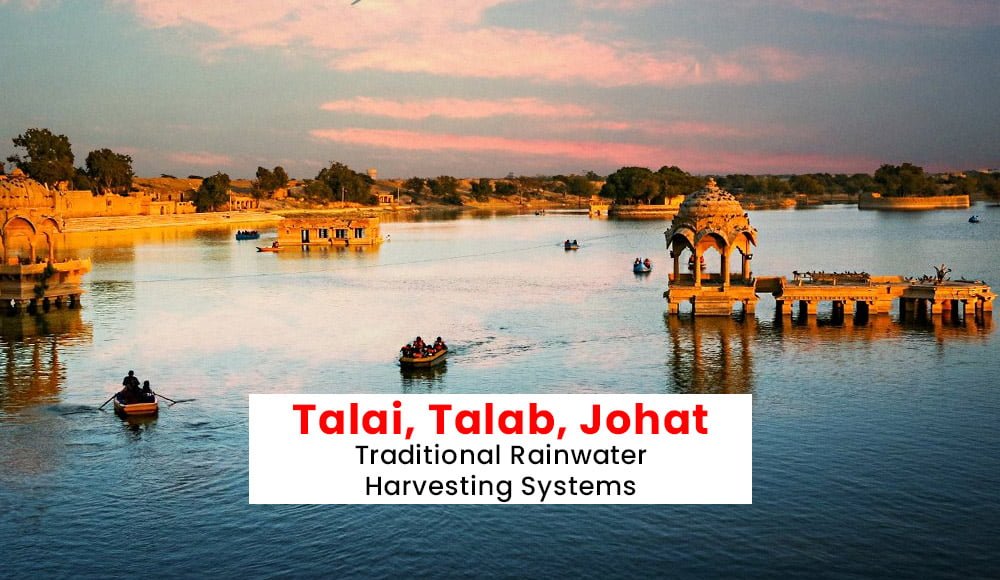
Talai, Talab and Johat! We have all heard these names since our childhood as they comprise the traditional water harvesting systems of India.
Since ancient times, our ancestors have invented various thoughtful and genius methods, to harvest water, for present and future use right since Indus Valley Civilization.
Even today, town planners keep a special place for water reservoirs with proper catchment channels while chalking out the grid plan of the town. There are many benefits of water harvesting like reduction in soil erosion, increase in ground water levels and tree cover, control over frequent floods and droughts, and having a year round supply of water. Different methods of water harvesting are used in different parts of India according to geographical terrains.
Let’s have a look at 6 traditional methods of water harvesting that are still in use.
Lake Pichola in Udaipur
Talab/Bandhis/Pond: Almost every town and village has a pond or lake for water supply. Either it is natural like or man-made. The examples of natural lakes and man-made lakes are:
Pichola Lake in Udaipur (natural)
Pushkar Lake in Ajmer (natural)
Siliserh Lake in Alwar (natural)
Foy Sagar Lake in Ajmer (man-made)
Gadisar Lake in Jaisalmer (man-made)
Balsamand Lake in Jodhpur (man-made)
They store huge quantities of water for drinking, household, religious and tourism purposes. Rain water is collected via narrow streams coming from various directions. Names are given according to size:
a) Talai – water body within 5 bighas.
b) Talab/Bandhi – a lake of medium size.
c) Sagar/Samand – A bigger sized lake.
Johads: Mainly found in the arid state of Rajasthan, these are small earthen(mud) check dams built to harvest and store rainwater for various purposes including recharging ground water. You will find them in areas having natural elevation on three sides where a reservoir pit has been dug out and an earthen embankment is constructed on the 4th side by the excavated mud. Sometimes a number of Johads are inter linked to balance out the water pressure on its walls.
Baoris/Stepwells: This traditional Water Harvesting method is unique to North-western and Western India. The scarce rainfall received by this semi-arid region is collected in man-made tanks by connecting them with canals built in hilly catchment areas. And to minimize water evaporation, a flight of steps are built around it to narrow down and deepen the well/tank. Such enormous structures were mainly built in cities for drinking purposes. Delhi and Bundi district have beautifully designed baoris. Examples are:-
Chand Baori in Abhaneri village near Jaipur having 3500 deep steps and 13 storeys.
Rani ki Baori in Bundi district.
Ahar Pynes: This ancient flood water harvesting system is indigenous to southern Bihar. Ahar is a water reservoir having embankments on 3 sides and pynes are narrow water streams dug out to divert excess water from rivers to Ahar. This traditional Water harvesting system controls floods and can irrigate up to 400 acres.
Kul/Kuhls: Kuls are diversion channels that carry water from streams of melted glaciers to the villages. It is a traditional Water harvesting and irrigation system prevalent in Himachal Pradesh especially in rain shadow region of Spiti Valley. Kuls/canals drain their water in a circular pond in the village from where water is diverted towards fields for irrigation purposes. One Kul system can irrigate around 20 hectare of land. There are more than 300 Kuhls in Himachal Pradesh for community welfare.
Eri: An old water storage system using tanks is widespread in Tamil Nadu. These tanks are fed naturally by rain water or by diversion channels carved out from rivers. Several eris are interconnected to provide water to the remotest of villages for their daily needs. Even today 1/3 of the irrigation in Tamil Nadu is still done through these huge water bodies. Majority of the rich paddy cultivation is credited to this traditional and highly useful water harvesting and irrigation system. This ancient system is very reliable in controlling floods, prevention of soil erosion, groundwater replenishment and storing of flowing rain water.