Home Blog Page 84

Blinkit Founder Dhindsa is Digital Person of the Year

0

The India Digital Awards recognised outstanding achievements across various categories and subcategories, honouring individuals and organisations making a significant impact in the digital domain.


Among the Special Category winners, Mr. Albinder Dhindsa, Founder & CEO, Blinkit, was adjudicated the Digital Person of the Year. The award recognises his visionary leadership and transformative contribution to India’s quick commerce and digital retail landscape, redefining consumer convenience through technology-driven innovation.


The award for Digital Startup of the Year was conferred upon Sarvam AI, in recognition of its pioneering work in the field of artificial intelligence. The startup has demonstrated remarkable innovation, strong execution, and the potential to shape the future of AI-led solutions from India for the world.


WPP won the award for the Digital Agency of the Year – Gold, followed by BigTrunk Communications with Silver and CollabX with Bronze.


About India Digital Awards
Started in 2009, the annual India Digital Awards (IDA) celebrate organizations, teams, and practitioners who have delivered exemplary business outcomes using digital as a medium. IDA stands as India’s most esteemed recognition in the digital domain – a true symbol of innovation and excellence.

National Golden Retriever Day 2026: Date, History, Significance, Facts & All You Need to Know

0

National Golden Retriever Day 2026 celebrates one of the most loved and popular dog breeds in the world—the Golden Retriever. Known for their gentle temperament, intelligence, and stunning golden coat, Golden Retrievers are cherished as family pets, therapy dogs, and loyal companions.

When Is National Golden Retriever Day Celebrated?

In several countries, National Golden Retriever Day is observed on February 3 each year. The day is dedicated to honoring the breed’s loving nature, loyalty, and contribution to human lives.

National Golden Retriever Day 2026: History

National Golden Retriever Day was founded by Kristen Shroyer, who realized there was no official day to celebrate this beloved breed. She chose the date in memory of her late Golden Retriever, Quincy, who tragically passed away from cancer at the age of seven. March 3 was Quincy’s birthday, and the day serves as both a tribute and a celebration of Golden Retrievers worldwide.

National Golden Retriever Day 2026: Significance

Golden Retrievers are admired not just for their beauty, but also for their exceptional personality traits:

  • They are ideal emotional support and therapy dogs due to their calm and affectionate nature.
  • Golden Retrievers rank fourth among the most intelligent dog breeds, after Border Collies, Poodles, and German Shepherds.
  • Their loyalty, friendliness, and adaptability make them one of the most popular dog breeds globally.

Why Should You Have a Golden Retriever?

Golden Retrievers are lively Scottish gundogs known for their charm and versatility. Here are some interesting facts about the breed:

  • They are widely used as therapy and service dogs, helping people cope with depression and anxiety.
  • Their positive attitude makes them excellent family pets, especially for households with children.
  • Golden Retrievers get along well with other pets and are easy to train.
  • Their top recorded running speed is 35 mph (56 km/h).
  • Average weight:
    • Male: 65–75 lb (29–34 kg)
    • Female: 55–65 lb (25–29 kg)
  • They shed heavily twice a year and have a double coat—an insulating inner layer and a water-resistant outer layer.

Golden Retrievers as Family Dogs

Golden Retrievers thrive when they live indoors, close to the people they love. They see themselves as part of the family and should be treated as such. Their tolerance for noise, activity, and commotion makes them especially good with children. True to their therapy-dog spirit, Golden Retrievers believe in the motto: “The more, the merrier.”

Bermuda Triangle Mystery Explained: New Scientific Theory Points to Natural Causes

0

For decades, the Bermuda Triangle has fueled speculation, myths, and conspiracy theories involving aliens, time warps, and supernatural forces. However, a new scientific theory is now gaining attention for offering a far more grounded explanation—one rooted in natural environmental phenomena rather than fiction.

What Is the Bermuda Triangle?

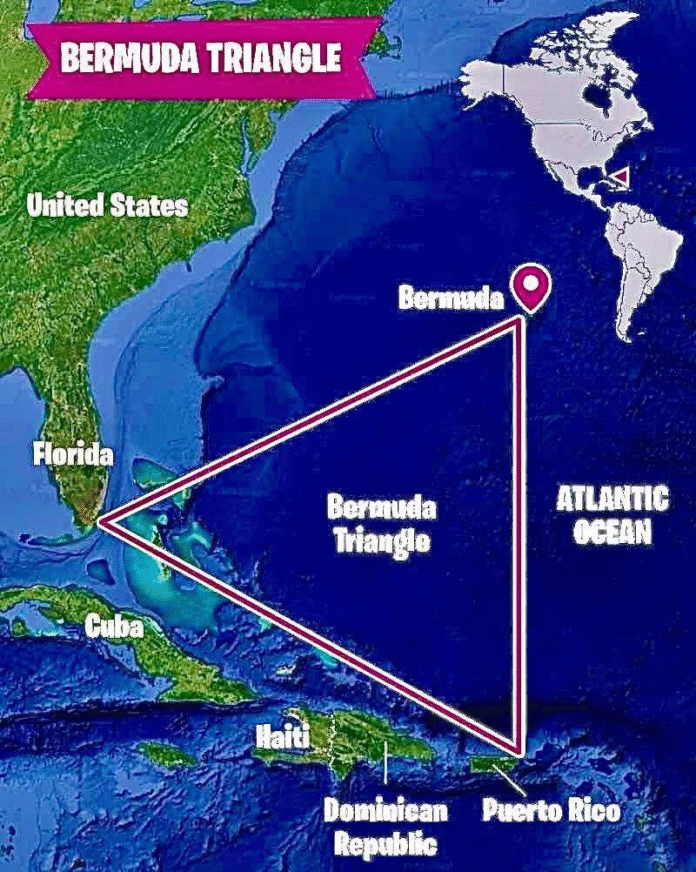
The Bermuda Triangle is a loosely defined region in the western North Atlantic Ocean, stretching between Florida, Bermuda, and Puerto Rico. Over the years, the area became infamous due to reports of ships and aircraft mysteriously disappearing, often without distress signals or wreckage.

These incidents sparked widespread theories ranging from magnetic anomalies to extraterrestrial activity. Scientists, however, have long argued that natural explanations were overlooked in favor of sensational storytelling.

New Scientific Theory: Methane Gas as the Key

According to the latest research-based theory, the mystery of the Bermuda Triangle may be linked to rare releases of methane gas from beneath the ocean floor. Methane hydrates, which are trapped under high pressure in seabed sediments, can occasionally erupt due to geological activity.

When large volumes of methane are suddenly released into the water, they drastically reduce water density. This loss of buoyancy can cause ships to sink rapidly, sometimes without warning. Computer simulations have shown that vessels caught in such conditions could be swallowed within minutes.

Impact on Aircraft and Navigation

Methane gas released into the atmosphere may also explain aviation incidents. Scientists suggest that methane clouds could interfere with aircraft engines, reduce lift due to lower air density, or disrupt navigation instruments. In earlier decades, when aviation technology was less advanced, such disruptions could have proven fatal.

Why Incidents Have Decreased

One of the strongest arguments supporting this theory is the sharp decline in unexplained disappearances in the Bermuda Triangle over the past few decades. Researchers believe that methane eruptions may no longer be active or now occur very rarely.

Additionally, modern navigation systems, satellite tracking, accurate weather forecasting, and improved communication technology have significantly reduced the risk of unexplained accidents.

Debunking Myths Around the Bermuda Triangle

Experts emphasize that many historical Bermuda Triangle cases were exaggerated, poorly documented, or misreported. Severe weather, strong ocean currents like the Gulf Stream, and human error likely accounted for many incidents.

A Scientific Perspective on a Global Mystery

While the new theory does not claim to solve every case associated with the Bermuda Triangle, it offers a logical, science-based explanation that challenges decades of myths. By focusing on natural forces rather than supernatural speculation, researchers hope to reshape public understanding of one of the world’s most famous mysteries.

As science continues to explore Earth’s oceans and atmosphere, the Bermuda Triangle may finally lose its reputation as an unsolvable enigma—and instead become a lesson in how nature, not myth, shapes reality.

From Indian Streets to US Highways: Aloka the Peace Dog Walks with Buddhist Monks to Spread Message of Peace

0

A former stray dog from India has captured hearts across the United States after becoming an unexpected companion to a group of Buddhist monks on a long-distance peace march. Known as Aloka the Peace Dog, the rescued canine is walking alongside the monks from Fort Worth, Texas, to Washington, DC, as part of the Walk for Peace, a journey aimed at spreading messages of compassion and global harmony.

Aloka, a brown-and-white dog with a distinctive heart-shaped mark on his forehead, has emerged as the unofficial mascot of the march. Videos and photographs of the dog calmly walking with the monks have gone viral on social media, drawing admiration from people across the world.

What Is the Walk for Peace?

The Walk for Peace is a cross-country march organised by the Huong Dao Vipassana Bhavana Center. Covering nearly 3,700 kilometres across 10 US states, the journey seeks to promote peace, loving-kindness, and compassion. According to organisers, the walk began on October 10 and is expected to take around 120 days, concluding in Washington, DC.

The initiative aims to raise awareness about non-violence and mindfulness, encouraging people to reflect on peace not just as a global ideal but as a daily practice.

Aloka’s Journey from India to the US

Aloka was once a stray dog in India. His life changed when he began walking alongside Buddhist monks during a similar peace march in the country. Over time, he formed a strong bond with the group and stayed with them for more than 100 days.

Now, Aloka has continued the journey overseas, accompanying the monks across the US. According to the Walk for Peace’s social media pages, he receives regular veterinary check-ups and is often greeted with food, treats, and affection from well-wishers who follow the march.

“Many people often ask about Aloka’s breed,” a post reads. “While we aren’t exactly sure, we estimate he is about four years old and likely an Indian Pariah dog.”

From the streets of India to American highways, Aloka the Peace Dog has become a powerful symbol of loyalty, compassion, and the universal language of peace.

February 2026 Calender: Holidays, Tithis, Festivals, Shivratri, Ekadashi, Purnima and important dates

0

February 2026 Calendar with Holidays: February 2026 is packed with significant events, starting with the Union Budget on the 1st, shaping economic policy. The Indian Coast Guard also celebrates its day. The month highlights science with National Science Day on the 28th, honoring CV Raman’s Nobel-winning discovery. Social reform and global awareness days also fill this busy period.

Key days and events in February 2026

Feb. 1 to 7: International Development Week

Feb. 1: Union Budget, Indian Coast Guard Day

Feb. 2: World Wetlands Day, Rheumatoid Arthritis Awareness Day

Feb. 3: National Golden Retriever Day (US)

Feb. 4: World Cancer Day, National Day of Sri Lanka

Feb. 6: International Day of Zero Tolerance for Female Genital Mutilation, World War Orphans Day

Feb. 8: National Opera Day (US)

Feb. 9: Baba Amte’s Death Anni ..

eb. 10: National Deworming Day, World Pulses Day, Safer Internet Day

Feb. 11: World Day of the Sick, International Day of Women and Girls in Science

Feb. 12: Darwin Day, National Productivity Day, Birth anniversaries of Maharishi Dayanand Saraswati and Abraham Lincoln

Feb. 13: World Radio Day, Sarojini Naidu Birth Anniversary

Feb. 14: Valentine’s Day, World Congenital Heart Defect Awareness Day

Feb. 15: Mahashivratri

Feb. 18 to 27: Taj Mahotsav

Feb. 19: World Anthropology Day, Beginning of Ramadan (date can vary)

Feb. 20: Arunachal Pradesh Foundation Day, Mizoram Foundation Day, World Day of Social Justice

Feb. 21: International Mother Language Day

Feb. 22: World Thinking Day

Feb. 23: World Peace and Understanding Day

Feb. 24: Central Excise Day

Feb. 26: Veer Savarkar’s Death Anniversary

Feb. 27: World NGO Day

Union Budget 2026 Announces SHE Marts to Help Women Entreprenuers

0

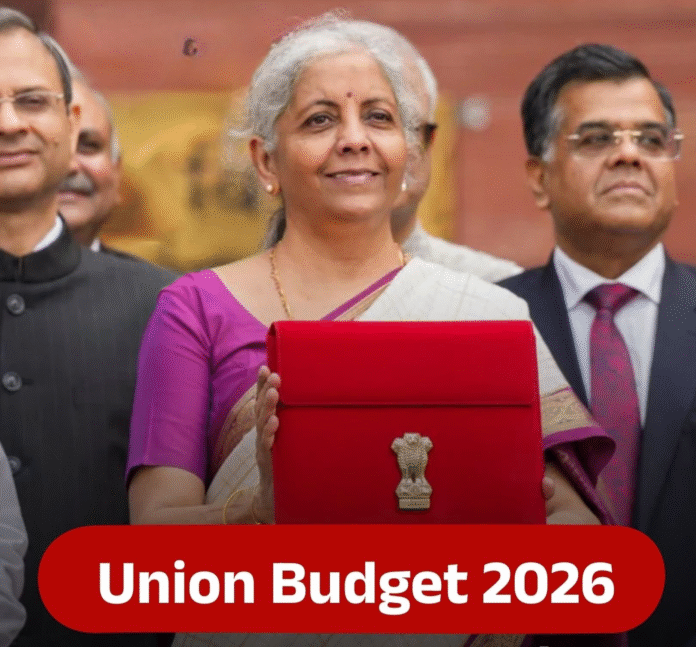
The Union Budget 2026-27 has announced the establishment of Self-Help Entrepreneur (SHE) Marts as community-owned retail outlets to strengthen women-led enterprises and deepen the self-help group ecosystem across states. The initiative is expected to provide a structured market platform for products made by women entrepreneurs, with Jharkhand emerging as a key beneficiary due to its strong SHG base.

From Credit-Led Livelihoods to Enterprise Ownership

Finance Minister Nirmala Sitharaman said the SHE Marts initiative builds on the success of the Lakhpati Didi Programme and aims to help women transition from credit-based livelihoods to ownership of enterprises. The proposed marts will be set up within cluster-level federations of self-help groups and supported through enhanced and innovative financing instruments. The focus is on enabling women to move up the value chain by accessing organised retail and stable demand.

Community-Owned Retail Model

SHE Marts are envisaged as community-owned retail outlets, allowing women-led SHGs to collectively market and sell their products. By aggregating production and linking it to assured retail spaces, the model seeks to reduce dependence on intermediaries and improve income realisation. The approach also aligns with broader efforts to formalise micro-enterprises and strengthen grassroots entrepreneurship.

Jharkhand’s Strong SHG Ecosystem

Jharkhand has already recorded significant progress in women’s economic empowerment, mobilising around 39 lakh rural SHG members through the Jharkhand State Livelihood Promotion Society. State officials said the SHE Marts proposal complements ongoing initiatives to transform rural women from borrowers into business owners. The state government expects the new retail model to strengthen existing market linkages and scale up women-led enterprises.

Important Facts

  • SHE Marts are community-owned retail outlets for women-led SHG products.
  • They build on the Lakhpati Didi Programme.
  • Marts will be set up through cluster-level federations.
  • Aim is to shift women from credit-led livelihoods to enterprise ownership.

Pakistan’s India Match Boycott: Group Exit Risk, Possible ICC Ban, and Future Hosting Woes

0

Pakistan’s decision to boycott its group-stage match against India in the upcoming T20 World Cup could have serious sporting, financial, and administrative consequences. On Sunday, the Pakistani government confirmed that the national team would participate in the tournament but would not play against India. Following the announcement, the International Cricket Council (ICC) asked the Pakistan Cricket Board (PCB) to reconsider its stance.

Pakistan’s India Match Boycott: Group Exit Risk, Possible ICC Ban, and Future Hosting Woes

Risk of Group-Stage Elimination

Under ICC playing conditions, a boycott can severely impact Pakistan’s net run rate. As per Clause 16.10.7, a team refusing to play is deemed to have scored zero runs in 20 overs, while the opponent’s overs are not counted. This could leave Pakistan with a significantly negative run rate, making qualification difficult even if it wins its remaining matches.

Group A includes India, Pakistan, the USA, Namibia, and the Netherlands. With only the top teams advancing, Pakistan’s margin for error is extremely small. Any defeat, combined with a damaged run rate, could result in early elimination. The USA and the Netherlands have previously caused major upsets in ICC events, adding to the challenge.

Possibility of ICC Action or Ban

The ICC has formally asked the PCB to explain its decision. If Pakistan fails to provide a satisfactory justification, the ICC could consider disciplinary action, including a possible ban from the tournament. In past World Cups, multiple teams have faced sanctions for boycotting matches.

Threat to PSL and Knockout Matches

Security concerns may not be accepted as a valid reason, as Pakistan is scheduled to play all its matches in Sri Lanka, not India. ICC sources indicate that if the PCB cites political solidarity as the reason, it may face consequences, including denial of a No Objection Certificate (NOC) for the Pakistan Super League (PSL).

Uncertainty also surrounds a potential India–Pakistan clash in the knockout stage. The PCB has not clarified whether Pakistan would play India if the teams meet later in the tournament. The ICC is expected to seek a clear response, with strict action likely if ambiguity continues.

Hosting Rights at Risk

Pakistan hosted the Champions Trophy in 2025, its first ICC event in nearly three decades. The current controversy may impact Pakistan’s chances of securing future ICC hosting rights. The India–Pakistan fixture is a major revenue generator, and its absence could lead to financial losses for the ICC, potentially affecting Pakistan’s revenue share as well.

Player Reaction

Pakistan captain Salman Ali Agha said the team would respect the government’s decision. “We want to play in the World Cup and will follow the government’s directive. Our focus is on giving our best in the tournament,” he said.

Union Budget 2026: Foreign Travel and Cancer Drugs Cheaper, Liquor and Trading Costlier

0

Union Budget 2026: Traveling abroad will be cheaper, the government has reduced taxes: 17 cancer medicines cheaper; alcohol may become more expensive, tax also increased on trading.
In the budget, the prices of goods now fluctuate only slightly due to increases and decreases in import duties. The prices of most items are decided by the GST Council.

Let’s understand what became cheaper and what became more expensive in this budget…

Cheaper

  1. Cancer medicines cheaper: Customs duty removed on 17 life-saving drugs

The government has removed the basic customs duty on 17 medicines used in the treatment of cancer. In addition, there will now be no tax on medicines and special foods imported from abroad for the treatment of 7 rare diseases. This will provide significant financial relief to families who depend on expensive foreign medicines for treatment.

  1. Microwave ovens cheaper: Duty reduced on parts, domestic manufacturing will increase

To promote domestic manufacturing, the government has made some important changes in the electronics sector. Customs duty has now been reduced on specific parts used in the manufacture of microwave ovens. This may lead to a reduction in the prices of microwaves in the coming days. The government aims for India to become a global hub for consumer electronics.

  1. EV batteries and solar panels cheaper: Raw materials for their manufacture are now tax-free

Considering the energy transition, the government has expanded the scope of tax exemptions available on machinery used to manufacture lithium-ion batteries. Now, there will be no duty on goods used for battery energy storage systems. Similarly, the duty has been removed on ‘sodium antimonate’ used in the manufacture of solar glass, which will make it cheaper to manufacture solar panels in the country.

  1. Shoes and clothes may become cheaper: Exemptions on raw materials to increase exports

Announcements have been made for the marine products, leather, and textile sectors to increase exports.

The duty-free import limit for seafood exports has been increased from 1% to 3%. Tax exemptions will now be available on the export of leather and synthetic shoes, including ‘shoe uppers’.
Why will it be cheaper: When companies get raw materials cheaper for manufacturing goods, the production cost will decrease. If companies pass on this benefit to customers, the prices of leather shoes, sports shoes, and seafood may decrease or at least remain stable.

  1. Foreign travel will be cheaper: Government reduces tax to 2%

Booking ‘tour packages’ for foreign travel will now be cheaper. Earlier, a 5% tax (TCS) was levied on expenses up to Rs 10 lakh and 20% on amounts exceeding that. This has now been reduced to a flat 2%. There is no longer any limit on the amount.

  1. Aircraft maintenance cheaper: Customs duty removed on parts

To promote civil aviation, customs duty has been removed on parts and components used in aircraft manufacturing. In the defense sector as well, there will be no tax on raw materials imported for aircraft maintenance and repair (MRO). This will reduce the cost of manufacturing and repairing aircraft in the country.

  1. Importing foreign goods cheaper: Tax reduced on items for personal use

Importing goods from abroad for personal use will become cheaper. The government has reduced the tax on such goods from 20% to 10%.

More expensive

TCS on liquor has been increased from 1% to 2%. This may increase the prices of liquor, as it will affect the retailer’s profit margin.
The Securities Transaction Tax (STT) on future trading has been increased from 0.02% to 0.05% and on options to 0.15%.
TCS stands for ‘Tax Collected at Source’. It is a type of advance income tax. The retailer who pays the 2% tax to the government now can adjust it while filing their Income Tax Return (ITR) at the end of the year. STT (Securities Transaction Tax) is a tax levied on every transaction (buying and selling). Due to the increase in tax rates, you will now have to pay more for the same transaction than before.

Knowledge Corner: The GST Council determines the prices of most goods.

From September 22, 2025, the four GST slabs were reduced to two. Now, GST is levied only in the 5% and 18% slabs. This decision was taken at the 56th meeting of the GST Council. This has made everything from buying ghee and paneer to cars and ACs cheaper.

Now, answers to two important questions…

Question 1: If duties are changed in the budget today, will goods become cheaper in stores from tomorrow?

Answer: No. This is the biggest misconception. The effect of tax changes in the budget applies to ‘new stock’. The goods already on the store shelves will be sold at the old prices. It takes time for the effects of the budget to be seen. Also, a price decrease or increase is not guaranteed. It depends entirely on the companies.

Sometimes, the government reduces duties, but companies do not lower prices to increase their profit margins. Similarly, if raw materials become expensive in the international market, prices may remain stable or even increase despite a reduction in taxes. In short, nothing is certain.

Question 2: Can the budget change the GST changes that came into effect on September 22, 2025?

Answer: No. The Finance Minister does not have the authority to change GST slabs in the budget. A separate meeting of the GST Council is required for this. The budget can only increase or decrease import duties.


WATCH OUT: Mount Everest Looks Like a Queue at a Theme Park and People Are Not Amused

0

A resurfaced video from a past spring climbing season is once again sparking outrage online, showing a massive human queue inching toward Mount Everest’s summit—at a staggering altitude of over 8,800 metres.

The clip, now going viral, shows climbers packed tightly along the narrow ridge near the top, waiting their turn to summit. Social media users wasted no time, comparing the scene to a “Disney ride line” or a “Starbucks queue in peak hours.”

hese bottlenecks happen during narrow May weather windows when teams crowd Nepal’s south-side route, trapping people in the dangerous ‘death zone’ where thin air leads to exhaustion and risks like hypothermia. Critics blame commercialization and unlimited permits for drawing less experienced climbers amid rising popularity, with over 13,700 summits since 1953, while defenders note the weather forces everyone together.

But this isn’t funny territory.

Gold and Silver May Get Cheaper After Budget 2026: Here’s What Investors Should Know

0

Buying gold and silver could become cheaper after the Union Budget on February 1, 2026. The government is considering a reduction in customs duty from 6% to 4% on precious metals. If announced, gold prices could fall by nearly ₹3,000 per 10 grams, while silver may become cheaper by around ₹6,000 per kilogram.

Gold and Silver May Get Cheaper After Budget 2026: Here’s What Investors Should Know

Current Gold and Silver Prices

After a sharp rally over the past year, precious metal prices are at record highs. In 2025, gold surged 75%, while silver jumped an astonishing 167%.
As of January 2026, 24-carat gold is trading at around ₹1.50 lakh per 10 grams, and silver is priced close to ₹3.50 lakh per kilogram.

5 Reasons Behind the Surge in Gold and Silver Prices

1. Global War and Uncertainty

Rising geopolitical tensions, trade wars, and global instability pushed investors towards gold as a safe-haven asset. According to JP Morgan, uncertainty has been the biggest driver of the rally.

2. Weak US Dollar

Interest rate cuts by the US Federal Reserve weakened the dollar. Since gold and silver are traded in dollars, a falling greenback made these metals more attractive, pushing prices higher.

3. Massive Central Bank Buying

By December 2025, central banks held a total of 32,140 tonnes of gold. According to the World Gold Council, central banks purchased:

  • 1,082 tonnes in 2022
  • 1,037 tonnes in 2023
  • A record 1,180 tonnes in 2024

Purchases are expected to cross 1,000 tonnes again in 2025, providing strong support to prices.

4. Rising Industrial Demand for Silver

More than 50% of silver demand comes from industrial uses such as solar panels, electric vehicle batteries, and semiconductor chips. Strong industrial growth has helped silver outperform gold.

5. Supply Constraints

Mining output of gold and silver has remained limited, while demand continues to rise. This supply-demand mismatch has significantly contributed to the price surge.

Should You Invest Before or After the Budget?

Market experts advise avoiding large lump-sum investments ahead of the February 1 Budget due to potential volatility.

Naveen Mathur, Director–Commodities at Anand Rathi Shares & Stock Brokers, recommends a “buy-on-dips” strategy, saying investors should avoid chasing the rally and instead accumulate gradually in small installments before and after the Budget.

Similarly, Navneet Damani, Head of Research (Commodities) at Motilal Oswal Financial Services, believes volatility may remain high in the first quarter of 2026, but the long-term outlook remains positive. He advises using “decent dips” in prices to increase exposure rather than investing all at once.

Two Ways to Invest in Gold and Silver

1. Physical Gold and Silver

Investors can buy coins or bars from trusted jewelers or banks. 24-carat gold is considered ideal for investment. However, physical storage involves risks such as theft, and bank lockers come with additional costs.

2. Gold and Silver ETFs

Gold and Silver ETFs can be bought through a demat account, just like shares. These offer assured purity, eliminate storage risks, and provide better liquidity, making them a popular choice among modern investors.