Home Blog Page 82

What is Valentine’s Day? Know Its Early History, Symbols and Significance in Present Times…

0

Valentine’s Day, celebrated annually on 14 February, is a festival dedicated to romantic love, friendship, and admiration. On this day, people express their affection by sending heartfelt messages, cards, flowers, and gifts to partners, family members, and friends. Couples often spend special time together to celebrate and honour their love.

The Early History of Valentine’s Day

Valentine’s Day is named after Saint Valentine, a Catholic priest who lived in Rome during the 3rd century. Over time, various stories about his life developed into the legend we know today.

During this period, many Romans were converting to Christianity. However, the Roman Emperor Claudius II remained pagan and imposed strict laws on Christians. He believed Roman soldiers should be fully devoted to Rome and therefore banned them from marrying.

According to legend, Saint Valentine defied this order by secretly performing Christian marriage ceremonies for soldiers. This act earned him a reputation as a defender of love and commitment. Eventually, he was discovered and imprisoned.

While in jail, Valentine is said to have cared for fellow prisoners and befriended the jailer’s blind daughter. Legend holds that he miraculously restored her sight. Before his execution on 14 February, 270 AD, he allegedly wrote her a farewell message signed, “From your Valentine” — a phrase that remains famous today.

How Did Valentine’s Day Develop?

More than 200 years later, 14 February was officially declared Saint Valentine’s Day. By then, Rome had become Christian, and church leaders sought to replace pagan festivals. A fertility celebration traditionally held in mid-February was abolished, and the day was dedicated to Saint Valentine, securing its place in the Catholic calendar.

In the Middle Ages, the English poet Geoffrey Chaucer was among the first to connect Saint Valentine with romantic love. His writings helped establish the tradition of courtly love, where affection and admiration were expressed, often secretly. This custom spread across Europe, giving rise to poetry readings and romantic traditions associated with 14 February.

Valentine’s Day Symbols

Over time, the tradition of expressing love through handwritten notes evolved into sending specially designed Valentine’s Day cards. These early cards were handmade and often featured sentimental verses praising the beauty and virtues of the recipient.

Common symbols of Valentine’s Day include:

  • Hearts – representing love
  • Cupid – symbolising desire and affection
  • Red roses – expressing deep romantic love
  • Lace and ribbons – signifying elegance and devotion

These symbols remain globally recognised emblems of love.

Valentine’s Day in Contemporary Times

Today, Valentine’s Day is celebrated in many countries around the world, though traditions vary. In some cultures, the day honours not only romantic relationships but also friendships and family bonds.

Common modern traditions include:

  • Exchanging Valentine’s cards and gifts
  • Giving flowers, especially red roses
  • Romantic dinners or home-cooked meals
  • Picnics or weekend getaways
  • Luxury hotel stays
  • Creative marriage proposals

Many couples choose Valentine’s Day as a meaningful occasion to propose marriage. From mountaintop proposals to billboard messages, these gestures are often designed to be romantic and unforgettable.

In Essence

Valentine’s Day has evolved from a historical legend into a global celebration of love in all its forms. Whether through a simple message, a thoughtful gift, or a grand romantic gesture, 14 February continues to be a special day dedicated to expressing affection and appreciation.


Happy Valentine’s Day 2026: Wishes, Images, Quotes, WhatsApp Status, Messages, Photos, Greeting Cards To Share With Your Special One

0

Valentine’s Day, observed annually on February 14, is a worldwide celebration dedicated to expressing love and affection. 

Named in honour of Saint Valentine, this occasion provides couples with a special time to celebrate their relationships, while also allowing friends and family to express their appreciation for one another, thereby strengthening the connections we hold dear.

Happy Valentine’s Day 2026 Wishes, Images, Quotes, WhatsApp Status, Messages, Photos, Greeting Cards: Valentine’s Day, annually celebrated on February 14, is all about celebrating connections which make us feel loved and cherished. As we’re looking ahead to celebrate Valentine’s Day, here is a list of wishes that one can share with their loved ones.

Happy Valentine’s Day 2026: Wishes, Images, Quotes, WhatsApp Status, Messages, Photos, Greeting Cards To Share With Your Special One

Romantic Messages for Your Partner

You are the reason my heart beats faster, and my soul feels at peace. Happy Valentine’s Day to my everything.

In a world full of temporary things, you are my forever. I love you more with every passing year. Every moment spent with you feels like a beautiful dream I never want to wake up from.

You haven’t just changed my life; you’ve become my life. Happy Valentine’s Day, my beautiful love.

My favourite place to be is wherever you are. Thank you for being the highlight of my 2026.

Happy Valentine’s Day 2026: Wishes, Images, Quotes, WhatsApp Status, Messages, Photos, Greeting Cards To Share With Your Special One

Loving you is as natural as breathing and just as essential. Happy Valentine’s Day!

Sweet Wishes for Husband and Wife

Our love story is my favourite book. I can’t wait to write the rest of the chapters with you.

To my partner in life and my love for all time: Thank you for building this beautiful life with me.Happy Valentine’s Day to the one who has seen me at my best and my worst and loved me through it all. Happy Valentine’s Day to the one who has seen me at my best and my worst and loved me through it all.

To my amazing husband/wife: You are my rock, my home, and my heart. Here’s to us in 2026.

Marriage is an adventure, and there is nobody else I’d rather have as my co-pilot. I love you! Marriage is an adventure, and there is nobody else I’d rather have as my co-pilot. I love you!

Beyond the chores and the routine, you are still the person who makes my world spin. Happy Valentine’s Day.

Love Quotes for Your Partner

I have seen the best of you, and I have seen the worst of you, and I choose both.

Whatever our souls are made of, yours and mine are the same.I would rather spend one lifetime with you than face all the ages of this world alone. I would rather spend one lifetime with you than face all the ages of this world alone.

You are the finest, loveliest, tenderest, and most beautiful person I have ever known; and even that is an understatement.

If I had a flower for every time I thought of you, I could walk through my garden forever.

To the world, you may be one person, but to me, you are the world.You’re the piece of me I didn’t know was missing until I found you. You’re the piece of me I didn’t know was missing until I found you.


Radio Reimagined: The Timeless Voice in a Digital World – Celebrating World Radio Day 2026

0

PC( Indian T.V Radio, Times Now)

World Radio Day: A Global Tribute to Radio’s Enduring Power

Today, on February 13, we celebrate World Radio Day, an annual tribute to one of the most enduring and accessible mediums of communication. Observed every year on this date, it commemorates the establishment of United Nations Radio in 1946. Proclaimed by UNESCO in 2011 and endorsed by the United Nations General Assembly through resolution A/RES/67/124 in 2012, World Radio Day highlights radio’s power to celebrate humanity’s diversity, foster democratic discourse, and serve as a platform for voices that might otherwise go unheard.

2026 Theme: Al Enhances, But the Human Voice Leads

The theme for 2026 is “Radio and Artificial Intelligence: Al is a tool, not a voice.” This forward-looking focus explores how Al enhances radio production, distribution, and reach while reaffirming that the true essence of radio lies in its human voice -building trust, emotion, and connection that technology alone cannot replicate.

From Marconi’s Sparks to Global Companion

Radio’s journey began in the late 19th century when Guglielmo Marconi pioneered wireless signal transmission over long distances. What started as a scientific marvel quickly evolved into a global mass communication powerhouse. By the 1920s, radio entered homes worldwide, becoming a daily companion delivering news, music, drama, and education. It shattered literacy barriers-listeners didn’t need to read to access knowledge. Farmers adopted modern techniques, students tuned into lessons, and citizens stayed connected to world events.

Radio Reimagined: The Timeless Voice in a Digital World - Celebrating World Radio Day 2026

Radio’s Heroic Role in Crises and Change

During wars and crises, radio proved indispensable, broadcasting accurate information and rallying communities. Leaders like Franklin D. Roosevelt used “fireside chats” to foster trust and unity. In developing nations, it became a voice for the voiceless, driving health awareness, social change, and rural empowerment. Even today, radio’s accessibility and affordability keep it vital in areas with limited internet.

Nostalgic Memories: Radio as Childhood’s Window to the World

For many, radio evokes cherished childhood memories. In an era before widespread internet and smartphones, it was our window to the world-informing, educating, and connecting people across distances. It filled homes with stories, songs, and shared moments, creating an intimate bond through the human voice.

Thriving in the Digital Age: Radio’s Smart Evolution

In the current digital age, radio thrives by adapting and evolving. Traditional FM/AM stations now blend with online platforms, mobile apps, and podcasts, reaching audiences instantly worldwide. It remains the most accessible medium-affordable, battery-powered, and reliable in remote areas or during disasters, where it delivers life-saving information when other systems fail.

Empowering Communities and Voices Worldwide

Community radio stations empower local voices, promote culture, education, health, and inclusion, especially in developing regions. Initiatives like UNESCO’s recognition underscore radio’s role in peace, dialogue, and sustainable development. With digital radio and podcasting on the rise, younger generations rediscover audio content via smartphones, smart speakers, and cars. Radio’s human touch, credibility, and emotional resonance keep it trusted amid social media’s noise.

India’s Proud Milestones in Radio History

In India, milestones highlight radio’s enduring legacy. The country’s first community radio station was inaugurated on February 1, 2004. Adding to the celebration, Ram Singh Bouddh from Amroha, Uttar Pradesh-known as the “Radio Man of India”-earned Guinness World Records recognition in 2025 for the world’s largest collection of 1,257 radios.

A Timeless Call: Celebrate the Human Voice of Radio

As we mark World Radio Day 2026, let’s honor radio not just as a medium, but as a timeless companion that informs, entertains, educates, and unites us. In an Al-driven future, it reminds us that while tools advance, the human voice remains irreplaceable. Tune in, reflect, and celebrate the enduring power of radio!

Pandeshwar Mahadev Temple in Rajasthan Houses Pandavas Caves Bespeaking Stories of Mahabharat Era…

0

Pandeshwar Mahadev Temple: The Grand Eleven Rudra Form of Lord Mahadev

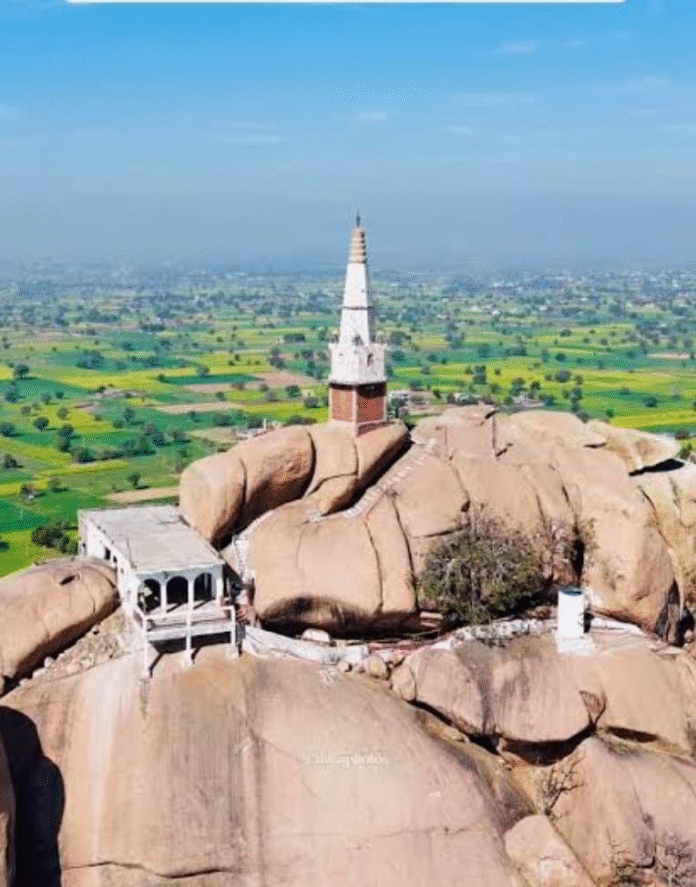
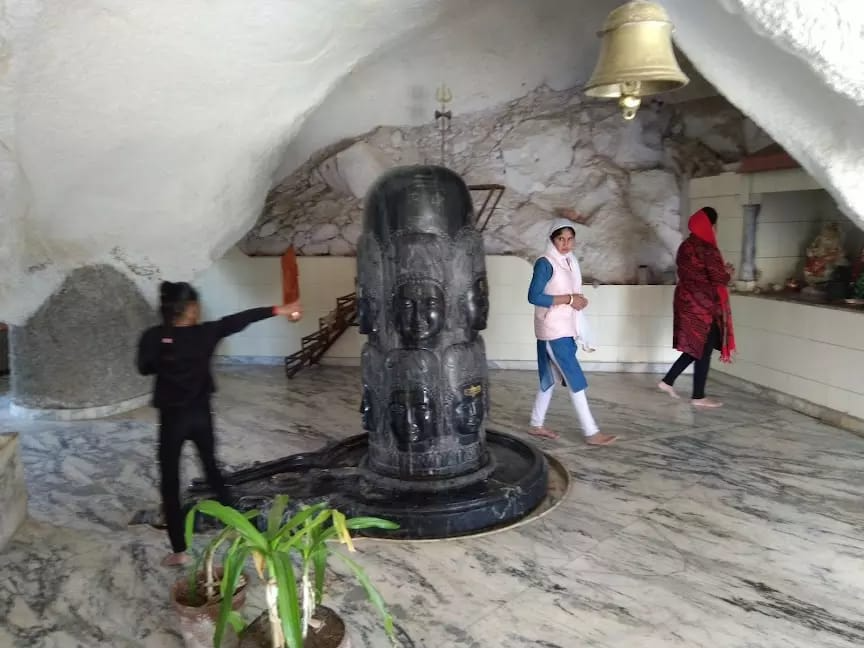
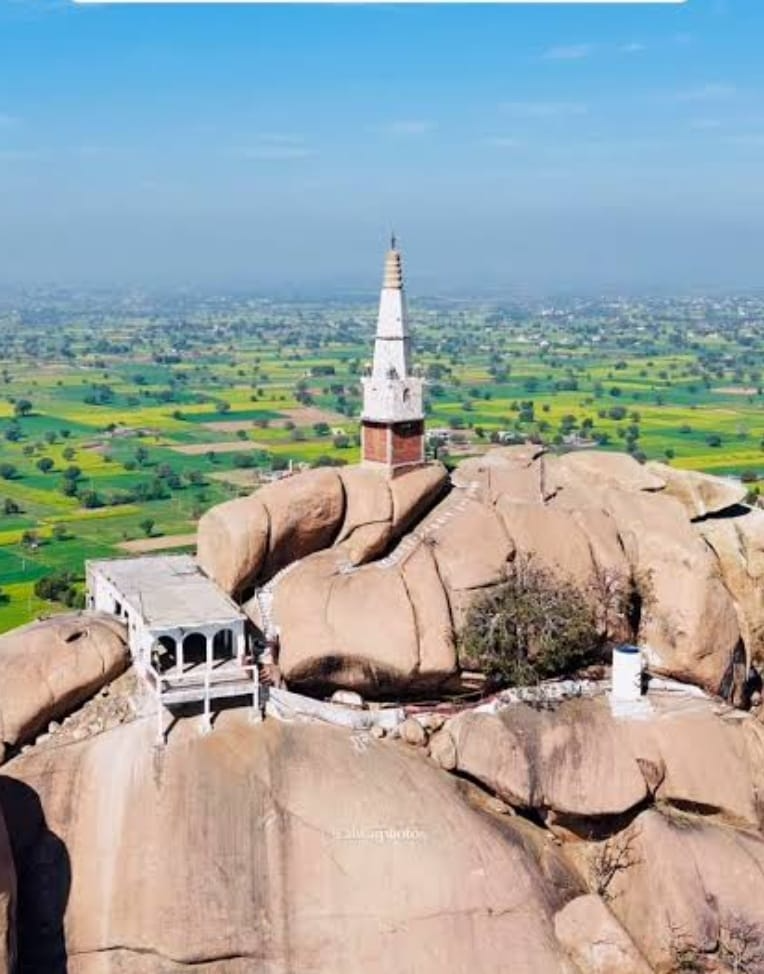
Located in Viratnagar, Rajasthan, approximately 85 kilometers from Jaipur, the Pandeshwar Mahadev Temple is an ancient and historically significant religious site. Nestled inside a cave on the Panchkhand Mountain, this temple houses an extraordinary and majestic form of Lord Mahadev. The deity here is the sawa saat feet (about 7.25 feet) tall Ekadash Rudra (Eleven Rudras), captivating every devotee with its immense size and divine aura.

Devotees Flock from Across India and Abroad

The Pandeshwar Mahadev Temple attracts not just devotees from Rajasthan, but from all over India and even foreign countries. Especially during Mahashivratri, massive crowds of pilgrims gather here. Devotees firmly believe that merely having darshan (sight) of Lord Mahadev at this sacred spot eliminates all life’s sufferings and brings prosperity and happiness. The profound peace and divine atmosphere of the cave provide deep mental and inner tranquility to every visitor.

Pandeshwar Mahadev Temple in Rajasthan Houses Pandavas Caves Bespeaking Stories of Mahabharat Era...

The 6-Ton Miraculous Shivling – Appears as if Constantly Bathed in Milk!

The Shivling here weighs around 6 tons and stands sawa saat feet tall. Skilled artisans carved it from black stone brought from Bhainslana, right within the temple premises. Looking at this Shivling gives the impression that it is continuously being bathed in milk. Alongside the Shivling, Nandi (Lord Shiva’s bull) is also enshrined in the cave. Every year on Mahashivratri, a grand three-day fair is held here, drawing saints and devotees not only from India but from abroad as well.

A Historic Mystery Linked to the Mahabharata Era

This site is connected to the Mahabharata period. The Virat Parva of the Mahabharata mentions this mountain, where the Pandavas hid their weapons in a cave during their year of incognito exile (agyatvas). The cave where Lord Mahadev now resides is formed by three massive rocks and has three entrances. Emperor Ashoka is also said to have spent 300 days on this very mountain. Even today, many sadhus and saints come here to perform penance.

Ekadash Rudra: The Unique Union of Lord Shiva’s 11, Divine Forms

Lord Shiva is believed to manifest in Eleven Rudras (Ekadash Rudra). One of Shiva’s names is ‘Rudra,’ meaning the destroyer of sorrow. In his fierce form, Rudra makes enemies weep while protecting the gods; this form is said to reside in heaven for the welfare of the deities. At Pandeshwar Mahadev Temple, devotees witness this powerful Rudra form of Lord Shiva.

Pandeshwar Mahadev Temple in Rajasthan Houses Pandavas Caves Bespeaking Stories of Mahabharat Era...

Pre-Mahabharata Agyatvas and the Miracle of Bhimtalta Kund

Tradition holds that this place dates back even before the Mahabharata events. After 12 years of forest exile, the Pandavas spent one year in incognito exile in Viratnagar. After slaying Keechaka, Bhima struck the ground with his foot to bring forth water and bathed there, leading to the creation of Bhimtalta Kund. Locals say the depth of this pond remains unknown to this day, its water source is a mystery, and the water level never decreases-no matter how severe the drought. Elders and villagers have passed down the belief that the pond’s water has never diminished, even in years without rain.

Pandeshwar Mahadev Temple in Rajasthan Houses Pandavas Caves Bespeaking Stories of Mahabharat Era...

The Tale of the Aghori and the Sealed Cave

According to the temple’s 13th Acharya, Swami Somendra Maharaj, hundreds of years ago, an Aghori ascetic lived in this cave on the mountain. When asked to leave the hill, a small Shivling was present in the cave. As a devotee of Lord Shiva, the Aghori sealed the cave’s entrance with stones to protect the Shivling from any harm during his absence. Viratnagar has been a land of penance for saints for thousands of years. Swami Ramchandra Veer Maharaj performed intense tapasya here for many years, and Acharya Swami Dharmendra initiated the Ayodhya Ram Janmabhoomi movement while residing at this site.
Many Shankaracharyas and prominent leaders have visited here in the past.

Festivals and Fairs Celebrated

Throughout the Year At Pandeshwar Mahadev Temple, numerous festivals are observed year-round. These include the annual Patotsav (fair) of Shri Vajrangdev Mahaprabhu on Magh Shukla Trayodashi, the grand Mahashivratri fair in Phalgun, Hanuman Jayanti, Narsimha Jayanti, and Guru Purnima on Chaitra Purnima, among others.

This temple is not merely a center of faith but a living witness to history, mysteries, and miracles. If you ever visit Viratnagar, be sure to seek the darshan of Pandeshwar Mahadev-where Lord Bholenath himself calls devotees!

Echoes of Ancient Madhya Pradesh: Sacred Temples of Jaso, Satna

0

PC( Facebook, Alamy )

In the heart of Madhya Pradesh’s Satna district lies Jaso, a quiet yet profoundly historical town where devotion, architecture, and legend intertwine. Here, sacred shrines perched on hillsides and amid serene landscapes whisper tales of ancient dynasties like the Chandela, Kalachuri, and even local Bhil rulers. Among its gems are the revered Jalpa Devi Temple and the majestic Kunwar Math, blending spiritual power with timeless artistry-a perfect fusion of faith and grandeur.

Jalpa Devi Temple: A Timeless Seat of Divine Shakti

Echoes of Ancient Madhya Pradesh: Sacred Temples of Jaso, Satna

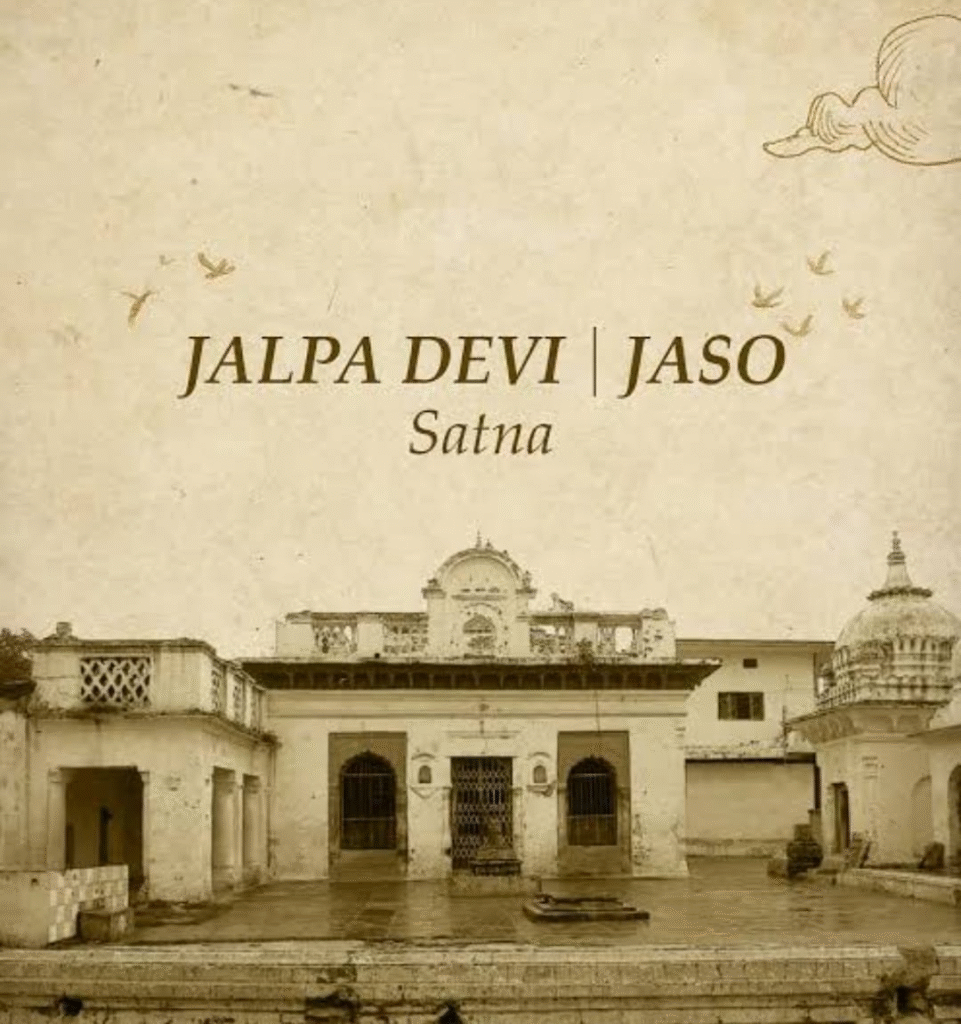
Perched atop a hill in Jaso, the Jalpa Devi Temple (also called Maa Jalpa Devi or Jalpa Mata Temple) stands as an ancient and venerated Shakti Peeth, drawing devotees and heritage enthusiasts alike. This state-protected monument is celebrated for its exquisite architecture, intricate stone carvings, and profound spiritual aura.

Historical Roots: The temple’s origins trace back


centuries, with traditions linking its establishment to Bhil kings who installed the deity on a simple platform atop the hill. Local legends describe the goddess manifesting as a sacred stone (shila) in the midst of dense forests, emerging divinely. Some accounts place its history around 900-1100 years old, reflecting influences from regional dynasties.

The Deity and Legends

Worshipped as a form of Goddess Durga, Maa Jalpa is revered as a protector and granter of wishes. Her name is said to derive from emerging from water (“jal”) and ensnaring (“jal” or net-like) devotees in her grace. The idol is a natural stone form, symbolizing raw divine energy.

Unique Traditions

Devotees often draw an inverted swastika when making a wish (mannat) and complete it as a straight swastik upon fulfillment-a poignant ritual of faith. Architectural Charm: The temple showcases remarkable ancient stonework and sculptures, set against a backdrop of natural beauty and tranquility. It attracts large crowds, especially during Navratri, when the hill comes alive with prayers and celebrations.

Spiritual Significance

Believed to be a powerful Siddh Peeth, sincere prayers here are said to manifest miracles, making it a beacon for those seeking protection, strength, and fulfillment. This shrine is more than a place of worship-it’s a living testament to Madhya Pradesh’s enduring spiritual legacy.

Kunwar Math: An Architectural Marvel of Shaivism

Echoes of Ancient Madhya Pradesh: Sacred Temples of Jaso, Satna

Nearby stands the Kunwar Math (or Kunwar Matha), an 11th-12th century CE Hindu temple dedicated to Lord Shiva. Recognized as a state-protected monument, it offers valuable insights into the architectural styles of the Chandela and Kalachuri periods in the Bundelkhand-Baghelkhand region.

Historical Context: Built during the later

medieval era, possibly under influences from nearby dynasties, the temple exemplifies the region’s Shaiva heritage. It features classic elements like a sanctum (garbhagriha) and finely carved stonework.

The structure


highlights intricate carvings and a design typical of ancient Shiva temples, emphasizing symmetry, elevation, and artistic detail.

Cultural Value

As an archaeological treasure,
Kunwar Math helps scholars trace the evolution of temple-building in central India. Its proximity to other historical sites adds to Jaso’s appeal as a heritage cluster.

Why Visit Jaso? A Blend of Devotion and Grandeur

Jaso encapsulates the essence of ancient Madhya Pradesh-where sacred temples meet royal echoes and natural serenity. Whether you’re a pilgrim seeking blessings at Jalpa Devi’s powerful shrine, an architecture lover admiring Kunwar Math’s medieval craftsmanship, or a traveler exploring hidden gems beyond mainstream destinations like Khajuraho, Jaso offers an authentic, soul-stirring experience. In this corner of Satna, faith and history resonate through stone and spirit, inviting you to discover the timeless heritage that continues to inspire awe.

Maha Shivratri Celebrating the Shiva–Shakti Union Symbolises True Love Across Ages…

0

Maha Shivratri, known as the Great Night of Shiva, is one of the most sacred festivals in Hinduism. Falling between February and March according to the lunar calendar, the festival often coincides with Valentine’s season—but its message of love goes far beyond modern expressions of romance.

Maha Shivratri marks the divine union of Shiva and Shakti, the masculine and feminine cosmic energies that sustain and balance the universe. Their union is not just a mythological event but a profound symbol of harmony, equality, and spiritual completeness.

In an era where relationships are often fleeting, Maha Shivratri reminds humanity of eternal love that transcends the physical and touches the soul. The bond between Shiva and Shakti represents devotion, surrender, balance, and spiritual awakening—qualities that define love in its purest form.

The Story of Shiva and Shakti

According to Hindu mythology, Goddess Sati, Shiva’s first consort, sacrificed herself after being insulted by her father. She was later reborn as Parvati, and through intense penance and devotion, she reunited with Shiva. Their reunion symbolises love that survives death, rebirth, and time itself—an eternal spiritual partnership.

Cosmic Alignment and Spiritual Energy

Maha Shivratri is believed to be a powerful night due to planetary alignments that create a natural surge of energy in the human body. Yogic traditions say that staying awake, meditating, and chanting on this night helps elevate consciousness and spiritual awareness.

This is why sages and seekers consider Maha Shivratri an ideal time for sadhana (spiritual practice), meditation, and inner transformation. It is seen as a night to rise above material attachments and connect with higher consciousness.

A Night Beyond Rituals

Maha Shivratri is not just a religious observance—it is a celebration of divine love, cosmic balance, and spiritual awakening. It teaches that true love is not merely about emotion or attraction but about unity of soul, purpose, and energy.

As millions celebrate Maha Shivratri, it serves as a timeless reminder that love, in its highest form, is eternal, transformative, and deeply spiritual.

Elon Musk Plans AI Satellite Factory on Moon, Speaks of Visiting Stars And Meeting Aliens…

0

Elon Musk, the world’s richest man, has revealed plans to establish an AI satellite factory on the Moon. According to Musk, the goal is to capture solar energy on an unprecedented scale. He shared this vision in a 45-minute video of an internal meeting at his AI company, xAI.

Here are 8 key takeaways from that meeting:

1. Harnessing Solar Energy & The Dyson Sphere Vision

Musk stated that human civilization currently uses only about 1% of Earth’s potential energy.

He explained that capturing even one millionth of the Sun’s total energy would provide nearly one million times more power than humanity uses today.

Key points from his vision:

  • The Sun accounts for 99.8% of the solar system’s mass, making it the ultimate energy source.
  • To fully utilize solar energy, humanity must expand beyond Earth.
  • Future plans include Earth-orbital data centers, launching 100–200 gigawatts of capacity into space annually with the help of SpaceX.
  • To exceed 1 terawatt of energy production, Musk believes operations must move to the Moon.
  • Factories built on the Moon will manufacture AI satellites.
  • These satellites will be launched into deep space using an electromagnetic launcher known as a “mass driver.”
  • Over time, these satellites could form a solar network similar to a Dyson Sphere.

A Dyson Sphere is a theoretical megastructure built around a star to capture a large percentage of its energy output. Musk envisions AI satellites forming a ring-like energy-harvesting system around the Sun, potentially enabling human settlements throughout the solar system and operation of massive interplanetary spacecraft.

2. Six of the 12 Founding Members Fired

Musk revealed significant restructuring within xAI:

  • Of the 12 founding team members, only six remain. Several early employees have been laid off. Musk described this as a change in the company’s “organizational structure.”

3. xAI Divided Into Four Major Teams

The company is now structured into four core divisions:

• Grok Team

Focus: Chatbots and voice-based AI systems.

• Coding Team

Focus: Strengthening the app’s technical infrastructure.

• Imagine Team

Focus: Advanced video-generation tools.

• Macrohard Project (Most Ambitious)

The “Macrohard” project aims to:

  • Create digital simulations of entire companies.
  • Model departments, supply chains, and business decisions.
  • Use AI to test consequences of major decisions before real-world implementation.

A major goal is to design complex machinery — including rocket engines — entirely through AI simulation. Musk claims this would:

  • Eliminate human error
  • Dramatically accelerate engineering development

4. AI Writing Entire Programs Without Human Coding

Musk claimed that AI models now understand problems like experienced engineers.

He predicts that:

  • AI will soon detect and fix coding errors independently.
  • By the end of the year, traditional coding may no longer be necessary.
  • AI could generate programs directly in binary (machine language).
  • “Grok Code” may become the world’s most advanced coding model within months.

According to Musk, AI could outperform human programmers and even traditional compilers.

5. AI-Generated 20-Minute Videos

The Imagine Team is working on models capable of generating 10 to 20-minute videos without human intervention by the end of the year.

6. The “Memphis Cluster” – World’s Largest Supercomputer

Musk claims to own the world’s largest GPU cluster, known as the Memphis Cluster.

Key details:

  • Operates 24/7
  • Designed to train advanced versions of Grok
  • Built rapidly — much of the data center was completed in six weeks
  • 1,363 kilometers of fiber cables installed
  • When fully operational, it will consume over 1 gigawatt of power

Thousands of systems work together like a giant artificial brain.

7. “Macro Hard” Written on the Roof

At the facility, the phrase “Macro Hard” was reportedly written on the roof — symbolizing the ambition behind the large-scale AI simulation project.

8. Musk’s Belief in “Compute Advantage”

Musk attributes much of his success to what he calls “compute advantage” — the idea that the entity with the most computational power will dominate AI development.

International Day of Women and Girls in Science: Empowering Equality in STEM

0

PC( The United Nation , Instagram)

International Day of Women and Girls in Science: Empowering Equality in STEM

Celebrated annually on February 11, this UN-designated day champions the full and equal participation of women and girls in science, technology, engineering, and mathematics (STEM).

The International Day of Women and Girls in Science (IDWGS) is observed every year on February 11. It promotes gender equality and highlights the leadership, achievements, and contributions of women and girls in science, technology, engineering, and mathematics (STEM). The day also seeks to empower women and girls globally to pursue careers in these fields, driving innovation and addressing pressing global challenges through inclusive scientific progress.

About the International Day of Women and Girls in Science

This year marks the 11th International Day of Women and Girls in Science. Achieving gender equality remains essential for advancing science and securing a sustainable future for humanity. Despite progress, women still represent less than one-third of the world’s researchers. IDWGS, observed by the United Nations, emphasizes the critical role of women in science and encourages more girls and women to enter STEM careers. Greater involvement from women fuels innovation, ensures diverse perspectives, and helps tackle issues like climate change, health, and technological development.

History of the International Day of Women and Girls in Science

The United Nations General Assembly officially proclaimed February 11 as the International Day of Women and Girls in Science in December 2015, through resolution 70/212. This built on earlier efforts, including the 2011 Commission on the Status of Women conclusions and a 2013 General Assembly resolution recognizing equal access to science and technology as vital for gender equality and empowerment.

The date February 11 was chosen partly to coincide with the birthday of Marie Curie, a pioneering woman in science. Gender equality has long been a core priority for the UN, as it contributes not only to economic development but also to achieving all goals of the 2030 Agenda for Sustainable Development.

International Day of Women and Girls in Science: Empowering Equality in STEM

Theme for 2026

The theme for the 2026 International Day of Women and Girls in Science is “From Vision to Impact: Redefining STEM by Closing the Gender Gap.”

This theme shifts focus from recommendations and awareness to showcasing practical good practices, solutions, and real-world actions that build more inclusive STEM ecosystems. It builds on prior initiatives, such as UNESCO’s 2024 Call to Action to Close the Gender Gap in Science and the 2025 campaign “Imagine a world with more women in science #EveryVoiceInScience.” Events, including a hybrid gathering at UNESCO Headquarters in Paris, highlight emerging technologies (like Al) and their role in promoting gender equality in STEM.

The day reminds us that closing the gender gap is not just about fairness-it’s essential for the quality, relevance, and impact of scientific progress worldwide.

Mumbai’s Coastal Road Now Sings ‘Jai Ho’! India’s First Musical Road Hits the Streets

0

PC(Indianbanker.com, NDTV )

Drive to the Beat: ‘Jai Ho’ Plays from the Road Itself as Mumbai Unveils Melody Magic.he Surprise Melody on Mumbai’s Iconic Coastal Road.

Commuters zipping along the north-bound arm of the Coastal Road from Nariman Point to Worli are in for a pleasant surprise – the road itself is now playing the iconic tune “Jai Ho”!

India’s First ‘Musical Road’ Comes Alive.

In a groundbreaking first for India, the Brihanmumbai Municipal Corporation (BMC) has installed special “musical strips” – precisely engineered grooves or rumble strips on a 500-metre section of the carriageway, roughly 500 metres ahead of the first lane near the median, just after emerging from the underground tunnel.

How the Road Actually Sings ‘Jai Ho’.

As vehicles cruise over these grooves at the optimal speed of 70-80 kmph, the friction between the tyres and the road surface generates vibrations that transform into sound waves, recreating the unmistakable melody of “Jai Ho” – the Oscar-winning anthem composed by A.R. Rahman for Slumdog Millionaire. The tune is clearly audible inside the vehicle, turning an everyday drive into a rhythmic, joyful experience.

From a Japanese Bulldozer to Mumbai’s Streets.

The innovative concept traces its roots to Japan in 2007, when engineer Shizuo Shinoda accidentally discovered the sound-generating effect while operating a bulldozer on a grooved road surface. What began as a serendipitous find has evolved into “melody roads” worldwide, and Mumbai’s version marks the country’s debut of this quirky engineering marvel.

Mumbai's Coastal Road Now Sings 'Jai Ho'! India's First Musical Road Hits the Streets

Smart Signage Keeps Drivers in Tune.

To ensure drivers are prepared and maintain the right speed, the civic body has erected prominent signboards at 500 metres, 100 metres, and 60 metres ahead of the stretch – all positioned inside the tunnel to alert motorists well in advance.

Engineering Meets Bollywood Magic.

A senior civic official described the project as “a perfect blend of modern engineering and cultural expression,” adding a touch of Bollywood flair to Mumbai’s iconic Coastal Road.

A New Rhythm for Mumbai Commuters.

With this installation, the city not only enhances the commuting experience but also celebrates innovation in infrastructure. So next time you’re heading towards Worli, keep your windows down, maintain a steady speed and let the road serenade you with “Jai Ho”!

Rare European Song Thrush Makes Historic Appearance at Himachal’s Pong Dam Lake

0

PC( The ok travel)

A surprising sighting during a routine bird census adds to the wetland’s avian wonders

Rare European Song Thrush Makes Historic Appearance at Himachal’s Pong Dam Lake

Exciting Discovery at Pong Lake

Birdwatchers across India were greeted with exciting news as a rare Song Thrush (Turdus philomelos), a species that breeds mainly in Europe, made an unexpected appearance at Pong Dam Lake (also known as Pong Lake Wetland) in Himachal Pradesh.

The Sighting and Habitat

The unusual visitor was observed near Sathana village, close to the outflow area of the Shah Nehar Barrage. The area – wet grassy patches interspersed with reeds, low shrubs, and scattered trees provided an ideal micro-habitat for the species. The bird remained visible for a few minutes, allowing observers to capture photographs before it quietly slipped away.

Identification by Experts

Initially unidentified in the field due to its extreme rarity in India, the photographs were later examined by bird experts Abhinav and Himanshu Chaudhary. They confirmed the species based on its distinct features: warm brown upperparts, well-defined wing bars, creamy underparts marked with bold arrowhead-shaped spots, and a characteristic upright thrush posture. A follow-up visit to the site did not yield further sightings.

Breeding Range and Rarity in India

The Song Thrush widely breeds in Europe and West Asia, with wintering populations typically found in southern Europe, North Africa, and West Asia. Indian records are exceptionally scarce. The last known sighting in Himachal Pradesh dates back to August 2018, when birder Ankit Vikrant recorded the species at Rangrik Na in the Spiti Valley.

Pong Dam as a Biodiversity Hotspot

A Ramsar site renowned for hosting thousands of migratory waterbirds every winter, Pong Lake continues to solidify its reputation as one of India’s most significant wintering grounds for both waterfowl and passerines. This new sighting highlights not only the region’s ecological importance but also the role of scrublands and grasslands as crucial habitat patches for rare and migratory species.

A Reminder of Hidden Biodiversity

The surprising appearance of the Song Thrush serves as a reminder of the hidden biodiversity within Himachal’s wetlands, where even a routine bird census can lead to a discovery of national significance.

Limited National Records

Nationwide, fewer than five confirmed sightings exist, with previous records from Ladakh, Bharatpur, Harike, and the Delhi region