Home Blog Page 785

Trains in India might run at speed of 574 km/hr. See how!

0

Trains in India which run at a speed of around 100 km per hour to 120 km hour might get a boost and start running at a speed of 574 km per hour. EBNW Story finds out how its speed can be enhanced..

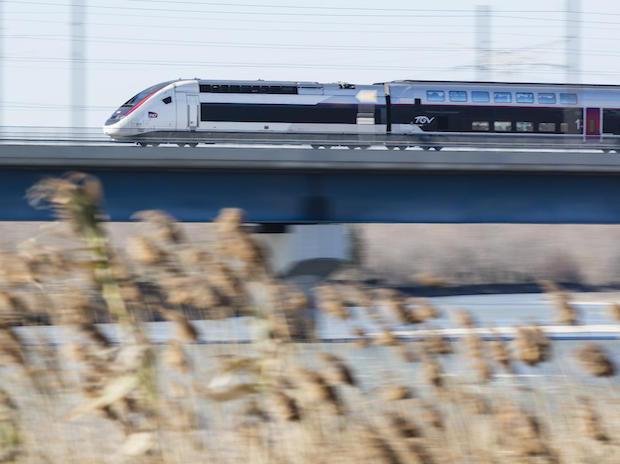
Trains in India might run at a speed of 574 kilometre if the ongoing discussions between Alstom India and the Indian railway materialises.

Alain Spohr, Managing Director at Alstom India said, “We are proposing a special train based on the High Speed technology that is used in France,”

 “The proposed train is based on TGV, which is a high-speed train that operates all over France. TGV stands for Train à Grande Vitesse (simply translated to high speed train in English). A certain type of TGV, called V150, holds the world record for the highest speed on any national rail system.”

“The current world speed record for commercial train on the steel wheels as held by the French TGV is 574.8 kilometres per hour. This record has been in place since April 2007.”

He further said, “We have developed local solution corresponding to the speed segment in India and  have also started to talk to the Indian Railways if they shall be interested in adding this to their fleet of long distance trains (above 1000 kilometres) High Speed Trains,” Spohr said.

Air India goes back to Tata after 68 years. Watch rare pictures from 1940s to see its chronology of change…

0

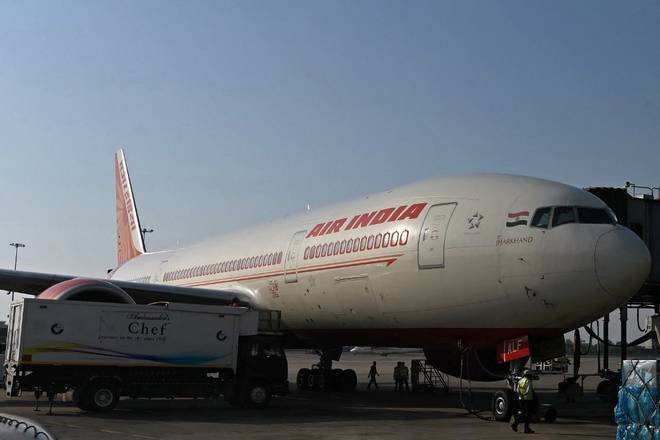
After 68 years, Tatas have won back Air India with ₹18,000-crore bid. and the airline is therefore all set to return to the Tata fold. Let’s see the chronology of change which shifted the ownership of Tata…

Air India is all set to return to the Tata fold as the Tata Sons subsidiary Talace Pvt Ltd emerged as the winning bidder for the debt-laden national carrier after quoting an enterprise value of ₹18,000 crore. The government will take a hit of ₹28,844 crore.

1940s :: Air Hostess of Tata Airlines

Air India goes back to Tata after 68 years. Watch rare pictures from 1940s to see its chronology of change...


1953 :: Indian Govt. Takes Over Air Transport Air India Nationalized Nehru’s Appeal to Staff

Air India goes back to Tata after 68 years. Watch rare pictures from 1940s to see its chronology of change...


1970s :: J.R.D Tata as Chairman of Air India

Air India goes back to Tata after 68 years. Watch rare pictures from 1940s to see its chronology of change...

1970s :: Shri J.R.D Tata Infront of Air India Boeing 747

Air India goes back to Tata after 68 years. Watch rare pictures from 1940s to see its chronology of change...

1980s :: Air India Advertisement

Air India goes back to Tata after 68 years. Watch rare pictures from 1940s to see its chronology of change...

1972 :: Air India Offer Bombay -New York – Bombay at Rs 4125/-

Air India goes back to Tata after 68 years. Watch rare pictures from 1940s to see its chronology of change...

Delhi Airport T1 Terminal to resume flight operations from October 31. Read the check-in, boarding rules here…!

0

Delhi Airport T1 Terminal has announced to resume its flight operations from October 31. The EBNW Story brings up the rules regarding check-in, boarding at security checks and other points…

Delhi International Airport Limited (DIAL), led by GMR Group, today announced that the operations at Terminal 1 will resume with effect from October 31 at 0001 hours. The terminal is all set to provide a safe and healthy environment to passengers flying in and out of Delhi Airport.

Delhi Airport T1 Terminal to reopen after 18 months

After almost 18 months of closure, the operations at Terminal 1 will resume with pre-COVID operators, i.e. IndiGo and Spice Jet. The first flight scheduled from T1 after its reopening would be an Indigo flight which will depart for Mumbai at 0105 hours.

DIAL has taken several safety measures with all key stakeholders to contain the spread of COVID-19, as directed by the Government of India.

“Delhi Airport is all set to reopen for domestic flight operations at T1 after nearly 18 months of shutdown. With the resumption of the third terminal, Delhi Airport will be functional completely. We would like to assure passengers that at Delhi airport, they would be in a safe and healthy environment. We have implemented several measures at the airport to ensure passenger safety without compromising their comfort and experience. Our teams have worked round-the-clock to sanitize the vast terminal. DIAL will continue its awareness drive by educating and encouraging passengers to maintain social distance while at the airport,” said Videh Kumar Jaipuriar, CEO-DIAL.

The COVID-19 pandemic has affected all corners of the aviation industry, and airports have not been spared from the crisis. Commercial operations of domestic and international flights were suspended from March 24, 2020 in a bid to contain the spread of coronavirus pandemic in the country.

The development has come after a successful resumption of Terminal 3 and Terminal 2 that began operations in a calibrated manner from May 25, 2020 and July 22, 2021 onwards, respectively.

Arrangements at Terminal 1 For the entry into the airport

  • 6 CUSS kiosks will be available for passengers for web check-in before entering the terminal i.e. in the Departure Forecourt
  • Arrangements have been made for thermal scanning of passengers as per Government guidelines

Guidelines at the Check-in at Delhi Airport T1 Terminal

  • To avoid close contact and crowding at the counters, passengers are encouraged to use the e-boarding scanners for entry to Security and frisking entry points.

Security check at the Delhi Airport T1 Terminal

  • Alignment of queues to ensure social distance among CISF personnel and passengers
  • Deployment of queue managers, floor markings and allocation of alternate seats, installation of automatic hand sanitiser at various places
  • Tray disinfection SOP for passengers’ safety will be maintained
  • Auto dispensing sanitiser machines have been kept for passengers to use after security checks
  • Contact-less Retail and F&B Options
  • After security checks, passengers will move to SHA, where they can access food carts and retail shops. Social distance markings have been put in shops, lifts, seats etc.
  • Strict & stringent SOP would be maintained for Food and Beverage (F&B) shops and retail shops to ensure safety and hygiene

Guidelines at the boarding gate of Delhi Airport T1 Terminal

·         Passengers are requested not to use seats with cross marks to ensure social distance

  • Queue managers deployed at boarding & bussing gates will continuously monitor precautionary measures
  • DIAL will encourage all passengers to wear masks and maintain social distance at all times, to ensure their safety and well-being.

Sanitization of high contact surfaces

  • Deep cleaning of the vast Terminal 1 is being carried out 24*7. A team of housekeeping personnel have been deployed to ensure a clean and sanitized terminal for passengers round the clock. The staff will be thermally screened and checked for symptoms before going on with their duties.
  • Regular sanitization of high contact surfaces, such as desks, chairs, elevators, railings, CUSS, trolleys, handles, trays, baggage belts, etc. inside the terminals would be carried out. Apart from these, washrooms will be closed after every hour to sanitize all its surfaces.
  • Apart from these, DIAL will also have facilities to isolate suspected COVID-19 passengers at the airport following government direction.

Indian gaming market is poised to reach USD 6-7 Bn in value by 2025: IAMAI

0

Indian Gaming industry: Let’s study the market prospect of this industry in India as per the report released byIAMAI,OnePlus and RedSeer.

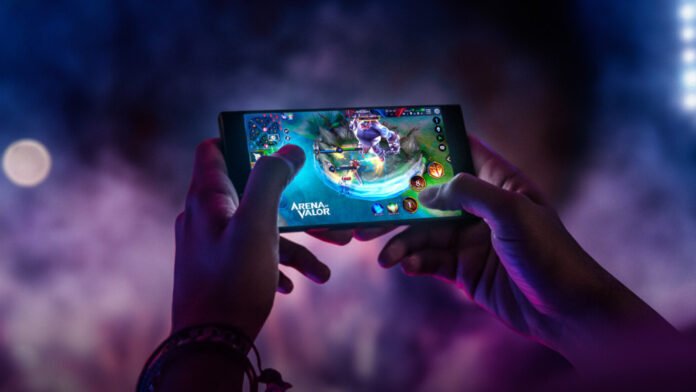
Indian gaming market is poised to reach USD 6-7 Bn in value by 2025 from USD 1.8 Bn presently, says a report prepared by IAMAI in collaboration with OnePlus and RedSeer The report also highlighted that 40% of the hardcore gamers pay for their games with an average spend of INR 230 per month. The Covid-19 pandemic has accelerated the organic growth of digital games as mobile app downloads grew by 50% and user engagement went up by 20%, the study says. The increased gaming time has spurred the growth of hardcore gamers in India, even as casual games remain the most popular genre in India. 

The report was launched today by Jayesh Ranjan,  Principal Secretary of the Industries & Commerce (I&C) and Information Technology (IT), Department of the Telangana Government; Saurabh Gaur, Joint Secretary Ministry of Electronics and Information Technology, in the presence of Navnit Nakra, Vice President, Chief Strategy Officer and Head of India Sales, OnePlus India, and Rajen Vagadia, Vice President and President, Qualcomm at a Roundtable discussion around E-Gaming hosted by IAMAI moderated by RedSeer, Associate Partner, Kanishka Mohan.

“We are at the cusp of a gaming revolution and the gaming ecosystem is working towards user-friendly smartphones and leveraging 5G technologies,” said Ranjan, speaking at the roundtable. 

While launching the report titled ‘Building up the e-gaming ecosystem of India and the influence of smartphones’, by OnePlus, the global technology brand in partnership with IAMAI and RedSeer, Ranjan also talked about the growth potential of the gaming sector and the significance of user-friendly devices for the same.

“The gaming sector has underlined the significance of affordable Smartphones with capable hardware. I am happy that parallelly, work is going on to make phones more user-friendly for gaming by leveraging 5G technology, developments in AI/ML, and hardware manufacturing.”

Saurabh Gaur, added that: “The [global] gaming industry can be matched with electronics, and consoles could be manufactured in India.”  He also voiced support for creating games for the Indian audience, based on Indian culture.

Indian gaming has leap-frogged into the mobile gaming era due to the rapid increase in smartphone penetration in the country, with large console and PC games now being curated for mobile platforms. The sector is also attracting huge investment interest, with nearly USD 1 Bn being invested in the sector in the last 6 months. 

India is currently home to over 400 Mn online gamers and the number of gamers is estimated to grow to 650 Mn by 2025. Currently, mobile gaming dominates the Indian gaming sector, contributing more than 90% to the USD 1.8 Bn gaming market and is expected to further grow to generate USD 6-7 Bn value by 2025, the report added.

Smartphones have become more affordable and pack strong hardware that is equipped to run games which may require medium to high Specifications. This has opened accessibility to more immersive gaming for the masses, with smartphone OEMs also increasingly focusing on incorporating dedicated gaming features on their newest devices and launching gaming-specific phones. 

Speaking at the session, Navnit Nakra, Vice President, Chief Strategy Officer and Head of India Sales, OnePlus India, said, “Over the past few years, the e-gaming industry in India has grown tremendously, driven by the rising avenues for digitization promoted by the flagship initiative of the government, the Digital India program and improved accessibility centered around innovation and affordability by OEMs. At OnePlus, our community has always been at the heart of everything we do and therefore, we have been leading the charge in introducing the most advanced features and have built partnerships with industry leaders to provide a seamless gaming experience on OnePlus smartphones. We are happy to have partnered with IAMAI and Redseer as the report has served as a unique avenue for the industry to gain actionable insights and come together to drive meaningful discourse and innovative ideas”.

Rajen Vagadia, Vice President and President, Qualcomm, shared, “In the last 12 years, we had to update our GPUs (Graphics Processing Unit) over 700 times, that’s the demand coming in from the consumers.” He also underlined that — certain efforts are being undertaken to nurture esports and ensure that it is seen as a field that can be taken up professionally as well.

Over the years, OnePlus has been focusing on making the seamless integration of top-of-the-line hardware and software more accessible to a wider audience of gaming enthusiasts. The company had also introduced industry leading innovative features that amplified the gaming experience for users such as 120Hz refresh rate, Warp Charge, Screen Recording, and Gaming Mode, which was later revamped to ‘Fnatic mode’. Further, the recently launched OnePlus 9R 5G was specially designed to cater to the demands of gaming enthusiasts, empowering them with smooth scrolling, immersive gaming controls and a superior viewing experience. Today, the OnePlus 9R 5G is one of the very few gaming phones in the market with an inbuilt VC cooling system. The introduction of OnePlus Games and Pro Gaming Mode have further enhanced the gaming experience for OnePlus users. 

World Mental Health Day 2021: More than half of India’s (55%) professionals are feeling stressed

0

World Mental Health Day 2021 is celebrated on October 10 each year. Linkedin launched a special ‘mental health’ edition of the Workforce Confidence Index to address the prevalence of work stress in India, and revealed in its survey that more than half of India’s (55%) employed professionals are feeling stressed at work as well-being measures become a luxury for many

Towards World Mental Health Day 2021, the world’s largest online professional network Linkedin has launched a special ‘mental health’ edition of the Workforce Confidence Index to address the prevalence of work stress in India, and how professionals expect greater flexibility to keep their mental health in check. Based on the survey responses of 3,881 professionals from July 31 to September 24, findings reveal that more than half of India’s (55%) employed professionals are feeling stressed at work as well-being measures become a luxury for many.

World Mental Health Day 2021:‘Balancing work with personal needs’ biggest challenge

The latest edition of the Workforce Confidence Index reveals that India’s overall workforce confidence remained steady with a composite score of +55 from July 31 to September 24, 2021, despite drastic transformations in the world of work. But keeping up with these times of change for the last 18 months has adversely affected the mental health of working professionals in the country. When asked to share their primary reasons for work stress, employed professionals cited ‘balancing work with personal needs’ (34%), ‘not making enough money’ (32%), and ‘slow career advancement’ (25%) as the top 3 stressors at work today. Amid such stressful times, 1 in 3 professionals are also seen drawing optimism from the availability of jobs (36%) and improved control over expenses (30%) in today’s recovering, yet competitive  jobs marketplace.

As workforce priorities continue to change in these transformative times, findings go on to indicate that flexibility and work-life balance will serve as critical talent drivers across the Indian professional landscape for years to come.

World Mental Health Day 2021: Employees need greater flexibility

Commenting on the findings, Ashutosh Gupta, India Country Manager, Linkedin, said, “These stressful times of change have impelled the need for greater flexibility and work-life balance among professionals. But our survey reveals a wide gap between what employees need and what employers are offering to cope with stress. While nearly half of (47%) employed professionals wish to end work at reasonable hours, only about one-thirds (36%) were actually able to do so. And while 41% planned for time-off, only 30% could take time off in the past two months. These alarming statistics reflect the urgency for companies to understand how creating a culture that encourages work-life balance and prioritises well being is critical moving forward.”

While greater flexibility remains a mutual need across generations, younger professionals found it easier to take a break than their older cohorts. Findings reveal that Millennials were 2x more likely to take time-offs, while Gen Z professionals were 1.5x more likely to take breaks during the day, when compared to Baby Boomers. Interestingly, Boomers were 1.5x more likely to be open with their colleagues about mental health and stress when compared to millennials as well as Gen Z professionals.

More than one in two (55%) employed professionals in India are feeling stressed at work as challenges on the mental health front abound, according to the latest edition of LinkedIn’s Workforce Confidence Index.

The online survey, conducted every two weeks, polled 3,881 individuals from July 31 to September 24.

World Mental Health Day 2021: Key findings of survey

👉  The top three stressors: Balancing work with family and personal needs, not making enough money and slow career advancement.

👉  There seems to be a wide gulf between expectation and reality.

– While 47% of employed professionals wanted to end work at reasonable hours, just 36% were actually able to do so.

– Similarly, while 41% planned to take time-off, only 33% could avail themselves of leave.

– Unplugging from work also proved a challenge: 22% wanted to not check in on work after hours, but only 16% were able to do so.

👉  Overall, Gen X (those born between 1965 and 1980) and millennials (born between 1981 and 1995) reported the highest levels of stress while boomers (born 1946-1964) fared relatively better.

– Gen X was also the most concerned about exposure to COVID from work.

👉 The good news? Nearly one in three professionals are feeling more confident about the availability of jobs and better control over their expenses.

Navratri Special: Look how southern states celebrate this nine-day festival

0

Navratri is celebrated in Southern India with similar zeal and fervour as in North India. As we invite Kanyas/ little girls and perform their pooja on ahstami and navami, the celebrations remains a little different in Southern states, but if full of pomp and joy.

The ‘navratris’ or nine nights are dedicated to Lakshmi, Durga and Saraswati, the three Goddesses equally. However, the goddess of learning and knowledge Saraswati remains the most significant in Southern traditions

Kerala

In Kerala, Poojavaippu marks the celebrations of Durgashtami. 

Saraswati Puja or the Ayudha Puja marks Mahanavami. On this day, books, music instruments and other tools are worshipped.

On Vijayadasami, books and tools are removed and ‘Puja Eduppu’ is performed. On this day, a child (between the age of 2-6 years) starts learning (called as ‘Vidhyarambam) and as part of the ritual, children are made to learn writing alphabets on rice or sand.

Tamil Nadu

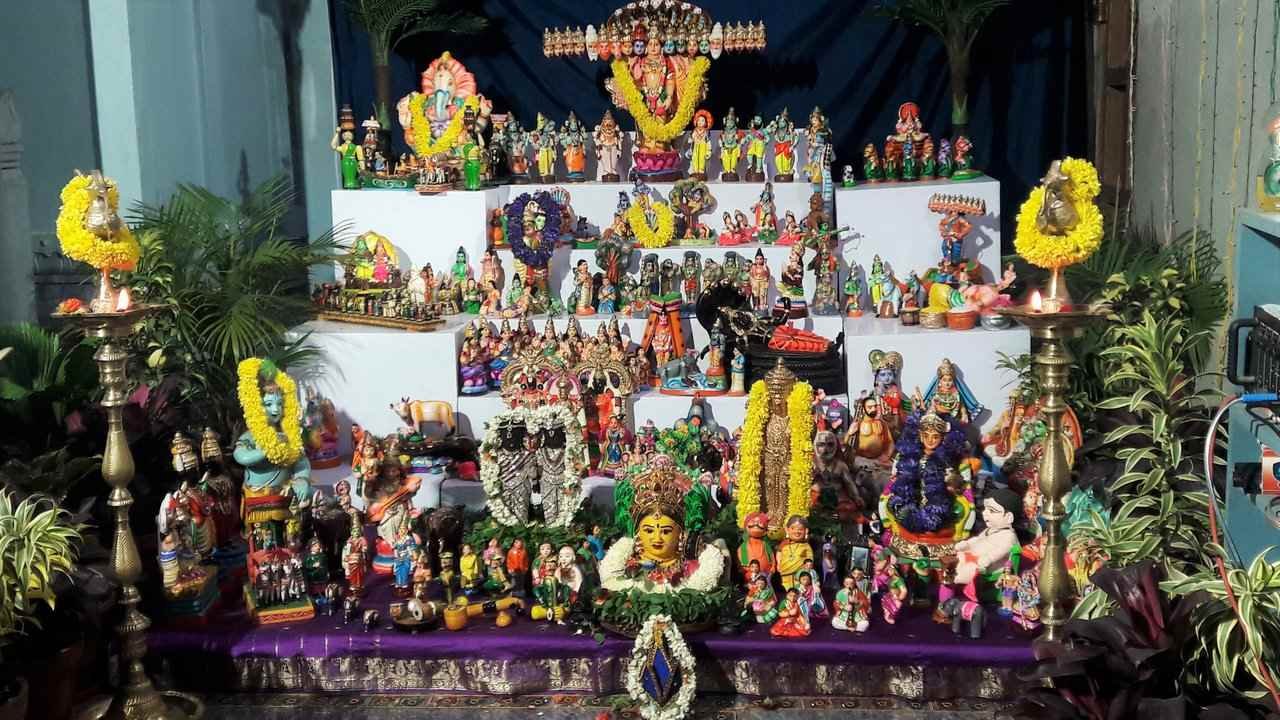
In Tamil Nadu, Navratri’s first three days are dedicated to Goddess Lakshmi while the next three days are dedicated to Durga.  The last three days are dedicated to Saraswati. Devotees arrange traditional dolls called Kolu or Golu a at homes, shops and temples. Kolu is a makeshift staircase where the dolls, passing on from many generations, are kept. They depict myriad themes like environment, space, mythology etc.

There are music and dance festivals organised in temples. In Tamil Nadu’s souther part, Pulikali (tiger dance) is performed where artists paint themselves as tigers while donning bright yellow and black and dance to the beats of instruments.

Karnataka

Decorated dolls are placed at homes in Karnataka on Navratri and people exchange coconuts, clothes and sweets among themselves. People enact scenes from the stories in the epics and puranas and visit renowned temples.

Navratri coincides with the ‘Mysore Dasara’ which is a known for its grand celebration. 

Temple of Chamundeswari of Chamundi Hill, an avatar of goddess Durga, who killed Mahishasur, is thronged by devotees. The Mysore Palace is lit up with lights and flowers during Dussehra and a “Jamboo Savari”, a famous procession takes place here involving elephant parades, wherein one of them carries goddess Chamundeswari.

Telangana and Andhra Pradesh

In Telangana and Andhra Pradesh, all nine days of Navratri are dedicated to Maha Gauri, the goddess representing womanhood. Bathukamma Padunga, a fascinating ritual is followed where women make flower stacks with local flowers in these nine days. On the last day, this stack is left a water body to float. Women can be seen dressing up in the traditional sari wearing jewels and other accessories.

Harwinder Kaur Janagal: India’s shortest lawyer became an inspiration

0
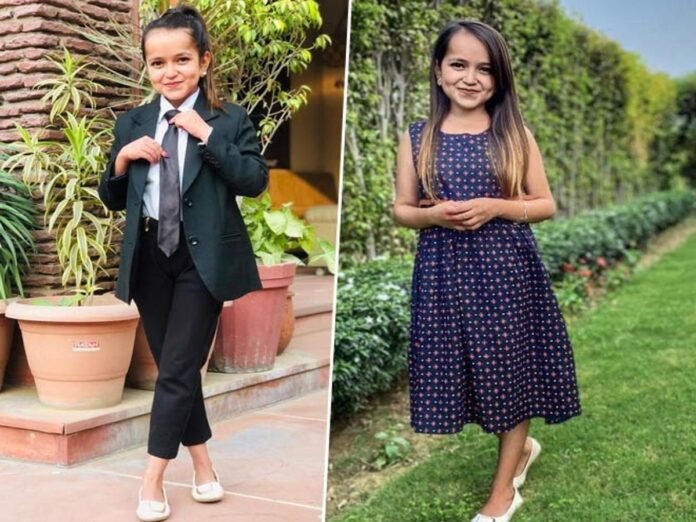
Harwinder Kaur Janagal
Harwinder Kaur Janagal becomes India's shortest lawyer with a positive attitude towards life and body.

Harwinder Kaur Janagal, India’s shortest lawyer with a natural height of about 3’11”, has faced many taunts to reach the heights in life and inspire others.

Harwinder Kaur Janagal, the 25-year-old lawyer with a natural height of about 3’11”, completed her LLB in 2020 and since then has been working in the Jalandhar sessions court. She has been deemed as the shortest lawyer in India, who inspires others with her positive outlook of body shape and size.

“I used to be taunted by people who said that law is not meant for me. How will I fight a case? How could I even stand before a judge? They used to laugh at me. But I used to say that I don’t think that my height is going to stop me from being a successful lawyer. Because this is a field in which physical appearance does not matter, what matters is knowledge and education,” Harwinder said.

The lawyer practitioner’s primary goal was to become an air hostess but she couldn’t because of her body configuration. Everyone in her family has normal heights, so her parents took her to many doctors who prescribed various medications, which did not help. This pushed her towards acute depression.

“There was a time when I used to be fed up of my life. I used to cry for why God made me like this. The vile things that people said really affected me. Then I started to watch motivational videos. It really helped me. It passed, and I started to gain confidence. Now I do not feel that way. I have started to believe that if God has created me then he has a purpose for me and I need to fulfill it,” Harwinder stated.

After 12th, she decided to pursue law as she realized that she can do a lot for the nation through it.

Completing her education on November 23, 2020, she received the license and enrollment client certificate by the Bar Council of Punjab and Haryana. She said that her colleague and the entire law fraternity have been cordial to her.

“We have one life and should live it to its fullest. The more positive we are, the more positive things happen.”

Bail denied to Aryan Khan and his friends; custody extended till 7

0
Bail denied to Aryan Khan

Aryan Khan, son of Shah Rukh Khan and Gauri Khan, denied bail following his arrest in his Mumbai drugs-on-cruise case. The custody was extended till October 7.

Aryan Khan, son of the famous movie star Shah Rukh Khan, was denied bail following his arrest in his Mumbai drugs-on-cruise case. The date of the Narcotics Control Bureau (NCB) custody has been extended till October 7.

The star child was arrested at a party, with 7 others, on October 3, when the NCB team boarded the cruise ship, leaving Mumbai for Goa, disguised as passengers.

According to the officials, the high-profile raid began from 10 am and lasted till 2 pm, that yielded 13 grams of cocaine, 21 grams of charas, 22 pills of MDMA and 5 grams of MD in all.

Two of his friends that were arrested with him included Munmun Dhamecha and Arbaaz Merchant.

Born on 13 November 1997, Aryan Khan is the eldest son of Bollywood star Shah Rukh Khan, and film producer and interior designer Gauri Khan. He is the big brother of Suhana and AbRam Khan.

Completing his school in 2016 from England, Aryan went on to do his graduation in Bachelor of Fine Arts, Cinematic Arts, and Television Production from School of Cinematic Arts, University of Southern California, California.

Aryan Khan has once before been included in a controversy that said the Khan’s third child AbRam was actually a love child of Aryan and a Romanian girl. This rumour was later cleared by Shah Rukh Khan who explained that his wife and him decided to have a third kid, and that his son was disturbed by the fake news spreading about him.

World Teachers’ Day: Know History, Significance and Theme of 2021

0
World Teachers' Day 2021

Celebrated every year on 5th October, World Teachers’ Day, also known as International Teachers Day, was established in the year of 1994. Know its history, significance, and the theme of the year.

World Teachers’ Day, also known as International Teachers Day, is celebrated every year on October 5 to commemorate the signing of the 1966 UNESCO/ILO Recommendation, concerning the Status of Teachers.

The day is co-convened in partnership with the International Labor Organization (ILO), UNICEF, and Education International (EI).

World Teacher’s Day History

Established in 1994, the day commemorates the signing of the 1966 UNESCO/ILO Recommendation concerning the Status of Teachers, which sets guidelines regarding the rights and responsibilities of teachers, and outlines standards relating to their initial preparation and further education personnel policy, recruitment, employment, and working and learning conditions.

World Teachers’ Day Significance

The day aims to focus on appreciating, assessing and improving the educators of the world, and this also provides an opportunity to consider issues related to them.

“On World Teachers’ Day, we are not only celebrating every teacher. We are calling on countries to invest in them and prioritize them in global education recovery efforts so that every learner has access to a qualified and supported teacher. Let’s stand with our teachers!”

Joint message from Ms. Audrey Azoulay, Director-General of UNESCO, Mr. Guy Ryder, Director-General of the International Labor Organization, Ms. Henrietta H. Fore, Executive Director of UNICEF, and Mr. David Edwards, General Secretary of Education International, on the occasion of World Teachers’ Day 2021.

World Teachers’ Day 2021 Theme

The 2021 International Teachers Day will be focusing on the theme of “Teachers at the heart of education recovery” that will support teachers to completely contribute to the recovery process during the Covid-19 crisis.

There will be a five-day series of regional and global events that will showcase the effect that the pandemic has had on the teaching profession, and their aim to establish the steps that need to be taken to ensure that the teching personnel develop their full potential.

Whatsapp, Facebook And Instagram service down worldwide

0

Facebook, whatsapp and Instagram all go down in apprent outage at once. The three major apps which is co-owned by Mark Zuckerberg, the founder of Facebook.

Today all the three apps completely stopped functioning and are still down in all the states of India. The outage is affecting a large number of people worldwide. Whatsapp stopped working and users are not able to send messages while Instagram is working, use browse the page but the new contents are not loading. In case of Facebook , the site is simply showing and error page or a message that their browser could not connect. 

These types of outages happens very rarely with these major apps which are very famous worldwide. More than 20,000 users registered their issue regarding this inconvenience.

A Facebook company spokesperson said-

‘We’re working to get things back to normal as quickly as possible, and we apologize for any inconvenience,’ 

WhatsApp also reached out to its users via Twitter to acknowledge the outage: