The Indian Army men shall be donning new looks with new uniforms from January 15 onwards,
On January 15, during the Army Day Parade, the soldiers shall flaunt first look of the new combat uniform.
The uniform has been designed keeping Make in India concept in mind jointly by the Indian Army & National Institute of Fashion Technology (NIFT).
The design is based on disruptive digital patterns keeping in mind the comfort and different terrains where the soldiers are deployed.
Colour of the new uniform pattern
It shall remain the same which is a mix of Olive and earthy colours.
New uniform availability
The newly designed fabric for the soldier’s uniform will be issued to officers and soldiers in batches in their units and shall not be available in open markets.
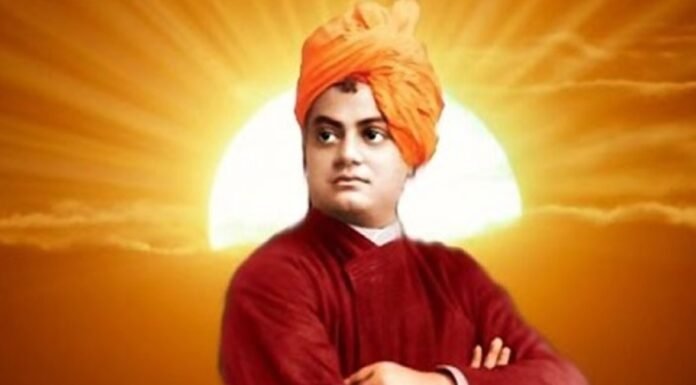
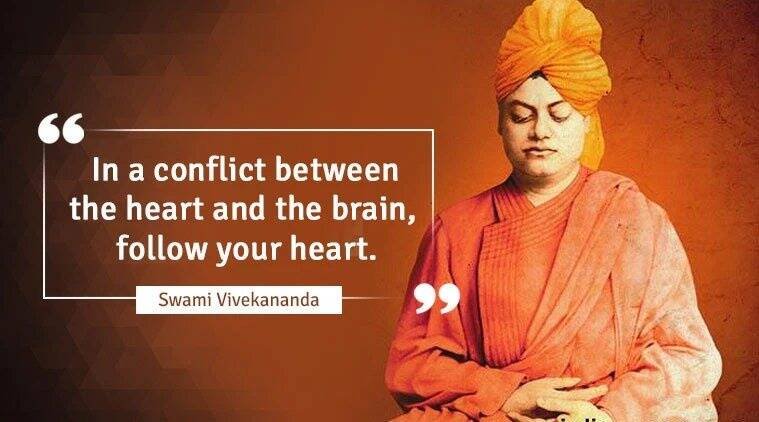
National Youth Day is celebrated every year on January 12 to honor the birthday of India’s greatest spiritual and social leader Swami Vivekananda.
National youth day marks Vivekananda’s ideas on how the young should participate in the modern world while upholding their values. He was the one who believed that with “muscles of iron” and “nerves of steel” every child could bring about social change and he always saw that hope for the future in every child. His life and teachings have encouraged millions around the world and still doing so.
History:
In 1984 the Government of India decided to celebrate Vivekananda’s birthday as National Youth Day every year. The first celebration was marked on January 12, 1985.
The Government of India quoted-
” The philosophy of Swamiji and the ideals for which he lived and worked could be a great source of inspiration for the Indian Youth Day.”
How this day is celebrated:
National youth day is celebrated all over the India every year at schools and colleges, with processions, speeches, music, youth conventions, seminars, Yogasanas, presentations, competitions in essay-writing, recitations and sports. Many blood drives are also organized on this day to help someone in need.
Significance of this day:
With this day India honors and celebrates Swami Vivekananda as an greet spiritual leader. His life and teachings of inspires young people.
His lectures and writings, deriving their inspiration from Indian spiritual tradition and the broad outlook of his Master Sri Ramakrishna Paramahansa. These are the source of inspiration which have motivated numerous youth organizations, study circles and service projects involving the youth.
Today where almost 50 percent of India’s population is under the age of 25, the future of the country is on their shoulder. With that empowering youth people is so important and this little celebration of youth can be a source of great motivation for them.
Quotes by Swami Vivekananda:
You have to grow from the inside out. None can teach you, none can make you spiritual. There is no other teacher but your own soul.
The greatest sin is to think yourself weak.
Take risks in your life. If you win, you can lead, if you lose, you can guide.
“Talk to yourself once in a day, otherwise you may miss meeting an intelligent person in this world.”
“In a day, when you don’t come across any problems – you can be sure that you are travelling in a wrong path”
Be the servant while leading. Be unselfish. Have infinite patience, and success is yours.”
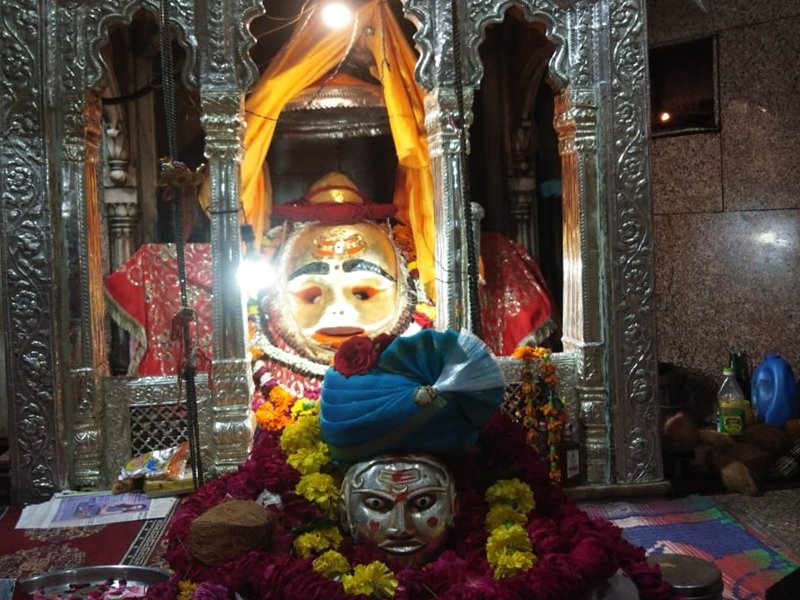
The Kal Bhairav Temple situated in Ujjain city of Madhya Pradesh, India is dedicated to Kal Bhairav, the guardian deity of the city is one of the most unique temple of India.
Kal Bhairava which is a representation of the Hindu Lord Shiva often recognized with a fiery expression and a coiled snake around the neck and one such temple is Located on the banks of the Shipra River, Ujjain and it is one of the most active temples in the city, visited by hundreds of devotees daily.
India which the home of almost 2 million temples holds many peculiar stories and rituals. And one such temple is the Kal Bhairav temple, the interesting ritual of this temple will shock you.
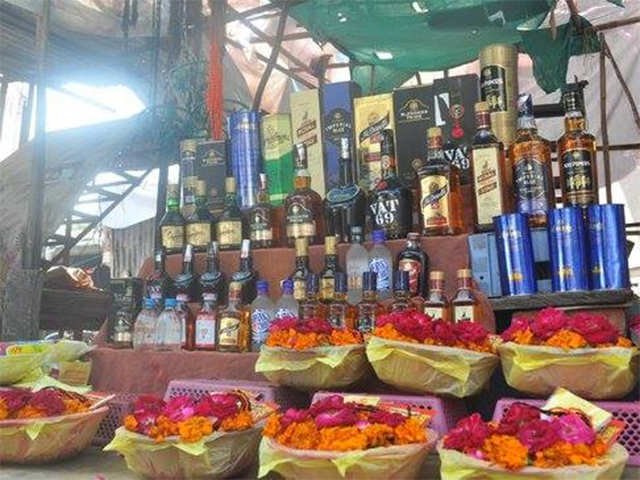
Here, the devotees offer liquor to the deity as chadhava’ and it is also given away as ‘prasad’ to the visitors of the temple. The liquor is offered to the Lord Shiva as one the five tantric ritual offerings known as panchamakara: madya (alcohol), maans (meat), meena (fish), mudra(gesture) and maithuna(sexual intercourse).
It is said that in Hindu scriptures, Shiva is described to be someone who enjoys his meat and his alcohol. He is smeared with ashes from the dead and is considered the destroyer while Vishnu is the creator.
Hence, Shiva is worshipped differently from the other Gods. It is also believed that the liquor offered is only special to Lord Bhairava and shouldn’t be offered to any other Hindu God. In older times all the five offerings were made to the deity, but now only alcohol is offered and the other four offerings are in form of symbolic rituals.
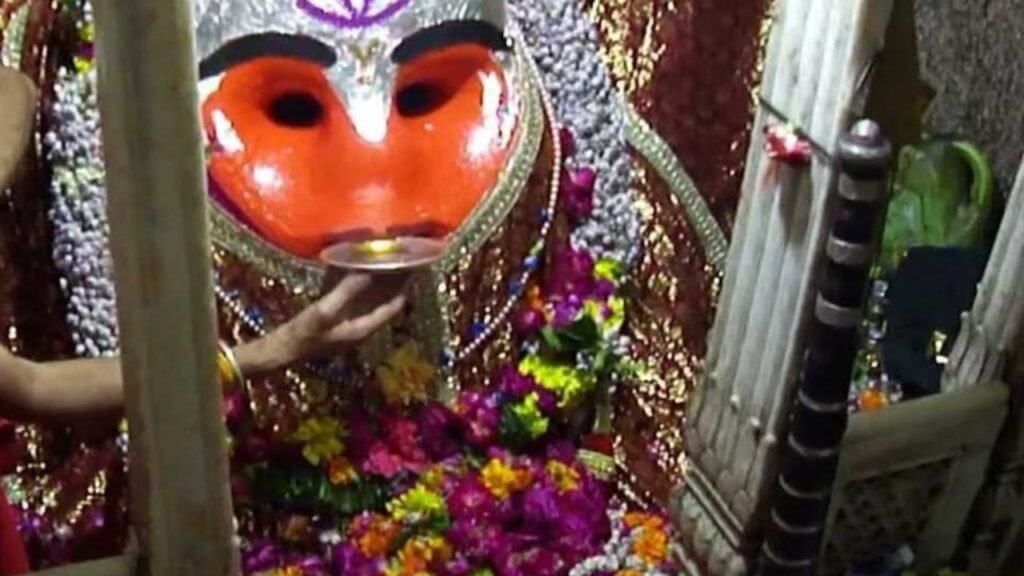
There are vendors outside the temple who sells puja basket containing flowers, coconut and a quarter of liquor. The devotees visits the temple with the basket and offer it to deity though the priest. The priest there, pours the alcohol into the plate and keeps it near the mouth of the shivalinga, he then tilts the plate a bit, and the liquor starts disappearing. The priest returns the rest of the bottle to the devotees as prasad.
Some devotees doubt that the deity’s lip which have a slit, have cavity between it. But the temple priests, as well as several devotees, claim that the slit doesn’t have any cavity, and that the deity miraculously swallows the liquor offered to him. However, the temple priest does not allow the visitors to examine the statue.
National Human Trafficking Awareness Day is observed every year in United State on 11 January. The day aims at raising awareness about the difficulties that a human trafficking victim faces. This day is celebrated so that we can promote and protect the rights of such victims.
Since 2010, the month January has been designated National Slavery and Human Trafficking Prevention Month, but this day was specifically dedicated to awareness and prevention of illegal human trafficking practices.
What is Human Trafficking?
Human trafficking involves the use of force, fraud, or coercion to obtain some type of labor or commercial sex act. Every year, millions of men, women, and children are trafficked worldwide. It can happen in any community and victims can be any age, race, gender, or nationality. Traffickers might use violence, manipulation, or false promises of well-paying jobs or romantic relationships to lure victims into trafficking situations.
Language barriers, fear of their traffickers, and/or fear of law enforcement frequently keep victims from seeking help, making human trafficking a hidden crime.
History of Human Trafficking Awareness Day:
In 2007, The United States Senate designated January 11th as National Human Trafficking Awareness Day. And back in 2010, President Obama dedicated the whole month of January as National Slavery and Human Trafficking Prevention Month.
Today there are more that 50 established organizations globally that are fighting against this illegal practice and trying their best to raise awareness for the same.
Objective:
The main objective of this day is to bring greater awareness to the crime of sex trafficking as Sexual exploitation (e.g., sex trafficking) is by far the most commonly identified form of human trafficking. So each year, organizations around the world provide supports to communities, training to volunteers and educational events to increase awareness.
Quotes:
“Human trafficking is an open wound on the body of contemporary society, a scourge upon the body of Christ. It is a crime against humanity.” —Pope Francis
“Defeating human trafficking is a great moral calling of our time.” – Condoleeza Rice, former U.S. Secretary of State
We have a moral obligation to raise awareness and educate those around us so we can create a world where human trafficking is a thing of the past, and bring these human rights violations to an immediate end.-Jacky Rosen
In reality, victims of human trafficking are often left voiceless and completely unseen by society.-Elise Stefanik
Living root bridge is Meghalaya is nothing less than a wonder. People have been growing these wonderful bridges from tree roots known as living root bridges over a period of time.
These living roots bridges are among the biggest attractions in Meghalaya. These bridges are handmade from threading and twisting the Ariel roots of rubber fig trees also known as Ficus elastic tree. The bridges are grown by trained Khasi and Jaintai tribes who have mastered the art of growing root bridges.
It takes a time period of between 10 to 30 years for the tree roots to even resemble a bridge. But once build these bridges can last centuries and can hold up to 35 people at once.
Most of the bridges grow on steep slopes of subtropical moist broadleaf forest between 50m and 1150m above sea level.
History:
The origin of these bridges can be traced back to Meghalaya, a hilly state in northern state of India, the home of Khasi and Jaintai tribes.
Though the Khasi people do not know when or how the tradition of living root bridges started but it said that the whole idea of Meghalaya’s living bridges came into the picture some two centuries ago (180 years precisely)when veterans of Khasi clan living in Meghalaya put rubber tree roots into hollow canes of Areca nut palm that met halfway across the stream.
It is also observed that Meghalaya is home of two towns that have the highest annual rainfall on earth, which means bridges made from cement will not last long, as it will quickly rot and decay from the rain. Therefore the indigenous people of khasi community, used their ingenuity to make bridges out of tree.
Recognized by UNESCO:
The living root bridges in Meghalaya has been recognized by UNESCO as a world heritage site.
Lifespan of these bridges:
The bridges lasts up to hundreds of years and as long as the tree from which it is formed remains healthy, the roots in the bridges naturally grow thick and strengthen. Once mature some bridges can have as many as 50 or more people crossing, and have a lifespan of up to 150 years. And Once fully grown these living roots bridges can stands strong for as long as 500 years.
The longest living root bridge is with a length of nearly 50 meters and is located in khasi town of Pynursla, India. The double decker living root bridge is one the most unique bridge in the world and make for prime attraction in the Northeast.
Talking about northeastern people, the patience and future oriented thinking shown by the khasi community in making these bridges is exceptional. The khasi community also makes structures like living ladders using the Ariel roots of rubber fig tree.
Padmanabhan Singh is the ‘king’ of Jaipur, who walks differently to make a difference. He spends his time playing polo, studies liberal arts, walks in fashion shows and travels the world. He studied at New York University and made Forbes’ 30 Under 30 Asia list for 2018 for his ‘prowess on the polo field,’ as he served as captain of the first Indian polo team in England in 20 years.
He walked the runway at a Dolce & Gabanna show in Milan, Italy in June 2018.
In fact, he is the first Indian royal to have walked the ramp for Dolce & Gabbana at Milan Fashion Week in the year 2018.
He has been covered by the coveted fashion glossies from around the world who have featured him on their covers.
Also called as Pacho, Padmanabh Singh is India’s most stylish royals who looks as desirable in his suits as he looks in those traditional Bandhgalas and kurtas.
Padmanabhan Singh with rajmata padmini devi and Princess Diya Kumar
He knows how to ace tone-on-tone trend, picks the right style and colours that complement each other, breaks the monotony, is daring yet dandy and is an avid polo player too.
The young heartthrob has been winning millions of heart for his great sense of fashion and for his smart and handsome looks.
About Padmanabhan Singh
He was born on 2 July 1998 in Jaipur, Rajasthan. He is the son of Diya Kumari and Narendra Singh. After the death of his father, in 2018, he become the new maharaja of Jaipur at a very young age of his life. His mother Diya Kumari is an Indian politician and a member of Parliament from Rajsamad parliamentary seat from Bhartaiya Janta Party.
Padmanabhan Singh has been the member of Guards Polo club. He is the 303rd descendant of the royal family of Jaipur and lives with his family in the City Palace, which was founded in 1727.
Like his grandfather and great-grandfather Man Singh II, he too is a successful polo player.
Pacho began playing competitive polo in 2015 in England and is also a member of Guards Polo Club.
Padmanabh led an Indian national team at Hurlingham Park which was the first visit to the venue by an Indian team in over 70 years in 2017.
Singh’s grandfather led the last successful Indian polo tour of the UK
The beginning of New year with recognition on prestigious international platform, the only Young cardiologist Dr Anurodh Dadarwal form Churu, Rajasthan selected from India for clinical case award in European Society of Cardiology.
European Society of Cardiology
The European Society of Cardiology is an independent non-profit, non-governmental professional association that works to advance the prevention, diagnosis and management of diseases of the heart and blood vessels, and improve scientific understanding of the heart and vascular system.
Clinical Case Award 2021
The best clinical cases Awards Session is composed of the four best cases selected for a presentation during ESC Congress. Best Clinical Case Award 2021
How is Dr Anurodh Dadarwal ?
Dr Anurodh Dadarwal is an Interventional Cardiologist in Jaipur, Who has dedicated himself to the services of humanity and poor peoples. He has extensive experience in Cardiac Catheterization, Angioplasty, peripheral vascular diseases, heart failure, carotid artery stenting),Percutaneous balloon valvuloplasties of all valves, pacemaker implantation etc.
The successful treatment of heart disorders requires great care and a wholesome approach. Dr. Anurodh Dadarwal is highly experienced and dutiful Cardiologist doctor, and from various cardiac subspecialties, for treating all types of heart disease with best Care.
Dubai has become the first country of the world to get Maharana Pratap’s statue.He can be seen riding on horse and elephant in two different statues installed for the first time in Dubai.
Also this is the first time when Pratap’s statue has been installed out of India. This comes as the proud news for Mewar.
The other distinguished fact in this matter is that different statues of Maharana Pratap riding on his beloved horse Chetak and the elephant Ramprasad have been installed in Dubai. There are no such statues of Pratap together in India where he is seen riding elephant and horse. The statues were placed under the supervision of Jaipur-based sculptor Mahavir Bharti at the Chokhi Dhani Resort Al Safe Malbar on the beach in Dubai.
The elephant riding statue is 14 feet high and the Chetak rider statue is 12.6 feet high.
Maharana Pratap statue riding Chetak horse installed in Dubai
Besides Pratap statues, the idols of Mewar queen Padmini and Maharaja Ganga Singh were also installed on the occasion.
While Maharani Padmini of Chittorgarh’s statue is 8 feet high, Maharaja Ganga Singh of Bikaner has also been installed in the above place in Dubai.
The four statues have been designed in Jaipur by sculptor Mahavir Bharti and designer Nirmala Kulhari. These were sent to Dubai by sea route. The sculptor claims that the elephant Ramprasad-rider statue of Maharana Pratap has been installed for the first time in the world in Dubai.
It needs to be mentioned here that Maharana Pratap was a Hindu Rajput king of Mewar and known for his military resistance. He was born on 9 May 1540 in Kumbhalgarh Mewar in a Hindu family and was the 13th Maharaja of Mewar. He was the one who fought against the expansion of Mughal Empire.
He has given shelter to many poets, artists, writers and artisans and also developed a college named Chavand School of Art. He was succeeded by his eldest son, Amar Singh I and on his death bed, he even told his son to never give up in front of Mughals.