Home Blog Page 767

Makar Sankranti 2022: Know significance, famous food and quotes for the festival…

0

In 2022, Makar Sankranti is being celebrated on 14th January. Astrologically, Makar Sankranti celebrates Sun’s transition in Capricorn. Dedicated to Lord Surya, this festival is known by different names in different regions of India. The joyous festival marks the end of winter, and the beginning of a new harvest season.

Makar Sankranti holds great significance for Hindus.  On this occasion, people get together on the rooftops of their houses to fly kites, dance and greet each other with sweets and hugs.

All across the country, the festival is celebrated by offering black sesame seeds, sesame laddus, rice, vegetables, pulses, turmeric, fruits, and other items to the poor. 
Let’s know about the most delightful food of Makar Sankranti 

Sesame Laddu ( Til ke laddu) 
Til laddu is most delightful, healthy, delicious, and nutty laddu prepared with white sesame seeds, jaggery, peanuts, and desiccated coconut. It is a famous Makar Sankranti dish. 
Puran Poli 
It is a maharashtrian delicacy which is sweet in taste. This is made with wheat flour and sweetened Moong or Chana dal stuffing and served with generous amount of ghee. 

Khichdi 
Moong beans cooked with rice and a pool of rustic spices, khichdi is more than just a comfort food for Indians. 
Pinni Made up of generous amount of ghee, wheat flour,  almonds and jaggery ,pinni is one of the delightful dish prepared to celebrate Makar Sankranti. This bites are packed with ghee and nuts. 

Quotes for Makar Sankranti 
May you sour high with success just like your kites this Makar Sankranti. HAPPY MAKAR SANKRANTI. 

This Makar Sankranti, the sun rises with hope, kites fly in the sky with vigour, and the crops are ready to be harvested – all signifying hope, joy and abundance. Happy Makar Sankranti! 

Makar Sankranti is a new beginning of a new destination, happiness or sorrow. Wish you a happy Makar Sankranti! 

Look Outside. It’s so pleasant! Sun Smiling For you.. Trees Dancing for you. Birds singing for you. Because I requested them All to wish you, HAPPY MAKAR SANKRANTI! 

With Great Devotion, Fervor and Gaiety, With Rays of Joy and Hope, Wish You and Your Family, Happy Makar Sankranti. 

As the Sun starts its journey towards the North, I hope you give your best towards achieving your goals. Wish you a Happy Makar Sankranti.”

Armed Force Veterans Day History, Significance, Importance

0

Armed force veterans day observed every year on Januray 14, since 2017 to honor the sacrifice of our veterans serving the nation.

This year we will celebrate the 6th armed force veterans day which was called as Armistice Day when it was announced in 2017.

Armed forces veteran day is celebrated with an aim to acknowledge and honor the selfless devotion and sacrifice of our veterans in the service of the nation.

This day recognises and honors the services rendered by Field Marshal KM Cariappa OBE, the first Indian Commander-in-Chief of the Indian Armed Forces. He retired back in January 14 in 1953.

Armed Force Veterans Day History, Significance, Importance

Armed force veterans day is observed to reassure the veterans for their well being and that their services and valuable suggestions are always privileged.

Every year ceremonies and Veterans Meet are organised at various Military Stations to mark the solidarity of our veterans.
Last year, Admiral Karambir Singh released the ‘Swarnim Vijay Varsh’ song dedicated to our brave and courageous soldiers of the 1971 war.

On this occasion Minister Rajnath Singh tweeted and acknowledged the contributions of the veterans.

“Greetings and best wishes to all the veterans and their families on the occasion of Armed Forces Veterans Day. We are proud of our veterans who have selflessly served the country with courage, dignity and duty. The Govt is committed towards the welfare of India’s Ex-servicemen,”

Haburia Bhata: The magical stone of Habur Village that turns milk into curd without buttermilk

1

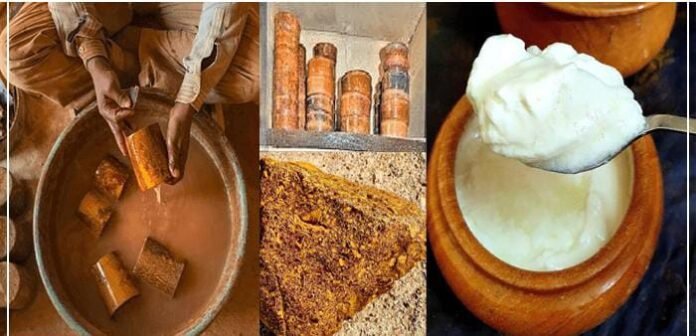
A unique yellow stone found in Swarnanagari, a tourist destination of Jaisalmer, has made a different identity in the whole world and the question here is why?

Well the stone found here is popular because of its special chemical properties which helps in curding of milk. We need to add some buttermilk to the milk to turn it into curd but this stone is no less than a miracle. Because as soon as the milk comes in contact with this stone, it becomes curd without buttermilk. This stone freezes the milk and turns it into curd.

Haburia Bhata: The magical stone of Habur Village that turns milk into curd without buttermilk

The miraculous unique stone is found in Habur village, now known as Poonamnagar ,50 kilometers (km) from Jaisalmer and over 600 km from the state capital Jaipur and the stone is known as Haburia Bhata in local language.

It is believed in the village that, the topography of the village was very different a long time ago (millions of years ago). And there used to be a sea here and
these stones date back to that period. As these stones emerge from the heart of the earth, they contains numerous minerals and remnants of fossils.

Haburia Bhata: The magical stone of Habur Village that turns milk into curd without buttermilk

This magical stone is not only popular in the country but abroad too due to its special quality.
The demand of utensils made of this stone
is always high and due to the impact of social media the stone became famous and many tourists stop by to buy the vessels and sculptures made from habur stone.

The magical stone is light golden and yellow in colour. The villages also make sculptures, idols and toys are from this stone.

Villagers says that the curd prepared from milk in Habur stone utensils is sweet in taste and has a sweet earthy aroma. Due to which tourists from all around the world are crazy about the curd stored in these utensils and the lassi made from it.

Researchers have also proved that the stone has special chemical properties and it contains amino acids, phenylalanine, tryptophan and tyrosine, which helps in curd formation, and one doesn’t need to add anything else.

Interesting facts about Makar Sankranti you might not know!

0

Makar Sankranti also known as Maghi is a Hindu festival that is traditionally been celebrated in the middle of January every year marking the end of the winter season and the beginning of longer days.

According to the solar cycle Makar Sankranti is celebrated annually on 14th January. The auspicious festival is dedicated to deity surya( Sun). This day marks the transit of sun into Makara(Capricorn), marking the end of shorter days and the beginning of longer days.

Makar Sankranti is celebrated with social festivities such as colorful decorations, rural children going house to house, singing and asking for treats in some areas, melas (fairs), dances, kite flying, bonfires and feasts.

Makara Sankranti is considered important for spiritual practices and accordingly, people take a holy dip in rivers, especially Ganga, Yamuna, Godavari, Krishna and Kaveri. It is believed that the bathing is a result in merit or absolution of past sins. They pray to the deity sun and thank for their successes and prosperity.

Interesting facts about Makar Sankranti you might not know!

Let’s take a look at some interesting facts about Makar Sankranti you might not know:

1) A unique Hindu festival based on Solar Cycle:

Makar Sankranti is one of the rarest festival that is celebrated on the basis of solar cycles as mostly Hindu festivals are celebrated according to lunar cycle of the Hindu calendar.

2) Makar Sankranti date changes in leap year:

Makar Sankranti almost always falls on the same Gregorian date every year (January 14) but on leap years it falls on 15 January.
Because by the time of leap year, year Calendar is lagging almost one day behind the sun, causing Makar Sankranti to fall on 15 January

3) Makar Sankranti is celebrated with different names in different places:

It is celebrated as Magh Bihu in Assam, Maghi in Punjab, Maghi Saaji in Himachal Pradesh, Maghi Sangrand or Uttarain (Uttarayana) in Jammu, Sakraat in Haryana, Sukarat in central India, Pongal in Tamil Nadu, Uttarayan in Gujarat, and Uttar Pradesh, Ghughuti in Uttarakhand, Dahi Chura in Bihar, Makara Sankranti in Odisha, Karnataka, Maharashtra, Goa, West Bengal.

4) Makar Sankranti is also celebrated in different countries:

Makar Sankranti is celebrated in Bangladesh, Nepal, Pakistan, Sri Lanka, Malaysia, Singapore, Australia, America,  Canada and in some European counties as well.

5) Makar Sankranti and Uttarayan coincided during the Aryabhata period (1500 years ago) :

During the time of Aryabhata
1,500 years ago, Uttarayan and Makar Sankranti coincided. Now Makar Sankranti falls on January 14, but Uttarayan happens on Dhanu Sankranti.

6) Makar Sankranti marks the end of inauspicious month :

Makar Sankranti marks the end of Malmaas, an inauspicious month in the Hindu Panchang calendar, and the transition of the Sun to the zodiacal sign of Makar (Capricorn) to herald a change in season.

Interesting facts about Makar Sankranti you might not know!

7) Every twelve years, the Hindus observe Makar Sankranti with Kumbha Mela :

Kumbha Mela is one of the world’s largest mass pilgrimage, with an estimated 40 to 100 million people attending the event. Every year Hindus observe Makar Sankranti with this mela.

8) Makar Sankranti and the ritual of kite flying :

There is a reason behind this kite flying ritual, Hindus considered the early morning sun beneficial for the skin and body and since winter is also the time of a lot of infections and sickness, by basking in the sun, Hindus believed that the bad bacteria on their bodies would be cleared to a certain extent.

Jadav Payeng is the Forest Man of India. Know why…!

0

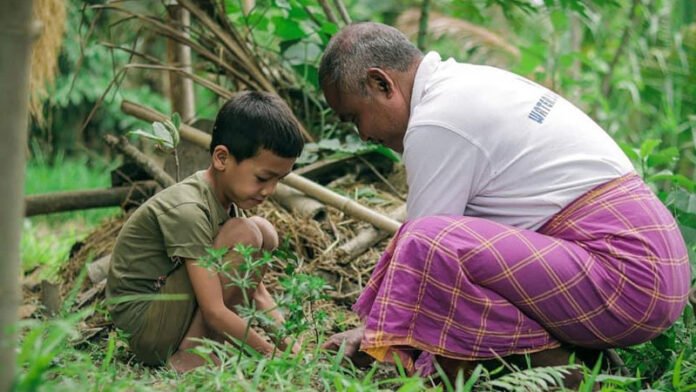
Jadav Payeng, known as Molai Payeng, has earned the title of ‘The Forest Man of India’.

He has spent 30 years of his life planting around 40 million trees to create a real man-made forest. By changing a barren sandbar of the Brahmaputra, covering an area of 550 hectares of land which is known as ‘Molai Kathoni’, he made a forest Molai Kathoni, located near Kokilamukh in Assam’s Jorhat district, which is now the home to tigers, elephant herds, deer, rabbits and a wide diversity of native and migratory species and thousands of trees.

Jadav Payeng is now working on the initiative which is a massive plantation project involving eight lakh hectares of land in Mexico.

Payeng, at the age of 16, came to know that a large number of snakes died due to excessive heat after floods washed them onto the sandbar. 

He planted around 20 bamboo seedlings on the sandbar of the Brahmaputra river and started working in the forest from 1979 when the Social Forestry division of Assam’s Golaghat district had launched a scheme of tree plantation on 200 hectares of land at Aruna Chapori in Jorhat district. He was one of the labourers of the project which was completed after five years.

Jadav Payeng has been honoured with Padma Shri in 2015.

Damyanti Gupta: This first degreed female engineer at Ford is a role model for young girls…

0

Damyanti Hingorani Gupta is the first female degreed engineer ever hired by Ford Motor Company. She is a role model of every young girl. EBNW Story features the inspiring story of her journey.

Birth and Life struggles

Damyanti Hingorani Gupta was born in 1942 in a small town Tharushah which was ruled by British. Her parents were known landowners but they lost everything as they had to leave their home country behind during the partition in 1947. Rioting and looting forced them flee to Karachi.

She has always dreamt to become an engineer and she came closer to her dream when she got admission as the first female student at engineering college.

Her mother Gopibai was a 4th grade student and always wanted her child to have quality education to pursue her dreams. WhenDamyanti heard  term ‘Engineer’ for the first time , she set her sights that she will pursue engineering.

She was first female student at engineering college. After receiving a bachelor’s degree in Mechanical Engineering, Damyanti moved to Düsseldorf, Germany to work. Later, she moved to Oklahoma where she earned a Master’s degree in Mechanical Engineering and once again she was the first female engineer from Oklahoma State University.


Capitalizing on the scope of engineering, she wanted herself to be a part of Ford when she was just 19.  Her parents handed over their lifetime savings to educate their child and fulfil her lifelong dream. The path to Ford wasn’t easy either, she was rejected when she applied for the first time. But rejection plays a vital role in success. She held onto her goal and eventually became the first female with a Masters in Engineering ever hired by the Ford Motor Company.

She is now retired from Ford but she has embarked her name as first female engineer hired by Ford.
The HR at Ford Motors said, “You’re applying for an engineering job, but we have no females here.” Damyanti replied “I’m here, and unless you hire me, you’ll never have any.” 

And that’s how she scripted a success story for herself and her females which continues to inspire many young girls…

Rajasthani special dish in winters: Taste Paniya resembling Pizza and haldi ki sabzi to satisfy your taste buds

0

Rajasthan is known for its special dishes and one such winter delight is Paniya and haldi ki sabzi. Shubham Kumawat writes more on this dish

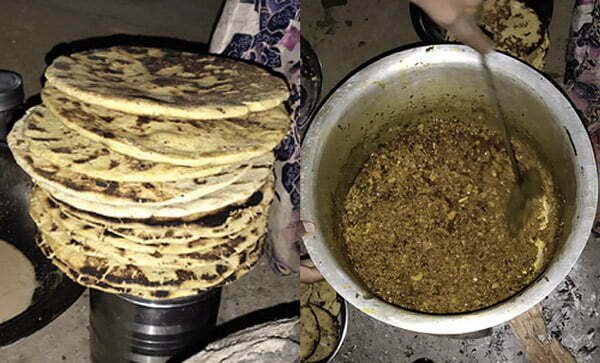
Paniya is made of Maize dough which looks more like a pizza.

Similarly, Haldi vegetable is made using different elements like haldi (turmeric solid form), tomato, peas, cardamom and other spices.

The dish is good for health as it comes with strong immunity power.

There are many different stories famous behind this dish being popularised in desert areas.

During Britishers rule, one British officer wanted to have food but nothing was available nearby.

Hence a locality served him Paniya and Haldi ki sabzi.

The Britisher ate the vegetable but left Paniya thinking that it is a plate kind thing.

Indian Army men to don new looks with new uniform from January 15

0

The Indian Army men shall be donning new looks with new uniforms from January 15 onwards,

On January 15, during the Army Day Parade, the soldiers shall flaunt first look of the new combat uniform.

The uniform has been designed keeping Make in India concept in mind jointly by the Indian Army & National Institute of Fashion Technology (NIFT). 

The design is based on disruptive digital patterns keeping in mind the comfort and different terrains where the soldiers are deployed.

Colour of the new uniform pattern

It shall remain the same which is a mix of Olive and earthy colours.

New uniform availability

The newly designed fabric for the soldier’s uniform will be issued to officers and soldiers in batches in their units and shall not be available in open markets.

National Youth Day 2022: Date, History, Significance and Quotes

0

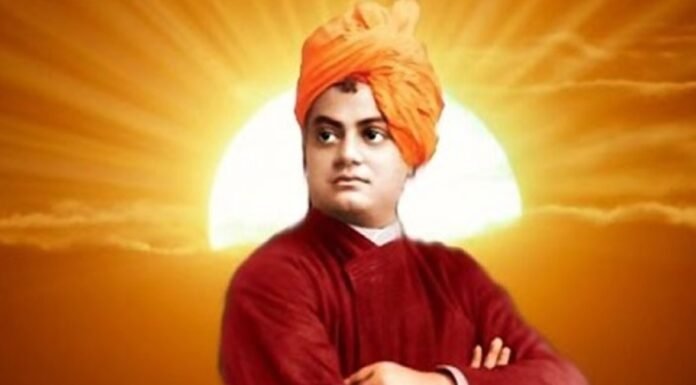
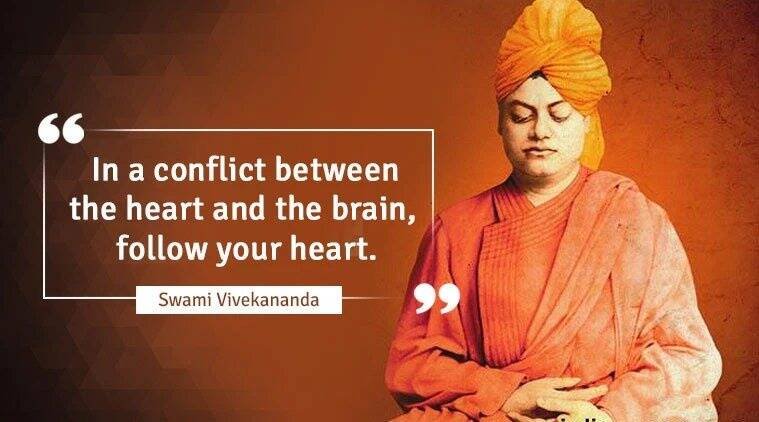
National Youth Day is celebrated every year on January 12 to honor the birthday of India’s greatest spiritual and social leader Swami Vivekananda.

National youth day marks Vivekananda’s ideas on how the young should participate in the modern world while upholding their values. He was the one who believed that with “muscles of iron” and “nerves of steel” every child could bring about social change and he always saw that hope for the future in every child. His life and teachings have encouraged millions around the world and still doing so.

History:

In 1984 the Government of India decided to celebrate Vivekananda’s birthday as National Youth Day every year. The first celebration was marked on January 12, 1985.

The Government of India quoted-

” The philosophy of Swamiji and the ideals for which he lived and worked could be a great source of inspiration for the Indian Youth Day.”

How this day is celebrated:

National youth day is celebrated all over the India every year at schools and colleges, with processions, speeches, music, youth conventions, seminars, Yogasanas, presentations, competitions in essay-writing, recitations and sports. Many blood drives are also organized on this day to help someone in need.

Significance of this day:

With this day India honors and celebrates Swami Vivekananda as an greet spiritual leader. His life and teachings of inspires young people.

His lectures and writings, deriving their inspiration from Indian spiritual tradition and the broad outlook of his Master Sri Ramakrishna Paramahansa. These are the source of inspiration which have motivated numerous youth organizations, study circles and service projects involving the youth.

Today where almost 50 percent of India’s population is under the age of 25, the future of the country is on their shoulder.
With that empowering youth people is so important and this little celebration of youth can be a source of great motivation for them.

Quotes by Swami Vivekananda:

National Youth Day 2022: Date, History, Significance and Quotes

You have to grow from the inside out. None can teach you, none can make you spiritual. There is no other teacher but your own soul.

The greatest sin is to think yourself weak.

Take risks in your life. If you win, you can lead, if you lose, you can guide.

“Talk to yourself once in a day, otherwise you may miss meeting an intelligent person in this world.”

“In a day, when you don’t come across any problems – you can be sure that you are travelling in a wrong path”

Be the servant while leading. Be unselfish. Have infinite patience, and success is yours.”

Kal Bhairav Nath temple: Wine is served as prasad here

0

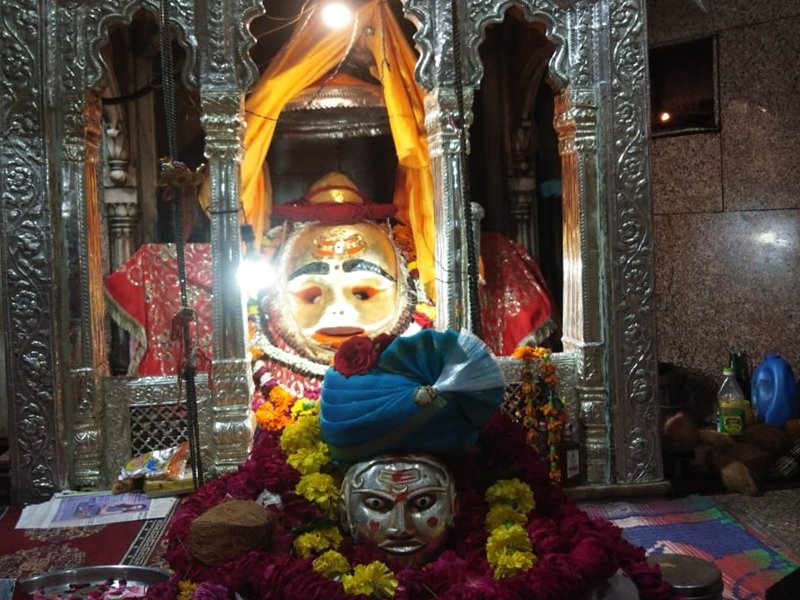
The Kal Bhairav Temple situated in Ujjain city of Madhya Pradesh, India is dedicated to Kal Bhairav, the guardian deity of the city is one of the most unique temple of India.

Kal Bhairava which is a representation of the Hindu Lord Shiva often recognized with a fiery expression and a coiled snake around the neck and one such temple is Located on the banks of the Shipra River, Ujjain and it is one of the most active temples in the city, visited by hundreds of devotees daily.

Kal Bhairav Nath temple: Wine is served as prasad here

India which the home of almost 2 million temples holds many peculiar stories and rituals. And one such temple is the Kal Bhairav temple, the interesting ritual of this temple will shock you.

Here, the devotees offer liquor to the deity as chadhava’ and it is also given away as ‘prasad’ to the visitors of the temple. The liquor is offered to the Lord Shiva as one the five tantric ritual offerings known as panchamakara: madya (alcohol), maans (meat), meena (fish), mudra(gesture) and maithuna(sexual intercourse).

It is said that in Hindu scriptures, Shiva is described to be someone who enjoys his meat and his alcohol. He is smeared with ashes from the dead and is considered the destroyer while Vishnu is the creator.

Hence, Shiva is worshipped differently from the other Gods. It is also believed that the liquor offered is only special to Lord Bhairava and shouldn’t be offered to any other Hindu God. In older times all the five offerings were made to the deity, but now only alcohol is offered and the other four offerings are in form of symbolic rituals.

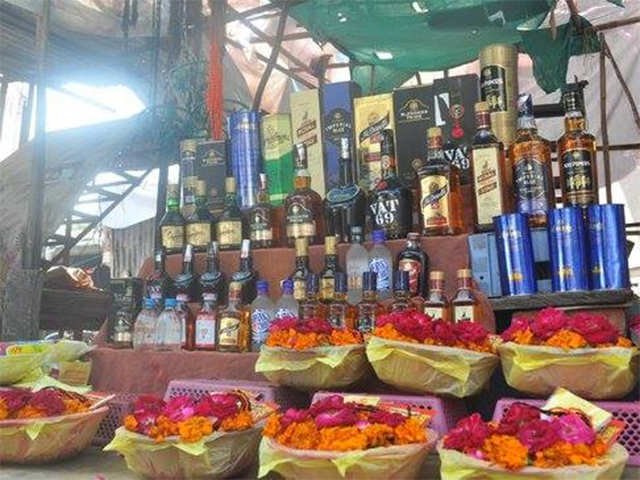
Kal Bhairav Nath temple: Wine is served as prasad here

There are vendors outside the temple who sells puja basket containing flowers, coconut and a quarter of liquor. The devotees visits the temple with the basket and offer it to deity though the priest. The priest there, pours the alcohol into the plate and keeps it near the mouth of the shivalinga, he then tilts the plate a bit, and the liquor starts disappearing. The priest returns the rest of the bottle to the devotees as prasad.

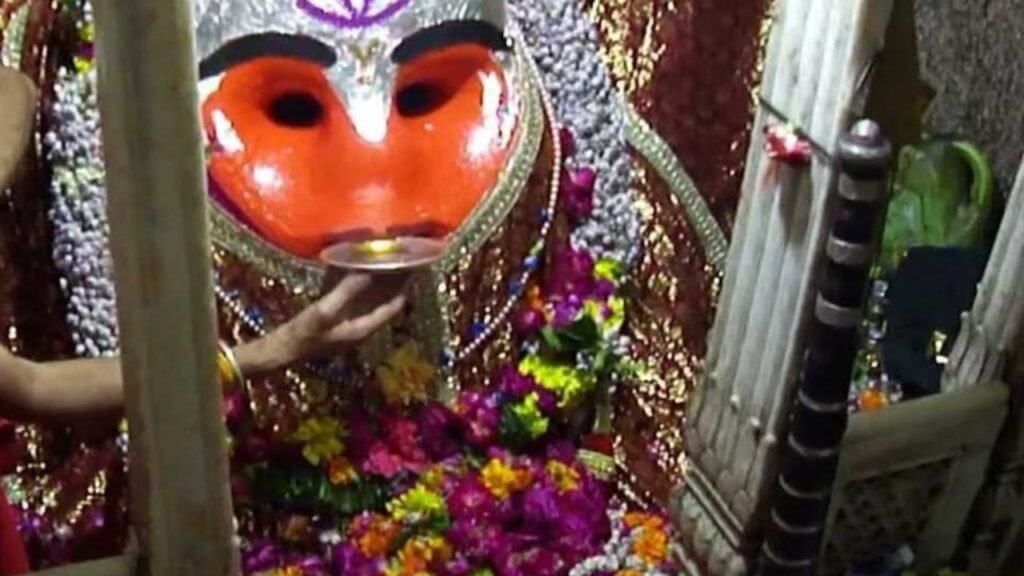
Kal Bhairav Nath temple: Wine is served as prasad here

Some devotees doubt that the deity’s lip which have a slit, have cavity between it. But the temple priests, as well as several devotees, claim that the slit doesn’t have any cavity, and that the deity miraculously swallows the liquor offered to him. However, the temple priest does not allow the visitors to examine the statue.