

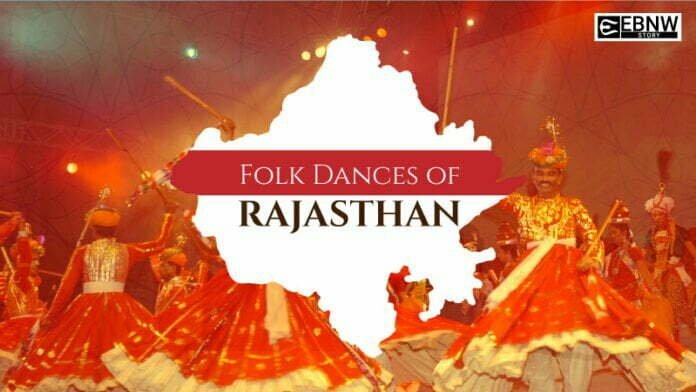
Top 10 Folk Dances Of Rajasthan





Gangaur 2022: Know date, significance, history and rituals
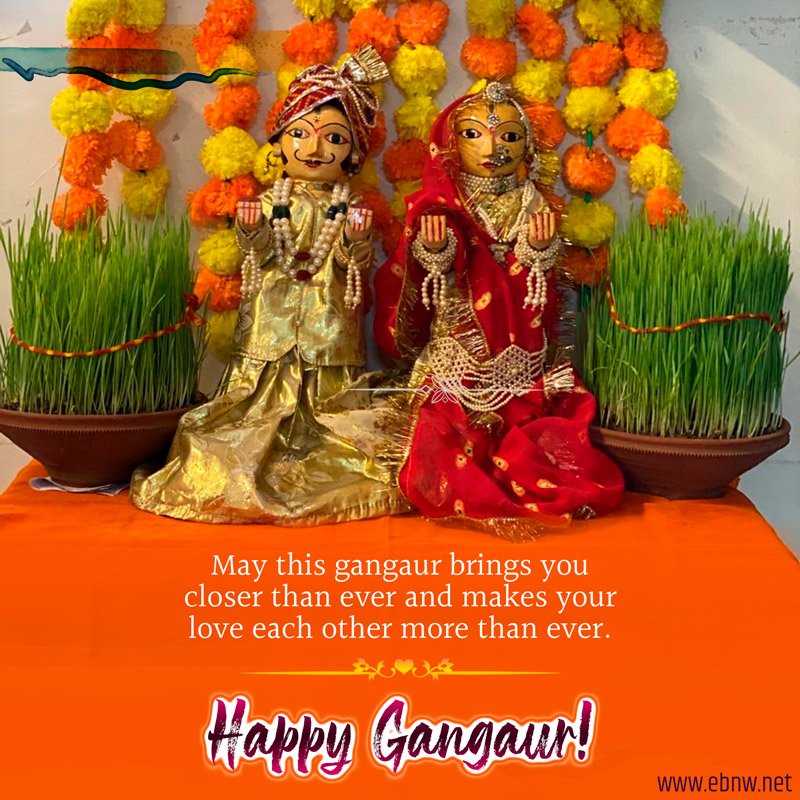
Gangaur is also called as Gauri Tritiya, which is celebrated extensively in parts of Rajasthan, Gujarat, Madhya Pradesh and Haryana. The Gangaur festival celebration extends for 18 days beginning on the first day of Chaitra month and the prayers are dedicated to Lord Shiva and Goddess Parvati.
The word Gangaur is made up of two words where ‘Gana’ means Shiva and ‘Gaur’ means Parvati.
It is this divine couple which is worshipped by all the womenfolk on this day for long life of their husbands. This day is also known as Saubhagya Teej.
Gangaur date & time
This year, the Gauri Tritiya or Gangaur will be celebrated on Chaitra Shukla Tritiya.
Gangaur for the year 2022 will be celebrated from March 18 to April 4.
The Gangaur festival usually lasts for 18 days, as people in most regions start performing the rituals a day after Holi. The festivities take place in Udaipur, Jaisalmer, Jodhpur, Nathdwara and Bikaner.
Gauri Teej – Significance
The festival of Teej holds immense significance in Hindu culture.
The day celebrates the marriage and love between Lord Shiva and Goddess Parvati. As per legend, after months of separation, Goddess Parvati reunited with Lord Shiva.
To celebrate the occasion, married women perform Gauri puja and pray for their husband’s long life and marital happiness whereas unmarried women pray to Goddess Parvati for an ideal life partner.
Devotees celebrating the Gauri Teej are said to be blessed with happiness, prosperity and longevity.
Gangaur (Saubhagya Teej) – Rituals and Celebrations
The rituals associated with Gauri Puja and Gangaur festival are colourful and full with vibrance and reverence. The celebrations start from early morning hours when women take shower and get dressed in traditional attires to perform Gangaur Puja.
The ash collected after Holika Dahan and mud are mixed and then grains of wheat and barley are sowed and watered for 18 days till the culmination of Gangaur Festival.
Women observe fast on this day and pray for their husband’s long life.
On the last three days of Gauri Tritiya or Gangaur, preparation of their departure commence. Gauri and Isar wear bright traditional attires and then during an auspicious hour, the married as well as unmarried women place the idols of both the deities and take out a colorful and beautiful procession in a garden or a step well.
Gangaur geet
Women can be seen singing the Gangaur Geet related to the departure of Gauri to her husband’s house. On the final day, images of Gauri and Isar are put in a water tank or well. This marks the conclusion of Gangaur festival.
On this day, women make clay paintings of Shiva and Parvati, dress them in beautiful clothes, worship them, observe a day-long fast for marital happiness and cook delicious dishes for the family. For the locals of Rajasthan, Goddess Parvati represents perfection and marital love; In such a situation, Gangaur festival has special significance for them.
The first and foremost tradition of Gangaur is to collect ashes from the holy fire in earthen pots (kunds) and sow wheat and barley seeds in them. After seven days the women make colorful idols of Gauri and Shiva, chanting mesmerizing Rajasthani folk songs. In some families, the idols are preserved for years and decorated and painted on auspicious occasions.
On the evening of the seventh day, a procession is taken out by unmarried girls by placing a lamp inside an earthen pot called Ghudalia. The girls are blessed with small gifts like sweets, jaggery, a little currency, ghee or oil, clothes and jewellery.
This continues for the rest of the day and the pottery is broken on the last day of the festival. For all the 18 days, newly wed women keep fast for the whole day while other women keep fast after having one meal a day.
On the remaining three days, the festive atmosphere reaches its peak, on these days, women dress up with ornaments, decorate hands with Heena (Mehndi), and also decorate idols for Gangaur Puja. Sinjara is sent by the parents of married women which includes sweets, clothes, jewelry and other decorative items for their daughters. The final day of Gangaur is grand, with many tourists and locals gathering to watch the procession of women carrying the idols of Gauri and Issar on their heads to a lake, river or garden, and Gauri and Issar. Shiva is given farewell. Their idols are immersed in water.
In Jaipur, the Gangaur procession draws a huge crowd where foreigners gather to watch the colourful procession.
Gudi Padwa 2022: Know date, celebrations, history and significance…

Gudi Padwa 2022: In Hinduism, the new year starts with Pratipada (first day of a fortnight ) of Shukla Paksha of Chaitra month. This is also known as Gudi Padwa. This year, the festival of Gudi Padwa will be celebrated on 2nd April.
The day also marks the start of the Chaitra Navratri. Both days have a great significance in Hinduism. Gudi literally means flag and Pratipada date is called Padwa. The festival of Gudi Padwa is celebrated with pomp all over South India including Goa and Maharashtra. It is believed about this festival that on this day, Brahmaji had created the universe and Satya Yuga had begun.
Gudi Padwa celebrations and reasons
There are different beliefs across the country regarding Gudi Padwa which are as follows:
The day of creation of the Hindu calendar
It is believed that the Pratipada of the Shukla Paksha of Chaitra month was the beginning of the Indian calendar, counting the days, months and years from sunrise to sunset.
New harvest festival
Gudi Padwa is also known as the harvest festival. In many parts of the country, people celebrate the festival of Gudi Padwa with great pomp to welcome the arrival of a new crop.
Lord Rama’s victory over Bali
South India was ruled by Bali in Treta Yuga. Bali was a tyrannical king. Lord Rama had freed people from the misrule by killing Bali. It is believed that this day was of Chaitra Pratipada. That is why this day is considered as a symbol of victory and Gudi means flag is hoisted.
Method of worshiping Gudi Padwa
. On this day, people wake up before sunrise and take bath. Torans and Gudi made of mango leaves are placed on the doors of the houses. On this day, beautiful Rangoli is also made at home.
Special dishes are made
On the occasion of Gudi Padwa, dishes like Puran Poli, Shrikhand, sweet rice are prepared.
King of Nav Samvatsara (Varshesh)
Lord (astrological planet) of the first day of the New Year is considered as the Lord of the year. In 2022, the Hindu Nav Varsh day is Saturday. Hence, lord of the Hindu New Year 2022 is saturn.
Gudhipadwa Celebrations
1. In the morning, after doing the daily routine works like cleaning, bathing, etc., Gudi is hoisted.
– People clean their houses; and in villages, houses are plastered with fresh cow-dung.
– It is mentioned in the Shastras that Taila Abhyang must be done during the Arunodaya Kaal on this day.
– Gudi must be worshiped just after the sunrise. It must not be delayed.
2. Beautiful Rangoli designs are also made with bright colors and houses are decorated with fresh flowers.
3. People dress up in new, beautiful clothes. Usually, Marathi women adorn themselves in Kastha or Nauvari (9-yard Saree tucked at the back) and men wear Kurta Pajama along with a turban, which is mostly saffron or red.
4. Families gather and greet the New Year to everyone.
5. New Year’s horoscope must also be heard on this day.
6. Traditionally, the celebration begins after having the sweetened Neem leaves as Prasad. Usually, a paste is made with Neem leaves, jaggery, tamarind, etc. It is believed that this paste purifies the blood and increases immunity. Taste of this paste signifies the course of life as sweet, sour, and bitter.
7. Delicacies are cooked like Shrikhand, Puran Poli, Kheer (sweet porridge kind of dessert usually made with sweet potato, coconut milk, jaggery, rice flour, etc. by Marathis), and Sanna.
How To Raise Gudi
1. The area must be cleaned properly where the Gudi will be placed.
2. A Swastika should be made on the ground below the Gudi.
3. A Swastika should be made on the ground below the Gudi.
About Gudhi Padwa
Gudipadva has several names as per the different regions in India.
1. Samvatsar Padvo is celebrated among Konkanis of Goa and Kerala.
2. Rest of the Konkani diaspora in Karnataka know it as Yugadi.
3. People from Andhra Pradesh and Telangana celebrate Ugadi.
4. Kashmiris celebrate it as Navreh.
5. Sajibu Nongma Pānba or Meetei Cheiraoba is celebrated in Manipur.
6. Chaitra Navratri begins from this day for North Indians.
On this day, Marathis hoist the Gudi. That is why this festival is known as Gudi Padava. Gudi is made on a bamboo stick by placing an inverted Kalash of silver, copper, or bronze over it and adorning the bamboo with a beautiful cloth (usually, it is of saffron color and made of silk with brocaded borders). The Gudi is then adorned with Gaathi (sugar crystals garland), Neem leaves, a mango twig, and red-flower garland.
The Gudi is hoisted at a higher place like terrace in home so that it is quite visible to everyone. Many people also stick it on their windows or the right side of their doors.
Significance Of The Gudi
Many beliefs are associated with Gudhi Padva. Some of them are mentioned below:
1. People hoisted Gudi in history when their King Shalivahana defeated Sakas and came back to Paithan, as it is considered as the symbol of victory.
2. Some people also hoist Gudi to commemorate the victories of Chhatrapati Shivaji.
3. As it is believed by some that Lord Brahma created the universe on this day, Gudi is also believed to be the Brahma Dhwaj (Lord Brahma’s flag). Some people also consider it as Indra Dhwaj (flag of Lord Indra). Hence, for some, it is also the beginning of the spring season.
4. Some people hoist Gudi as the symbol of the Lord Rama’s return to the Ayodhya after 14 years of exile.
5. Usually, it is believed that hoisting Gudi brings prosperity in life.
Sattriya dance belongs to which state of India?

Sattriya is a dance form that is more than 500 years old and comes from the Vaishnava monasteries of Assam state of India.
Satrriya, also known as Sattriya Nritya, was formed in the Satra monasteries as a contribution extended to the Bhakti movement of neo-Vaishnavite led by Srimanta Sankardev during the 15th century in Assam.
Therefore Sattriya has its origin from Krishna focused Vaishnavism in the state of Assam as introduced by the famous scholar, reformer and Vaishnaya saint Srimanta Sankardev. Sattriya classical dance is more than five hundred years old.
The dance form Sattriya is a powerful medium of interpretation of faith associated with Vaishnavism which has underwent various changes with time. In fact, it always came out in a more expanded form with distinctive styles.
It has been preserved for many centuries as committed by the Vaishnava monasteries. As the dance style is related to Sattras possessing religious values, therefore, it was given the name of Sattriya. Sankaradeva gave the dance form his own unique ideas but by including the characteristics of numerous treatises and local folk dances.
Chaitra Navratri 2022 Date, Time, Muhurat, Wishes Quotes, Poster, Banner
Chaitra Navratri 2022 Date, Time, Muhurat, Wishes Quotes, Poster, Banner