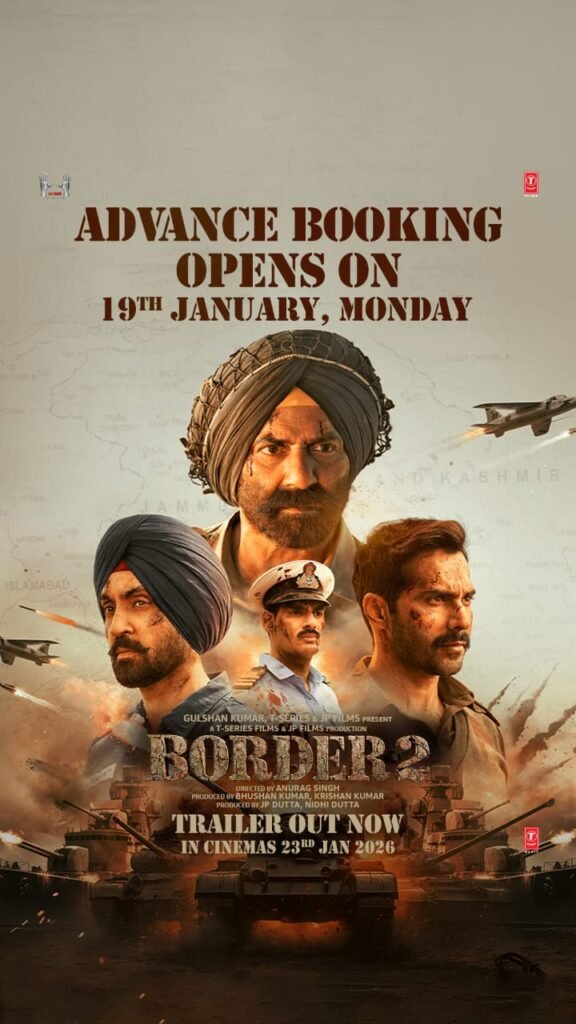
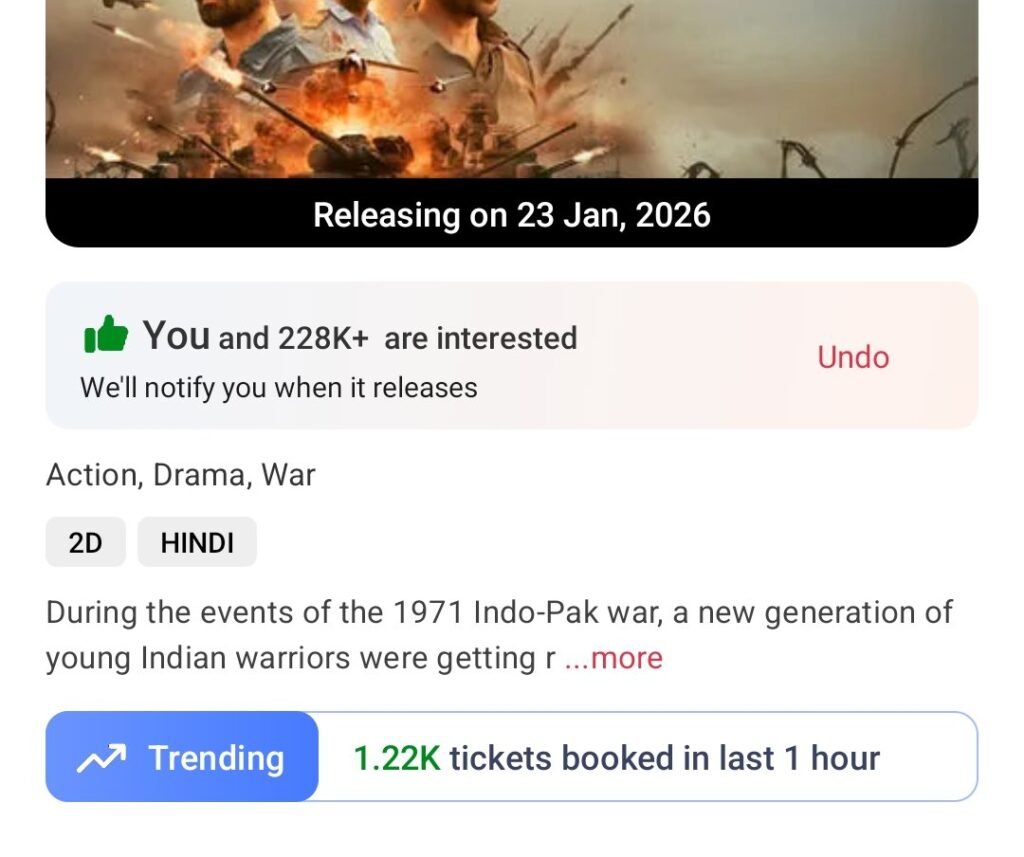
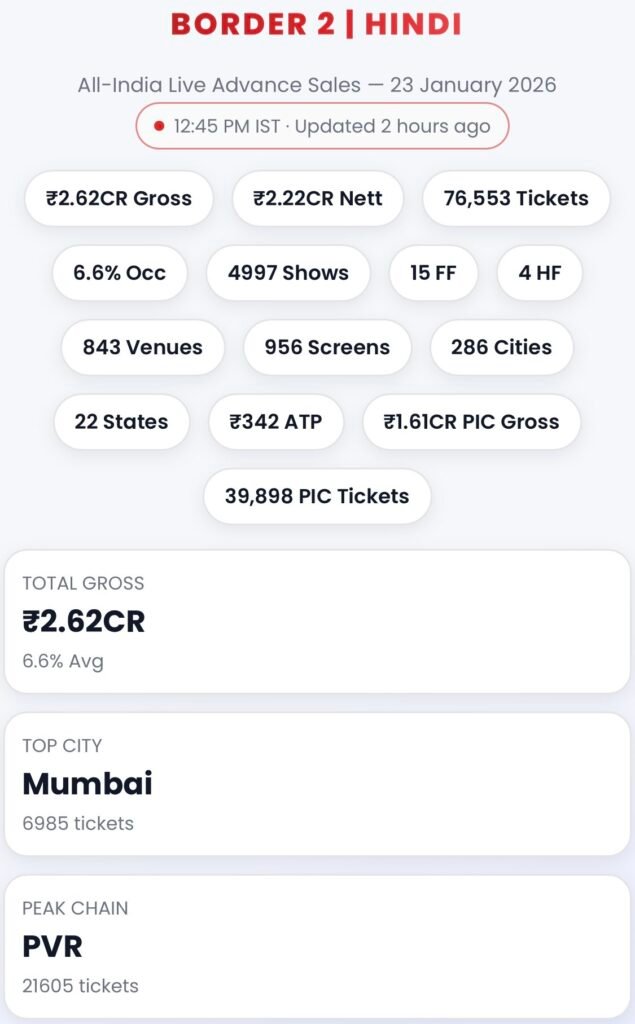
The first major box office story of 2026 is unfolding well before a single ticket buyer has walked into a cinema. Advance bookings for Border 2, the much-anticipated war action sequel starring Sunny Deol are already showing strong momentum, indicating a powerful opening when the film releases nationwide on January 23, 2026.
Early ticket sales exceed expectations
Border 2 began its advance booking phase with limited ticket availability, yet even in this restricted window the film sold more pre-sale tickets than Salman Khan’s Sikandar did in a similar early period. On ticketing platform BookMyShow, Border 2 sold approximately 8,280 tickets during the limited pre-sale about 48 % more than Sikandar’s 5,720 tickets over the same time frame.
This early interest suggests that Border 2 is drawing audiences not just because of its star power but also due to its nostalgic connection to the original Border (1997), which remains one of Indian cinema’s most beloved patriotic war films.promising signs for opening weekIndustry trackers note that some ticket counters, including national chains such as PVR INOX and Cinepolis, have already sold close to 10,000 seats for opening day shows, signalling strong enthusiasm across the board.
Meanwhile, around 40 % of cinemas nationwide have started full advance bookings, and smaller but steady sales are already taking place at major theatre chains outcomes that point toward a significant opening weekend for the film.
What’s driving audience excitement
A combination of factors appears to be driving the buzz. Border 2 reunites Sunny Deol, Varun Dhawan, Diljit Dosanjh and Ahan Shetty in a high-budget war saga helmed by director Anurag Singh. The franchise’s patriotic theme has traditionally resonated strongly with Indian audiences, and the recently released trailer praised by filmmakers like Karan Johar for being dramatic, patriotic and emotional has added to the anticipation.
Fans and insiders are also closely watching whether Border 2 can challenge the booking records set by some of 2025’s biggest films, especially War 2, which logged more than 800,000 advance ticket sales on BookMyShow last year.
What this means for 2026’s box office
If the early trends continue as bookings scale nationwide, Border 2 could emerge as one of the first major hits of 2026 and perhaps reset expectations for patriotic war films at the box office. With its combination of veteran leadership and current stars, the sequel is poised to turn strong early buzz into a memorable theatrical run for fans and industry alike.
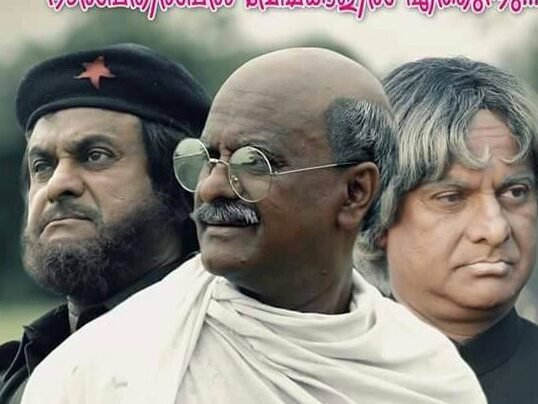
In a remarkable achievement that has flown under the radar for years, a Malayalam actor and comedian has set a Guinness World Record for portraying the highest number of distinct characters – 45 in a single film, outshining even iconic multi-role performances by major Indian stars.
The record-setting performance that stunned cinema lovers
While Indian cinema has seen legendary actors like Kamal Haasan, Govinda and Amitabh Bachchan take on multiple roles in individual films, none of those performances have surpassed this extraordinary milestone. The world record belongs to Johnson George, a versatile actor from the Malayalam film industry, who portrayed 45 different characters in the movie Aaranu Njan.
The film, a 2018 release directed by P.R. Unnikrishnan, featured Johnson in a variety of roles that demanded rapid physical transformations and emotional depth. He slipped into personas ranging from spiritual figures to historical icons, including portrayals of Mahatma Gandhi, Jesus Christ, Leonardo da Vinci, and other distinct characters. These varied roles each with its own look, voice, and body language required meticulous preparation, highlighting not just range but stamina and commitment.
Why this achievement matters in film history
Multi-role performances have long fascinated audiences and critics alike, with actors testing the limits of their craft by taking on dual roles or triple roles within the same narrative. Kamal Haasan’s Dasavathaaram is often cited for its ten roles, while Govinda and Amitabh Bachchan have delivered memorable performances in films featuring multiple character portrayals. Yet Johnson George’s record remains unmatched in Indian cinema to date.
This accomplishment is significant not just for the sheer number of characters, but for the creative breadth and versatility it represents. Playing 45 roles in one film isn’t just a numerical feat, it reflects the ability to convincingly distinguish each character through nuanced expressions, timing, and physical transformation. It also brings global attention to regional cinema, demonstrating that creative boundaries are not limited to mainstream industries like Bollywood or Kollywood.
What this means for India’s film landscape
Johnson George’s world record highlights the richness of Indian cinema beyond the conventional spotlight. While big stars often dominate headlines, regional films continue to push artistic and narrative innovation. Records like this remind audiences that compelling performances and cinematic achievements can emerge from any corner of the industry.
As cinema continues to evolve, and as actors explore more ambitious roles and experimental storytelling, milestones such as this one will likely inspire a new generation of performers to challenge conventions and redefine what’s possible on screen.
Maharana Pratap’s punyatithi makes a special significance in every Indian’s mind as it is a date to be remembered and an event that is marked in calendars. Each year, on January 19th, the death anniversary of Maharana Pratap is a reminder, in its own quiet manner, of what courage is. Maharana Pratap had lived his life with his head held high, prioritising comfort less than honour, and choosing to resist rather than succumb. He was a man of principle in an era of empires.
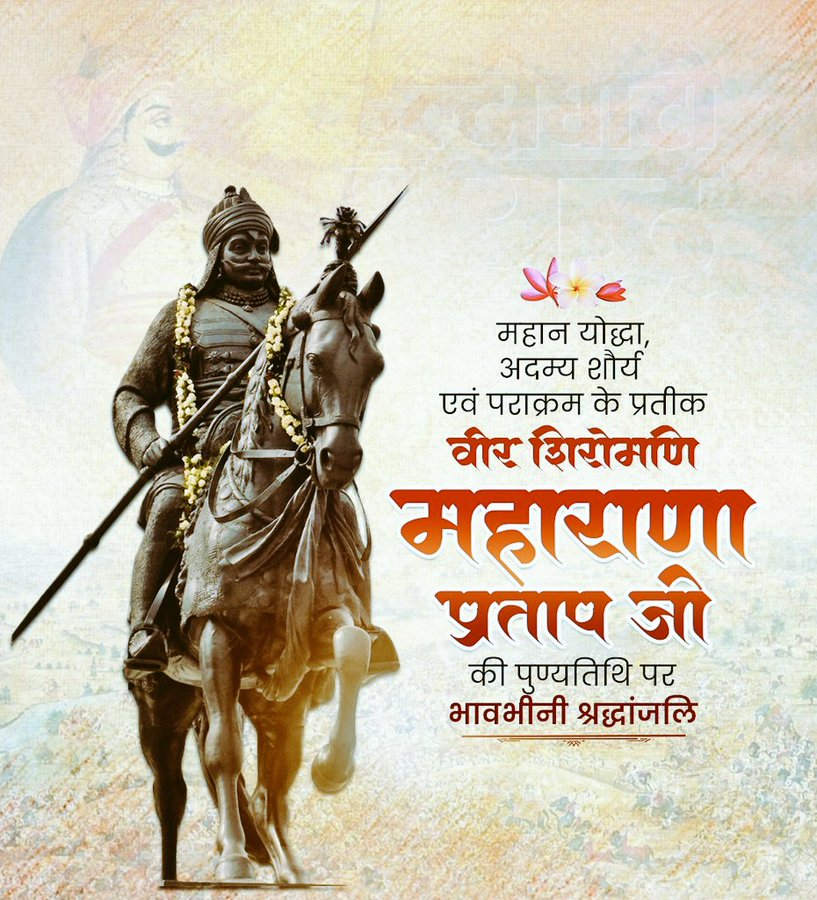
This is a day of reflection, not of noise. It comes as a pause to remember a king who refused to bow, even when the odds and history pushed hard the other way. The EBNW Story brings Maharana Pratap’s punyatithi statuses, images and posts are important on the occasion.
Maharana Pratap punyatithi date
Maharana Pratap’s punyatithi is observed on 19 January, marking the day in 1597 when the legendary Mewar ruler passed away. Across Rajasthan and beyond, the day is commemorated through tributes, remembrance messages, and reflections on his ideals of independence and courage.
Maharana Pratap images
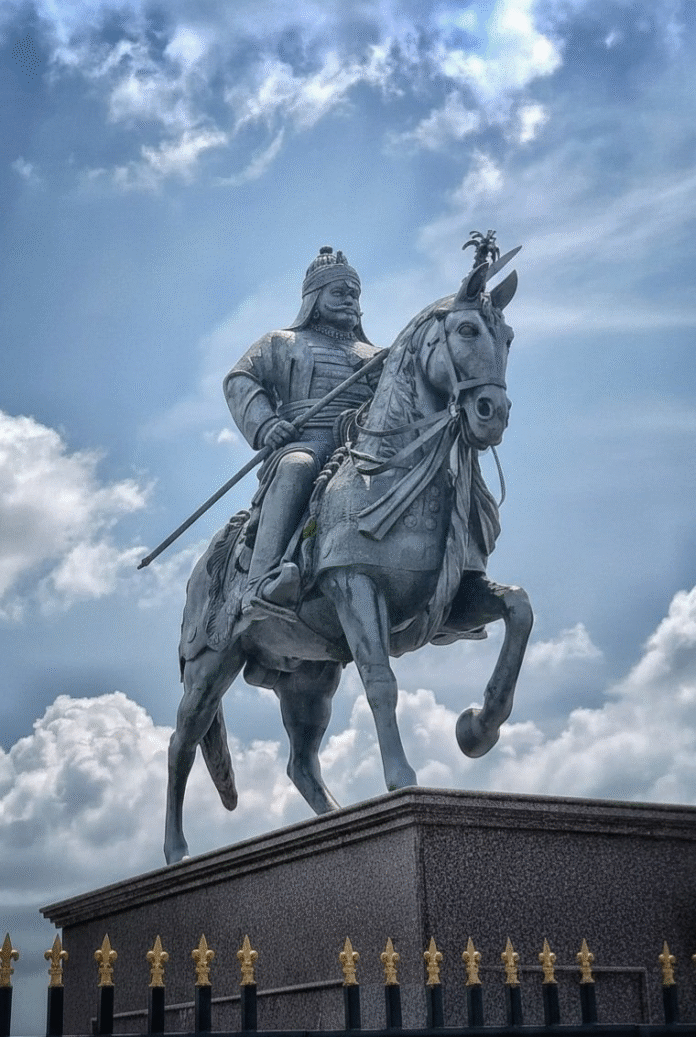
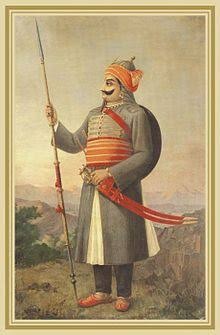
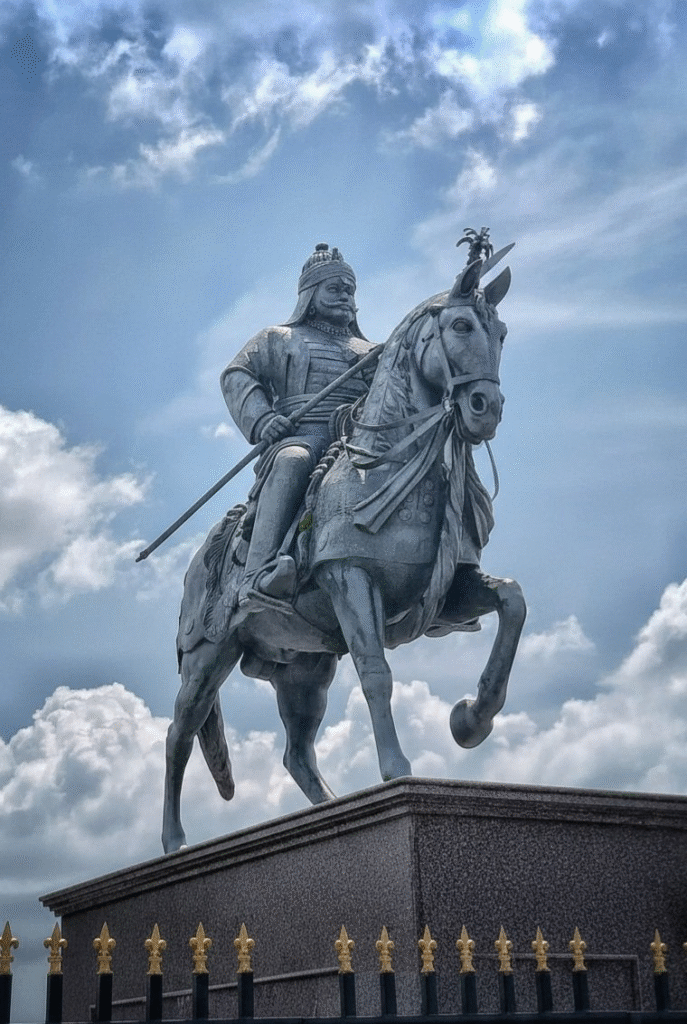
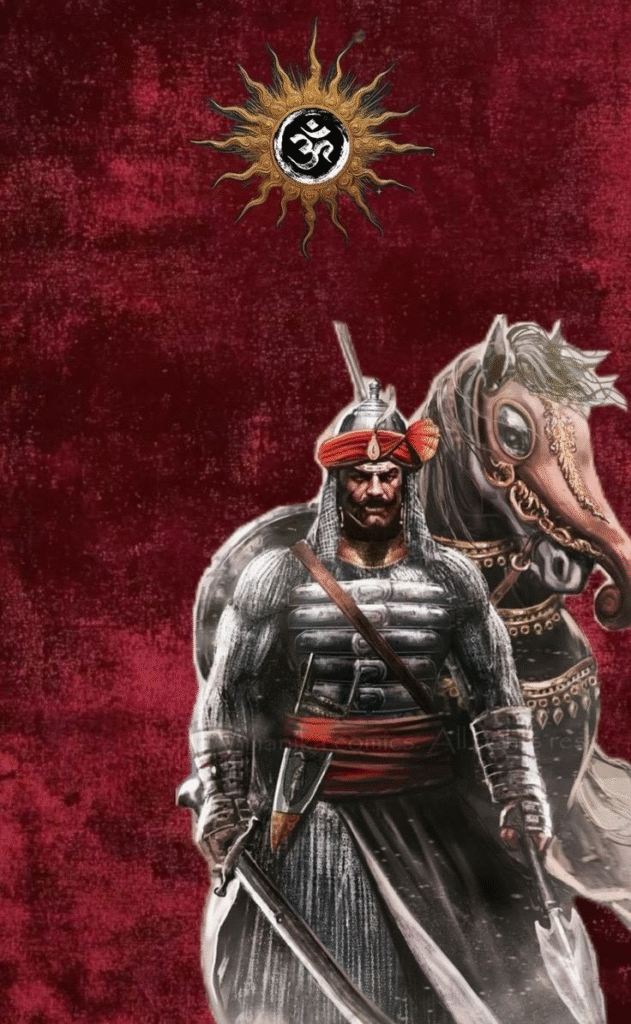
Statues, portraits, and battlefield depictions of Maharana Pratap often show him on his loyal horse Chetak, not as a conqueror dripping in luxury, but as a warrior defined by resolve. These images endure because they reflect character over crown, values over victory.
Maharana Pratap quotes
“Maharana Pratap was not just a warrior; he was an idea, of freedom without compromise.”
“History remembers Maharana Pratap not for victories alone, but for values he refused to surrender.”
“Where others chose survival through submission, Maharana Pratap chose honour through struggle.”
“Maharana Pratap proved that true royalty lies in character, not crowns.”
“He lost kingdoms but never lost his spine; that is why Maharana Pratap still stands tall in history.”
“Maharana Pratap’s resistance turned defeat into a legacy of courage.”
“Empires feared Maharana Pratap not for his armies, but for his unbreakable will.”
“Maharana Pratap lived poor by choice, rich in self-respect.”
“To remember Maharana Pratap is to remember that freedom is worth every sacrifice.”
“Maharana Pratap remains eternal because he chose dignity when compromise was easier.”
On the day of Maharana Pratap’s death anniversary, let’s celebrate the legacy he left behind!
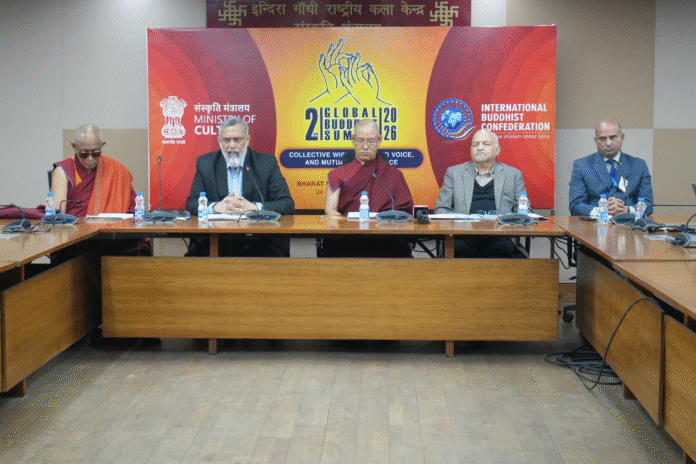
The International Buddhist Confederation, in collaboration with the Ministry of Culture, will organise the second edition of the Global Buddhist Summit on January 24 and 25, 2026. The event will take place at Bharat Mandapam in New Delhi and is expected to serve as a major international forum for dialogue on Buddhist perspectives addressing contemporary global challenges.
Theme and Contemporary Relevance
The 2nd Global Buddhist Summit will be organised under the theme “Collective Wisdom, United Voice, and Mutual Coexistence”. At a time marked by rapid social, political, and environmental transformations, the summit aims to highlight the relevance of Buddha Dhamma in responding to conflict, alienation, and uncertainty. The principles of compassion, harmony, and wisdom will be examined as guiding values for peaceful coexistence and shared prosperity.
Platform for Global Buddhist Dialogue
Aligned with the motto of the IBC, “Collective Wisdom, United Voice”, the summit is envisioned as a global platform for unity and dialogue. Building on the success of the inaugural edition held in 2023, the event will bring together Buddhist leaders and thinkers to articulate a collective voice rooted in ethical reflection and mutual respect. The summit seeks to strengthen international engagement through spiritual and philosophical exchange.
High-Level Participation and Inauguration
The summit is likely to be inaugurated by Prime Minister Narendra Modi as the Chief Guest, as was the case during the first edition. Around 200 delegates, including Supreme Patriarchs, heads of national Buddhist Sanghas, eminent monks, scholars, and senior dignitaries from across the world, are expected to participate. The overall audience is projected to exceed 800 participants.
Facts for Exams
International Buddhist Confederation organises the Global Buddhist Summit.
The 2nd GBS will be held on January 24–25, 2026.
The venue is Bharat Mandapam, New Delhi.
The summit theme focuses on collective wisdom and coexistence.
Buddhist Responses to Global Challenges
The 2nd Global Buddhist Summit will facilitate discussions among state leaders, Sangha members, Dhamma practitioners, and scholars on Buddhist responses to modern challenges. Deliberations will explore how the values of Buddha Dhamma can inspire ethical leadership, social harmony, and sustainable living amid technological change, consumerism, and environmental degradation. The summit aims to reaffirm Buddhism’s enduring relevance in shaping a more compassionate and balanced global order.
As India ushered in 2026, alcohol once again sat at the centre of celebration — and concern. An estimated 12 to 15 million cases were consumed nationwide, while cities like Mumbai had to nearly double police deployment to achieve a 37 per cent drop in drunk-driving incidents. The contrast captures a long-standing policy dilemma: alcohol is simultaneously a major source of state revenue and a significant driver of social harm. Managing this contradiction lies at the heart of one of India’s most fraught governance challenges.
Why alcohol demands state intervention
From a public policy perspective, alcohol consumption is a textbook case of negative externalities. While individuals decide how much to drink, the costs — road accidents, public disorder, domestic violence, lost productivity and pressure on public health systems — are borne by society at large. Market prices do not reflect these social costs, leading to over-consumption if left unregulated.
This market failure justifies state intervention. But the form of intervention matters. Alcohol is not comparable to narcotics that warrant blanket prohibition. In most societies, moderate consumption is a matter of personal choice. The policy objective, therefore, is not elimination, but informed and responsible consumption — achieved without over-stretching limited state capacity for enforcement.
The two levers states actually control
Indian states regulate alcohol through two broad instruments: non-price regulation and taxation.
Non-price regulation governs the context of consumption — minimum legal drinking age, outlet density, and locational norms keeping liquor shops away from schools, colleges and religious institutions. These rules matter, especially for protecting vulnerable populations, but their effectiveness depends heavily on enforcement capacity.
The heavier policy burden, however, falls on taxation. Excise duty is the principal economic tool available to states to internalise alcohol’s social costs.
Why excise duty has become fiscally indispensable
Under India’s Constitution, alcohol taxation is firmly a state subject. Since the introduction of GST in 2017 sharply reduced states’ independent tax handles, excise on alcohol has become a fiscal lifeline.
Today, excise duty accounts for anywhere between negligible levels in prohibition states to as much as 30–35 per cent of own tax revenue in places like Puducherry. Many large states now derive 15–25 per cent of their own tax revenue from alcohol. In economic terms, excise collections range from near zero in prohibition states to around 1.5–2 per cent of GSDP in high-dependence states such as Chhattisgarh and Telangana, with most states clustered between 0.5 and 1.2 per cent.
This represents a sharp structural shift over the last decade — and it lies at the root of the policy conflict.
The core contradiction: Public health versus fiscal pressure
States face a built-in tension. On the one hand, they are expected to reduce the social harms associated with alcohol. On the other, budgetary pressures push them to maximise excise revenue. The result is often a punitive, complex regulatory regime that neither meaningfully reduces harm nor creates a rational consumption environment.
Martin Luther (born November 10, 1483, in Eisleben, Saxony—now in Saxony-Anhalt, Germany; died February 18, 1546, in Eisleben) was a German theologian and religious reformer who became the central figure of the 16th-century Protestant Reformation. Through his writings and actions, Luther sparked a movement that fundamentally reshaped key doctrines of Christian belief and led to the permanent division of Western Christianity between Roman Catholicism and emerging Protestant traditions.
The Reformation gave rise to several major branches of Protestantism, including Lutheranism, Calvinism, Anglicanism, the Anabaptist movement, and anti-Trinitarian traditions. Luther’s influence on theology, church structure, and religious thought makes him one of the most significant figures in the history of Christianity.
Reformation Day, observed by many Protestants, commemorates October 31, 1517, when Luther is traditionally believed to have posted his Ninety-Five Theses on the door of the Castle Church in Wittenberg, Germany. This event is widely regarded as the symbolic beginning of the Protestant Reformation.
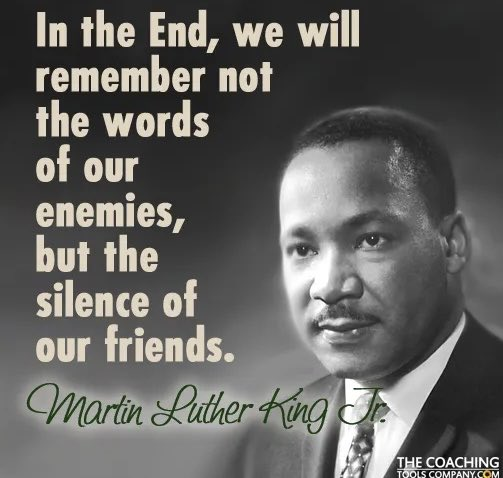
When is Martin Luther King Jr. Day? Martin Luther King Jr. Day is observed on the third Monday of January each year. In 2026, it falls on Monday, January 19.
Is MLK Day a federal holiday? Yes. Martin Luther King Jr. Day is one of the 11 federal holidays observed across the United States. Federal offices, including government agencies, are closed on this day.
List of U.S. federal holidays in 2026:
Thursday, Jan. 1: New Year’s Day
Monday, Jan. 19: Martin Luther King Jr. Day
Monday, Feb. 16: Washington’s Birthday
Monday, May 25: Memorial Day
Friday, June 19: Juneteenth National Independence Day
Friday, July 3: Independence Day
Monday, Sept. 7: Labor Day
Monday, Oct. 12: Columbus Day
Wednesday, Nov. 11: Veterans Day
Thursday, Nov. 26: Thanksgiving Day
Friday, Dec. 25: Christmas Day
Is Martin Luther King Jr. Day a paid holiday in Florida? Yes. MLK Day is among the nine paid holidays for Florida state employees.
Florida state holidays in 2026:
Thursday, Jan. 1: New Year’s Day
Monday, Jan. 19: Martin Luther King Jr. Day
Monday, May 25: Memorial Day
Friday, July 3: Independence Day
Monday, Sept. 7: Labor Day
Wednesday, Nov. 11: Veterans Day
Thursday, Nov. 26: Thanksgiving Day
Friday, Nov. 27: Day after Thanksgiving
Friday, Dec. 25: Christmas Day
What will be closed on MLK Day? On Monday, January 19, federal and Florida state offices will be closed. The stock market, most banks, and post offices will also remain shut, and no mail delivery will take place. However, most retail stores and grocery stores will remain open.
Are schools closed? Yes. All Florida schools across 67 counties will be closed on MLK Day.
Why does the date change every year? Although Dr. Martin Luther King Jr. was born on January 15, 1929, the federal holiday was officially set as the third Monday of January in 1983. By 2000, all 50 states recognized it as a state holiday.
Theme for MLK Day 2026 The theme for 2026 is “Mission Possible: Building Community, Uniting a Nation,” as announced by The King Center.
Who was Martin Luther King Jr.? Dr. King led the nonviolent Civil Rights Movement in the late 1950s and 1960s, playing a pivotal role in advancing legal equality for African Americans. As The King Center notes, in less than 13 years of his leadership, the movement achieved more progress toward racial equality than the previous 350 years combined.
Ever wondered how a country turns everyday tech into military power? That’s civil-military fusion in a nutshell – a smart strategy where civilian industries, universities and the armed forces team up to share knowledge and resources. It’s not just talk; it’s happening big time in China, and India can learn a lot from it. But here’s the sad truth: most Indian youth have no clue about this, and that’s a missed chance for our nation’s future.
Why It’s Simple Yet Powerful Think of it like this: your smartphone’s GPS or AI apps? Those can double up for drones or soldier training. Civil-military fusion makes that happen by blending civilian brains and money with defense needs. No silos, just smooth teamwork. China kicked this into high gear under Xi Jinping, creating a top commission that pulls in private companies and labs to build “world-class” weapons. Result? Faster growth in tech like chips, biotech and robots – all serving both markets and the army.
The Awareness Gap Among Indian Youth Walk into any college campus or scroll youth forums in India – civil-military fusion barely gets a mention. We’re busy with exams, reels and jobs, blind to how this fusion could supercharge our defenses. China uses it to leapfrog rivals; we lag because our youth aren’t pushing for it. Surveys and chats show most under-25s know more about global trends than homegrown strategies like this. Time to wake up – ignorance here means weaker India tomorrow.
India’s Future with Civil-Military Fusion Picture India in 2040 with full CMF: a superpower where startups build drones for farmers and fighters alike, AI spots floods and enemy moves, and biotech saves lives on farms and frontlines. Borders secure, economy booming from dual-use exports, disasters handled in hours not days. Youth-led innovations make us self-reliant – no imports, just homegrown might. This future isn’t sci-fi; it’s what happens when we fuse smartly. Without it? We stay behind, vulnerable and slow.
How India Can Make It Work – And Youth Must Lead India’s trying bits of it, like DRDO partnering startups for missiles or disaster relief tech. But we need full fusion: laws to share civilian R&D with forces, incentives for engineers to join defense projects. Youth, this is your call! Join hackathons, volunteer for Army tech drives or start campus clubs on dual-use innovations. Imagine building an app that helps farmers and soldiers track borders – that’s fusion in action. Your energy can bridge the gap.
India’s youth are our biggest asset – 65% under 35, tech-savvy and bold. Step up, learn civil-military fusion, spread the word and build it. A stronger nation starts with you knowing and acting. Let’s fuse for victory!
(The Writer is Lakshya Govani, a student of Class IX, APS, Jaipur)
Ratlam, nestled right in the heart of Madhya Pradesh, feels like a hidden gem of the Malwa region-vibrant, bustling, and full of surprises that stick with you long after you leave. During the Malwa Media Fest, I stumbled upon so many little-known facts about this town that locals guard like treasures, from its industrial backbone to the everyday magic in its streets. It’s no wonder Ratlam earns its fame as the “sev capital” of India, with those crispy Ratlami sevs spilling out of every corner shop, their spice-kissed aroma pulling you in like a magnet.
Flavours and Traditions
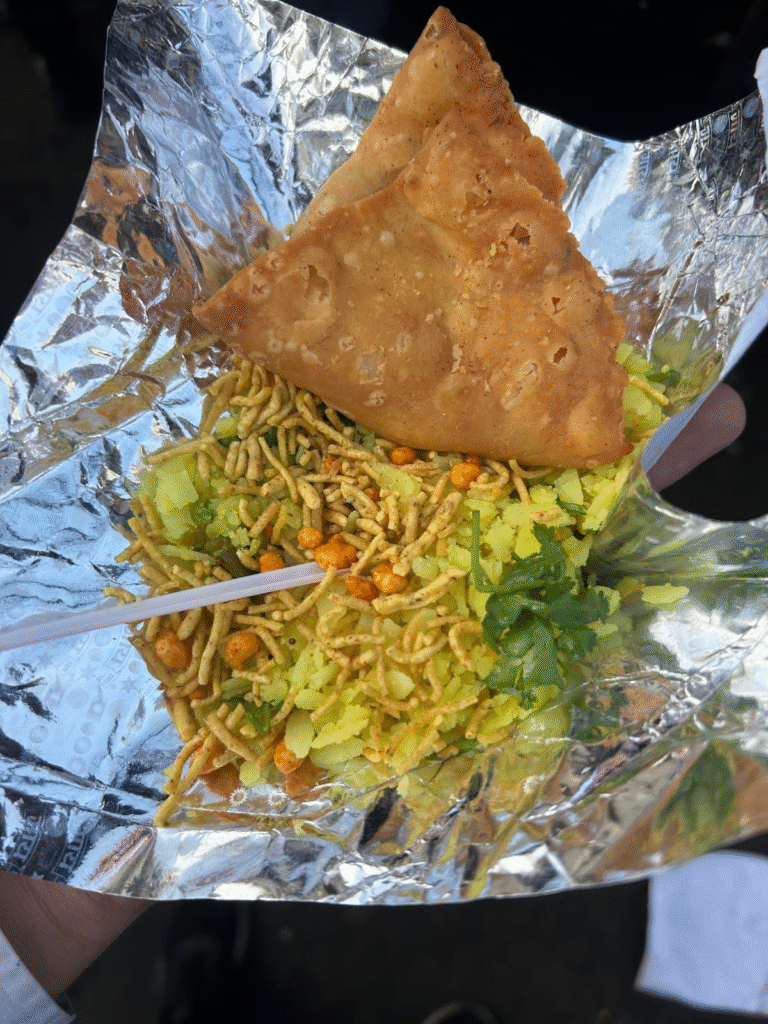
Ratlami sev isn’t just a snack here; it’s woven into the town’s soul, made with gram flour, a special masala blend, and that perfect crunch that travels across the country. Walking through the morning markets, you’d catch the kadhais bubbling with fresh batches, steam rising alongside the smell of kadak chai being poured from height into tiny glasses-pure theater. People huddle over plates of poha before heading to work, and here’s the twist I discovered: they often sprinkle in a bit of sugar for that subtle sweet edge, turning the usual savory bite into something unexpectedly addictive.
Garadu stole the show for me, though-a humble shoot potato-like veggie that’s deep-fried till golden, hit with a squeeze of lemon, and dusted with jeeravan, that tangy dry masala hailing from Pratapgarh in Rajasthan. For just 40 rupees a plate, it hits like a flavor bomb, and locals pair it with poha, samosas, or kachoris for that extra kick. Then there’s Bajrang Tea Stall near the railway station, a perpetual crowd-magnet: mornings mean hot, crunchy namkeen over poha with steaming chai, while evenings flip to crispy vadas that vanish as fast as they’re fried.
Street Whispers
Beyond the eats, Ratlam hums with industry-textiles, chemicals, and factories keeping the economy ticking, yet it holds onto this old-world charm. Foggy mornings amplify it all: the chill air carrying sev scents, folks savoring their chai rituals, and that lively hum of life before the day ramps up.
It’s mesmerizing how this central Indian hub blends workaday grit with these sensory delights.
Serenity at Mangalya Temple
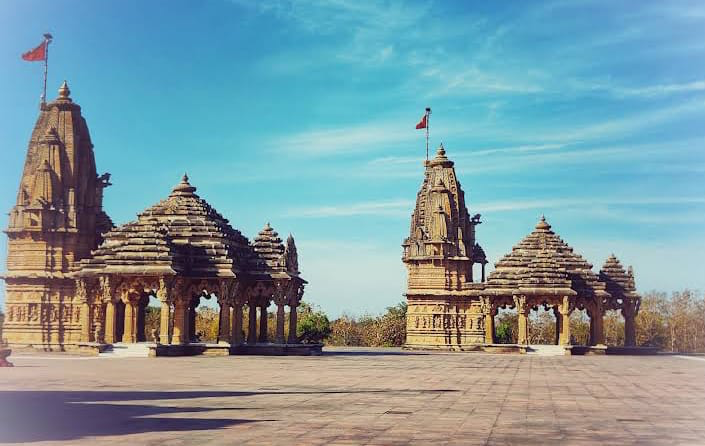
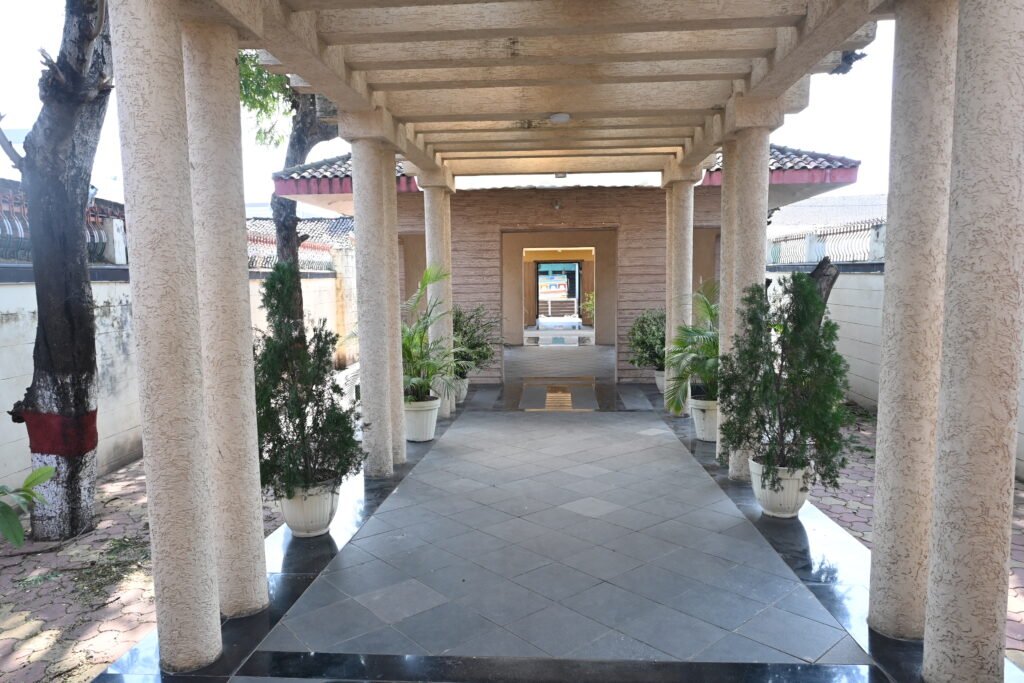
Our team timed a visit to Mangalya Temple perfectly one foggy morning during the fest-cold mist blanketing the sprawling complex, making the heart-shaped layout of its seven shrines feel otherworldly. We were among the rare early souls there, soaking in the quiet vibe amid elephant carvings and gardens, as the first light pierced the haze. In a town pulsing with energy, this spot offered a peaceful counterpoint, enhancing Ratlam’s pull as a place of contrasts.
While strolling into Ratlam’s morning market, you get mesmerized: tea pouring into cups with that rhythmic pour, the aroma of kadak chai wrapping around you, people relishing poha before the workday grind, the irresistible pull of fresh Ratlami sev wafting from kadhais-hot, golden, alive. In this industrial hub turned flavor haven, every whiff and bite whispers stories of tradition, drawing you deeper into the gentle rhythm of a town that feels like home.
(Writer of this article is Lakshya Govani, a class IX student from APS Jaipur)
Dubai has become one of the competitive digital markets globally. Brands are not only competing on the basis of getting attention, they are competing on the basis of appearing on search engines. The concept of SEO in Dubai has developed to become a simple marketing strategy to a powerful driving force of business growth which determines how companies can be found, trusted and selected online.
With consumers increasingly turning to Google to find services and solutions, partnering with a reliable SEO agency in Dubai has become essential for brands that want consistent traffic, strong visibility, and long-term success in the digital space.
SEO in Dubai Boosting Brand Authority and Trust
Making it to the top of search engines is not just a source of clicking. It builds credibility. Trust is naturally formed when there is repetition of a brand on the first page by users. SEO in Dubai is aimed at enhancing brand power by enhancing the optimized content, sound technical base and meaningful online indications.
Search Visibility That Builds Confidence
Expertise and reliability are the terms that the users connect to the highest rankings. A powerful search engine optimization in Dubai will facilitate the presence of brands in high intent search, therefore enabling them to reach consumers who are willing to interact, ask, or make purchases.
SEO in Dubai Popular Among Growth Focused Businesses
Businesses in Dubai, whether new or old, are allocating a lot of resources to SEO. The reason is simple. SEO provides long term achievements. SEO in Dubai will keep generating traffic as opposed to paid advertisements which cease operation when the budgets are stopped.
Organic Growth That Scales
Scalable SEO plans enable brands to increase their presence in Dubai as the population of online users vastly increases without incurring significant expenditure. Long term visibility is brought about by SEO in Dubai and hence it is one of the most economical digital investments.
SEO in Dubai and the Rise of Smart Search Behavior
The search engines are becoming intelligent and so are people. The voice search, mobile first, and artificial intelligence results have transformed the way individuals search. SEO in Dubai evolves to these changes concentrating on intent, experience, and relevance instead of concentrating on keywords.
Content Designed for Real People
Current day SEO in Dubai has put emphasis on content that is easy to understand as well as easy to read. Search engines reward pages which are helpful, engaging and easy to navigate particularly to mobile users who are the major online traffic in Dubai.
SEO in Dubai Strengthening Local and Global Reach
Dubai is a international destination and numerous companies are aimed at serving both the local and international markets. SEO in Dubai fills this gap through the development of strategies that are local and friendly to global expansion.
Local Search Visibility That Drives Action
Local SEO guarantees that the businesses are listed in the searches associated with certain places. SEO in Dubai can enable the brands to attract nearby customers who are in active search of service.
SEO in Dubai Powering Technical Performance
SEO in Dubai lays great emphasis on technical optimization in order to make the websites up to date.
Behind every successful ranking lies there is a technically sound web site. Page speed, mobile responsiveness, and clean structure all influence search performance. SEO in Dubai places strong emphasis on technical optimization to ensure websites meet modern standards.
Seamless Experiences That Keep Users Engaged
Quick loading pages and easy navigation minimize bouncing rates and maximize the engagement. SEO in Dubai aims at producing websites that are trusted by the search engines and are pleasant to the users to browse.
SEO in Dubai Driving Content That Converts
Traffic alone is not enough. SEO really counts because of conversion. SEO in Dubai connects the customer journey, moving the users through discovery to decision making using the well designed pages and convicting messages.
Turning Clicks Into Conversions
Brands maximize ROI through strategic content placement, use of clear calls to action, and interesting storytelling. SEO Dubai makes sure that there is a purpose to each page other than ranking.
SEO in Dubai Adapting to Algorithm Changes
The algorithms of search engines keep on changing. What was good last year might be not good tomorrow. SEO in Dubai is adaptable and concentrates on ethical procedures and long term strategic approaches that will rely on the updates.
Stability in a Changing Digital Landscape
Focusing on quality rather than shortcuts, SEO in Dubai helps protect the brands against an abrupt decline in the ranking and secures them against the changes in the algorithm.
SEO in Dubai Supporting Competitive Advantage
The Dubai digital space is characterized by high competition. It is a distinct benefit to the brands that invest in SEO as they remain visible when the customers are searching. SEO in Dubai makes businesses appear among rivals and make them a market leader.
The Growing Impact of SEO in Dubai
SEO in Dubai is a fundamental part of success online as the digital behavior keeps on developing. It integrates visibility, trust and performance into a single powerful strategy. As a brand aiming at expanding in a sustainable way, engaging with users on a personal level, and keeping pace with the competitive environment, SEO in Dubai remains one of the iconic forces in contemporary digital development.
The phone buzzed, and Archana Mam’s excited voice sealed it: “You’re in for Malwa Media Fest in Ratlam!” My heart pounded-I was over the moon. This was my first media fest, a whirlwind intro to gripping histories and today’s headlines. From that call to travel day, pure adrenaline kept me counting hours, dreaming of the magic ahead.
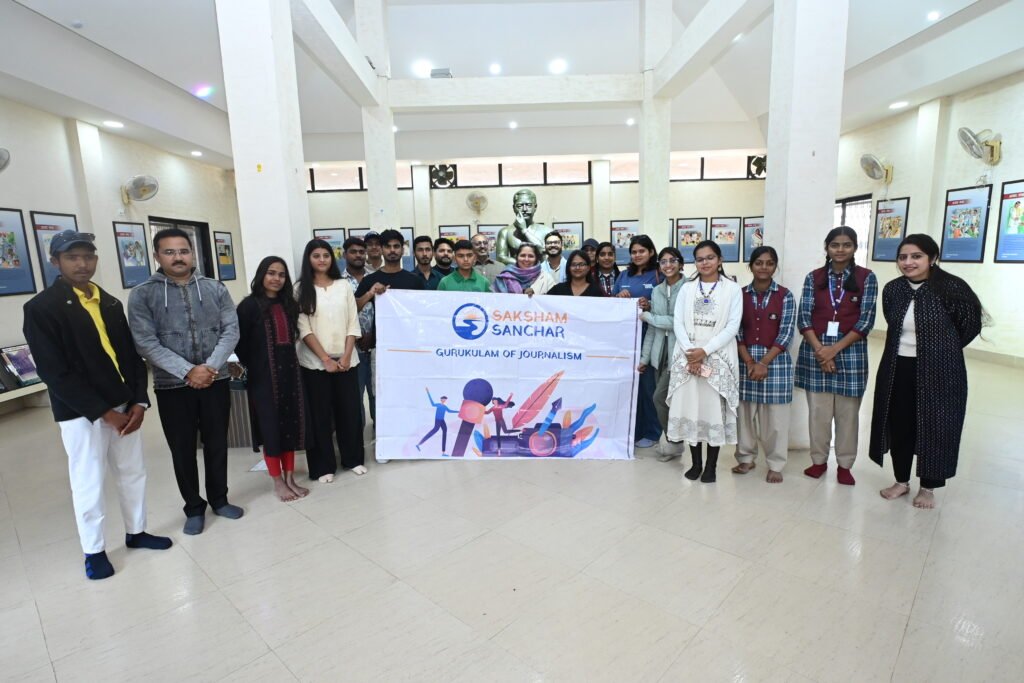
Saksham Sanchar Foundation and EBNW Story turned Malwa Media Fest 3.0 into a powerhouse event, igniting media passion in underserved spots like Ratlam and rural Malwa. The air hummed with creativity, from workshops buzzing with ideas to stages alive with stories.
The real thrill? Rubbing shoulders with legends. A retired NSG soldier shared raw bravery tales that gave me goosebumps; spy Lucky Bisht whispered intel intrigue; Major Namrata Dhamsana, fresh from Indian Army valor, embodied unbreakable spirit. Mam Soumya Panday dazzled with model poise, Mam Bharti Dixit enchanted as a musical storyteller, while cabinet minister Sir Chetanya Kashyap Ji, Sir Swapnil Vairagi (journalist), Mam Ruchi Shrimali (social worker), and others dropped game-changing insights. Every handshake felt like destiny.
Best part: linking up with the EBNW Story crew, forging bonds over late-night chats and shared dreams. Laughter echoed, ideas flew-this was where my journalism fire roared to life.
Day 1: “Bhavra’s Revolutionary Spark & Kabir Night Bliss”
On the 8th, I departed Jaipur with Ravindra Sir, a true gem packed with wisdom and encouragement. Traveling mostly solo for the first time, nerves tangled with thrill in my stomach. As the journey unfolded, I breathed deep, calming the jitters. Chatting with co-passengers broke the ice. I shared my articles, and jaws dropped when they learned I was just in Class 9. “No way, you write like a pro!” We rolled into Ratlam around 9 PM, greeted by our awesome college-student team at the hotel. Quick intros, room prep, and we crashed, buzzing for the next day.
On the 9th, the first full day of Malwa Media Fest, we headed out at 8 AM to Bhavra. This gem of an authentic village in Madhya Pradesh’s Alirajpur district is the birthplace of revolutionary icon Chandrashekhar Azad (born Chandrashekhar Tiwari on July 23, 1906). Despite his towering legacy as India’s “fearless tiger,” who evaded British clutches for years and famously declared, “They may cut my body into pieces, but they can’t make me surrender,” Bhavra clings to its timeless village charm. Mud huts, lush fields, and the gentle Narmada River nearby evoke a pure, unspoiled India. Far from glory’s glare, yet pulsing with quiet pride.
Team intros en route had everyone stunned again: “Class 9? With that height and hustle?” At Azad’s modest ancestral home, now a memorial with faded family photos, childhood relics, and plaques tracing his fiery path, history came alive. We dove into reel-making for the competition, snapping videos of that place. Check out this cool reel made by Mr. Devansh Gohare, a final-year homeopathy student I met there—he’s gearing up to rock the white coat soon.
Wandering those grounds, Azad’s story gripped me: A teen revolutionary by 15, he masterminded the Kakori Train Robbery, bombed British targets with HSRA comrades like Bhagat Singh, and chose death over capture in Allahabad’s Alfred Park in 1931 at age 24. Gazing at his family’s sepia portraits and simple cradle, I felt his childhood spark, the defiance that fueled India’s freedom fight. No grand statues here, just raw inspiration: a reminder that heroes rise from humble soil.
On the drive back, I opened up, laughing and bonding with the team. We became instant family. Bhavra wasn’t just a visit. It ignited my soul. Inspired, I penned a full article on Azad, channeling that revolutionary fire into words.
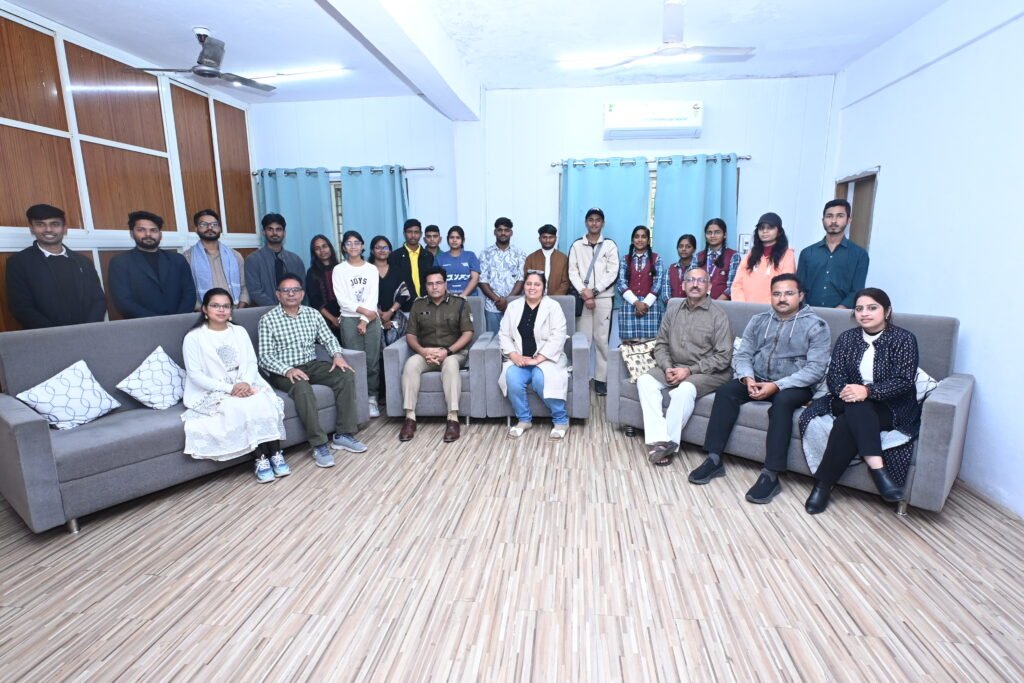
We also scored a bonus: a quick visit to the SP office in Jhabua to meet the Superintendent of Police. Chatting with him in his crisp office, files stacked high, maps on walls-was pure motivation for UPSC dreamers like me. His calm authority and stories of grit lit a fire.
Just before the kabir night, Saloni Didi, another fest connection, and I grabbed a cup of tea beforehand, plus tried the local legend Giradu, a fluffy, savory delight you can only find around there. Simple flavors, big smiles. She is also a good character and an inspiring one.
After a quick rest, we geared up for the evening’s highlight: Kabir Night with Padma Shri awardee Shri Prahlad Tipaniya, the folk legend whose voice bridges ancient wisdom and modern hearts. We even podcasted him, capturing gems as his melodies swept us away. What a magnetic soul-humble yet commanding, every line a profound lesson in life, love, and letting go. His bhajans, drawn from Sant Kabir’s dohas, unfolded a spiritual odyssey: piercing illusions of ego, urging unity beyond caste, and echoing eternal truths like “Bura jo dekhan main chala, bura na miliya koye / Jo mann khoja apna, to mujhse bura na koye” (I searched for the bad in others, found none; when I checked my own heart, none was worse than me).
Tipaniya Ji’s charm mesmerized us-raw, rhythmic folk beats blending with Kabir’s razor-sharp poetry, healing and awakening in one breath. A true maestro, he turned the night into timeless reverence.
Day 1 wrapped perfectly: a small cup of steaming tea with the team and my new friends, sharing laughs under the stars. Pure bliss.
Day 2: “My Stage Moment Army Legends Epic Games Night”
I woke sharply at 6 AM and slipped downstairs for some fresh air. Ratlam’s icy breeze hit hard, so I headed right back to bed. Boredom started to creep in until Ravindra Sir woke up. We then ventured out for a lively market tour. We landed at the iconic shop famous for its kadak chai and fluffy poha – pure perfection. I grabbed a pack of crunchy Ratlami sev for the Jaipur return trip. Dressed in formals with sunglasses shielding against the scorching sun, I made a confident stride to the main stage.
The day kicked off with EBNW team introductions that energized the lively crowd of school students and NCC units. Then came my moment: sharing my ground reporting journey in Ladakh. On stage, I dove deep into all the adventures and screened my raw videos along with the photos I had clicked there. The crowd was completely captivated. As I stepped off stage, I made the big reveal that I’m in Class 9. Shockwaves rippled through – everyone thought I was a teacher, college student, or professional journalist. Their amazement supercharged my energy.
At the hotel reception, I met Major Namrata Dhasmana and Bharti Dixit Mam as they prepared for their sessions. I was tasked to assist with rooms and logistics, and during that time, I absorbed valuable insights from these accomplished women. Major Namrata, retired from the Indian Army, now excels in corporate writing and has authored a powerful book exposing smuggling and human trafficking networks.
Major Namrata mam’s session was electrifying. She shared gripping experiences from her Army service, stories of resilience under pressure, timeless leadership lessons, and also a lot about geopolitics. As her session wrapped up, I coordinated preparations for Lucky Bisht Sir’s espionage talk. Our brief chat highlighted his razor-sharp wit, and his session delivered thrilling real-life spy operations, evasion techniques, and national security insights that left the crowd spellbound.
The highlight arrived: I secured a podcast interview with Major Namrata! We first finalized all the details together. Then, filled with excitement, we stepped out to explore Ratlam’s bustling streets. We grabbed steaming poha from a street vendor, enjoyed tangy golgappas bursting with flavor, and I enthusiastically suggested the local specialty Giradu. She loved every bite – it was a total hit!
After Lucky Sir’s session, where we snapped photos and had inspiring chats, I recorded the podcast with Major Namrata. It was high-energy content creation right in the middle of the fest buzz.
Next came Bharti Dixit Mam’s storytelling session on Adi Shankaracharya. Pure enchantment unfolded. Her soft, melodic voice brought legends to life with masterful artistry – haunting folk melodies intertwined with rhythmic poetry and profound emotional depth. It was a captivating symphony of sound and soul. Timeless and transformative. Goosebumps hit from start to finish.
The amazing dinner that evening satisfied everyone perfectly. Once fueled up, our group set off on a memorable walk to the famous local sweet shop. The streets glowed under the night lights as we raced each other while laughing wildly. Conversations flowed nonstop, sharing fest highlights, personal dreams, and hilarious anecdotes. The shop’s ras malai was the absolute star: creamy, melt-in-mouth perfection with signature sweetness that had us all hooked. We devoured it while talking until we were breathless with joy.
When we reached the hotel, we discovered the sitting area buzzing with seniors like Ravindra Sir sharing wisdom, Ruchi Shrimali Mam (who teaches Hindi in the UK and USA), Swapnil Vairagi Sir with his family, and many more. We joined them seamlessly, and conversations sparked instantly, stories of journeys, inspirations, and light-hearted laughs blending beautifully. Ruchi Mam suddenly lit up and said, “You remind me exactly of my student Nachiketa!” Just like that, my nickname became Nachiketa. It felt like a true family instantly.
The energy led to games! We played Radha-Krishna to test concentration and Dumb Charades for pure chaotic fun. My highlight was Dumb Charades. I was given the recent hit movie Saiyaaraa and nailed it in just 5 seconds flat with quick gestures. My team guessed it instantly. The room erupted in roaring cheers and high-fives; victory felt electric!
Pranjal Mam’s laugh rang out the loudest and most infectious, sparking joy in everyone around her constantly. Hugs and cheers sealed the bonds. Day 2 wrapped perfectly as “Nachiketa,” leaving me with that profound sense of belonging to something truly special.
Day 3: “Temple Magic Minister Honor Heartfelt Farewell”
The previous night, we planned a special morning temple visit with whoever could join. After finalizing details, Umair Bhaiya, Nirjala Didi, Anjali Didi, Sonali Didi, and I decided to visit the beautiful Mangalya Temple early the next morning. I felt tremendous excitement about this plan. Around 6 AM, I woke up early and quickly freshened up to get ready for the temple trip. All of us gathered and were set to depart soon. In Ratlam’s thick fog and bone-chilling morning cold, we finally left the hotel. I rode on the back of Umair Bhaiya’s bike while the Didis rode on a scooty. The temple was only about 2 kilometers away from our hotel. When we arrived, the temple looked breathtakingly beautiful. The heavy fog actually enhanced its mystical beauty, and almost no one else was there except our small team. We clicked some memorable photos together and then headed back to the hotel. This quick trip to Mangalya Temple became one of our most cherished, peaceful memories.
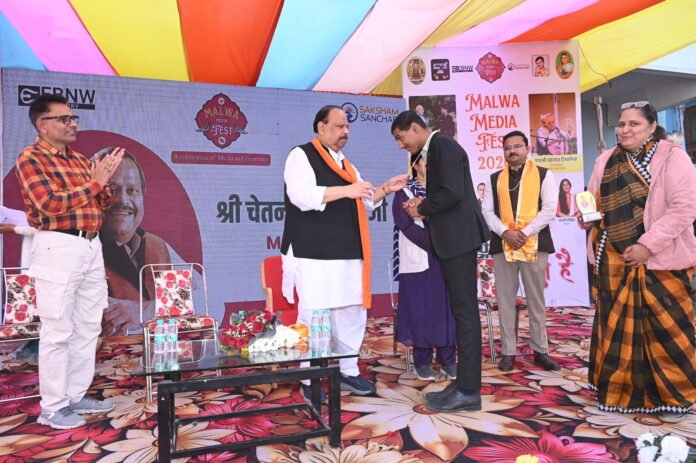
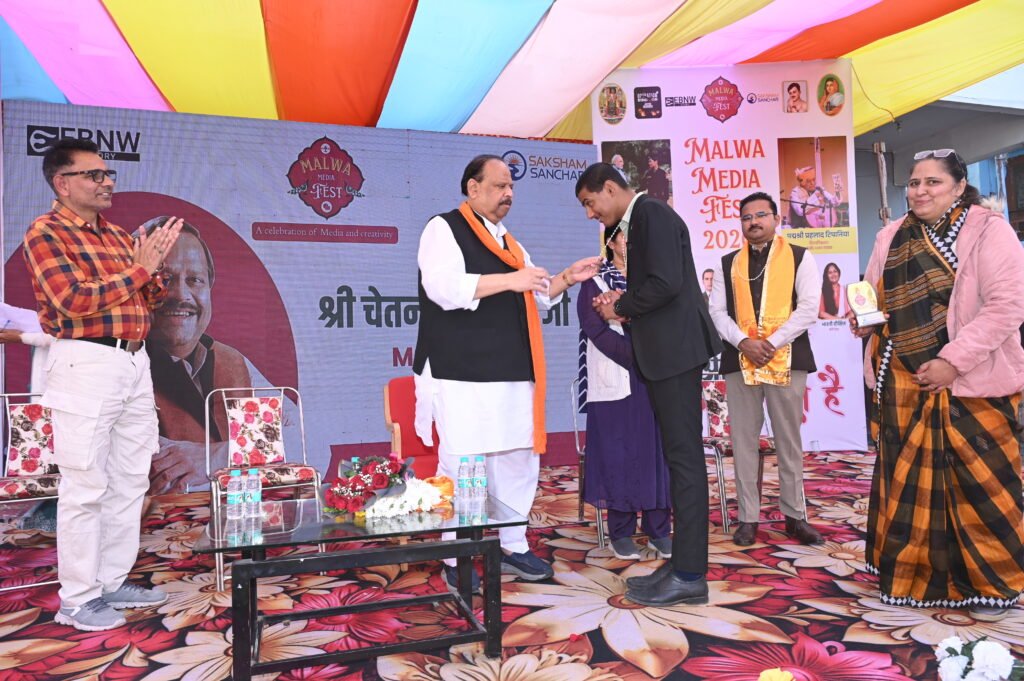
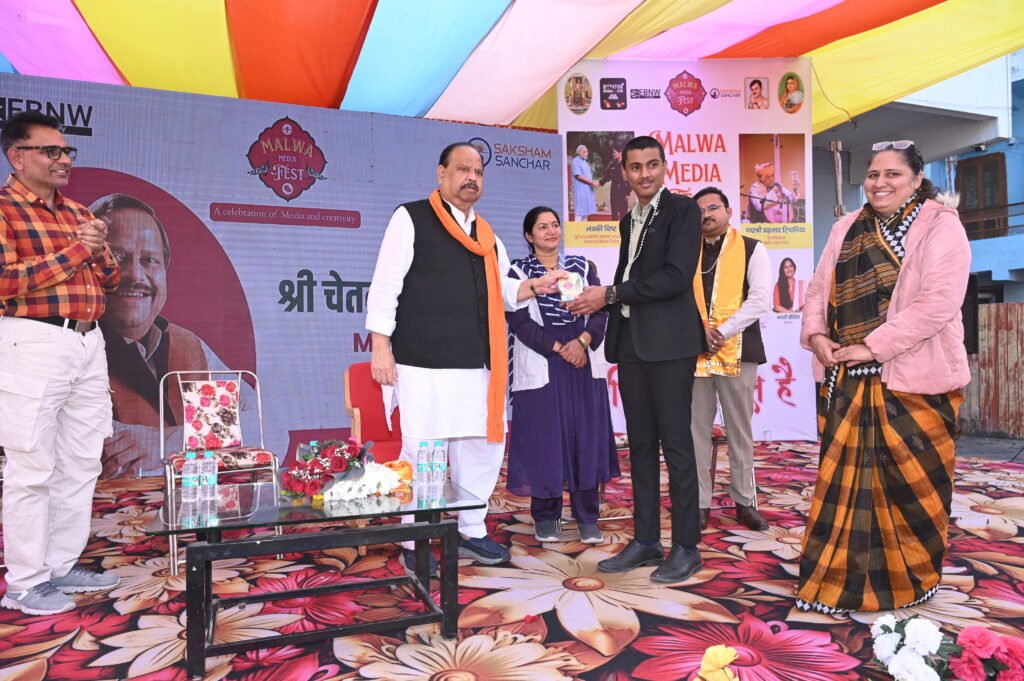
After returning to the hotel and getting ready for the main events of the day, I learned that Ratlam’s Cabinet Minister, Shri Chetanya Kashyap Ji, had arrived as the chief guest. It became my immense personal honor when Shri Chetanya Kashyap Ji felicitated me right on stage in front of everyone. This dynamic leader inspires through dedicated public service, youth empowerment initiatives, and transformative development work across MP. During the ceremony, he personally handed me the recognition and shared warm words of encouragement: “Continue telling the real stories of people—your voice matters.” His gracious presence and motivational visit to all the stalls uplifted every participant. He took time to interact, offer guidance, and genuinely encourage young creators. This moment felt like a career milestone.
The next session featured Gajendra Singh Rathore, an international educationist and speaker who serves as a key figure at the World Schools Summit. His talk delivered powerful insights on global education trends and innovative learning strategies.
National Book Trust senior project officer Neeti Verma’s session followed and proved equally amazing. As a dedicated researcher and program officer with National Book Trust India (NBT), she drives nationwide literacy campaigns and champions quality children’s literature. NBT publishes affordable books in 23+ languages, promotes reading culture through fairs/workshops. Mam Neeti’s inspiring session unpacked strategies for book promotion, igniting passion for literature among youth. Truly motivating.
I had wonderful conversations with my senior Simran Didi during breaks. She gave me valuable advice to stay focused on studies alongside my passions, guidance I’ll cherish and follow lifelong. We also discussed NDA and defense careers, since I’m a defense aspirant. Simran Didi truly represents excellence and serves as a shining beacon for students and budding journalists everywhere.
After a short break, excitement built for the fashion show. Everything was perfectly set for models to command the stage. The show delivered spectacularly—every participant looked stunning, confident, and gorgeous. Runway fire!
Met Soumya Pandey Mam there too. What a kind-hearted luminary and inspirational runway queen! Her graceful poise, empowering presence, and genuine warmth make her the ultimate role model for all models. Mentor with a golden heart—our conversation inspired me deeply.
As Malwa Media Fest 3.0 reached its magnificent peak, we ignited the crowd’s excitement for the upcoming Malwa Fest 4.0. The conclusion ceremony unfolded beautifully as organizers presented certificates, shared highlights, and celebrated every participant’s contributions. The atmosphere buzzed with universal happiness and pride-everyone agreed it was an overwhelming success that exceeded all expectations.
That evening, our group enjoyed a memorable dinner together that strengthened all our bonds even further. Over delicious food, we reflected on the incredible journey, laughed about memorable moments, and exchanged contact details for future collaborations. We then planned our early departures for the next morning. My train was scheduled for 7:05 AM, so I needed to be at the station early.
I slept lightly that night, woke up well before dawn, and prepared myself fully with all my luggage organized. The final goodbyes proved emotional. Simran Didi and I shared a memorable selfie at the station. As my train pulled away from Ratlam station, I watched the platform fade while carrying a treasure trove of unforgettable memories. Honestly, I wish the event could have extended a few more days because I enjoyed every moment with the team and everyone I met. The camaraderie felt like family, and the connections we built were truly magical. But we all promised sincerely to meet again in the near future.
My profound thanks to Archana Mam for giving me this once-in-a-lifetime opportunity to participate in Malwa Fest 3.0. This experience delivered unparalleled exposure to journalism’s highest levels, countless wisdom-packed lessons from legends, elite professional networks that will shape my career, and transformative personal growth that I’ll carry forever. Saksham Sanchar Foundation creates pure magic.
Heartfelt gratitude to the entire team-every single interaction taught me something profound and valuable. Every new place offers opportunities to learn something fresh and significant; this fest sparked a complete revolution within me.