Home Blog Page 651

Woman gave birth to snake in India: News is real or fake?

0
Image: Snake birth image

Recently, several videos have been circulating on social media claiming that a woman in India has given birth to a snake. The videos show different locations for the incident, such as Uttar Pradesh, Bihar, West Bengal and others. Some of them also show an ultrasound scan image that appears to show a snake-like creature inside a woman’s womb. But is this news real or fake?

The verdict: Fake

After doing some research, we can confidently say that this news is fake. It is based on false and misleading information and pictures. There is no evidence or credible source to support this story. It is likely that someone created this story by using different sources and editing them together.

The facts: Why it is impossible

First of all, it is scientifically impossible for humans to give birth to snakes or any other non-human animal. Humans and snakes are different species with different genetic codes, reproductive systems and modes of development. Humans are mammals, giving birth to live young, while snakes are reptiles that mostly lay eggs. The genetic makeup, anatomical structures and reproductive processes of humans and snakes are fundamentally different.

Secondly, there is no evidence that any human woman has ever given birth to a snake or any other species. All the cases that have been reported have been either hoaxes or cases of mistaken identity. For example, in 2015, a woman in Somalia supposedly gave birth to a live snake, but it turned out to be a case of pseudocyesis (a false pregnancy) and a coincidental encounter with a snake³. In 2016, a woman in Philippines allegedly gave birth to a snake-like creature, but it was later identified as an eel common in the area⁴.

The sources: How to spot the hoax

The videos that claim that a woman in India has given birth to a snake are not reliable sources of information. They are based on false and misleading information and pictures. Some of them use manipulated images of ultrasound scans or unrelated footage of doctors in operating theatres¹². They also do not provide any details about the woman, the hospital, the doctors or the snake.

If you encounter such videos or stories on social media, do not believe them or share them. Instead, do some research and check the facts from credible sources. You can also use fact-checking websites like Factly or Hoax or Fact to verify the authenticity of such claims.

The conclusion: Be aware and be critical

The news that a woman in India has given birth to a snake is fake. It is based on false and misleading information and pictures. It is scientifically impossible for humans to give birth to snakes or any other non-human animal. There is no evidence that any human woman has ever given birth to a snake or any other species.

We hope this article has helped you understand why this news is fake and how to spot such hoaxes. Be aware and be critical of what you see and hear on social media. Do not believe everything you see or share without checking the facts first.


References:

¹: Woman Gives Birth to a Snake in India: A Hoax or a Miracle?

²: The Claim that a woman gave birth to a snake in India is a hoax – FACTLY

³: A Woman in Somalia Supposedly Gave Birth to a Live Snake – VICE

⁴: A Woman in Philippines Gave Birth to a Live Snake: Hoax

ISRO’s Chandrayaan 3 mission to be launched on Friday

0

The Indian Space Research Organization has planned to launch the Chandrayaan 3 mission, which will be one of the most worked, lunar exploration missions. This anticipated event will take flight on Friday at 2.35 PM on board LVM3, carrying Chandrayaan 3.

The mission has taken nearly 4 years after the failure of the Chandrayaan 2 soft landing. Thus, this time failure has been used as a lesson to improve the scenarios that can backfire. The first orbit Chandrayaan 3 will be injected on Friday, whereas most of the resolutions are for the last phase.

The chairman of ISRO S Somanath, stated that there are many changes done to the mission of Chandrayaan-3 to offer more stability. The LVM3 will associate Chandrayaan 3 on the apogee, which is the farthest point from earth, of 36, 500Km, against 45, 475 Km which was during Chandrayaan 2.

Witness this space event at the official youtube channel or the website of ISRO.

Aurora Borealis displays in Ladakh

0
Credit to the owner

We all love the northern lights, some due to a celestial projection or some for the beauty of the universe. So, if you are one of the stargazers, Ladakh should be the next stop for you! A region in the western Himalayas at an elevation of 4,500 meters (14,764 ft), has become the stargazer spot in India.

Hanle Observatory, one of the highest-located sites for optical, infrared, and gamma-ray telescopes in the world is situated in the area. According to the reports, The Hanle Observatory is one the highest optical telescopes in the world.

The region has recently become an ultimate destination for stargazers, bloggers, scientists, and influencers as it showcased an astronomical light show, Aurora Borealis. It is one of the results of the solar storm that displays the beauty of cosmic events.

The observatory recently released a time-lapse of this cosmic event which stunned a lot of people.
As we know, the Aurora Borealis is a cosmic event that is usually seen in countries like Finland, Norway, Greenland, and Iceland. However, for some events it is also displayed in the region of Ladakh.

Know more about Instagram, Threads

0

Instagram has been one of the largest used social media in the world. Therefore, Instagram has officially launched the text-based conversation app, known as Threads. It is a new app that helps the creator share ideas and views through words. The app is available for download through the play store for Android, and apple story or iOS. The app is currently available in 100 countries.

Instagram users can easily access the app with a few steps and enjoy the app and its function.

It is also an app that contributes to a chain of communication between the community. In a community, one can raise their voice and let people hear them. It is an app that allows users to discuss many things.
One can follow each other and connect with them.

The features of Threads:
Camera: It can be used to post anything under community guidelines.
Inbox: For the users to connect and know more about each other.
Status screen: It will show the status of the user’s account.

Instagram users can easily share and connect with others while following simple steps of community guidelines.

Udaipur temple imposes dress code

0

The Bohra Ganesh temple has been one of the significant temples in Udaipur. The temple has been very strict about particular aspects of the dress code.

The history of Bohra Ganesh Temple:

The very old and famous temple of Lord Ganesh, Bohra Ganesh Temple, is situated near Mohanlal Sukhadia University in Udaipur. It is believed that the temple is 350 years old. One can witness an east-facing idol of the lord in a dancing posture, in the center of the temple.

Bohra Ganesh temple has the same prestige as the temple of Moti Dungari. Thousands of devotees visit every week.

The imposed rule

As the temple authorities strictly follow the Hindu religion. Thus, this became the reason for the ban on short clothes in the mandir. The priest has strictly prohibited any devotee from entering the temple wearing short clothes, as they say, it has been imposed to follow the Hindu religion.

Do You Know! Which part of the constitution deals with the panchayats?

0

Panchayats are institutions of self-government in rural areas of India. They are responsible for planning and implementing various development schemes and programs at the local level. The constitution of India provides for the establishment, composition, powers and functions of panchayats in Part IX, which was added by the 73rd amendment in 1992.

According to Article 243B of Part IX, there shall be constituted in every state, panchayats at three levels: village, intermediate and district. However, states with a population not exceeding 20 lakhs may not have panchayats at the intermediate level. The panchayats at each level shall consist of elected representatives from the territorial constituencies in the panchayat area. The ratio between the population of each constituency and the number of seats allotted to it shall be the same throughout the state, as far as practicable.

Article 243C of Part IX specifies the composition of panchayats at each level. It also provides for the representation of the chairpersons of the lower level panchayats, the members of parliament and state legislatures, and the members of the upper houses of parliament and state legislatures in the higher level panchayats. The chairperson of a panchayat at the village level shall be elected by the people, while the chairperson of a panchayat at the intermediate or district level shall be elected by and from among the elected members of that panchayat.

Article 243D of Part IX mandates that not less than one-third of the total number of seats in a panchayat shall be reserved for women, and that not less than one-third of the offices of chairpersons in a panchayat at each level shall be reserved for women. It also provides for reservation of seats and offices for scheduled castes and scheduled tribes in proportion to their population in a panchayat area.

Article 243E of Part IX stipulates that every panchayat shall continue for five years from the date of its first meeting, unless dissolved earlier. It also states that an election to constitute a new panchayat shall be completed before the expiry of its term, or within six months of its dissolution.

Article 243F of Part IX lays down the qualifications and disqualifications for membership in a panchayat. It also empowers the state legislature to make laws regarding these matters.

Article 243G of Part IX empowers the state legislature to endow the panchayats with such powers and authority as may be necessary to enable them to function as institutions of self-government. It also authorizes the state legislature to delegate to the panchayats such functions and responsibilities as may be entrusted to them by law relating to various subjects listed in the Eleventh Schedule.

Article 243H of Part IX authorizes the state legislature to make laws regarding the finances of the panchayats, including their taxation powers, grants-in-aid from the consolidated fund of the state, and allocation of funds from central or state plans.

Article 243I of Part IX provides for the constitution of a State Finance Commission every five years to review the financial position of the panchayats and make recommendations regarding their resources, expenditure and audit.

Article 243J of Part IX obliges every panchayat to maintain accounts and records of its income and expenditure, and submit them for audit by such authority as prescribed by law.

Article 243K of Part IX provides for the constitution of a State Election Commission to conduct elections to the panchayats in accordance with law.

Article 243L of Part IX extends Part IX to union territories subject to such modifications as may be specified by law.

Article 243M of Part IX exempts certain areas from Part IX, such as those under Schedule V (tribal areas), Schedule VI (hill areas), or any other area where local self-government exists under any other law or custom. It also empowers Parliament to make laws regarding these matters.

Article 243N of Part IX states that any law made under Part IX shall not be called in question in any court on any ground.

Article 243O of Part IX bars any court from interfering in any electoral matter relating to a panchayat, except on an election petition presented to such authority as prescribed by law.

Butati Dham: A Temple of Miracles for Paralysis Patients

0

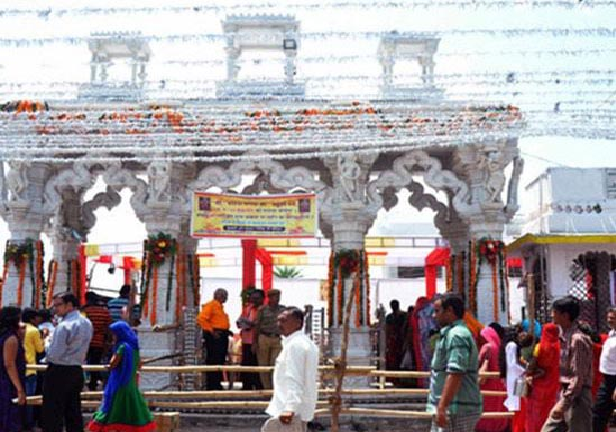
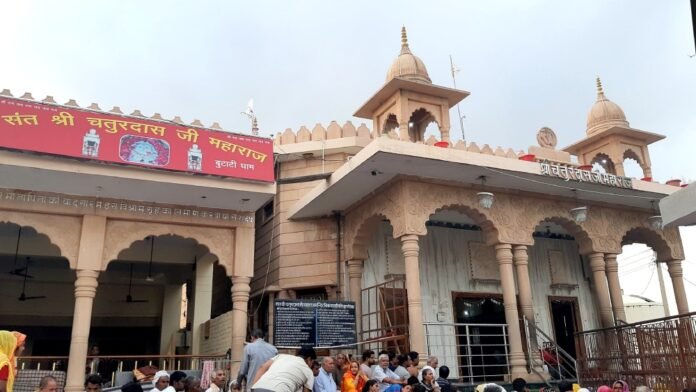
Butati Dham is a temple located near Kuchera town in Nagaur district of Rajasthan. It is dedicated to Saint Chaturdas Ji Maharaj, who is believed to have miraculous powers to cure paralysis. Every year, lakhs of people from across the country and abroad visit this temple to seek healing from this debilitating condition.

The Legend of Saint Chaturdas Ji

According to the legend, Saint Chaturdas Ji was born in a Charan caste family about 500 years ago. He was a great yogi and a devotee of Lord Shiva. He and his brother, Saint Gangadas Ji, went on a pilgrimage to various holy places. During their journey, they met many sages and saints who blessed them with divine powers.

One day, they reached a place called Butati, where they decided to stay for some time. There, they saw many people suffering from paralysis and other diseases. Saint Chaturdas Ji felt compassion for them and started using his powers to heal them. He would apply ash from the sacred fire (havan kund) on their bodies and make them walk around the temple seven times. Soon, the news of his miracles spread far and wide, and people started flocking to Butati Dham for paralysis cure.

Saint Chaturdas Ji spent the rest of his life in Butati, serving the people and worshipping Lord Shiva. He attained samadhi (final liberation) at the age of 108. His samadhi is now the main shrine of Butati Dham temple, where people pay their respects and seek his blessings.

The Ritual of Sapt Parikrama

The main ritual of Butati Dham temple is the sapt parikrama (seven circumambulations). It is believed that anyone who performs this ritual with faith and devotion can get rid of paralysis or any other disease. The ritual involves walking around the temple seven times in seven days, twice a day: once in the morning after the aarti (worship service) and once in the evening before the aarti.

The temple authorities provide free accommodation, food, water, utensils, firewood and other facilities to the patients and their attendants. They also provide guidance and assistance to perform the ritual properly. The patients are advised to follow a vegetarian diet, abstain from alcohol and tobacco, and maintain cleanliness and hygiene during their stay.

Many patients have reported significant improvement or complete recovery after completing the sapt parikrama. Some have even shared their testimonials on social media platforms like Facebook and YouTube. The temple also organizes special fairs and festivals on auspicious occasions like Ekadashi (eleventh lunar day), Vaishakh (April-May), Bhadon (August-September) and Magh (January-February), when thousands of devotees throng to Butati Dham.

How to Reach Butati Dham

Butati Dham is situated about 52 km away from Nagaur city on the Ajmer-Nagaur road. The nearest airport is Jaipur International Airport, which is about 250 km away. From there, one can take a train, bus or taxi to reach Merta Road Junction railway station, which is about 45 km away from Butati Dham. Alternatively, one can also hire a private car or cab from Jaipur or nearby cities like Pushkar⁵.

From Merta Road Junction, one can take a jeep or taxi to reach Butati Dham temple. The temple is open from 5 am to 10 pm every day. There is no entry fee or donation required to visit the temple or avail its services. However, one can offer voluntary contributions to support the temple’s activities and maintenance.

Butati Dham is a unique place of faith and healing that attracts people from all walks of life. It is a testimony to the power of Saint Chaturdas Ji’s miracles and the devotion of his followers. If you are looking for a spiritual experience or a cure for paralysis, you may want to visit this temple and witness its wonders for yourself.

Barsatein – Mausam Pyaar Ka: A Romantic Drama Set in a Newsroom

0

Sony Entertainment Television is all set to launch a new romantic drama series titled ‘Barsatein – Mausam Pyaar Ka’ on July 10, 2023. The show is produced by Balaji Telefilms and features popular actors Kushal Tandon and Shivangi Joshi in the lead roles.

The Plot

The show revolves around the love story of Reyansh Lamba (Kushal Tandon) and Aradhana (Shivangi Joshi), who work in the same news channel. Reyansh is the owner of the channel, who is ambitious, suave and charming. He is also emotionally unavailable and lacks chivalry towards women. Aradhana is a journalist, who is fearless, honest and passionate. She uncovers several wrongdoings of Reyansh’s business empire, which leads to their clash of wills and ideologies.

However, as they say, there is a thin line between love and hate. Reyansh and Aradhana’s initial hostility gradually transforms into attraction and romance, as they face various challenges and dangers together. But will their love survive the storm of secrets, lies and betrayals? Will they be able to overcome their differences and find their happily ever after?

The Cast

Kushal Tandon, who was last seen in Beyhadh opposite Jennifer Winget, is making his television comeback after six years with this show. He said that he was thrilled to be back with a distinctive role that was tailored for him by Ekta Kapoor. He also said that television has and will always have his heart.

Shivangi Joshi, who rose to fame with Yeh Rishta Kya Kehlata Hai, is playing the role of Aradhana, a female journalist who falls in love with her boss. She said that she was excited to be a part of this show, which is an enticing romance drama with a lot of twists and turns.

The show also stars Saii Ranade, Sameer Malhotra, Preet Kaur Nayak, Vipul Deshpande, Ali Khan, Mishika Mishra, Prarthana Mondal and Arshi Bharti in pivotal roles.

The Promo

The makers of the show have released a teaser promo that shows Kushal Tandon and Shivangi Joshi in a rain sequence. The promo has a tagline that says “Jab baarish mein bheegi hui dhadkanein milengi, tab barsaatein mausam pyaar ka ban jayegi”. The promo has created a lot of buzz among the fans of the actors and the genre.

The Timings

The show will air every Monday to Friday at 8 pm on Sony Entertainment Television from July 10, 2023. The show will also be available for online streaming on SonyLIV app.

Meet Bharat Jain, the richest beggar in India who owns properties worth crores

0

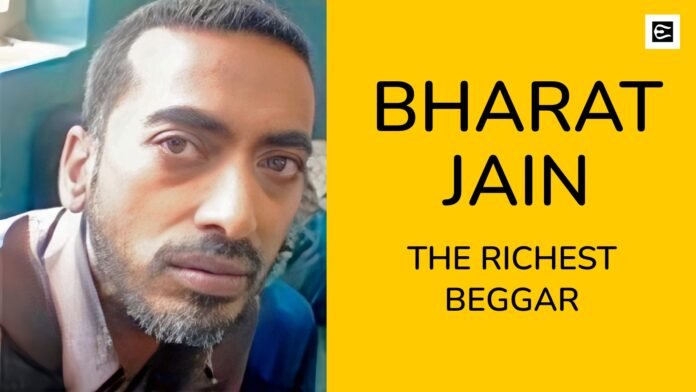
Bharat Jain is not your ordinary beggar. He is, in fact, the richest beggar in India and probably the world. He can be seen begging on the streets of Mumbai, but he has a net worth of Rs 7.5 crore. He owns a 2BHK flat in Mumbai worth Rs 1.2 crore and two shops in Thane that rent for Rs 30,000 per month. He also has bank deposits and investments worth crores.

Jain, who is 55 years old, has been begging for more than three decades. He started begging after he dropped out of school due to financial problems. He is married and has two sons who are studying in college. He also supports his father and brother who live with him¹. He begs at prime locations like Chhatrapati Shivaji Maharaj Terminus railway station (CSMT) or Azad Maidan, where he earns between Rs 60,000 and 75,000 per month.

Jain says he begs because he likes it and it gives him satisfaction. He says he does not want to stop begging even though he has enough money to live comfortably. He says he does not bother anyone and people give him money willingly. He also claims that he pays income tax on his earnings and does not evade any laws.

Jain’s story is an example of how begging can be a lucrative business in India, where there are millions of beggars living in poverty and destitution. Jain is one of the top five richest beggars in India, who are richer than most of us and are in fact correlates.

UNCTAD’s World Investment Report 2023 Sheds Light on Sustainable Investment Challenges

0

The recently released World Investment Report 2023 by the United Nations Conference on Trade and Development (UNCTAD) offers valuable insights into foreign direct investment (FDI) trends in developing countries. The report emphasizes the pressing need to bridge the investment gaps, particularly in renewable energy, to achieve the Sustainable Development Goals (SDGs) by 2030. Additionally, it highlights the global decline in FDI and calls for support to developing nations in their transition to clean energy. Let’s delve into the key findings of the report.

FDI in Developing Countries in Asia:

In 2022, FDI in developing countries in Asia remained steady at $662 billion, signaling no change compared to the previous year. Although the growth rate was flat, countries in this region, such as India and ASEAN, continued to attract substantial FDI, contributing to their economic buoyancy.

Global FDI Decline:

The report reveals a 12% decline in global FDI, reaching $1.3 trillion in 2022. This decline follows a strong rebound in 2021 after the impact of the COVID-19 pandemic in 2020. Notably, China experienced a 5% increase in FDI, serving as an exception to the global downward trend.

Renewable Energy Investment Gap:

One of the critical concerns emphasized in the report is the significant investment gap in renewable energy within developing countries. While the annual investment required to support clean energy transitions amounts to $1.7 trillion, these nations only attracted $544 billion in FDI for clean energy in 2022. This calls for urgent efforts to bridge the investment gap and attract more sustainable energy investments.

Investment Gaps in Sustainable Development Goals:

The report uncovers a substantial investment gap across all sectors of the Sustainable Development Goals (SDGs), which has risen to over $4 trillion per year from $2.5 trillion in 2015. Sectors such as energy, water, and transport infrastructure face the largest investment gaps. Addressing these gaps is crucial for achieving sustainable development targets and fostering inclusive growth.

Challenges and Opportunities:

Despite a positive trend in sustainability investment in global capital markets, the report highlights the need for increased investments in developing countries. Most of the renewable energy investments have flowed into developed nations, leaving developing countries with a significant deficit. Enhancing exposure to developing nations and addressing concerns of greenwashing are vital priorities for the sustainable finance market.

Investment Policymaking and Reform:

The report sheds light on the surge in investment policymaking activities in 2022, with many countries adopting measures to counter an expected economic downturn. Measures favorable to investment increased to 102, nearly doubling from the previous year. Furthermore, work to reform the international investment agreement (IIA) regime continued, focusing on new types of agreements, termination of existing treaties, and discussions on reforming dispute settlement mechanisms.

Global Action Compact for Investment in Sustainable Energy for All:

To address the challenges highlighted in the report, a Global Action Compact for Investment in Sustainable Energy for All is proposed. This compact encompasses guiding principles covering the objectives of the energy transition, including meeting climate goals, providing affordable energy for all, and ensuring energy security. The compact also outlines six action packages to drive national and international investment policymaking, foster partnerships and cooperation, implement financing mechanisms, and strengthen sustainable finance markets.

UNCTAD’s World Investment Report 2023 underlines the urgency to bridge the investment gaps and promote sustainable investment practices in developing countries. By addressing these gaps and fostering partnerships, nations can work together to achieve the SDGs and ensure a sustainable and inclusive future. The report serves as a call to action for governments, international organizations, and stakeholders to prioritize investment in clean energy, enhance investment policymaking, and reform international investment agreements.