Home Blog Page 643

Undercover agent brings out stories of pain and sacrifice in Jaipur

0

Thrilling stories of sacrifice, pain and zeal came up in an event organised by Literature Circle of FORTI Women Wing. 

The event was “Army ke Jabaaz” and the venue was the IIS University in Jaipur. The event served as a tribute to the valor and sacrifices of the armed forces, showcasing their indomitable spirit and dedication to the nation. 

Saksham Sanchar Foundation got the opportunity to interview the personalities and covered the engaging session. Here is the brief of the talk session organized at IIS.

Distinguished guests of honour Lucky Bisht and Rachna Bisht won many hearts by bringing out unknown stories from undercover agent and Army men’ lives.

 Lucky Bisht, a former undercover agent, shared riveting anecdotes from his life’s journey. Having once operated in the shadows to protect the nation, he revealed the heart-wrenching reality that, unlike fallen soldiers who are honored posthumously, undercover agents who are captured often go unrecognized by their own country. This poignant insight shed light on the emotional turmoil faced by the families of these unsung heroes, who yearn for their missing loved ones to return one day.

Amidst his tales of hardship and courage, Mr. Bisht imparted a profound piece of wisdom he learned from his senior: “Waqt sab seekha dega” – a reminder that time has the power to heal, teach, and guide us through life’s challenges. His transformation from a covert operative to a Bollywood author is a testament to the resilience and strength that his experiences have bestowed upon him.

Rachna Bisht, an accomplished author in the army and defense genre, graced the event with her presence. Renowned for her books “Shoot. Dive. Fly.” and “Kargil: Untold Stories from the War,” Rachna is not only an exceptional storyteller but also a senior journalist in the industry. Drawing from her personal experiences as an Army daughter, wife and sister, she shared heartwarming anecdotes that resonated with the audience.

In her address, Rachna Bisht encouraged young girls to shun societal stereotypes and unapologetically pursue their dreams. She passionately advocated for women to transcend their roles as wives and mothers and embrace their individuality. Her words resonated deeply, inspiring the attendees to challenge norms and strive for self-fulfillment.

The inauguration of the Literature Circle by FORTI on the occasion of India’s 77th Independence Day is a significant step towards intellectual growth, cultural enrichment, and fostering a sense of unity within the community. The “Army ke Jabaaz” session served as a poignant reminder of the sacrifices made by our armed forces and the unsung heroes who work tirelessly behind the scenes. With esteemed guests like Lucky Bisht and Rachna Bisht gracing the event, their stories of valor and resilience continue to inspire generations to come.

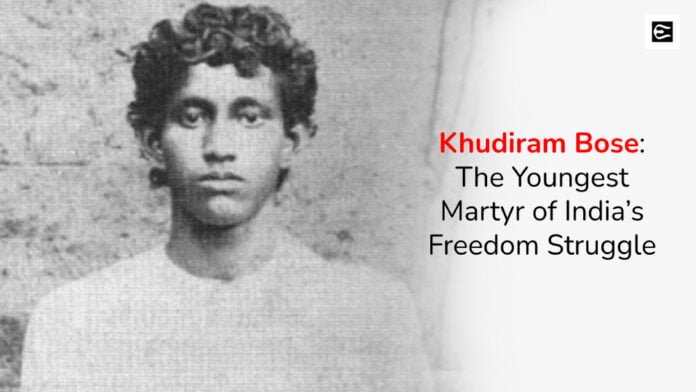
Remembering Khudiram Bose: The Youngest Martyr of India’s Freedom Struggle

0

Khudiram Bose Death Day: On this day, a brave young man sacrificed his life for the cause of India’s independence from the British colonial rule. Khudiram Bose, who was only 18 years old at the time of his execution, was one of the most daring and inspiring revolutionaries of the Indian freedom movement. He was involved in several acts of resistance against the British authorities, including the attempted assassination of a British judge, Magistrate Douglas Kingsford, in Muzaffarpur.

Khudiram Bose was born on December 3, 1889, in a small village named Habibpur in the Midnapore district of West Bengal. He was influenced by the patriotic writings of Bankim Chandra Chattopadhyay and Swami Vivekananda, and joined the revolutionary organization Jugantar at a young age. He participated in protests during the Bengal partition period in 1905, and learned to prepare and plant bombs from his mentors.

In 1908, he teamed up with another revolutionary named Prafulla Chaki to carry out a daring mission to kill Magistrate Kingsford, who was notorious for his harsh sentences against Indian nationalists. The duo threw bombs on the carriage they suspected the judge was in, but missed their target and killed two British women instead. Chaki fatally shot himself before being arrested, while Khudiram was captured by the police after a long chase.

Khudiram was tried for the murder of the two women and sentenced to death by hanging. He showed remarkable courage and composure during his trial and imprisonment, and refused to plead for mercy. He greeted death with a smile and a chant of “Vande Mataram” (Hail Motherland) on August 11, 1908, at the Muzaffarpur jail. He was holding a Bhagavad Gita in his hand when he was hanged.

Khudiram Bose’s martyrdom sparked widespread outrage and admiration among the Indian masses, and inspired many other young revolutionaries to join the freedom struggle. He is remembered as one of the youngest and bravest martyrs of India’s independence movement, and his legacy lives on in the hearts of millions of Indians.

The World’s Most Formidable Special Forces: Unveiling the Most Dangerous Commando Units

0

In the high-stakes realm of special operations, a select few elite forces stand apart as the embodiment of excellence, courage, and prowess. These Special Commando Forces, often shrouded in secrecy, are tasked with executing some of the most daring and dangerous missions on the planet. While it’s a challenging endeavor to rank or compare them, this article will showcase 11 of the most feared and respected special forces units from around the world. From intense training regimens to historic feats of heroism, these forces epitomize the true meaning of valor and dedication.

1. MARCOS, India: The Silent Warriors

The Indian Marine Commandos, known as MARCOS, strike fear into the hearts of adversaries. Trained in both HALO (High Altitude Low Opening) and HAHO (High Altitude High Opening) techniques, they excel in underwater combat and coastal warfare. Equipped with cutting-edge weaponry and real-time war equipment, MARCOS are renowned for their role in critical operations like the Kargil War and Operation Leech. Operating with unparalleled secrecy, they hold the distinction of being the only special force, apart from the US Navy SEALs, capable of full-fledged combat in water bodies.

2. Special Services Group (SSG), Pakistan: The Agile Guardians

The Pakistani SSG is a force to be reckoned with, undergoing grueling training that pushes their limits. Known for their exceptional physical endurance, they have participated in Indo-Pakistan wars and the Soviet-Afghan War. Their heroic intervention during the Pan Am Flight 73 hijacking and swift rescue of hostage children from a hijacked Afghan school bus demonstrate their unmatched bravery and skill.

3. National Gendarmerie Intervention Group (GIGN), France: Defenders of Freedom

Originating in response to the Munich Olympics massacre, France’s GIGN is a formidable counter-terrorism force. Their training is among the slickest in the world, allowing them to tackle challenges from rescuing hostages to combating Somali pirates. Operating with unwavering dedication and a commitment to saving lives, GIGN’s crowning moment was the recapture of the Grand Mosque in Mecca, showcasing their unmatched valor.

4. Special Forces, USA: Green Berets and Deadly Snipers

Known as the Green Berets, the US Special Forces are recognized for their versatile capabilities. Among them, the snipers are considered some of the deadliest assassins, undergoing rigorous training to become unparalleled marksmen. From coalition support to counter-drug operations, their expertise spans diverse fields, and their motto “De oppresso liber” embodies their commitment to liberating the oppressed.

5. Sayeret Matkal, Israel: Masters of Precision

Israel’s Sayeret Matkal specializes in counter-terrorism and is revered for their physical and intellectual prowess. Rigorous training under constant monitoring prepares them for the most challenging situations. They have played a pivotal role in defusing tensions during Palestine terror attacks, epitomized by their daring rescue of an Israeli taxi driver from an underground pit.

6. Joint Force Task 2 (JTF2), Canada: Shadows in the Dark

Canada’s JTF2 is a secretive counter-terrorism force that excels in precision. Despite its relatively short history, it has made its mark through hostage rescues and covert operations. Their commitment to being a “scalpel, not a hammer” highlights their discreet yet effective approach to safeguarding national security.

7. British Special Air Service (SAS): Pioneers of Special Forces

The SAS is the foundation for special forces worldwide, setting the standard for excellence. Their iconic motto “Who dares wins” reflects their fearless approach to challenging missions. Their role in post-Iraq war operations and their influence on other special forces, including the US Delta Force, attests to their unparalleled reputation.

8. Navy SEALs, USA: The Ultimate Warriors

The US Navy SEALs are the epitome of physical and mental toughness. Their rigorous training regimen, technological prowess, and versatile skill set make them a force to be reckoned with. Operating across sea, air, and land, they embody their name – Sea Air and Land special operators.

9. GIS, Italy: Counter-Terrorism Experts

The Gruppo di Intervento Speciale (GIS) of Italy is a counter-terrorism powerhouse, revered for its marksmanship and precision. With a focus on anti-terrorism operations, security services, and training, GIS is a key player in maintaining Italy’s national security.

10. Alpha Group, Russia: Silent Executioners

Part of the formidable Spetsnaz, Russia’s Alpha Group is known for its fierce reputation and ruthless tactics. With a history dating back to the Afghan invasion, they’ve displayed both brutal effectiveness and controversial methods. Their role in the Moscow theatre hostage crisis underscores their unwavering dedication, even amidst criticism.

While ranking the world’s most dangerous special forces is a daunting task, each of these elite units has earned its place through exceptional training, unwavering dedication, and remarkable courage. From the stormy seas to hostile lands, these Special Commando Forces stand as the embodiment of heroism, ready to face the most treacherous challenges and protect the world from threats.

Exploring the Enchanting Nashik Wineries: A Journey Through India’s Wine Heritage

0

Simran Saini reports on the Nashik wineyards…

Nestled in the picturesque landscapes of Maharashtra, the Nashik region has emerged as a heaven for wine connoisseurs and enthusiasts alike. With a history steeped in viticulture and an array of award-winning wineries, Nashik has solidified its position on the global wine map. In this article, we take a captivating journey through the vineyards, cellars, and tasting rooms of Nashik’s wineries, unravelling the story behind this burgeoning wine destination.

While India’s winemaking tradition dates back thousands of years, Nashik has risen to prominence in recent decades as a hub for high-quality wines. The region’s temperate climate, fertile soil, and proximity to the Sahyadri mountain range create an ideal environment for cultivating grape varieties that yield exceptional wines. Nashik’s winemaking roots can be traced to the 19th century when the British introduced grape cultivation. However, it wasn’t until the 1980s that the commercial wine industry began to flourish, marking the beginning of a remarkable transformation.

A visit to Nashik’s wineries offers a visual feast for the senses. Rolling vineyards stretch across the landscape, with rows of vines laden with plump, sun-kissed grapes. Sula Vineyards, arguably the most renowned among them, is a pioneer in the Indian wine industry. The winery’s sprawling estate not only produces a diverse range of wines but also offers guided tours, tastings, and even accommodation options for an immersive experience. Beyond Sula, Nashik boasts an impressive collection of boutique wineries, each contributing its unique character to the region’s wine tapestry. 

Grover Zampa Vineyards, York Winery, and Soma Vine Village are just a few examples of establishments that have garnered acclaim for their craftsmanship and commitment to producing wines that capture the essence of the Nashik terroir. The art of winemaking is a meticulous dance between nature and human expertise. Nashik’s wineries adhere to traditional methods while embracing modern techniques to ensure the highest quality standards. From grape selection and harvesting to fermentation and ageing, each step is executed with precision and passion. Visitors to these wineries are often treated to behind-the-scenes glimpses of the winemaking process. Walking through the cellars, one can witness rows of oak barrels and stainless steel tanks, where the alchemy of transforming grapes into liquid gold takes place. Knowledgeable guides provide insights into the intricate science and artistry of winemaking, making the experience not only enjoyable but also educational.

Tasting the Essence of Nashik:

A journey through Nashik’s wineries culminates in the tasting room, where the true magic of the region comes alive. Wine enthusiasts can sample an impressive range of varietals, from crisp and refreshing whites to full-bodied reds and even rosés. The sensory adventure is elevated by the stunning views of the surrounding vineyards, creating an ambience that invites relaxation and contemplation. As you savour each sip, you’ll notice that Nashik’s wines often exhibit a distinct character that reflects both the terroir and the expertise of the winemakers. Whether it’s the floral notes of a Sauvignon Blanc, the rich complexity of a Cabernet Sauvignon, or the harmonious balance of sparkling wine, Nashik’s offerings are a testament to the region’s dedication to producing exceptional vintages.

A Destination Beyond Wine:

While Nashik’s wineries are undoubtedly the main attraction, the region offers a multifaceted experience that goes beyond wine tasting. The Nashik Wine Festival, held annually, is a vibrant celebration of all things wine, featuring live music, culinary delights, and an opportunity to interact with winemakers. Additionally, Nashik’s proximity to other cultural and historical sites, such as the ancient Ellora and Ajanta caves, adds an enriching layer to any visit.

The Road Ahead: Nashik’s Promising Vinicultural Future

As Nashik’s wineries continue to garner attention and accolades on both national and international stages, the future of Indian winemaking appears promising. The region’s commitment to quality, sustainability, and innovation bodes well for its growth as a sought-after wine destination. As more enthusiasts and curious travellers discover the allure of Nashik’s wineries, the legacy of India’s wine heritage finds new avenues to flourish. In conclusion, the Nashik wineries offer a sensory journey that traverses history, craftsmanship, and the sheer beauty of the land. With its distinctive wines, captivating landscapes, and warm hospitality.

Indigenous Youth as Agents of Change: Celebrating the International Day of the World’s Indigenous People 2023

0
Image: Freepik

On August 9, 2023, the world will observe the International Day of the World’s Indigenous People, a day dedicated to raising awareness and protecting the rights of the world’s indigenous population. This year, the theme of the day is “Indigenous youth as agents of change for self-determination”, which recognizes the role and contributions of indigenous youth in exercising their rights and aspirations in various contexts .

According to the United Nations, there are an estimated 476 million indigenous peoples in the world living across 90 countries. They make up less than 5 per cent of the world’s population, but account for 15 per cent of the poorest. They speak an overwhelming majority of the world’s estimated 7,000 languages and represent 5,000 different cultures .

Indigenous peoples are inheritors and practitioners of unique cultures and ways of relating to people and the environment. They have retained social, cultural, economic and political characteristics that are distinct from those of the dominant societies in which they live. However, they also face many challenges and vulnerabilities related to their identities, cultures, languages, lands, territories, natural resources, education, health, and human rights .

In this context of demand for self-determination, indigenous youth are working as agents of change at the forefront of some of the most pressing crises facing humanity today. For instance, indigenous youth are harnessing cutting-edge technologies and developing new skills to offer solutions and contribute to a more sustainable, peaceful future for their people and planet. But their future depends as well on the decisions that are made today. Their representation and participation in global efforts towards climate change mitigation, peacebuilding, and digital cooperation are crucial for the effective implementation of their rights as indigenous.

Indigenous youth are also mobilizing for justice and seeking to end the violations of their rights by governments, corporations, and other actors. They are advocating for their rights to self-determination, autonomy, land, territory, natural resources, free prior and informed consent, cultural integrity, and non-discrimination. They are also promoting their cultures, traditions, and contributions to the world as sources of pride and strength.

Moreover, indigenous youth are creating intergenerational connections with their elders and ancestors and preserving their unique cultures and ways of relating to people and the environment. They are learning from their wisdom and knowledge and passing it on to future generations. They are also teaching and inspiring others to respect and value their diversity and resilience.

The International Day of the World’s Indigenous Peoples 2023 aims to celebrate and support the rights and aspirations of indigenous peoples, especially their youth, as they are vital for the well-being of humanity and the planet. The day will also feature a commemoration event where speakers will share their expertise and experience about the role of indigenous youth in exercising self-determination. The event will be held on August 9, 2023 from 9:00 to 10:30 a.m. EDT (New York time) and will be open for online registration.

J.R.D. Tata: Pioneering Indian Aviation and Entrepreneurship

0

Jehangir Ratanji Dadabhoy Tata, fondly known as J.R.D. Tata, holds a remarkable position in Indian history as a pioneering aviator and visionary industrialist. His groundbreaking achievements in aviation, entrepreneurship, and philanthropy have left an indelible mark on India’s landscape. One of his most significant accomplishments was becoming India’s first licensed pilot, a feat that marked the beginning of a lifelong journey filled with innovation and contribution to the nation’s growth.

Early Life and Entrepreneurial Spirit

Born on July 29, 1904, into the illustrious Tata family, J.R.D. Tata inherited a legacy of business acumen and social responsibility. His father, Ratanji Dadabhoy Tata, was a prominent businessman, and his mother, Suzanne Brière, made her own mark as the first woman in India to drive an automobile. These early influences nurtured J.R.D.’s spirit of exploration and enterprise.

Aviation Pioneer

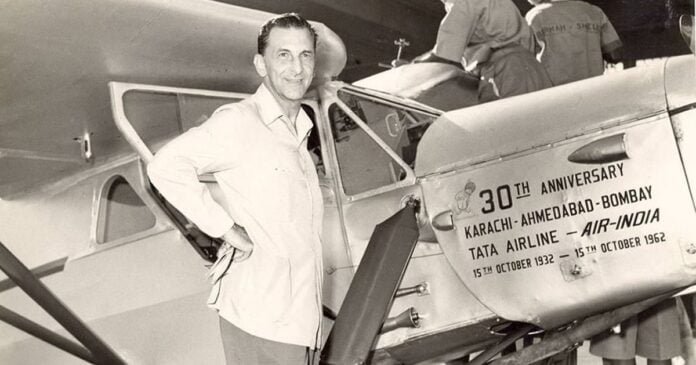
In 1929, J.R.D. Tata etched his name in history by becoming the first Indian to acquire a commercial pilot certificate. On February 10th of that year, the Aero Club of India, under the auspices of the Federation Aeronautique Internationale, awarded him license number “1,” a symbolic testament to his pioneering spirit. This achievement marked a significant milestone in the development of aviation in India.

Tata’s passion for flying led him to found Tata Airlines, which later evolved into Air India, the country’s national airline. His ambition to connect people and places through the skies culminated in a historic moment on October 15, 1932, when he piloted the first commercial flight from Karachi to Bombay in a single-seater aircraft, the D.H. Puss Moth.

Entrepreneurial Legacy

J.R.D. Tata’s contributions extended far beyond aviation. He emerged as a visionary entrepreneur, founding the Tata Group, a conglomerate that spans diverse sectors including steel, automobiles, energy, and hospitality. His commitment to excellence and ethical business practices set the standards for corporate governance and responsibility in India.

Philanthropy and Recognition

Tata’s enduring legacy also encompasses philanthropy and social welfare. His tireless efforts to uplift communities and improve the quality of life earned him numerous accolades, including the prestigious Bharat Ratna in 1992, India’s highest civilian honor. He was also recognized with the French Legion of Honour in 1983 and the Padma Vibhushan in 1955.

J.R.D. Tata’s journey from becoming India’s first licensed pilot to pioneering industrialist and philanthropist showcases his unwavering commitment to progress, innovation, and social responsibility. His trailblazing spirit and visionary leadership continue to inspire generations of Indians, leaving an enduring legacy that touches every corner of India’s development. J.R.D. Tata’s legacy is a testament to the power of one individual’s determination to transform a nation and shape its future.

Knowing Famous Scientists of India

0

In the intricate tapestry of our everyday lives, science weaves a thread of wonder and innovation that often goes unnoticed. From the sleek gadgets that adorn our lives to the monumental achievements of space exploration, the marvels of modernity are a testament to the gifts of science and technology. Ponder for a moment the absence of these wonders – a world devoid of the technological symphony that enriches our existence. It is the genius of extraordinary minds that has paved the way for our comfort and progress. Here, we present the indelible contributions of 14 Indian scientists who have earned global recognition and left an indomitable mark on the canvas of human achievement.

1. CV Raman: Born in Tiruchirapalli on November 7, 1888, Chandrasekhara Venkata Raman stands as an emblem of scientific excellence. His pioneering work on the scattering of light earned him the Nobel Prize for Physics in 1930, marking him as the first Asian to achieve this distinction. Raman’s curiosity extended to the harmonics of musical instruments, unveiling the secrets of the tabla and the mridangam. His groundbreaking discovery of Raman scattering, where light transforms through transparent matter, continues to shape modern science. The legacy of this visionary, who shared his profound wisdom till his last breath on November 21, 1970, resonates through generations.

2. Homi J. Bhabha: Born on October 30, 1909, in Bombay, Homi Jehangir Bhabha assumed the mantle of a quantum pioneer. His advocacy for peaceful nuclear technology garnered global acclaim. Bhabha’s tenacity led him to champion India’s nuclear ambitions, persuading leaders like Jawaharlal Nehru to envision an atomic future rooted in prosperity and compassion. While Bhabha’s life was tragically cut short by the Air India Flight 101 crash in 1966, his principled stance against nuclear arms endures as a testament to his unwavering commitment to the betterment of humanity.

3. Visvesvaraya: A beacon of engineering prowess, Sir Mokshagundam Visvesvaraya’s brilliance illuminated India’s path to industrialization. Born on September 15, 1860, his legacy encompasses revolutionary inventions like automatic sluice gates and block irrigation systems, which continue to stand as marvels of engineering. His visionary outlook, captured by celebrating Engineer’s Day on September 15, resonates as an enduring call for progress and innovation.

4. Venkatraman Radhakrishnan: Emerging from the celestial tapestry, Venkatraman Radhakrishnan, born on May 18, 1929, delved into the mysteries of the cosmos. An astrophysicist of international acclaim, his theoretical insights illuminated the enigma of pulsars, interstellar clouds, and galaxies. Beyond the heavens, Radhakrishnan’s innovative spirit extended to the creation of ultralight aircraft and sailboats. His legacy endures as a radiant star in the firmament of scientific achievement.

5. Vikram Sarabhai: Often hailed as the Father of India’s space program, Vikram Sarabhai’s birth on August 12, 1919, marked a transformative chapter in India’s scientific journey. His visionary leadership propelled the establishment of the Indian Space Research Organization (ISRO), a cornerstone of India’s technological ascent. Sarabhai’s resolute commitment to applying advanced technologies to real-world challenges remains an inspiring call to action.

6. Har Gobind Khorana: Born on January 9, 1922, Har Gobind Khorana’s trailblazing insights into the genetic code earned him the Nobel Prize for Physiology or Medicine in 1968. His pioneering work on nucleic acids and synthetic genes laid the groundwork for biotechnology and gene therapy, fostering collaborations across borders through initiatives like the Khorana Program.

7. APJ Abdul Kalam: Avul Pakir Jainulabdeen Abdul Kalam, born on October 15, 1931, symbolizes the fusion of science and leadership. A luminary in aerospace engineering, Kalam’s role in India’s satellite endeavors and his presidency from 2002 to 2007 exemplify his commitment to a developed India powered by technology and innovation. His aspiration to interact with countless students continues to inspire, reflecting his unwavering dedication to nurturing the next generation.

8. Satyendra Nath Bose: The quantum realm found its maestro in Satyendra Nath Bose, born on January 1, 1894. His role in identifying bosons, particles named in his honor, reverberates through modern physics. Collaborations with luminaries like Albert Einstein left an indelible mark, illuminating the path to Bose-Einstein statistics.

9. Salim Ali: Born on November 12, 1896, Salim Moizuddin Abdul Ali soared as a pioneering ornithologist and naturalist. His meticulous bird surveys enriched ornithology, and his influence catalyzed support for the Bombay Natural History Society. Salim Ali’s legacy extends as a guardian of biodiversity, recognized through the Padma Vibhushan.

10. Birbal Sahni: The legacy of Birbal Sahni, born on November 14, 1891, transcends time through his paleobotanical insights. As an Indian paleobotanist and geologist, his studies of fossilized plants and historical flora unveiled a window into Earth’s past. Sahni’s induction as a Fellow of the Royal Society and his establishment of the Institute of Palaeobotany stand as testaments to his contributions.

As we traverse the corridors of scientific history, these visionary minds emerge as beacons of innovation, compassion, and progress. Their unwavering pursuit of knowledge has propelled India onto the global stage, leaving an indelible imprint on humanity’s journey toward enlightenment. Through their enduring legacy, we are reminded that the wonders of today and the promises of tomorrow are forever indebted to the brilliance of these remarkable scientists.

Navigating the World Wide Web

0

The World Wide Web, often referred to as the web or WWW, stands as a digital tapestry interwoven with boundless knowledge and connectivity. It is the realm where public websites and pages reside, accessible to users across the globe through the vast expanse of the internet. Linked by the intricate threads of hyperlinks, these pages unravel a wealth of information, presented in diverse formats such as text, images, audio, and video.

Understanding the World Wide Web

Distinguishing itself from the broader concept of the internet, the World Wide Web is a pivotal facet of this digital landscape. It encompasses an array of components that seamlessly pave the way for users to explore resources, documents, and web pages scattered across the online realm. Picture the WWW as an electronic tome, its pages scattered across servers spanning the world, waiting to be unveiled.

At the heart of this labyrinth of information lies the web pages, the fundamental building blocks of the WWW. These pages are intricately connected through hyperlinks, gateways that transport users from one point to another within the web’s intricate web of content. The essence of the World Wide Web is rooted in these interconnections, giving rise to a vast collection of interlinked documents.

Hypertext: A Gateway to Exploration

Central to the dynamic of the web is hypertext, a transformative concept enabling instant cross-referencing of information. This mechanism empowers seamless linking of content between different web pages and sites, forming the bedrock of online communication. Empowered by hypertext, the web seamlessly weaves content from one corner of the internet to another, driven by the Hypertext Transfer Protocol (HTTP) that standardizes data exchange between servers and clients.

Hypertext Markup Language (HTML) emerges as the artistic medium that brings these web pages to life. Utilizing a text-based structure, HTML weaves the fabric of web pages through elements and tags, conjuring a visual display through web browsers. Thus, as users venture into the World Wide Web, they engage with a symphony of HTML-coded narratives, each page an intricate composition of text, images, and multimedia.

Journey Through the Web

The voyage into the web commences with the user’s interaction with their browser, which serves as the gateway to this digital wonderland. Armed with a universal identifier, often a Uniform Resource Locator (URL) or Uniform Resource Identifier (URI), users embark on a quest for knowledge. As the browser communicates the user’s intent to the web server, a web page is summoned from its digital cocoon and presented to the user, unveiled within the confines of their browser.

Unveiling the Genesis: The Birth of the World Wide Web

The story of the World Wide Web traces back to the ingenuity of British physicist Tim Berners-Lee. Collaborating with fellow visionaries at CERN, the European Organization for Nuclear Research, Berners-Lee crafted a visionary concept in 1989. This concept was driven by a desire to amalgamate existing technologies and data networks into a cohesive platform for global communication and information dissemination.

The inception of the WWW heralded the advent of the first web server and browser, aptly named httpd and WWW respectively. It was in 1990 that Berners-Lee unveiled the first web server and browser at CERN, presenting his vision to the world. A watershed moment arrived in 1991, when Berners-Lee introduced the world’s first web page, christened http://info.cern.ch/hypertext/WWW/TheProject.html. A virtual gateway to his brainchild, this page remains operational, an enduring testament to the web’s nascent days.

A Tapestry of Evolution: From Mosaic to Web 3.0

The evolution of the World Wide Web mirrors the trajectory of human innovation. The release of a text-based web browser in 1992 laid the groundwork, but it was the user-friendly Mosaic browser of 1993 that truly catalyzed the WWW’s meteoric rise. With its point-and-click interface reminiscent of personal computers, Mosaic ignited a global fascination with the web.

This momentum continued with the emergence of the Netscape Navigator, which seized the throne of the dominant browser in 1994 until dethroned by Microsoft’s Internet Explorer in 1995. The browser landscape continued to shift with the advent of Mozilla Firefox in 2004 and Google Chrome in 2008. The subsequent years witnessed the evolution of web iterations, each expanding the boundaries of interaction and utility.

Peering into the Horizon: Web 3.0’s Promise

As the digital horizon stretches, the World Wide Web embarks on a new chapter with Web 3.0. This evolving realm promises heightened intelligence, connectivity, and openness, shaping a canvas yet to be fully painted. Unlike its predecessors, Web 3.0 envisions a landscape of complete decentralization, relinquishing control from platform owners and placing content creation in the hands of creators.

The World Wide Web, an intricate masterpiece of human ingenuity, stands as a testament to the power of connectivity and the boundless potential of a united global community. With each click and hyperlink, users traverse a realm where information dances, and knowledge blossoms like petals in a digital garden. As we step into the evolving corridors of the web, we embark on a perpetual journey of discovery, innovation, and transformation.

Celebrating the Essence of Handloom: A Swadeshi Movement Unfolds in Jaipur

0

On the vibrant occasion of National Handloom Day, August 7th, 2023, the resplendent Anantaya Courtyard at Narayan Niwas in Jaipur was ablaze with the spirit of tradition, innovation, and unity. The event marked the debut of “We Love Handloom,” an exceptional initiative within the broader “We Love Handloom” series. This effort stands as a testament to the convergence of artisans, designers, industries, and institutions in a shared vision, a swadeshi movement that transcends time and celebrates the legacy of handloom craftsmanship.

The collaborative endeavor, spearheaded by CCWA, Khatu Designs, Anantya & AKFD, INTACH, Raghukul Trust, Rangotri ADIJ Association of Designers of Jaipur, and Shilpi Sansthan, Spandan Weavers Crafts, aims at the core goal of “Promoting Handlooms.” It’s a tribute to heritage and a commitment to preserving the craft that has woven India’s tapestry for centuries.

The event itself was an immersive experience that bridged generations, institutions, and perspectives. Esteemed office-bearers from diverse social, academic, and business spheres graced the event, engaging in open dialogues about the exquisite handloom garments they adorned. These discussions were guided by the wisdom of experts, who unravelled the intricacies of handloom techniques, connecting the past with the present and inspiring a vibrant future.

The vitality of the occasion extended beyond discussions, as over a hundred enthusiastic youths vowed to kindle a renewed passion for handloom within themselves and their communities. These young torchbearers embraced their role in preserving the rich tapestry of handcrafted artistry.

The heart of the event resonated with appreciation and recognition for the artisans, the hands behind the intricate beauty of handloom. Rajendra Verma, Sunita Verma, Ashish Jain, Durgashankar, and their fellow handloom artisans were felicitated with garments and certificates, a tangible embodiment of gratitude for their ceaseless dedication.

Diverse activities added color to the celebration, with a captivating Heritage and Handloom Quiz engaging and enlightening the attendees, fostering a deeper connection to the heritage and craft of handlooms. The quiz was a vessel for awareness, sailing the participants through the storied legacy of Indian handloom.

The gathering was graced by esteemed guests, including Mrs. Madhu Sharma, former State President Mahila Morcha BJP, as the chief guest, and Mr. Dhirendra and Kusam Madan, along with Pooja Sharma ‘Rekha’ from Mumbai, as special guests. The event witnessed a remarkable announcement from Mr. Dhirendra Madan of Mahima Group, unveiling plans for a Handicraft Village, a sanctum for the preservation and evolution of traditional crafts.

Mrs. Gitanjali and Mr. Ayush Kasliwal from Anantaya extended a warm welcome to all attendees, urging them to embrace indigenous clothing and join the Swadeshi Jagran movement. This call to action was sealed with an oath, uniting all present under the banner of tradition and self-reliance.

Meenakshi Singh of Khatu Designs cast a spell with her exclusive handloom collection, narrating stories woven into every thread. The significance of handlooms was further illuminated by Dr. Brij Ballabh from Shilpi Sansthan, painting a vivid picture of the present-day relevance of this age-old craft.

Kuldeep Panwar, an ambassador of ADIJ Jaipur, demystified the harmony between sustainability and handlooms, unveiling a world where the preservation of tradition goes hand in hand with a brighter future.

Vasumitra Shankar from CCWA infused the audience with vigor, championing the use of handlooms as a means to uphold intellectual property and advocate for the indomitable spirit of handcrafted artistry.

As the event concluded, the air was thick with inspiration, a shared commitment to upholding the legacy of handlooms, and a renewed dedication to the spirit of swadeshi. “We Love Handloom” was more than an event; it was a symphony of unity, a celebration of heritage, and a collective step towards a brighter, more sustainable future woven with the threads of tradition.

Vatican City: Exploring the World’s smallest Nation with a Big Legacy

0

It’s a concept that might baffle the mind – a country smaller than Central Park in New York City and a population that can be compared to a typical high-school classroom. But nestled within these astonishing parameters lies Vatican City, a truly unique entity that holds an unparalleled place on the global map.

A Kingdom within a City: Defining Vatican City

Nestled on the western bank of the Tiber River and enclosed by Italy’s embrace, Vatican City is a microcosm of sovereignty. Spanning a mere 0.2 square miles, this diminutive nation stands as the world’s smallest in terms of landmass. To put it into perspective, Vatican City is nearly 120 times smaller than Manhattan, New York’s iconic island.

A Papal Enclave: Where Spirituality Meets Sovereignty

The official seat of the pope of the Catholic Church since 1377, Vatican City’s journey to independent statehood was a result of centuries of intricate power dynamics. The Lateran Treaty of 1929 marked a pivotal moment, declaring Vatican City as a sovereign nation, a haven for the Catholic Church to thrive amidst the complexities of global politics.

From Power Struggles to Diplomacy: Vatican City’s Evolution

Years of power struggles between religious and political leaders paved the way for Vatican City’s unique existence. In a historic accord on February 11, 1929, Benito Mussolini and Pope Pius XI established the Lateran Pacts, granting the Catholic Church an independent haven in exchange for papal recognition of the Kingdom of Italy. Thus, the world’s smallest country emerged as a beacon of spirituality and diplomacy, where nearly 75 percent of its citizens are members of the clergy.

Pitcairn Islands: The Intriguing Population Comparison

While Vatican City may be the smallest country in terms of landmass, the title for the tiniest population belongs to the Pitcairn Islands. With a fluctuating population ranging from 40 to 60 inhabitants, this British territory in the Pacific Ocean holds a unique heritage. The descendants of Tahitians and the Bounty mutineers, who sought refuge on the uninhabited Pitcairn Island, offer a living testament to history’s twists and turns.

Secrets and Surprises: Unveiling Vatican City’s Intriguing Traits

As a traveler steps onto the hallowed grounds of Vatican City, they enter a world where history, tradition, and modernity converge. Beyond its compact size, Vatican City harbors captivating secrets that unfold at every corner.

An Enigmatic Past: Tracing Vatican City’s Evolution

Vatican City’s history is a tapestry woven with intrigue and transformation. What is now a tiny city-state was once a vast expanse, with the Papal States stretching across approximately 44,000 square kilometers. Yet, the ebb and flow of time saw this territory evolve, culminating in the emergence of the modern-day Vatican City.

Passport-Free Pilgrimages: A Quirk of Vatican City’s Protocol

While a trip to Vatican City is an extraordinary experience, don’t expect to get your passport stamped. The absence of passport stamps adds to the mystique of this small nation, yet pilgrims and visitors do receive a different kind of validation – a pilgrim’s stamp to commemorate their journey within the spiritual heart of the Catholic Church.

Citizenship: An Unconventional Path

In Vatican City, birth does not determine citizenship. Instead, citizenship is extended to those who hold positions within the Holy See or work within the Vatican. The city’s unique populace includes diplomats, cardinals, and those with roles crucial to the functioning of the Vatican.

Cheers to Tradition: Vatican City’s Wine Consumption

For a country with a population of around 1,000 inhabitants, Vatican City’s wine consumption is nothing short of remarkable. Each resident drinks approximately 74 liters of wine annually, an impressive 105 bottles per person. This tradition harks back to the city’s roots, where wine is an integral part of cultural and religious practices.

Currency and Commerce: The Vatican Euro

Vatican City’s ties to Italy extend to currency. In 2002, the city-state adopted the Euro as its official currency, and Vatican Euros hold the distinction of being legal tender not only within Vatican City but also across the entire eurozone. This unique currency highlights the harmonious relationship between Vatican City and the global economy.

Post Office Par Excellence: Vatican City’s Correspondence Hub

Vatican City boasts a thriving postal service that outshines its size. This bustling post office witnesses a higher volume of letters sent from its postcode than any other place on Earth. A testament to its efficiency, many Romans opt for the Vatican City post office, contributing to its reputation as one of the world’s best.

A Miniature Railway: Vatican City’s Shortest Network

The Vatican may be small, but it houses a railway system that is even smaller. With just two tracks spanning 300 meters, Vatican City’s railway is a charming reflection of its compact scale. While primarily used for transporting goods, this quaint rail network adds to the city’s unique charm.

The Ultimate Tourist Attraction: Unveiling Vatican City’s Appeal

Vatican City’s allure transcends its size, drawing in a stream of tourists who seek to witness its profound historical, religious, and cultural significance. With its splendid architecture, renowned museums, and iconic landmarks, including St. Peter’s Basilica, Vatican City stands as a testament to human creativity and devotion. The Vatican Museums alone welcome approximately five-and-a-half million visitors annually, a staggering testament to the city’s magnetic appeal.

As one embarks on a journey to the world’s smallest country, Vatican City’s significance unfolds in layers, revealing a rich tapestry of history, faith, and heritage. A pilgrimage to this diminutive nation is a pilgrimage into the soul of humanity’s profound relationship with spirituality and tradition.